
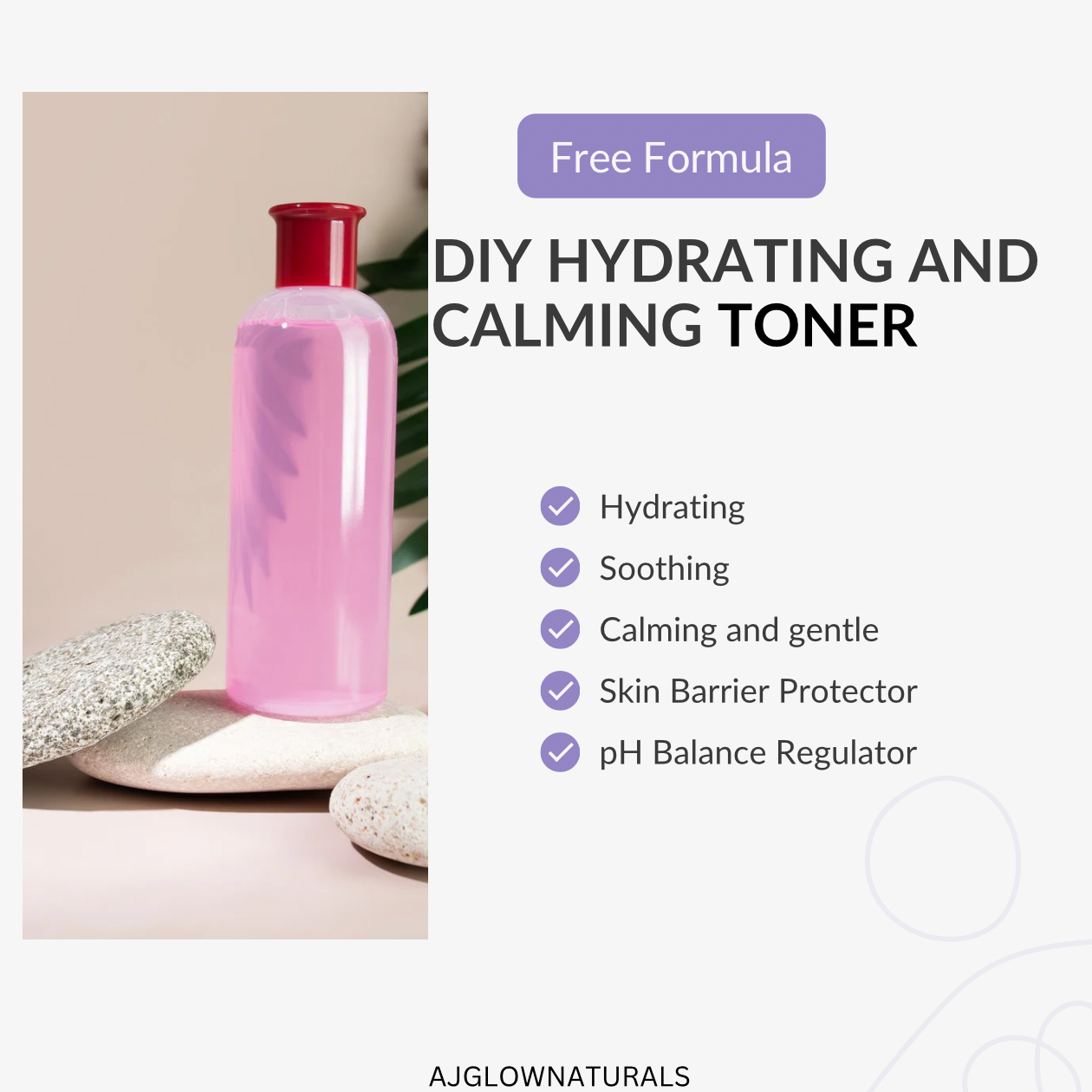
(Perfect for All Skin Types, Especially Sensitive or Irritated Skin)
What is a Toner?
A toner is a lightweight, water-based skincare product designed to be used after cleansing and before moisturizing. It helps to refresh and hydrate the skin, restore its natural pH balance, and prepare it for the next steps in your skincare routine. Modern toners also offer additional benefits like soothing irritation, reducing the appearance of pores, and infusing the skin with nourishing ingredients.
Why Use a Toner?
Many people skip toners, but it plays a vital role in maintaining healthy, hydrated skin. After cleansing, especially with harsher cleansers, your skin’s pH may be disrupted. A toner works to restore that balance, while also providing extra hydration and nutrients. For sensitive or irritated skin, using a toner helps to soothe and calm the skin, preventing flare-ups and redness.
What Does a Toner Do? (Functions)
Toners are multi-functional and can address various skin needs:
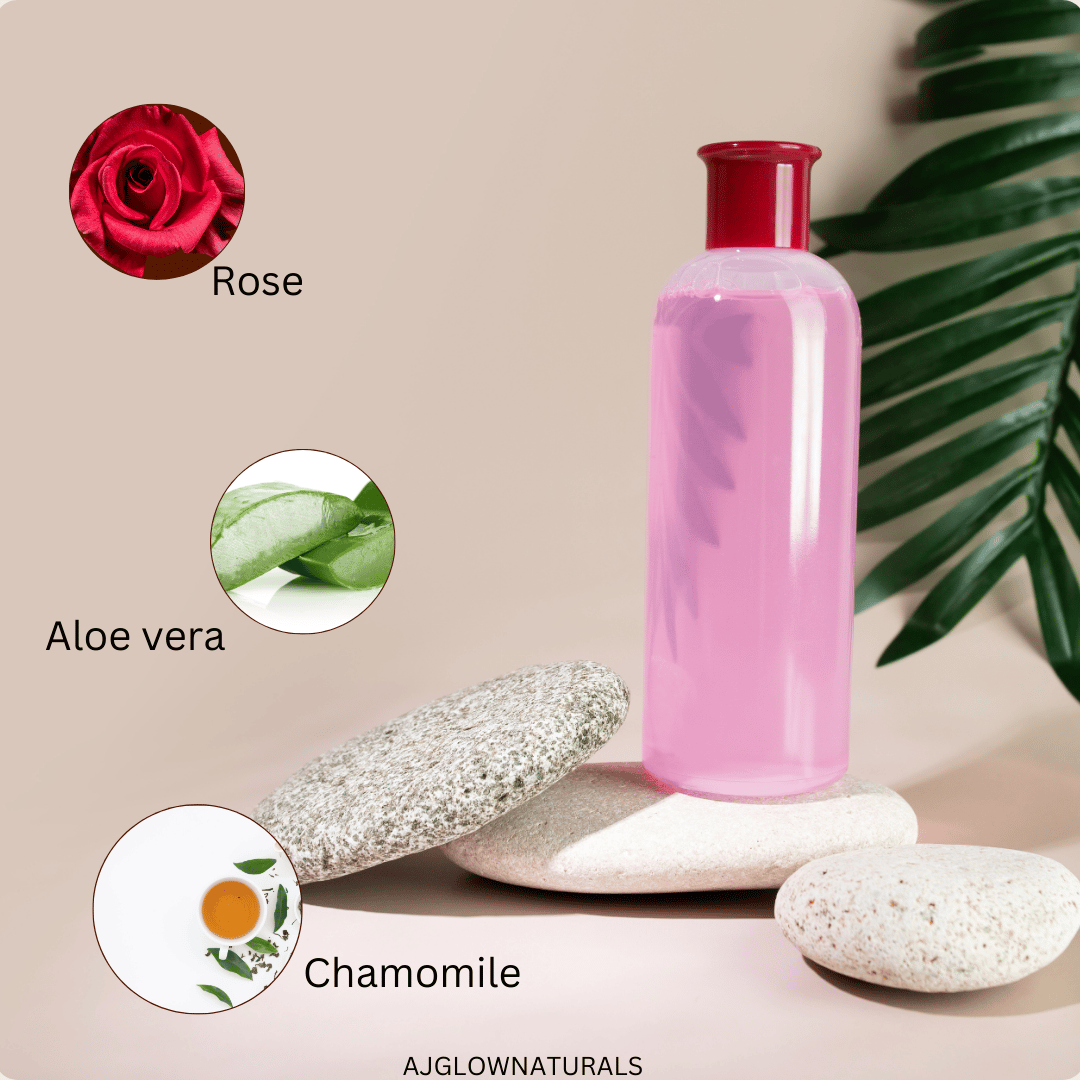
• Hydrate: Provides a quick moisture boost, especially when formulated with ingredients like rose water and aloe vera juice.
• Balance: Helps restore the skin’s pH after cleansing, which is important for protecting the skin’s barrier function.
• Sooth: With calming ingredients like chamomile and panthenol, toners can reduce redness and inflammation.
• Prep the skin: It primes the skin, allowing serums and moisturizers to penetrate more effectively.
What Can Go Into a Toner?
A toner can be as simple or complex as you like, depending on your skin’s needs. Ingredients often include:
• Water-based ingredients: Rose water, aloe vera juice, hydrosols, and floral waters that provide hydration and soothing effects.
• Humectants: Such as glycerin, which helps to attract moisture to the skin.
• Actives: Ingredients like panthenol (pro-vitamin B5) to soothe and hydrate.
• Preservatives: To prevent bacterial growth and keep your formula safe for use.
Benefits of the Ingredients
• Rose Water : Rose water is naturally calming and anti-inflammatory, helping to reduce redness and irritation. It also has mild astringent properties, making it suitable for all skin types.
• Aloe Vera Juice : Known for its soothing, hydrating, and healing properties, aloe vera is excellent for sensitive and irritated skin, providing deep hydration without clogging pores.
• Glycerin : A powerful humectant, glycerin draws moisture from the environment into the skin, keeping it hydrated and plump throughout the day.
• Chamomile Hydrosol : Chamomile is famed for its anti-inflammatory and calming properties. The hydrosol form is gentle and perfect for calming sensitive or acne-prone skin.
• Panthenol : Panthenol is a moisturizing and healing agent that helps soothe irritation, promotes wound healing, and enhances hydration.
• Preservative : A must for water-based products, preservatives ensure that your toner remains free from bacteria and mold, keeping it safe for use over time.
DIY Hydrating and Calming Toner Formula
This 50g batch is a perfect blend for all skin types, with a focus on hydration and calming irritated or sensitive skin.
Ingredients List:
• Rose Water: 35g
• Aloe Vera Juice: 7.5g
• Glycerin: 2.5g
• Chamomile Hydrosol: 4g
• Panthenol: 0.5g
• Preservative: 0.5g
Why Ingredient Compatibility Matters
When formulating skincare products, it’s important to ensure that the ingredients you choose are compatible with each other. This means not only selecting ingredients that complement each other but also ensuring that the pH levels are balanced. The wrong pH can affect the stability of the formula and may lead to irritation or reduced efficacy. When crafting your own DIY toners or other skincare products, always keep in mind the pH and interaction of ingredients to maintain the effectiveness and safety of your formulation.
Instructions
1. Sanitize Your Workspace: Ensure all your utensils and containers are sanitized to prevent contamination.
2. Measure Ingredients: Accurately measure each ingredient by weight. For small amounts like panthenol and preservatives, use a precise scale.
3. Combine Ingredients: In a sterilized glass bowl, combine the rose water, aloe vera juice, glycerin, and chamomile hydrosol. Stir gently but thoroughly.
4. Add Panthenol: Slowly mix in the panthenol. This ingredient boosts hydration and enhances the soothing properties of your toner. Test pH before adding preservative
5. Incorporate Preservative(Optiphen plus or any other broad spectrum preservative or Geogard ECT (also known as EcoCert Preservative): Finally, add the preservative, stirring gently to ensure it’s evenly distributed throughout the formula.
6. Mix Well: Use a sterilized whisk or stirrer to ensure everything is fully blended.
7. Transfer: Carefully pour the toner into a clean, sterilized bottle, preferably one with a spray nozzle for easy application.
Balancing the pH (and Why It’s Important)
The pH of your toner should be between 4.5 to 5.5, which is in line with the skin’s natural pH. Maintaining this balance is crucial because:
• It helps to protect the skin’s acid mantle, which acts as a barrier against bacteria, pollution, and moisture loss.
• When the pH is too high or too low, it can disrupt the skin barrier, leading to irritation, breakouts, or dryness.
Confirming and Adjusting the pH
• Test the pH: Use pH strips or a pH meter to test your toner’s pH level. Dip the strip into the liquid and match the color to the corresponding pH scale.
• Adjust if Necessary:
• If the pH is too high (above 5.5), you can lower it by adding a tiny drop of citric acid solution.
• If it’s too low, raise the pH with a few drops of sodium bicarbonate solution. Always retest after making adjustments.
Final Tips
• Storage: Keep your toner in a cool, dark place. It should last around 3 months with the preservative. If you notice any change in smell or color, discard it.
• Application: After cleansing, spritz your toner onto clean skin or apply it with a cotton pad. Follow with your favorite serum and moisturizer.
• Patch Test: If you have very sensitive skin, always patch test on your inner arm to ensure your skin doesn’t react negatively.
Ready to Dive Deeper?
If you’re excited about creating customized skincare products and want to learn more advanced techniques, don’t miss out on my Advanced DIY Body Scrub eBook! It’s packed with pro tips, detailed formulations, and guidance on crafting scrubs tailored to your unique skin needs.
📘 Grab your copy here: Advanced DIY Body Scrub eBook