

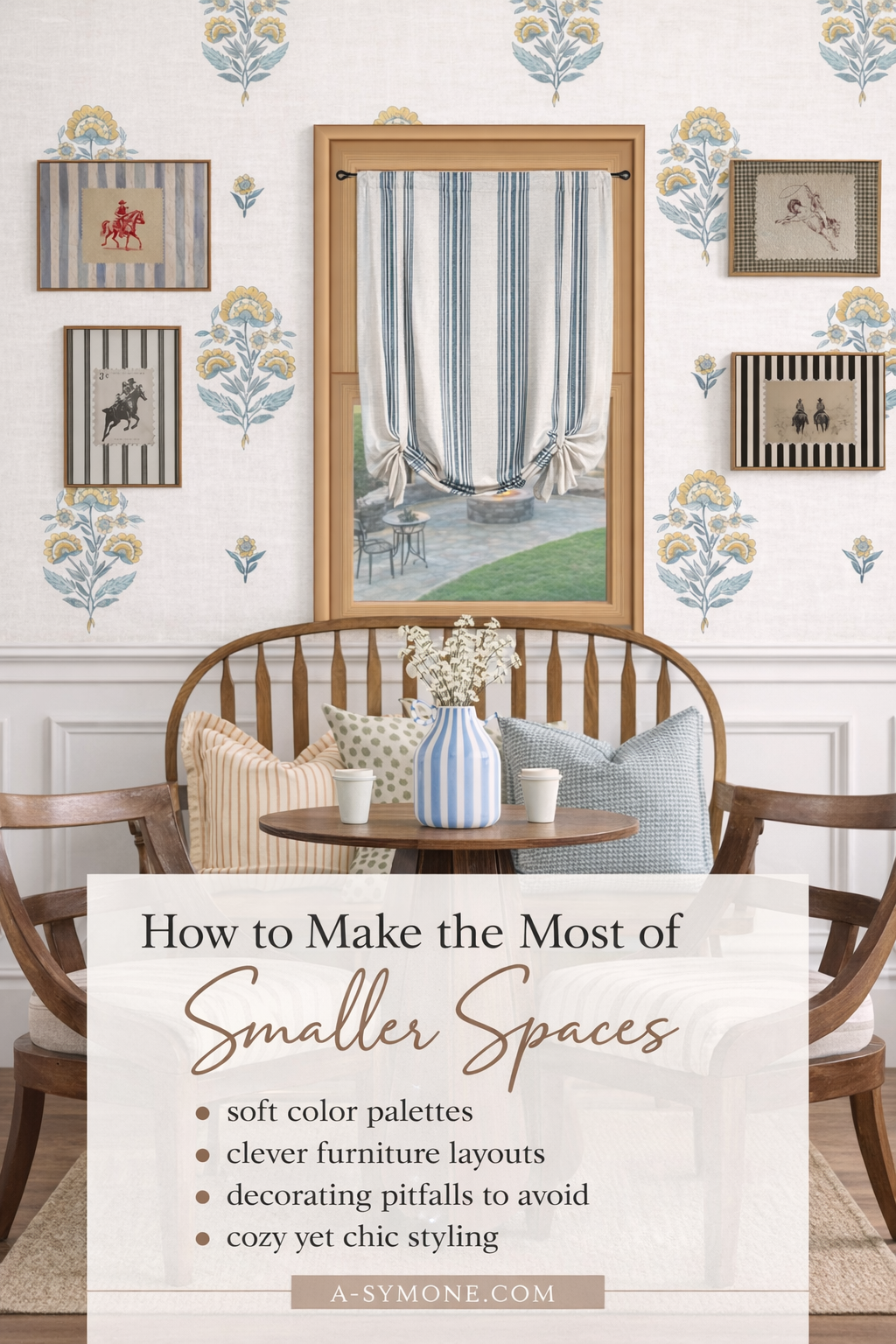
How to Maximize Small Spaces in Interior Design
Small spaces often get a bad reputation, but thoughtful interior design can make even the most compact rooms feel intentional, comfortable, and beautiful. At A.Symone, we believe small spaces are an opportunity to design with clarity and purpose. When every item has meaning, a room can feel calm, functional, and elevated rather than crowded. This guide explores practical ways to approach small-space design while maintaining a cozy, chic aesthetic.
How to Choose the Right Color Palette for a Small Home
Color plays one of the most important roles in how a small space feels. Lighter tones tend to reflect more light, which helps a room feel open and airy. Soft neutrals such as warm whites, creams, pale blush, soft taupe, or light gray create a gentle backdrop without overwhelming the eye.
That said, small spaces don’t need to be colorless. A limited palette is often more effective than a bright, varied one. Choose one primary color, one secondary tone, and one accent shade. This keeps visual flow consistent from room to room. Muted pastels, warm earth tones, or dusty hues can add personality while still feeling calm.
Using the same color on walls, trim, and even ceilings can also blur boundaries and make a space feel larger. If you enjoy deeper colors, consider using them in smaller doses—such as an accent wall, cabinetry, textiles, or artwork—rather than covering every surface.
How to Arrange Furniture in a Small Room
Furniture arrangement is less about filling a room and more about allowing it to breathe. Start by identifying the main purpose of the space. Is it meant for resting, working, entertaining, or all three? Once the function is clear, select furniture that supports that purpose without excess.
In small rooms, fewer pieces are usually better. Instead of many small items, choose a few well-proportioned pieces that fit the scale of the room. Furniture with exposed legs, slim profiles, or open bases tends to feel lighter visually.
Placement matters just as much as size. Avoid pushing everything against the walls, which can sometimes make a room feel boxed in. Allowing small gaps between furniture and walls creates depth. Also, keep walkways clear to maintain easy movement through the space.
Multi-functional furniture is especially useful—think ottomans with storage, beds with drawers, nesting tables, or desks that double as vanities. These pieces reduce clutter while increasing usability.
Common Mistakes to Avoid When Decorating a Small Room
One of the most common mistakes in small-space design is overcrowding. Too many decorative objects, patterns, or furniture pieces can quickly make a room feel chaotic. Editing is essential. If something doesn’t serve a function or bring genuine enjoyment, it may not belong.
Another mistake is ignoring vertical space. Walls are valuable real estate in small homes. Floating shelves, tall bookcases, wall-mounted lighting, and artwork drawn upward can make ceilings feel higher and rooms feel more expansive.
Improper lighting is also a frequent issue. Relying solely on one overhead light can create harsh shadows and flatten the room. Layered lighting—using a mix of ambient, task, and accent lighting—adds warmth and depth.
Lastly, using furniture that is too large or too small can throw off balance. Oversized pieces can overwhelm a room, while furniture that’s too tiny can make a space feel disjointed. Proportion is key.
The Best Way to Keep a Small Space Cozy and Chic
Cozy and chic often come down to texture and intention. Soft textiles such as linen, cotton, velvet, or wool instantly warm a room. Layering rugs, throws, and pillows adds comfort without adding clutter when kept within a cohesive color palette.
Natural elements also help ground a small space. Wood, stone, ceramic, and woven materials bring warmth and character while maintaining a timeless feel. Even small touches—like a wooden tray or ceramic vase—can make a difference.
Personal details are what ultimately make a space feel like home. Meaningful artwork, books, or objects collected over time add depth and authenticity. Instead of displaying everything at once, rotate items seasonally to keep the space feeling fresh.
Finally, maintaining a sense of order is essential. Thoughtful storage solutions allow beauty and function to coexist. When a space is well-organized, it naturally feels calmer, more inviting, and effortlessly stylish.
Final Thoughts
Designing a small space is about working intentionally rather than expansively. With a balanced color palette, purposeful furniture arrangement, and mindful styling, small rooms can feel just as luxurious and welcoming as larger ones. At A.Symone, we believe that beauty isn’t defined by square footage—it’s defined by how a space makes you feel.