
Maintaining a beautiful, healthy, and well-organised garden requires more than occasional watering and lawn mowing. Whether you have a small residential garden, a large landscaped property, a commercial outdoor space, or a garden surrounding an apartment complex, consistent maintenance is essential to keeping the environment attractive, functional, and healthy.
Many property owners enjoy having beautiful gardens but struggle to find the time, equipment, or knowledge required to maintain them properly. Grass grows, weeds spread, shrubs become overgrown, plants develop diseases, and irrigation systems occasionally need attention. Without a proper maintenance routine, even a well-designed garden can quickly lose its appearance.
This is where professional garden maintenance services become valuable.
A professional garden maintenance service helps property owners manage their outdoor spaces through planned maintenance activities, practical gardening knowledge, suitable equipment, and consistent care. However, not everyone understands exactly what these services include or what they should expect when hiring a professional.
Does garden maintenance only involve mowing lawns? Should a professional service include pruning, weed control, fertilising, and irrigation inspections? How frequently should maintenance take place? And how can you determine whether a garden maintenance provider is delivering value for money?
In this comprehensive guide, we explore what to expect from a professional garden maintenance service, the tasks involved, the benefits of hiring professionals, and important considerations before choosing a service provider.
1. Initial Garden Inspection and Assessment
A professional garden maintenance service should begin with an assessment of the property.
Before starting any maintenance work, the service provider needs to understand the condition of the garden, its size, the types of plants present, and the maintenance requirements.
Not every garden requires the same approach.
For example, a residential property with a lawn, flower beds, and a few shrubs will have different requirements from a commercial property with extensive landscaped areas, trees, irrigation systems, and outdoor entertainment spaces.
During an initial assessment, the service provider may examine:
- The general condition of the lawn.
- Existing trees, shrubs, and ornamental plants.
- Weed growth and unwanted vegetation.
- Soil conditions and drainage.
- Irrigation systems and watering arrangements.
- Overgrown or damaged plants.
- Garden pathways and outdoor structures.
- Areas requiring immediate attention.
- The overall layout and maintenance requirements.
The inspection helps establish what needs to be done immediately and what can be included in a longer-term maintenance programme.
Why this matters: An initial assessment helps prevent unnecessary work and allows the service provider to recommend maintenance activities according to the actual condition of the garden.
2. Lawn Mowing and Grass Maintenance
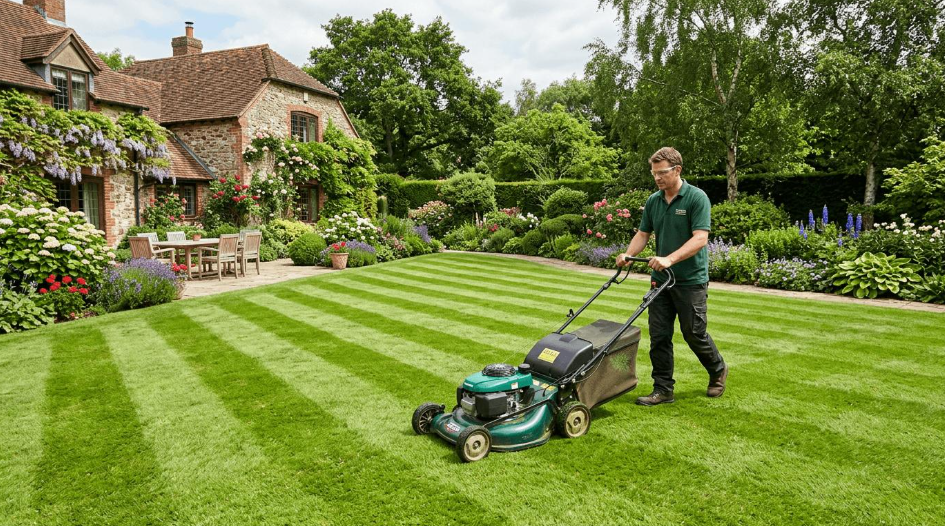
Lawn maintenance is one of the most recognisable parts of professional garden care.
A neat lawn can significantly improve the appearance of a property, but maintaining it requires consistency and an understanding of different grass types.
Professional lawn maintenance may include:
- Regular grass cutting.
- Trimming lawn edges.
- Removing excessive grass clippings where necessary.
- Identifying bare or damaged patches.
- Monitoring weed growth.
- Checking for signs of pests and disease.
- Recommending lawn treatment where appropriate.
Why proper mowing matters
Cutting grass too short can weaken it and make it more vulnerable to environmental stress, weeds, and damage.
Professional maintenance should consider the grass species, weather conditions, growth rate, and intended appearance of the lawn.
For example, a lawn that receives strong sunlight throughout the day may have different maintenance requirements from one growing under trees.
A professional should also consider whether the lawn requires additional attention, such as aeration, overseeding, or soil improvement.
What to expect: A properly maintained lawn should have an appropriate cutting height, reasonably consistent growth, neat edges, and fewer visible signs of neglect.
3. Weed Removal and Weed Control
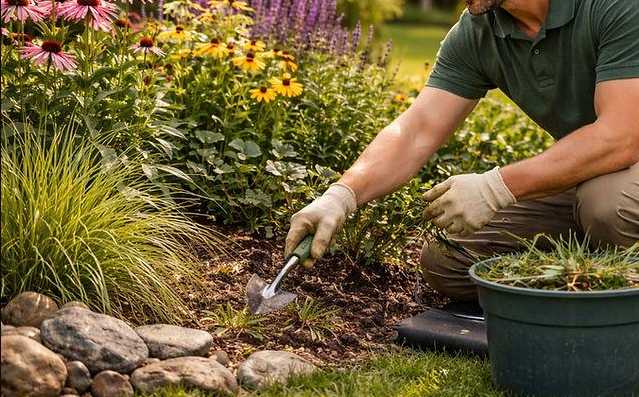
Weeds are among the most common challenges faced by homeowners and property managers.
They compete with desirable plants for water, nutrients, sunlight, and growing space. If left unmanaged, they can spread throughout lawns, flower beds, pathways, and vegetable gardens.
A professional garden maintenance service should include appropriate weed management.
This may involve:
- Removing weeds manually.
- Clearing unwanted vegetation.
- Removing weeds from planting beds.
- Managing weeds growing between paving stones.
- Applying suitable weed-control treatments where necessary.
- Identifying persistent weed problems.
- Recommending preventive measures.
The correct approach depends on the type of weed, its location, and the surrounding plants.
For example, removing weeds from a vegetable garden requires particular care to avoid damaging edible crops.
Chemical weed-control products should only be used where appropriate and according to label instructions.
Why it matters: Regular weed management prevents small problems from developing into extensive garden clean-up projects.
4. Pruning Trees, Shrubs, and Plants
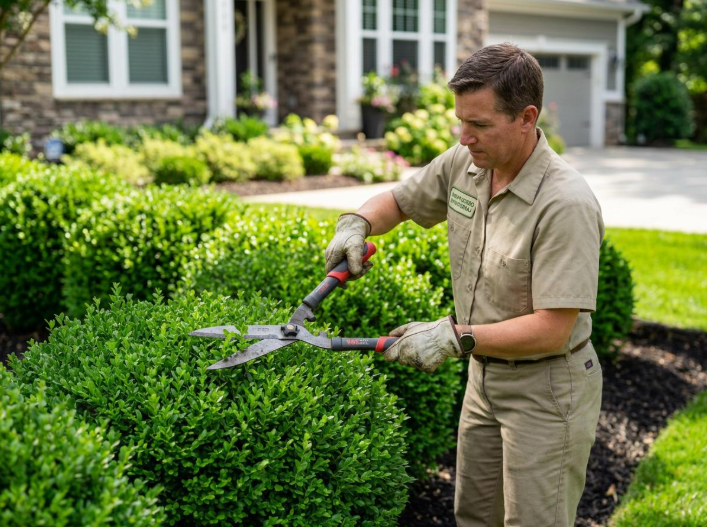
Plants require different forms of care depending on their species, age, growing conditions, and intended appearance.
Pruning involves selectively removing branches, stems, or leaves to maintain plant health, encourage suitable growth, improve appearance, or manage size.
Professional pruning services may include:
- Removing dead or damaged branches.
- Trimming overgrown shrubs.
- Maintaining suitable plant shapes.
- Removing unwanted growth.
- Improving plant structure.
- Managing vegetation around pathways.
- Removing selected branches that interfere with other plants.
However, pruning should not be performed indiscriminately.
Some plants flower on older growth, while others produce flowers on new growth. Pruning at the wrong time may affect flowering or damage the plant.
Large trees may also require specialist assessment and qualified tree-care professionals, particularly where branches are hazardous or close to buildings and electrical infrastructure.
What to expect: Pruning should improve the condition and appearance of plants without unnecessary cutting or damaging their natural growth patterns.
5. Watering and Irrigation System Management
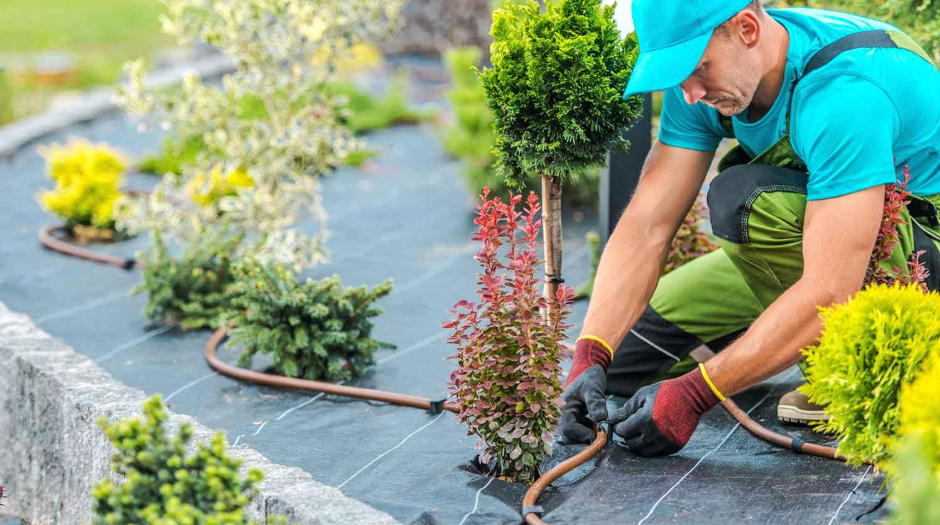
Water is essential for plant survival, but incorrect watering can cause significant problems.
Underwatering may cause wilting, poor growth, and plant stress. Overwatering can contribute to root damage, waterlogging, and certain plant diseases.
Professional garden maintenance may include checking watering arrangements and identifying irrigation problems.
This can involve:
- Inspecting garden hoses and connections.
- Checking irrigation pipes for leaks.
- Inspecting sprinkler heads.
- Identifying blocked drip emitters.
- Monitoring areas receiving insufficient water.
- Checking for waterlogging.
- Adjusting watering schedules where appropriate.
- Recommending irrigation improvements.
For larger gardens, irrigation systems may require separate watering zones to accommodate different plant requirements.
For example, a lawn may require a different watering schedule from a vegetable garden or an area containing drought-tolerant indigenous plants.
Why it matters: Proper irrigation management helps maintain plant health while reducing unnecessary water consumption.
6. Fertilising and Soil Improvement
Healthy plants depend on suitable growing conditions, including appropriate soil structure, nutrients, moisture, and drainage.
Over time, soil conditions may deteriorate due to nutrient depletion, compaction, erosion, or repeated cultivation.
A professional garden maintenance provider may assess whether the garden requires fertilising or soil improvement.
Depending on the condition of the garden, this may include:
- Applying suitable fertilisers.
- Incorporating compost or organic matter.
- Improving soil structure.
- Adding mulch.
- Identifying soil compaction.
- Recommending soil testing.
- Improving drainage where appropriate.
Understanding fertilisers
Different plants have different nutrient requirements.
For example, flowering plants, lawns, fruit trees, and vegetable crops may require different fertilisation approaches.
Applying too much fertiliser can damage plants and contribute to environmental pollution.
Professional maintenance should therefore focus on identifying actual requirements rather than applying products unnecessarily.
What to expect: Recommendations should be based on the condition of the plants and soil, the type of vegetation, and the intended results.
7. Garden Clean-Up and Removal of Green Waste
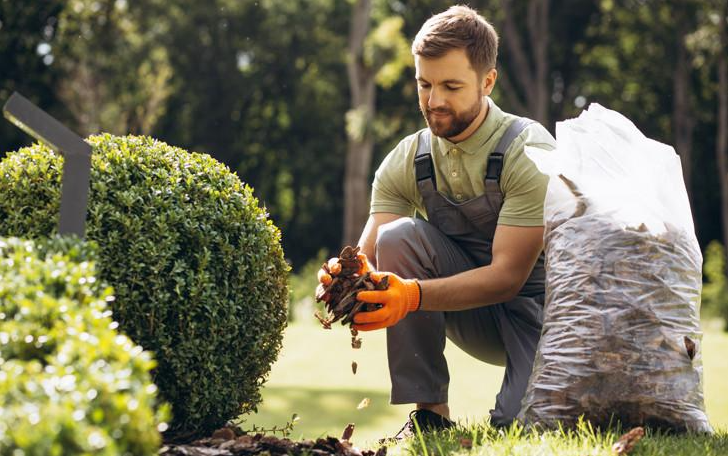
A well-maintained garden should be clean, organised, and free from unnecessary debris.
Leaves, branches, grass clippings, weeds, and other organic material can accumulate quickly, particularly during seasonal changes.
Garden clean-up services may include:
- Collecting fallen leaves.
- Removing unwanted branches.
- Clearing dead plant material.
- Collecting grass clippings.
- Removing unwanted vegetation.
- Cleaning garden beds.
- Clearing pathways.
- Organising selected planting areas.
Green waste should be handled responsibly.
Where suitable, some organic material can be composted and reused to improve soil quality.
However, diseased plant material and invasive weeds may require different disposal methods to avoid spreading pests, diseases, or unwanted seeds.
Why it matters: Regular clean-ups improve the appearance of the property and help maintain a healthier growing environment.
8. Pest and Plant Disease Monitoring
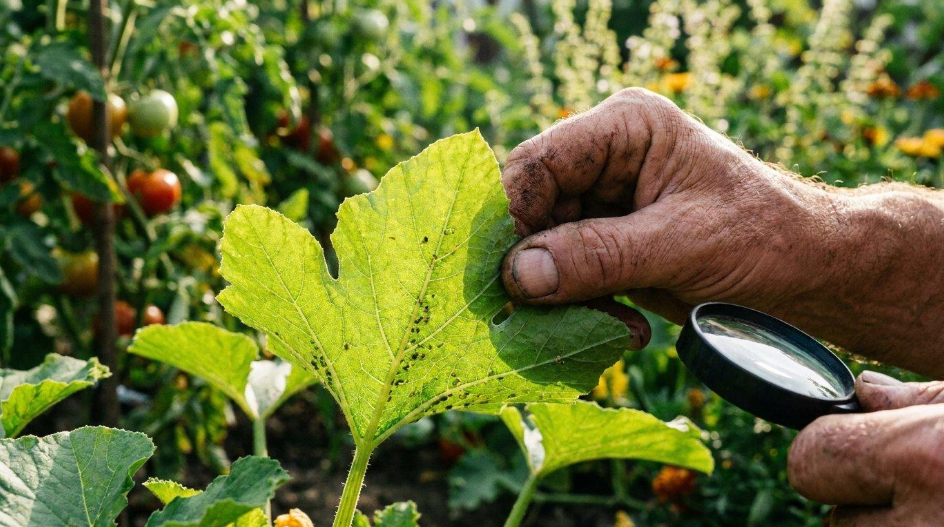
Plants can be affected by insects, fungal diseases, bacterial infections, and other environmental problems.
Some issues develop gradually and may not be obvious until considerable damage has occurred.
A professional garden maintenance service should pay attention to unusual changes in plant appearance.
Common warning signs include:
- Yellowing leaves.
- Unusual spots.
- Wilting.
- Damaged leaves.
- Stunted growth.
- Discolouration.
- Unusual insect activity.
- Branches dying unexpectedly.
The objective is to identify possible problems early and recommend appropriate action.
For instance, aphids may affect young plant growth, while fungal problems may become more common where plants experience excessive moisture and poor air circulation.
Not every damaged plant requires chemical treatment. Sometimes improving drainage, adjusting watering, removing affected material, or correcting growing conditions may help.
For serious or persistent problems, specialist plant-health advice may be necessary.
9. Mulching and Flower Bed Maintenance
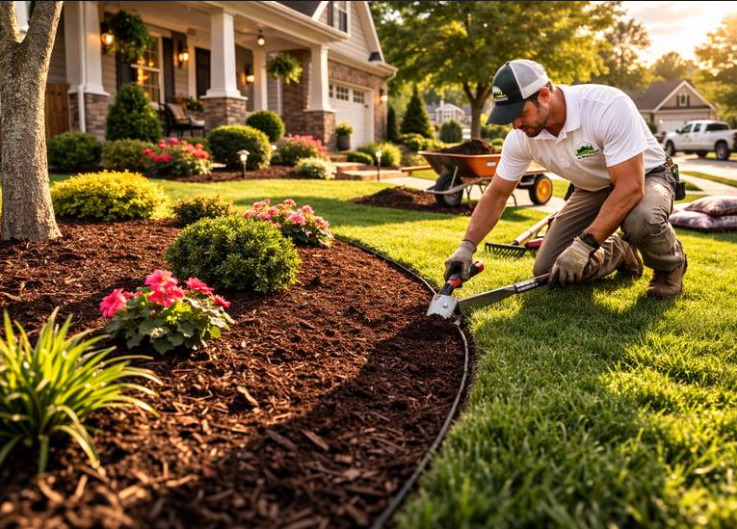
Mulching is an important part of garden maintenance.
It involves covering the soil surface with suitable organic or inorganic material.
Organic mulch may include bark, wood chips, compost, and other appropriate plant-based materials.
Mulching can help:
- Reduce moisture loss.
- Suppress weed growth.
- Regulate soil temperature.
- Protect soil from erosion.
- Improve soil structure as organic materials decompose.
- Improve the appearance of planting beds.
Professional maintenance may also include removing unwanted vegetation, rearranging planting areas, replacing unsuitable plants, and maintaining clean garden-bed edges.
Mulch should be applied appropriately. Excessive mulch piled against plant stems or tree trunks can create problems.
10. Seasonal Garden Maintenance
Gardens change throughout the year, and their maintenance requirements change with them.
A professional garden maintenance programme should consider seasonal conditions rather than applying exactly the same routine every month.
In South Africa, seasonal planning is particularly important because rainfall, temperatures, and growing conditions differ across provinces and regions.
Spring
Spring often brings increased plant growth.
Maintenance may include:
- Removing accumulated winter debris.
- Managing weeds.
- Preparing planting beds.
- Checking irrigation systems.
- Assessing lawns after winter.
- Planting suitable seasonal flowers and vegetables.
Summer
Hot weather can place considerable pressure on plants and lawns.
Maintenance may include:
- Monitoring soil moisture.
- Adjusting watering schedules.
- Controlling fast-growing weeds.
- Monitoring pests.
- Maintaining lawns.
- Applying suitable mulch.
Autumn
Autumn provides an opportunity to prepare gardens for cooler weather.
Maintenance may include:
- Collecting fallen leaves.
- Removing dead plant material.
- Reviewing irrigation requirements.
- Preparing planting beds.
- Planting suitable seasonal crops and plants.
Winter
Winter maintenance focuses on protecting plants and preparing the garden for the next growing season.
Activities may include:
- Removing damaged growth where appropriate.
- Managing weeds.
- Protecting frost-sensitive plants.
- Reducing irrigation according to conditions.
- Maintaining pathways and garden structures.
- Planning future landscaping improvements.
The exact activities depend on the local climate and the plants growing in the garden.
11. Maintenance of Garden Pathways and Outdoor Areas
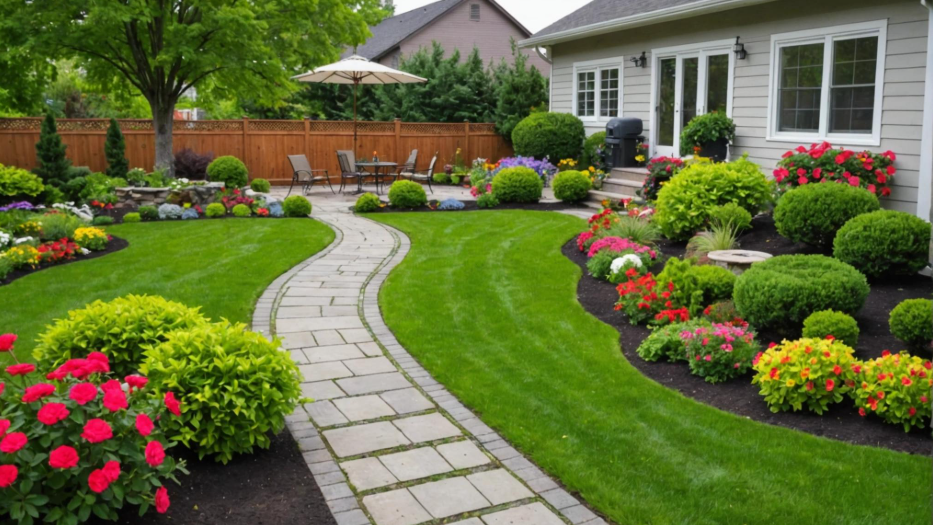
Garden maintenance should not focus exclusively on plants.
The surrounding outdoor environment also needs attention.
Pathways, paving, garden borders, outdoor seating areas, and decorative features contribute to the overall appearance and usability of a property.
Maintenance may include:
- Removing weeds growing between paving.
- Sweeping pathways.
- Clearing leaves.
- Maintaining garden edging.
- Identifying damaged paving.
- Cleaning outdoor seating areas.
- Inspecting garden structures.
- Keeping access routes unobstructed.
For commercial properties, maintaining clear walkways and safe access is particularly important.
A beautiful garden should also be practical and safe for people using the property.
12. Garden Maintenance Recommendations and Professional Advice
One of the additional benefits of hiring an experienced garden maintenance provider is access to practical advice.
Sometimes the problem with a garden is not simply a lack of maintenance. The original design, plant selection, soil conditions, or irrigation arrangements may be unsuitable.
For example:
- A lawn may struggle because it receives insufficient sunlight.
- Plants may repeatedly die because they are unsuitable for the local climate.
- Water may collect because of poor drainage.
- Shrubs may become overcrowded because they were planted too close together.
- Certain areas may require water-wise landscaping.
A professional can identify these challenges and recommend possible improvements.
This may include changing plant selections, improving irrigation, introducing mulch, adjusting planting arrangements, or redesigning certain sections.
The goal is to help property owners achieve a garden that is easier to maintain and better suited to its environment.
How Frequently Should You Book Professional Garden Maintenance?
The frequency of garden maintenance depends on the size of the property, the type of plants, weather conditions, and the level of care required.
Some gardens need weekly attention, while others can be maintained through monthly or seasonal visits.
Here is an example of a general maintenance schedule.
Frequency
Typical activities
Weekly
Lawn mowing where required, weed removal, general clean-up
Fortnightly
Lawn and shrub maintenance, planting-bed care, inspections
Monthly
Irrigation checks, pruning where appropriate, soil and plant assessment
Seasonally
Seasonal pruning, mulching, planting and garden preparation
Annually
General garden assessment and long-term improvement planning
This is a guide rather than a fixed schedule.
A rapidly growing garden during summer may require more frequent attention than a low-maintenance garden during winter.
Businesses and large property owners may also require customised maintenance agreements.
What Should You Look for When Hiring a Garden Maintenance Service?
Choosing the right service provider is just as important as deciding to hire one.
Not every provider offers the same services, experience, equipment, or quality of work.
Before making a decision, consider the following factors.
1. Experience and Knowledge
Look for a provider who understands different plants, lawn requirements, soil conditions, pruning practices, and garden maintenance techniques.
2. Range of Services
Determine whether the provider offers the services you actually need.
Some companies focus mainly on lawn mowing, while others offer broader garden maintenance and landscaping solutions.
3. Suitable Equipment
Professional maintenance requires appropriate tools and equipment.
Ask whether the provider has the necessary equipment for the size and nature of your property.
4. Reliability and Consistency
Garden maintenance requires regular attention.
Choose a provider who can explain how visits will be scheduled and how ongoing work will be managed.
5. Transparent Pricing
Request a quotation that explains what is included.
Clarify whether the price covers labour, equipment, waste removal, products, and additional services.
6. References and Previous Work
Where possible, review previous projects, photographs, customer feedback, or references.
This can help you understand the provider's standard of work.
7. Safety and Responsible Practices
Ensure that appropriate safety practices are followed when operating equipment, handling products, and working around trees, buildings, and outdoor structures.
How Much Does Professional Garden Maintenance Cost?
The cost of professional garden maintenance varies depending on several factors.
There is no universal price because every property has different requirements.
Some of the factors that influence pricing include:
- Size of the garden.
- Condition of the property.
- Frequency of maintenance.
- Type and number of plants.
- Lawn size.
- Amount of weed growth.
- Pruning requirements.
- Equipment and labour requirements.
- Waste removal.
- Additional landscaping work.
For example, maintaining a small residential garden may require less time and equipment than maintaining a large commercial property with extensive lawns, trees, and landscaped areas.
It is also important to distinguish between routine maintenance and once-off garden rehabilitation.
A neglected garden may require substantial initial work before it can be maintained through a regular schedule.
Money-saving tip: Request a maintenance assessment and quotation before agreeing to ongoing services. Compare what different providers include rather than choosing based only on the lowest price.
DIY Garden Maintenance vs Professional Garden Maintenance
Should you maintain your garden yourself or hire professionals?
Both options have advantages, and the right choice depends on your available time, skills, budget, and the complexity of the garden.
DIY maintenance
Professional maintenance
You manage the work yourself
A service provider performs agreed tasks
May reduce labour expenses
Requires a service budget
Requires your time and effort
Saves time and physical effort
You need to purchase or access tools
Provider may bring suitable equipment
Knowledge must be developed independently
Professional experience may be available
Suitable for manageable garden tasks
Useful for larger or more demanding gardens
When DIY maintenance makes sense
DIY maintenance may be suitable when:
- You have a relatively small garden.
- You enjoy gardening.
- You have sufficient time.
- The maintenance requirements are manageable.
- You already have suitable equipment.
When professional maintenance is worthwhile
Professional assistance may be more suitable when:
- Your garden is large.
- You have limited time.
- The garden requires specialised attention.
- There are extensive pruning or clean-up requirements.
- You manage commercial or residential properties.
- You need consistent maintenance throughout the year.
You can also combine both approaches.
For example, you may water plants and remove small weeds yourself while arranging professional assistance for lawn care, pruning, landscaping, and periodic garden clean-ups.
Questions to Ask Before Hiring a Garden Maintenance Company
Before signing an agreement or booking a service, ask a few important questions.
- What exactly is included in your garden maintenance service?
- Do you provide lawn mowing and edging?
- Do you offer pruning and weed control?
- Do you inspect irrigation systems?
- Are garden waste removal services included?
- How frequently will maintenance take place?
- Do you provide your own equipment?
- Are fertilisers and other garden products included in the quotation?
- Can you recommend improvements to my existing garden?
- Do you also provide landscaping services?
These questions help you understand what you are paying for and reduce the likelihood of misunderstandings.
How Agric Garden Buddy Can Help
Maintaining a healthy and attractive garden requires the right knowledge, tools, products, and consistent care.
Whether you are a homeowner who needs assistance with routine garden maintenance, a property owner planning a landscaping improvement, or someone interested in developing practical gardening and agricultural skills, having access to the right solutions makes a difference.
Agric Garden Buddy focuses on more than garden maintenance alone. The company brings together garden maintenance services, landscaping, training, and agricultural and garden products to support customers with different outdoor and agricultural needs.
1. Garden Maintenance Services
If you struggle to find the time to maintain your garden, Agric Garden Buddy offers garden maintenance services to help keep outdoor spaces neat, attractive, and properly cared for.
Whether your property requires regular attention or a garden clean-up, explore the available services and find out how they can support your maintenance requirements.
2. Landscaping Services
Sometimes a garden requires more than mowing and pruning.
If your outdoor space needs improvement, landscaping can help transform its layout, appearance, and functionality.
Agric Garden Buddy offers landscaping services for customers looking to improve their outdoor environments and create more attractive spaces.
3. Agricultural and Garden Products
Maintaining a garden or managing an agricultural project requires appropriate tools and products.
Explore Agric Garden Buddy's range of agricultural and garden products to support your gardening, maintenance, and growing activities.
4. Training and Skills Development
Understanding how to maintain plants, manage soil, use gardening equipment, and apply suitable agricultural practices can help you make better decisions.
Agric Garden Buddy also focuses on training to support people interested in developing practical knowledge and skills in gardening, agriculture, and landscaping.
5. Practical Agricultural Solutions
Beyond residential gardening, Agric Garden Buddy also has a broader agricultural focus.
Whether you are interested in growing food, improving your gardening knowledge, developing an agricultural project, or accessing relevant products, explore the available solutions.
Looking for practical garden and agricultural solutions?
Visit the official Agric Garden Buddy website to explore garden maintenance, landscaping, agricultural and garden products, training, and other available services.
Final Thoughts
A professional garden maintenance service does much more than keep grass short and remove weeds.
It involves understanding the needs of the garden, maintaining plants correctly, monitoring soil and irrigation conditions, managing unwanted vegetation, and ensuring that the outdoor environment remains attractive, functional, and healthy.
For homeowners, professional maintenance can save valuable time and help protect their investment in their outdoor spaces.
For businesses and property managers, it can contribute to a more professional appearance and a better-maintained environment for employees, customers, and visitors.
Before hiring a provider, understand what services are included, assess your garden's needs, request a quotation, and establish a maintenance schedule that suits your property.
Remember that a beautiful garden is not created through a single maintenance visit. It develops through consistent care, informed decisions, and the right maintenance practices.
Your garden deserves more than occasional attention. Give it the care it needs to remain healthy, attractive, and enjoyable throughout the year.
Agric Garden Buddy: Supporting better gardening, landscaping, agricultural knowledge, and practical outdoor solutions.
Comments ()