

When beauty brands launch campaigns, the goal is simple: sell product. But in the case of e.l.f. Cosmetics’ newest partnership with comedian Matt Rife, the conversation was all outrage, no admiration — and the markets noticed.
The Campaign
In August 2025, e.l.f. Cosmetics unveiled a campaign featuring Matt Rife, known for his viral stand-up clips and controversial humor. The creative was clearly designed for maximum online visibility — leaning into a kind of digital logic that thrives on outrage, shock, and shareability.
The Backlash
There was no split opinion, no “good publicity is still publicity” moment here. The reaction was overwhelmingly negative. And while bad publicity can sometimes boost visibility, the purpose of advertising is not to provoke for provocation’s sake — it’s to move product.
In the words of Dr. Mara Einstein, ex–TV/ad executive turned marketing critic:
“They lost the plot. The point of advertising is to get people to buy your product — not to get people to scream and holler about you. Rage-bait might get attention, but it doesn’t necessarily get sales.”
The Market Impact
The investor reaction was swift. Shortly after the campaign dropped, e.l.f.’s stock dipped 0.55%, opening at $119.50 and hitting a low of $117.30 before a partial recovery.
Market Reaction — e.l.f. Cosmetics (August 15, 2025)
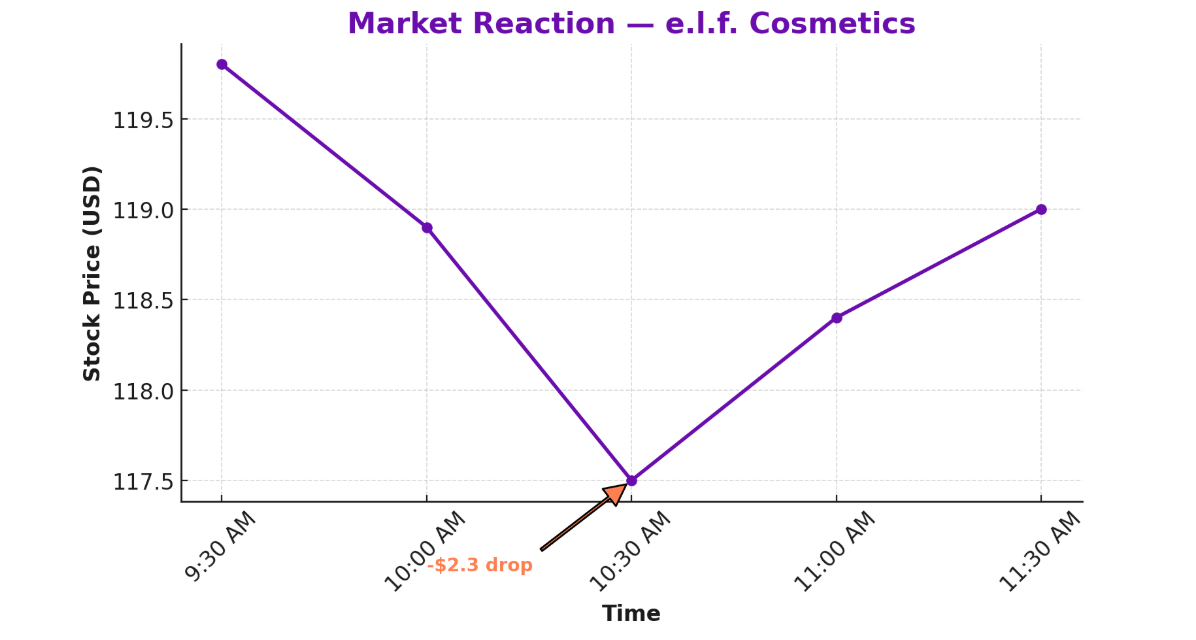
For a $6.74B company, that’s millions in market value — gone in hours. And while stock fluctuations are normal, the alignment between brand controversy and market dip is hard to ignore.
Why This Matters
- Rage-Bait Isn’t a Growth Strategy – Outrage might get a campaign shared, but it doesn’t guarantee sales or loyalty.
- Audience Alignment Is Key – Misaligned messaging risks alienating both customers and investors.
- Beauty Is Being Watched Like Tech – Brand perception is now a market driver, not just a marketing KPI.
My Take
This isn’t about whether Matt Rife is funny or not — it’s about brand strategy. e.l.f. has been a market darling, but this campaign is a case study in how chasing digital attention at all costs can backfire.
The future of beauty marketing isn’t in provoking outrage for clicks. It’s in building campaigns that convert visibility into sales, loyalty, and market strength. Outrage might get you talked about — but investors are watching for something else entirely.