
Friendships are one of the most important parts of childhood. Through friends, children learn to share, cooperate, solve problems, and understand others' feelings. While these life skills often develop through everyday experiences, storybooks provide a gentle and engaging way to help children understand what healthy friendships look like.
Whether you're a parent, grandparent, teacher, or caregiver, reading stories together can open meaningful conversations that stay with children long after the final page.
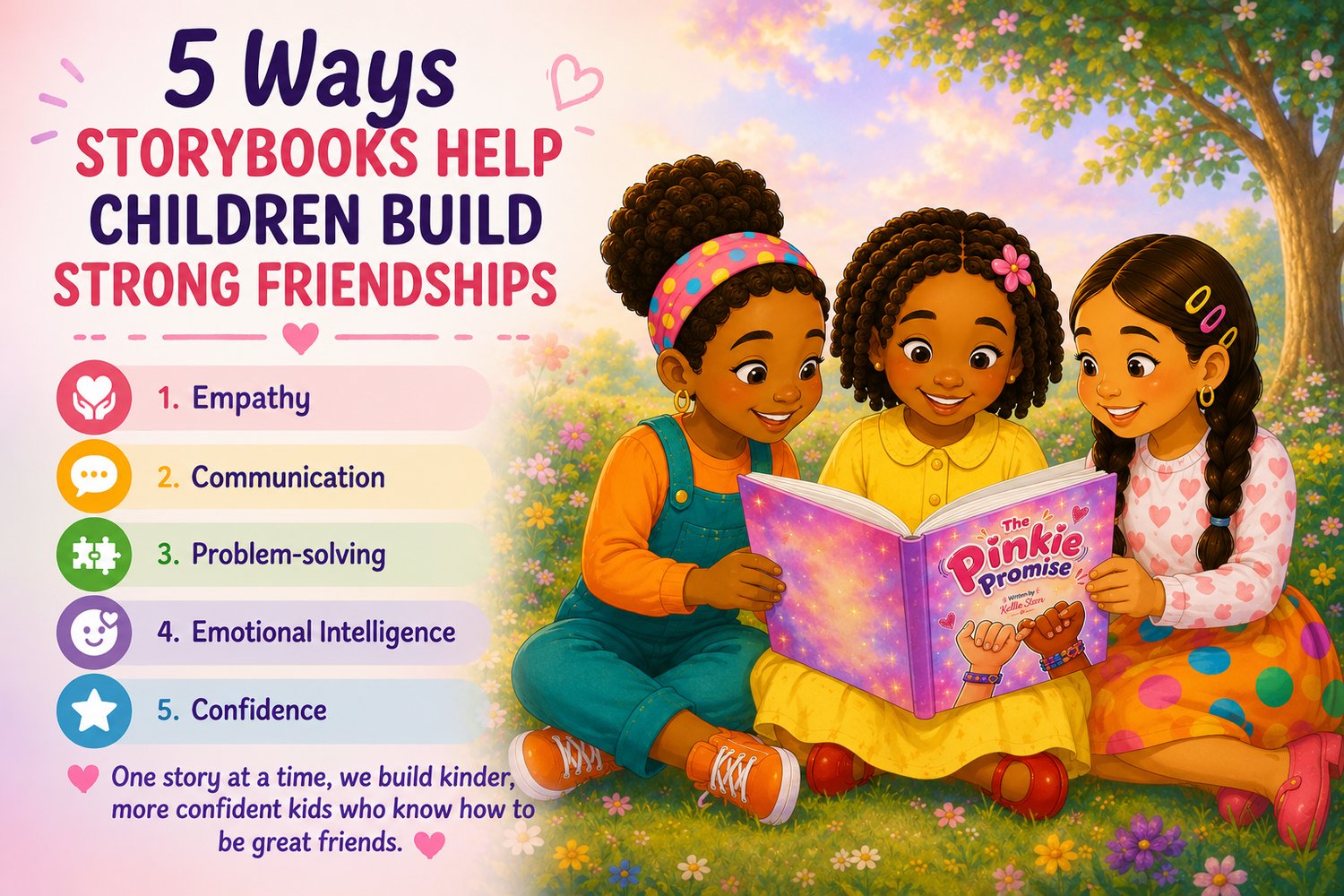
Here are five powerful ways storybooks help children build strong friendships.
1. Storybooks Teach Empathy
Empathy is the ability to understand and care about how someone else feels. When children read about characters who experience happiness, disappointment, fear, or excitement, they begin to imagine life from another person's perspective.
Instead of simply being told to "be kind," children see kindness in action. They witness characters making mistakes, learning from them, and discovering how their choices affect others.
These stories encourage children to ask questions such as:
- How do you think that character felt?
- What would you have done?
- How could you help someone in that situation?
Over time, these conversations help children become more thoughtful and compassionate friends.
2. Stories Strengthen Communication Skills
Good friendships depend on honest and respectful communication.
Storybooks introduce children to conversations between characters, helping them understand the importance of listening, speaking kindly, apologising, and expressing feelings in healthy ways.
As children read dialogue aloud or discuss the story afterwards, they naturally practice vocabulary, active listening, and confidence in expressing themselves.
Many disagreements between children occur because they simply don't know how to explain how they feel. Books provide excellent examples of positive communication that can be imitated in everyday life.
3. Storybooks Encourage Problem-Solving
Every great story has a challenge.
Characters may disagree, misunderstand one another, or face difficult situations together. Watching them work through these problems teaches children that conflicts are a normal part of friendship and that they can be solved with patience, honesty, and teamwork.
Instead of giving up when something goes wrong, children begin to understand that every problem has possible solutions.
These lessons often transfer naturally into playground interactions, classroom activities, and family life.
4. Books Help Build Emotional Intelligence
Children experience many emotions, but they don't always have the words to describe them.
Storybooks help children recognise emotions such as sadness, frustration, excitement, jealousy, embarrassment, forgiveness, and joy.
When young readers identify these feelings in characters, they become better at recognising them in themselves and in others.
This growing emotional awareness helps children:
- Manage their feelings more effectively.
- Respond kindly to others.
- Handle disagreements calmly.
- Build healthier, longer-lasting friendships.
Emotional intelligence is one of the greatest gifts reading can provide.
5. Stories Build Confidence
Confident children are often more willing to introduce themselves, include others, and stand up for what is right.
As children watch storybook characters overcome fears, solve problems, and grow through challenges, they begin believing they can do the same.
Books remind children that nobody is perfect. Everyone makes mistakes, and everyone has opportunities to learn, grow, and become a better friend.
This confidence encourages children to build positive relationships and approach new friendships with kindness and courage.
A Story That Celebrates Friendship
One story that beautifully explores these lessons is The Pinkie Promise by Kellie Starr.
The Pinkie Promise tells the story of two close friends whose friendship is tested when one chooses to attend a birthday party instead of their planned day together. Through misunderstandings, forgiveness, and the welcome of a new friend, the girls discover what true friendship really means.
Feelings are hurt, misunderstandings grow, and the friends must learn important lessons about honesty, forgiveness, empathy, and welcoming others.
Rather than focusing on perfection, the story reminds children that true friendship grows stronger through kindness, understanding, and second chances.
It offers young readers meaningful opportunities to talk about emotions, communication, and the importance of treating others with respect.
Reading Together Creates Lasting Lessons
The time spent reading with a child is far more than improving literacy. Every story is an opportunity to teach values that shape the kind of friend a child becomes.
By choosing books that celebrate kindness, empathy, communication, confidence, and problem-solving, you're helping children build skills that will benefit them throughout their lives.
One story at a time, we can help raise caring, thoughtful, and confident children who know how to build lasting friendships.
Happy reading!
✨Kellie Starr
Children's Author