
Empathy is one of the greatest gifts we can give a child. It is the ability to understand another person's feelings, show compassion, and respond with kindness. While empathy develops through everyday experiences, one of the most enjoyable ways to nurture it is through storybooks.
When children step into the world of a story, they see life through someone else's eyes. They experience different emotions, challenges, and perspectives, helping them become more understanding and caring in their own lives.
Here are five ways stories help children build empathy.
1. Stories Help Children See Different Perspectives
Every story introduces children to characters with unique personalities, feelings, and experiences. As they follow each character's journey, they begin to understand that everyone thinks and feels differently.
This helps children realise that their own point of view is not the only one that matters.
After reading together, ask questions like:
- How do you think that character felt?
- Why do you think they reacted that way?
- What would you have done?
Simple conversations like these encourage children to think beyond themselves.
2. Books Give Feelings Names
Young children often experience big emotions without knowing how to describe them.
Storybooks introduce emotions such as:
- Happiness
- Excitement
- Disappointment
- Jealousy
- Loneliness
- Fear
- Pride
When children can identify emotions in story characters, they become better at recognising those same feelings in themselves and in others.
This emotional awareness is the foundation of empathy.
3. Stories Show the Impact of Kindness
Many children's books demonstrate how even small acts of kindness can make a big difference.
Whether a character shares a toy, offers encouragement, forgives a mistake, or includes someone who feels left out, children begin to understand how their own actions affect the people around them.
Rather than simply telling children to "be kind," stories allow them to see kindness in action.
4. Reading Encourages Meaningful Conversations
One of the greatest benefits of reading together is the discussion that follows.
Parents and teachers can use stories to talk about:
- Making good choices
- Respecting others
- Solving disagreements
- Including new friends
- Saying sorry
- Showing forgiveness
These conversations help children connect what they read with situations they experience every day at home, at school, and on the playground.
5. Stories Help Children Become Better Friends
Empathy is at the heart of every healthy friendship.
Children who understand how others feel are more likely to:
- Listen carefully.
- Share willingly.
- Include others.
- Resolve conflicts peacefully.
- Offer encouragement.
- Show compassion.
Storybooks provide children with positive examples they can follow, helping them become thoughtful, caring friends.
A Story That Encourages Empathy
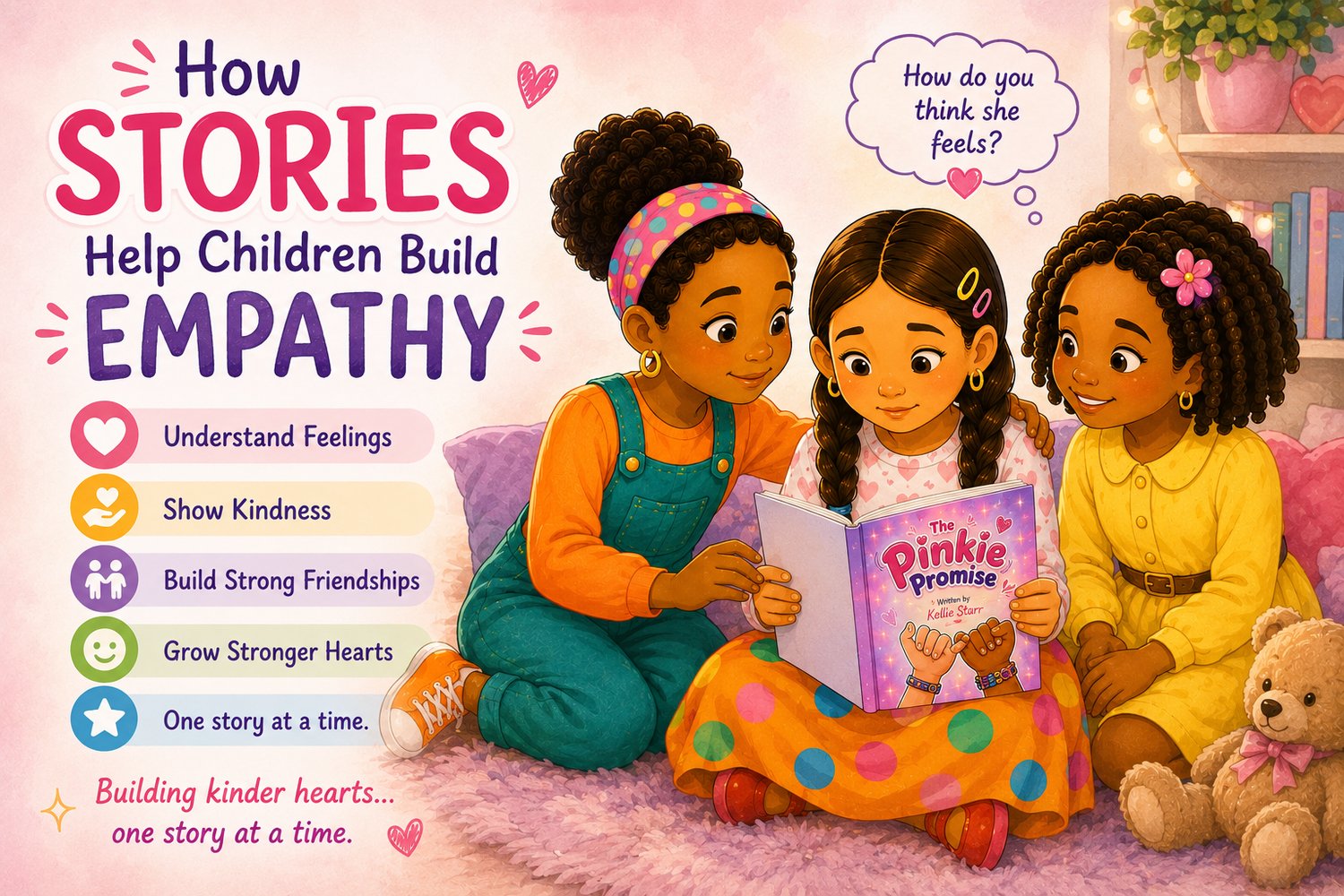
One book that gently explores empathy is The Pinkie Promise by Kellie Starr.
The story begins with two close friends who always look forward to spending time together. When one chooses to attend a birthday party instead of their planned day together, hurt feelings and misunderstandings follow. As the story unfolds and a new friendship begins, the girls learn valuable lessons about understanding one another's feelings, communicating honestly, forgiving mistakes, and welcoming others with kindness.
It reminds young readers that empathy is not just about feeling sorry for someone. It is about listening, understanding, and choosing kindness even when emotions are difficult.
Growing Kind Hearts, One Story at a Time
Every story a child reads is an opportunity to grow.
Books entertain, educate, and inspire, but they also help children understand the people around them. As children learn to recognise emotions, appreciate different perspectives, and respond with kindness, they develop empathy that will guide them throughout their lives.
The next time you open a storybook with a child, remember that you're doing more than sharing a story. You're helping shape a compassionate, thoughtful person who understands the value of kindness and friendship.