
FTC Disclosure: This post contains Amazon affiliate links. If you click and buy, I may earn a small commission at no extra cost to you. (Affiliate link)
🥇 Editor’s Pick (AI Book)
A beginner-friendly guide that explains artificial intelligence in plain language — perfect for understanding machine learning, ethics, and the future of intelligent systems.
👉 Explore the Editor’s Pick AI Book on Amazon
Artificial intelligence isn’t just technology — it’s a new way of thinking, learning, and shaping the future.
Explore the Mind of Artificial Intelligence.
Artificial intelligence is no longer a distant future — it is becoming the operating system of modern life. From the way we learn and work to how businesses innovate and careers evolve, AI is quietly reshaping the world at a speed few people fully understand.
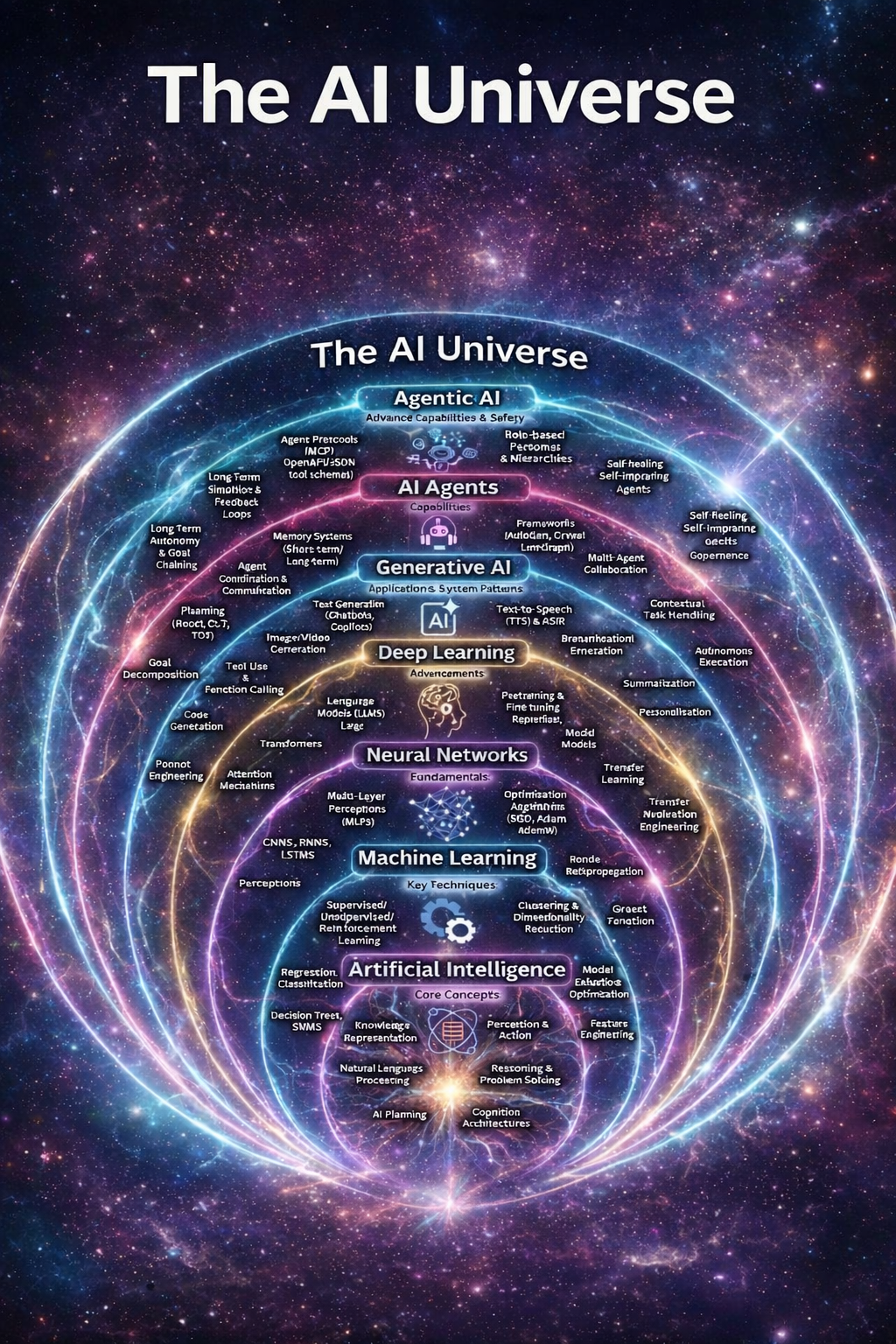
But artificial intelligence is not a single technology. It is a layered ecosystem of machine learning, neural networks, deep learning, generative models, and emerging AI agents — each building on the other to create systems that can learn, adapt, and collaborate with humans. Understanding these layers is quickly becoming one of the most valuable skills of the decade.
As AI tools become more powerful and accessible, the real question is no longer whether AI will change industries — it’s who will know how to use it, who will adapt, and who will be left behind. The future belongs to those who understand how artificial intelligence works, how it’s evolving, and how it can be applied to real-world skills and careers.
In this guide, we explore the major trends shaping artificial intelligence in 2026 and beyond — from AI literacy and machine learning to human-AI collaboration, career-proof skills, and the tools transforming the way we learn and work. Whether you’re a student, professional, entrepreneur, or lifelong learner, this breakdown will help you understand where AI is headed — and how to stay ahead of it.
--------------------------------------------------
I. THE RISE OF AI LITERACY AS A CORE COMPETENCY
Digital literacy once meant understanding how to use computers and navigate the internet. In the current decade, AI literacy has become the next essential layer of knowledge. Individuals who understand the logic behind artificial intelligence—how models learn, how algorithms shape outcomes, and how data drives prediction—are better positioned to navigate modern systems of power, information, and opportunity.
AI literacy is no longer limited to engineers. Professionals in law, education, finance, marketing, healthcare, and entrepreneurship increasingly encounter AI-driven systems. Understanding the fundamentals of artificial intelligence enables individuals to interpret automated decisions, recognize bias, and engage critically with emerging technologies.
Recommended Resource:
👉AI Essentials for Beginners
Strategic Value:
This work provides a rare combination of conceptual clarity and accessibility. It translates technical frameworks into language suitable for non-specialists while maintaining intellectual depth.
--------------------------------------------------
II. MACHINE LEARNING AS THE ENGINE OF MODERN INTELLIGENCE
Machine learning is the operational core of artificial intelligence. Unlike traditional software systems, machine learning models improve through exposure to data, enabling adaptive behavior and predictive capability. From recommendation systems and fraud detection to autonomous vehicles and medical diagnostics, machine learning has become ubiquitous.
As organizations increasingly rely on data-driven systems, machine learning knowledge has expanded beyond technical roles. Executives, analysts, designers, and policymakers benefit from understanding how algorithms infer patterns and generate predictions.
Recommended Resource:
👉 Hands-On Machine Learning
Strategic Value:
This advanced guide bridges theoretical foundations with real-world application. It equips readers with practical insight into neural networks, deep learning architectures, and modern AI frameworks.
--------------------------------------------------
III. THE EVOLUTION OF WORK: HUMAN INTELLIGENCE AND MACHINE CAPABILITY
Public discourse often frames artificial intelligence as a replacement for human labor. In reality, the more consequential transformation lies in collaboration between humans and machines. AI systems excel at computation, pattern recognition, and scale; humans excel at interpretation, ethics, creativity, and contextual judgment.
The future workforce will not be divided between humans and machines, but between individuals who understand AI and those who do not. Roles emphasizing strategic thinking, emotional intelligence, and interdisciplinary knowledge will expand, while repetitive tasks will increasingly be automated.
Recommended Resource:
👉 The Coming Wave: AI, Power, and Our Future
Strategic Value:
This resource identifies the competencies that distinguish resilient professionals in an AI-driven economy, including adaptability, digital reasoning, and systems thinking.
--------------------------------------------------
IV. IMMERSIVE INTELLIGENCE: AI AND THE RISE OF EXPERIENTIAL LEARNING
Artificial intelligence increasingly converges with immersive technologies such as virtual and augmented reality. These systems enable environments in which learners interact with complex concepts in spatial, simulated contexts. Medical training, engineering design, and behavioral research increasingly rely on AI-enhanced simulations.
Immersive intelligence represents a shift from passive consumption of information to embodied learning, where users engage with knowledge through experience.
Recommended Resource:
👉 Virtual Reality Learning Technology (VR Headsets and Educational Platforms)
Strategic Value:
Immersive technologies transform abstract concepts into tangible experiences, accelerating comprehension and engagement.
--------------------------------------------------
V. HUMAN CAPABILITIES IN THE AGE OF AUTOMATION
As machines acquire cognitive functions, human capabilities become more valuable rather than obsolete. Emotional intelligence, ethical reasoning, narrative construction, and interpersonal communication are qualities that resist automation. These attributes increasingly define leadership and innovation in the AI era.
Rather than competing with machines, individuals must cultivate uniquely human forms of intelligence that complement computational systems.
Recommended Resource:
👉 The Age of AI: And Our Human Future
Strategic Value:
This body of work emphasizes the enduring importance of human cognition in a technologically saturated environment.
--------------------------------------------------
VI. THE NEXT FRONTIER: ETHICS, AGENCY, AND THE QUESTION OF MACHINE CONSCIOUSNESS
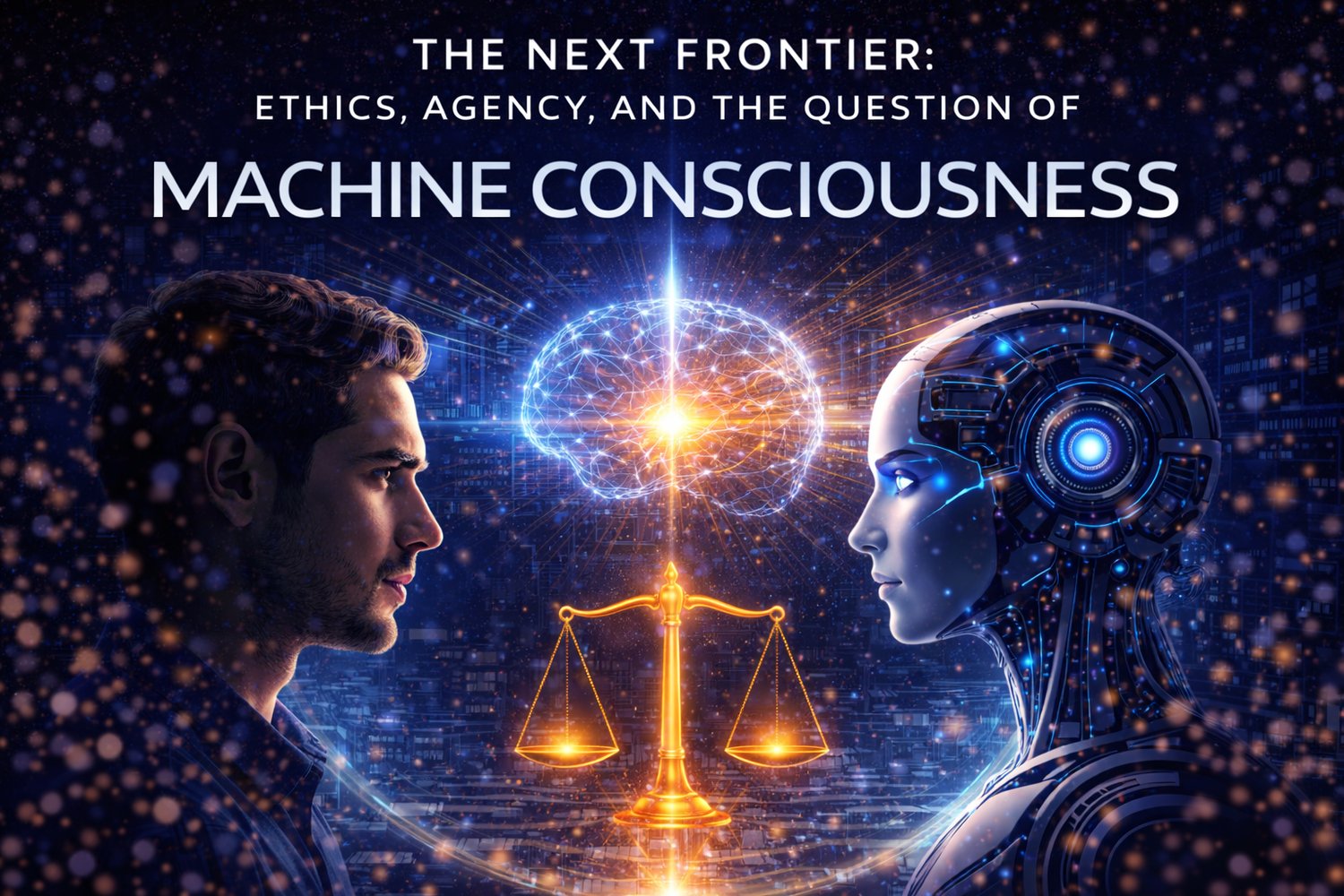
As artificial intelligence systems grow more autonomous, ethical and philosophical questions emerge. Issues of bias, accountability, transparency, and existential risk increasingly shape global debates. Beyond technical considerations, AI challenges fundamental assumptions about intelligence, agency, and human identity.
Understanding these debates is essential for anyone seeking to grasp the deeper implications of artificial intelligence beyond immediate applications.
Recommended Resource:
👉 AI Ethics and Future Technology Studies
--------------------------------------------------
CONCLUSION: TOWARD AN INTELLIGENT FUTURE