

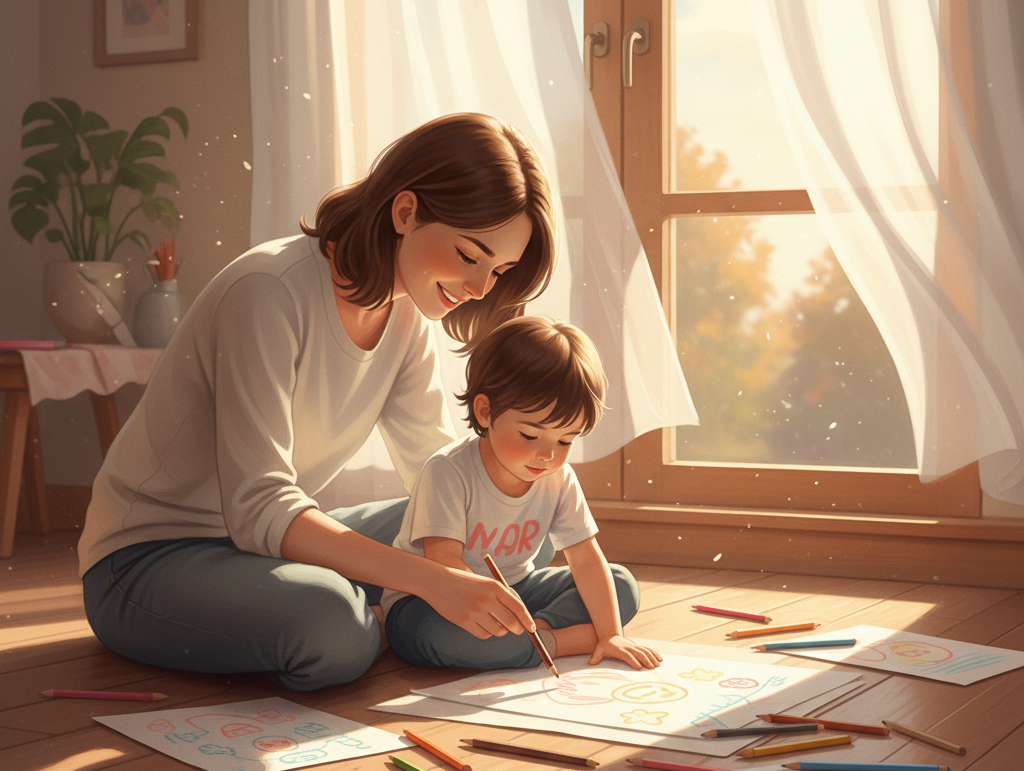
A small hand reaches for yours, but your phone vibrates at the same moment. You hesitate — just for a second — and the moment slips away. Modern parenting is filled with these tiny trade-offs, where urgency wins over presence. But childhood doesn’t move at the speed of notifications. It unfolds in moments of waiting, wondering, and wandering — and that’s where its magic lives.
In the rush to raise capable children, we often forget that time itself is a teacher. When life moves too fast, children lose the chance to notice the world and to understand themselves within it. Studies from The University of Cambridge highlight that children who experience slower, more mindful routines show stronger emotional regulation and deeper creative thinking. Slowness, it turns out, isn’t laziness — it’s nourishment.
Parenting in the digital age often feels like a race: milestones to hit, activities to join, skills to master. But connection doesn’t grow in a schedule — it grows in stillness. Sitting together on the floor, letting your child tell a story that goes nowhere, watching the clouds pass — these are not wasted minutes; they are memory in progress. The slower we move, the more room we give for love to settle.
There is also science behind this softness. Psychologists describe how unhurried time allows the brain’s stress circuits to rest, lowering cortisol and building resilience. When parents slow down, children mirror that calm. They learn patience, empathy, and the art of waiting — traits that prepare them far better for life than constant productivity ever could.
But slowing down is not easy. It often feels uncomfortable, especially in a world that rewards speed and multitasking. Parents worry that stillness means missed opportunities. Yet what children remember years later is rarely what we rushed to achieve — it’s who was beside them when time felt slow. The smell of pancakes on Sunday morning, a walk in the rain, or laughter before bedtime — these are the anchors of belonging.
Embracing slow parenting isn’t about doing less, but about doing with intention. It’s choosing depth over pace, and presence over perfection. The world outside can keep spinning fast; what matters is the small universe we build at home, where children can breathe and feel loved without condition.
When we give children the gift of our time — not just our hours, but our attention — we teach them that love doesn’t hurry. It listens, it waits, it stays. And in that stillness, family becomes not something we manage, but something we truly live.
Slow down today. Turn a routine moment into a shared one — make eye contact, listen, laugh. Let time stretch a little longer between you and your child. Because in parenting, the moments that last are the ones we don’t rush through.
Comments ()