

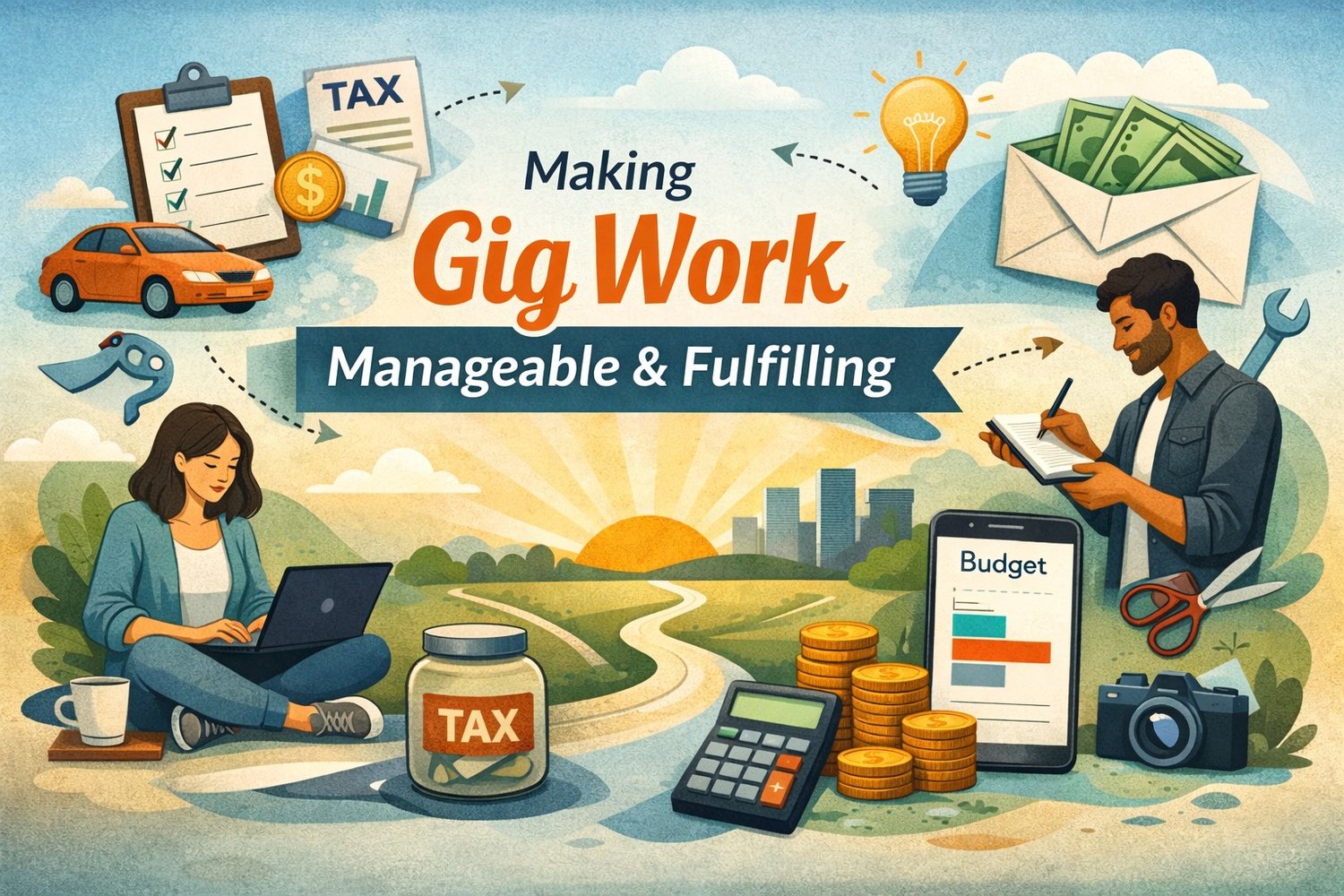
Gig work has become one of the most misunderstood parts of today’s economy.
For some people, it’s framed as a last resort.
For others, it’s glamorized as “freedom” without acknowledging the instability underneath.
And for many, it’s something they already rely on—without the tools or guidance to make it sustainable.
The truth lies somewhere in between.
Gig work itself isn’t inherently chaotic or unprofitable. What makes it difficult is that most people are expected to navigate it alone, without systems, without clarity, and without support that reflects real life.
What Gig Work Actually Is
At its core, gig work is simply exchanging a skill, service, or resource for income—outside of a traditional salaried role.
That can look like:
- Freelance or contract work
- On-demand services
- Creative projects
- Consulting, tutoring, caregiving, or digital services
- Task-based or project-based income
The issue isn’t that gig work is informal.
The issue is that it’s rarely intentional.
Many people enter gig work reactively—because bills are due, hours were cut, or opportunities feel limited. Without a clear connection between skills, interests, capacity, and financial goals, gig work can quickly feel exhausting instead of empowering.
Matching Skills to Gigs That Actually Fit Your Life
One of the biggest mistakes people make with gig work is choosing gigs based only on availability or trends.
A better starting point is asking:
- What skills do I already use in my daily life?
- What do people already ask me for help with?
- What problems do I understand deeply because I live them?
Sustainable gig work sits at the intersection of:
- Skills you can repeat
- Interests you can tolerate or enjoy
- Demand that exists without constant self-promotion
- Capacity that fits your real schedule and energy
When gigs align with who you already are, they stop feeling like a second job and start feeling like an extension of your life.
Why Gig Work Comes with Real Challenges
It’s important to name the difficulties honestly—without shaming people or dismissing their experiences.
Some of the most common challenges include:
Income volatility
Gig income isn’t predictable. One month can feel abundant, the next stressful. This makes budgeting emotionally and practically difficult.
Tax burden shock
Many gig workers don’t realize they’re responsible for setting aside their own taxes. Without guidance, tax season can feel punitive instead of manageable.
Hidden costs
Gas, software, tools, equipment, maintenance, fees—these costs quietly eat into profit if they’re not tracked intentionally.
Mental load
When you’re the worker, the manager, the accountant, and the planner, decision fatigue builds fast.
These challenges don’t exist because gig workers are irresponsible.
They exist because the systems around gig work weren’t designed for people—they were designed for platforms.
Making Gig Work More Manageable (Without Hustle Culture)
The solution to gig work stress isn’t “work harder” or “stack more gigs.”
It’s structure.
Structure looks like:
- Separating personal and gig finances
- Planning for low-income months during higher-income ones
- Tracking true profit—not just deposits
- Setting realistic income floors instead of chasing highs
- Budgeting for taxes before they become emergencies
When structure is present, gig work stops feeling fragile.
It becomes predictable enough to plan around—and flexible enough to support real life.
This is where gig work becomes not just survivable, but fulfilling.
A Better Way Is Being Built
Many people don’t fail at gig work—they’re simply never given tools designed for how gig income actually behaves.
That’s why something new is being created: GigWise.
Not as a hype machine.
Not as a promise of overnight success.
But as a system that helps people:
- Identify gigs aligned with their real skills and lives
- Understand income patterns without shame
- Prepare for taxes and expenses proactively
- Build clarity instead of chaos
Gig work doesn’t need to be romanticized—or dismissed.
It needs to be respected enough to be supported properly.
When people are given structure, transparency, and guidance, gig work becomes what it was always meant to be: a tool—not a trap.