

Independent creatives are often given fragmented advice.
Build your audience. Improve your craft. Network more. Get publicity. Attend industry events. Post consistently. Find a mentor. Invest in your brand.
None of that advice is inherently wrong.
The problem is that after more than 20 years working across public relations, media, publishing, music, events, and entrepreneurship, I've watched people do several of those things well and still struggle to create movement.
Usually, something is missing.
I've worked with talented people who had development but no visibility. I've encountered visible people who weren't prepared for the opportunities visibility created. I've watched well-connected people repeatedly enter rooms without a clear strategy for what to do once they arrived. And I've seen talented independent professionals trying to build everything alone simply because they didn't have access to the people, information, or resources that could help them move differently.
That's why I don't view growth as one thing.
Independent growth requires an ecosystem.
For The INDIE Exchange, I've distilled that ecosystem into four pillars:
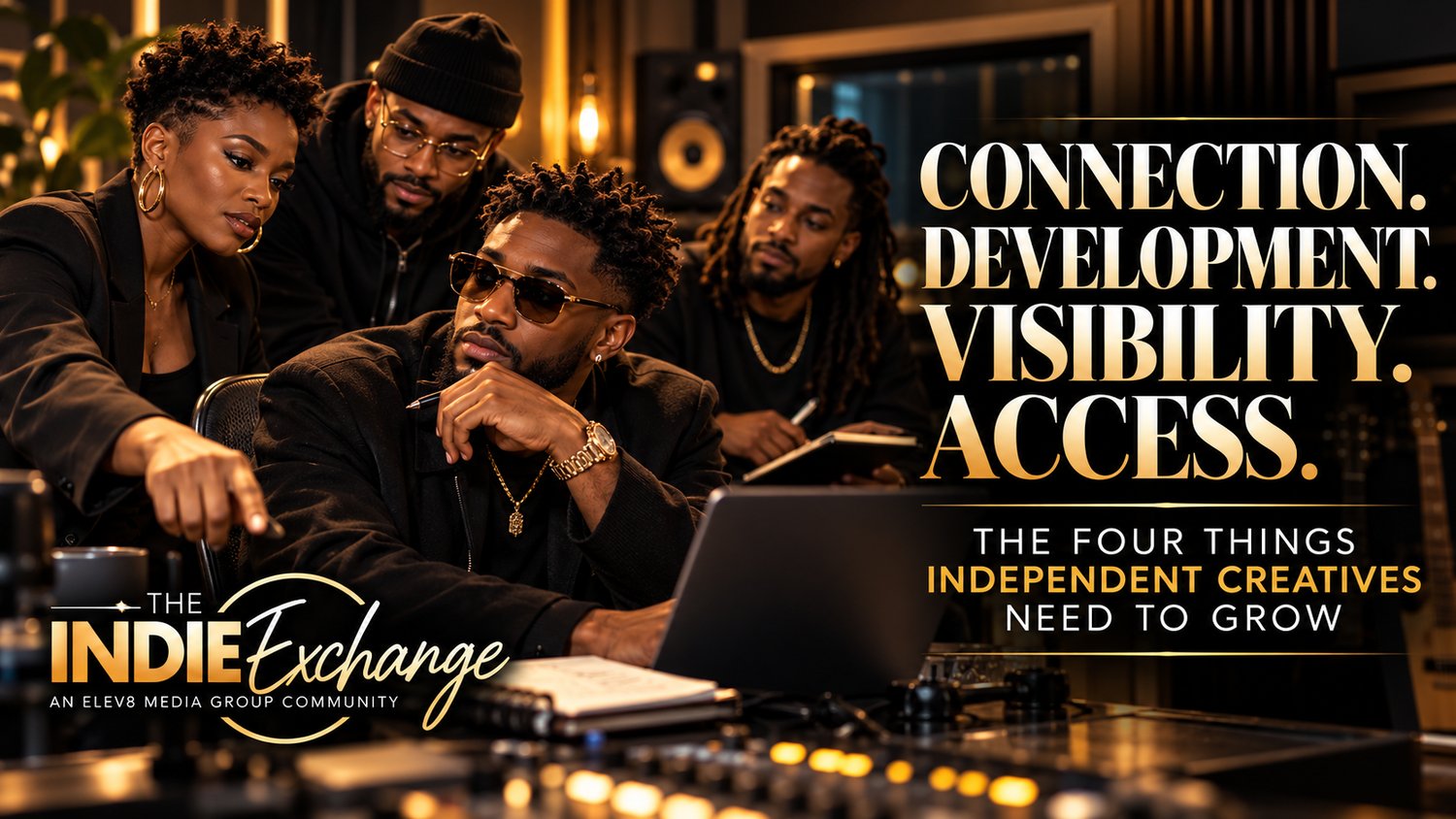
Connection. Development. Visibility. Access.
Not because they sound good together.
Because I've watched what happens when one of them is missing.
CONNECTION: WHO KNOWS WHAT YOU DO?
Connection isn't collecting contacts.
I've accumulated plenty of business cards over the years. A contact sitting in your phone isn't automatically a relationship, and following someone online doesn't mean you're connected to them professionally.
The question I ask is more specific:
Who knows what you do well enough to say your name when you're not in the room?
That's a different kind of connection.
If you're an artist, who knows what kind of music you make and where you fit? If you're a photographer, who understands your visual specialty? If you're an entrepreneur, who understands the problem your business solves? If you're a media professional, who knows your expertise well enough to call when they need it?
Strong professional relationships create circulation. Information circulates. Referrals circulate. Introductions circulate. Opportunities circulate.
That doesn't happen because you collected the most contacts.
It happens because you've built enough relational equity for people to know what you bring to the table.
DEVELOPMENT: CAN YOUR INFRASTRUCTURE HANDLE WHAT YOU'RE ASKING FOR?
This is where I see people get ahead of themselves.
Everybody wants the opportunity.
Fewer people ask whether they're prepared to support it.
I've seen creatives pursue publicity without having usable media assets. I've seen people want interviews without knowing how to articulate their story. I've seen businesses invest in visibility before fixing the customer experience people would encounter once they arrived.
That's a development problem. Development isn't only becoming better at your craft. It includes strengthening the infrastructure around your craft.
Your messaging.
Your materials.
Your business systems.
Your media readiness.
Your communication.
Your ability to deliver.
Your understanding of your industry.
Visibility will expose whatever development failed to address.
If 50 people discover a broken system, you have a problem.
If 50,000 people discover it, you have a bigger problem.
So before asking, “How can I get more exposure?” I often want to know:
What exactly are we exposing them to?
Development prepares the answer.
VISIBILITY: CAN THE RIGHT PEOPLE FIND ENOUGH TO SAY YES?
I've spent a significant part of my career in publicity, so I believe deeply in visibility.
But visibility isn't simply posting more.
And it certainly isn't appearing everywhere for no strategic reason.
Useful visibility creates discoverability, credibility, context, and recall.
If I pitch an artist to an editor and the editor searches their name, what reinforces my pitch?
If someone hears about your business and looks you up, does what they find support the recommendation?
If an opportunity appears six months after your release, is there still enough digital evidence for someone to understand what you created?
That is why I distinguish visibility from noise.
The objective isn't to be everywhere. The objective is to be findable, understandable, credible, and memorable where it matters.
Sometimes that means media coverage.
Sometimes it means a strong website.
Sometimes it means search visibility.
Sometimes it means consistent content.
Sometimes it means being present in the right industry conversation.
Strategy determines which one you need.
ACCESS: ARE YOU READY WHEN THE DOOR OPENS?
Access gets romanticized.
People think access means getting somebody's phone number, entering a VIP room, meeting an executive, getting invited backstage, or knowing somebody influential.
That's proximity.
Access becomes valuable when proximity meets readiness.
I've watched people receive the introduction they said they needed and do absolutely nothing with it.
No follow-up. No materials. No clear ask.
No understanding of why the connection mattered.
I've also watched someone receive one introduction, handle it professionally, nurture the relationship, and eventually gain access to an entirely different network of opportunities.
The difference wasn't luck.
They knew what to do with the door once it opened.
That's why access comes after development in this framework.
I don't simply want independent creatives getting closer to opportunities.
I want them equipped to recognize, evaluate, and respond to those opportunities when they arrive.
HERE'S WHERE THE FOUR WORK TOGETHER
This is the part that matters most.
Connection without development can introduce you before you're ready.
Development without visibility can leave excellent work undiscovered.
Visibility without access can produce attention without meaningful movement.
Access without readiness can waste an opportunity you worked hard to receive.
But when the four begin working together, something changes.
You build relationships.
You strengthen what you're building.
You become easier to discover and understand.
And when opportunity appears, you're positioned to do something with it.
That is an ecosystem.
And for independent creatives, ecosystems matter because you don't have the machinery of a major label, large corporation, national agency, publishing conglomerate, or major media company automatically working behind you.
You have to build intelligently.
FROM THE PUBLISHER'S TABLE
This is exactly why The INDIE Exchange has four pillars instead of a random collection of benefits.
Connection. Development. Visibility. Access.
Each one solves a different problem. I've watched independent professionals encounter throughout my career. The goal isn't to create another membership people pay for and forget they joined.
The goal is to create an environment where relationships can form, knowledge can move, people can strengthen what they're building, visibility opportunities can be identified, and useful access can circulate.
Because independent doesn't mean unsupported. It means you have to become much more intentional about the ecosystem you build around your work. The INDIE Exchange is one place we're building that ecosystem.
Comments ()