
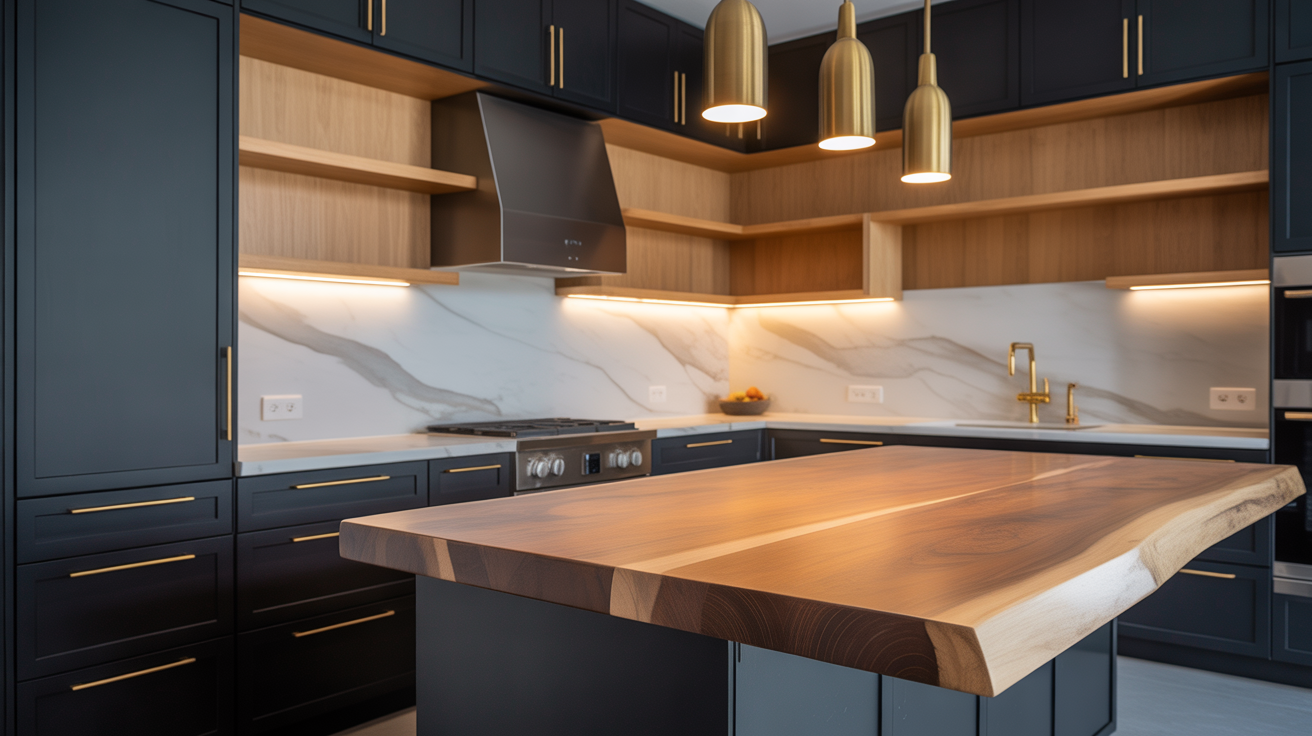
Black and wood kitchens look like they should be hard to pull off, but they're actually one of the more forgiving combinations out there. Here's what actually works — and what will make your kitchen feel like a cave.
1. Nail the Balance Between Black and Wood First
Before you pick a single cabinet or countertop, decide on your ratio. The golden rule most designers land on is roughly 60/40 or 70/30 — either more wood than black, or more black than wood, but never a straight 50/50 split. Equal amounts fight each other.
A darker-dominant kitchen (lots of black cabinetry, wood accents) reads as bold and moody. A wood-dominant kitchen with black hardware and fixtures reads as warm and grounded. Both work. What doesn't work is trying to do both equally and ending up with neither.
Start with your floor. If you've got warm oak or walnut flooring going in, lean into more black on the upper cabinets and let the floor carry the wood weight. If you're starting from scratch, you get to set this from the ground up.
2. Choose the Right Wood Tone — Warm vs. Cool Undertones Matter
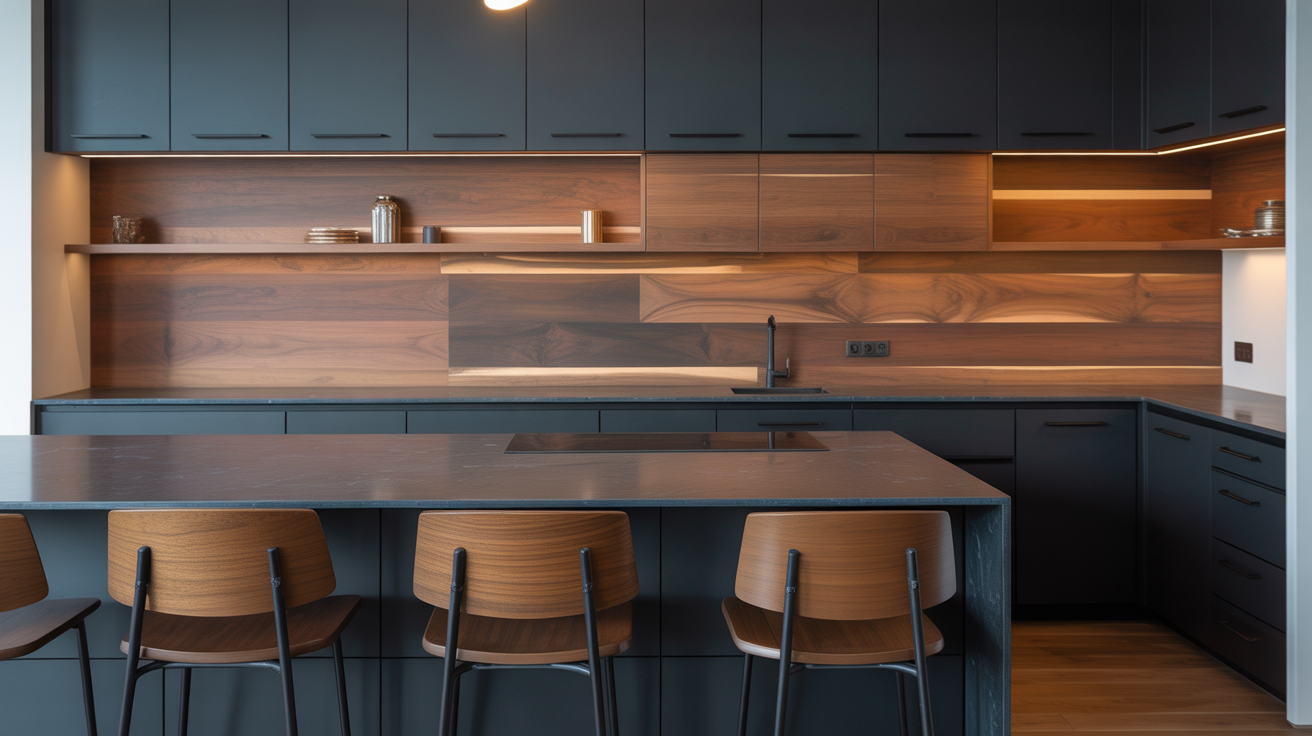
Not all wood plays nicely with black. Light, honey-toned pine next to matte black cabinetry can look like a showroom accident. The wood tone you pick sets the entire mood of the space.
Warm, mid-tone woods — walnut, oak, teak — are the most reliable partners for black. They have enough depth to hold their own without competing. Very light woods (bleached ash, whitewashed pine) can work, but they need careful handling or the contrast tips into high-contrast chaos rather than intentional design.
If you're going for a sleek, contemporary black and wood kitchen, cooler-toned woods like smoked oak or grey-washed timber help the palette feel cohesive rather than rustic. The goal is that the wood and black feel like they were chosen together — not that you had cabinets left over from a different project.
3. Pick Your Black Finish Wisely — Matte, Gloss, or Textured
This one surprises a lot of people. Black isn't just black. The finish changes the entire personality of the kitchen.
Matte black cabinetry absorbs light and creates that dramatic, editorial feel you see in design magazines. It's also the most forgiving finish in a real kitchen — it hides fingerprints, minor scratches, and cooking grease far better than gloss. If you have kids or you actually cook, matte is your friend.
Gloss black amplifies light and makes a smaller kitchen feel larger and more dynamic. It's stunning when it's clean. It looks like a crime scene when it's not. High-gloss black works best in kitchens where you're more likely to be entertaining than actually cooking — or where you're committed to wiping it down every single day.
Textured finishes — woodgrain-effect black laminates, for example — bridge the gap. They add depth without the maintenance commitment of gloss.
4. Use Open Shelving Strategically to Break Up the Dark
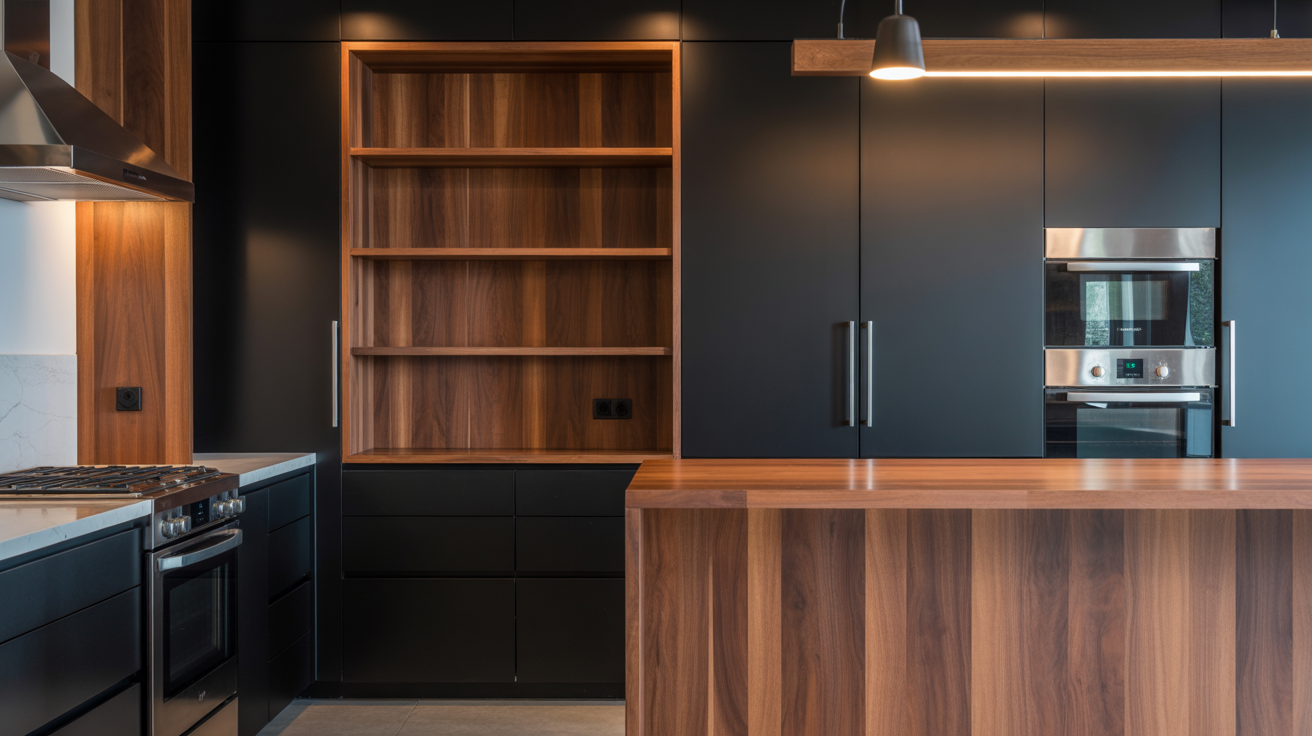
A fully black kitchen with no visual breaks feels oppressive pretty fast. Open wood shelving is one of the best solutions because it solves two problems at once: it lightens the visual weight and gives you somewhere to display things that add personality.
The key is treating open shelves as intentional, not just storage overflow. A row of mismatched mugs and leaning cutting boards doesn't reinforce the design — it undermines it. Use open shelving for things you'd actually want people to see: consistent ceramics, a few cookbooks, clean glassware.
Position open wood shelving between upper and lower black cabinets to create a deliberate layered effect. Floating shelves in walnut or oak against a black backsplash tile is one of the cleaner moves in black and wood kitchen design — low cost, high visual impact.
5. Get the Countertop Right — It Ties the Whole Room Together
The countertop is where black and wood kitchens most often go wrong. People default to white marble or quartz because it feels safe, but in a black and wood palette it often reads as disconnected — a third material competing for attention.
Your two best countertop options are: a black or very dark stone that extends the cabinetry, or a butcher block/wood surface that amplifies the warmth of the wood elements. Dark countertops (black granite, black quartz, charcoal concrete) create a sleek, continuous look. Wood countertops add texture and warmth, especially over lower black cabinets.
If you do go lighter, white stone, light grey quartz, make sure you're doing it as a deliberate contrast, not a default. A waterfall white marble island against black perimeter cabinets can be a strong statement. A white laminate counter that just happened to be available is a different thing entirely.
Want more ideas for getting the balance right? Evyve Homes has a full guide on designing black and wood kitchens, real room examples, style breakdowns, and a few product picks worth bookmarking. Check it out here.
6. Backsplash Options That Actually Work in This Palette
The backsplash is your chance to add texture, pattern, or material interest without committing to a major change. In a black and wood kitchen, you've got more options than you might think.
The safest bets:
- Large-format matte black tiles for a seamless, low-contrast extension of the cabinetry
- Warm-toned natural stone (travertine, sandstone, warm terracotta) to amplify the wood
- Unlacquered brass or bronze zellige tiles to add warmth and a handmade texture
- Exposed brick in darker tones if the rest of the space can handle the rustic note
What to avoid: very cool-toned subway tile in white or light grey. It breaks the warmth of the wood and makes the black feel even heavier.
The backsplash doesn't have to run floor to ceiling. A lower backsplash behind the hob with open shelving above is often a cleaner solution than tiling an entire wall.
7. Lighting Is Non-Negotiable in a Dark Kitchen
This is the most important practical point in this entire article. A black and wood kitchen with bad lighting is just a dark kitchen. You need to plan lighting at the design stage, not as an afterthought.
Layer your lighting. Under-cabinet task lighting is essential — it's where you prep food, and black
cabinetry blocks ambient light efficiently. Pendant lights over an island or peninsula add warmth and give the eye somewhere to land. A combination of warm-white bulbs (2700K–3000K) keeps the wood tones alive without the cold, clinical feel of daylight-spectrum lighting.
Natural light changes everything here. A black and wood kitchen in a space with large windows and southern exposure looks entirely different from the same scheme in a north-facing galley. If your kitchen is light-limited, consider going wood-heavy rather than black-heavy, and use black as an accent — hardware, fixtures, a single cabinet run — rather than the dominant element.
8. Hardware and Fixtures: Small Details, Big Impact
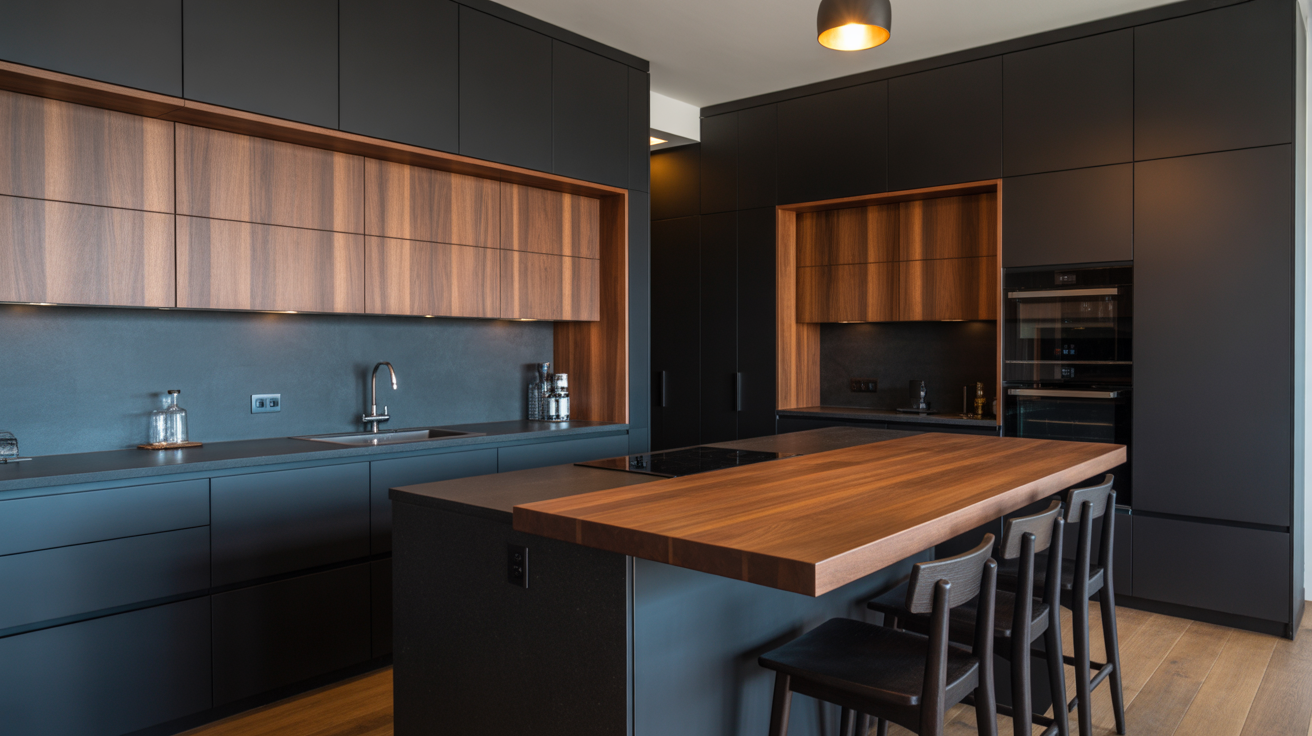
In a black and wood kitchen, hardware is where you get to be precise. The metal you choose either pulls the palette together or introduces a new element that competes with everything else.
Matte black hardware is the obvious safe choice, it disappears into black cabinetry and reinforces the palette on wood cabinets without drawing attention. It's clean, it works, and it's unlikely to date quickly.
Warm metals, unlacquered brass, brushed gold, aged bronze, are the more interesting option. Against matte black cabinetry, a brushed brass pull feels rich without being flashy. Against warm walnut, it amplifies the warmth. The combination of black, wood, and brass is one of the better-looking trios in kitchen design.
One thing: commit to a metal. Mixing brass fixtures with chrome handles and black hardware is a decision that will bother you every time you're standing at the sink.
9. Flooring That Grounds the Whole Room
The floor is the largest single surface in any kitchen and in a black and wood scheme, it's doing real work. Get this wrong and the whole design reads as unresolved.
Warm wood flooring — especially in a herringbone or wide plank format — is the most reliable anchor for a black and wood kitchen. It extends the warmth of the wood elements downward and prevents the black cabinetry from making the room feel top-heavy. Matching the floor closely to the wood in your cabinetry or shelving creates a cohesive, enveloping feel. Going slightly darker or lighter in the same family adds depth.
Concrete and stone floors (especially in warmer grey or sandy tones) also work well, particularly in more contemporary or industrial-leaning versions of the scheme. Cool, pale grey tiles are trickier — they can make the warmth of the wood feel like an accident.
What to avoid: very pale wood floors in a black-dominant kitchen. The contrast can feel stark rather than intentional, and lighter floors show everything.
10. Add Life With Plants, Ceramics, and Textiles
A black and wood kitchen done well looks intentional. But done without any softening elements, it can also look like nobody lives there. FYI: this is where a lot of otherwise well-designed kitchens fall flat.
A few well-chosen objects do more for the overall feel than any individual design decision. A trailing plant on a shelf, a ceramic bowl on the counter, a linen runner on the island — these things signal that the kitchen is actually used and loved, which is what separates a beautiful kitchen from a showroom mock-up.
Go for natural textures that reinforce the warmth of the wood: terracotta, linen, handmade ceramics in earthy tones. Avoid overly bright or plastic accessories that pull attention away from the palette. And keep the counter clear — in a dark kitchen, clutter reads twice as heavy as it does in a light one.
The Bottom Line
A black and wood kitchen is one of the more considered schemes you can go for — it rewards planning and punishes rushing. Get the ratio right first, choose your wood tone deliberately, layer your lighting properly, and pick one metal and stick with it. Do those four things and the rest of the decisions fall into place.
The best version of this kitchen doesn't look designed. It looks like it was always meant to be exactly that way. That's what you're aiming for.
If you're still figuring out your ratios, finishes, or which wood tone actually works with matte black — Evyve Homes breaks it all down with real examples and style direction. Worth a read before you commit to anything. See the full guide at Evyve Homes
Comments ()