
For Composers, Music Producers, and Content Creators
One of the most common questions in music licensing is whether creators should pursue exclusive or non-exclusive opportunities. Some composers focus entirely on exclusive libraries and publishers. Others prefer the flexibility of non-exclusive platforms that allow the same music to be licensed in multiple places. The reality is simple: Neither approach is inherently better.
Many working composers, producers, and sound designers use both strategies as part of a larger catalog plan. The key is understanding how each model works, where it excels, and how it fits into your long-term goals.
For some tracks, exclusive representation may provide access to specialized opportunities and targeted pitching. For others, non-exclusive distribution may offer broader exposure and greater flexibility.
Understanding the strengths and limitations of both approaches helps creators make more informed decisions about how their music is licensed and managed.
What Is Non-Exclusive Music Licensing? 🎹
Non-exclusive licensing allows a creator to license the same track through multiple libraries, marketplaces, clients, or opportunities simultaneously. In most cases, you retain ownership of the music and can continue distributing it elsewhere, depending on the agreement.
This model is widely used across the production music industry and creator-focused licensing platforms.
✅ Advantages
Flexibility
The same track can appear across multiple licensing channels, increasing exposure and opportunity.
Wider Reach
Music can be discovered by editors, filmmakers, and content creators across several platforms at once.
Catalog Growth
Non-exclusive licensing supports building large, diverse catalogs efficiently.
Greater Control
Creators typically retain more control over distribution and usage.
Market Testing 📊
Great for identifying which genres, moods, and styles perform best.
⚠️ Disadvantages
Increased Competition
Large libraries often contain thousands of competing tracks.
Reduced Exclusivity
Some buyers prefer music that is not widely available elsewhere.
Marketplace Saturation
Over-distribution can reduce perceived uniqueness.
Contract Variations
Not all “non-exclusive” deals are equal—always review terms carefully.
What Is Exclusive Music Licensing? 🎬
Exclusive licensing means a track or catalog is represented by a single company, publisher, or licensing entity for a defined period of time.
During that period, the music typically cannot be licensed elsewhere.This model is common in premium sync libraries, trailer music catalogs, advertising campaigns, and film/TV placements.
🚀 Advantages
Higher-Value Placements 💰
Exclusive libraries often target larger commercial sync opportunities.
Stronger Catalog Positioning
Selective curation can increase perceived quality and placement potential.
Dedicated Representation
Many companies actively pitch music to supervisors, editors, and agencies.
Less Internal Competition
Your track isn’t competing against duplicates within the same catalog.
⚠️ Disadvantages
Reduced Flexibility
Music is tied to one platform during the agreement period.
Long-Term Commitments
Some agreements last years.
Limited Control
Distribution and pitching decisions are handled by the library.
Risk of Inactivity
If the library isn’t active, your music may sit unused.
Why Many Professionals Use Both 🔁
A common misconception is that creators must choose one path permanently.
In reality, many successful composers use both exclusive and non-exclusive licensing as part of a broader strategy.
Different tracks serve different purposes:
- 🎬 Premium cinematic tracks → exclusive opportunities
- 🚨 Trailer music → specialized representation
- 🏢 Corporate / lifestyle music → non-exclusive libraries
- 📱 Creator content music → broad distribution
- 🎧 Experimental music → testing new markets
The real question is not: Exclusive or non-exclusive? It’s: What is the best licensing strategy for this specific track?
Evaluating music individually allows creators to maximize opportunity while staying flexible.
The Real Value of Organization 🗂️
As catalogs grow, organization becomes critical.
Creators working across both models need a system to track where music is submitted and licensed.
Without it, it becomes easy to:
- Submit exclusive tracks in multiple places ❌
- Lose contract details
- Miss renewal deadlines
- Create ownership conflicts
- Confuse alternate versions
What professionals track:
- Track titles
- ISRC codes
- Library placements
- Exclusive / non-exclusive status
- Contract dates
- Publishing info
- Placement history
- File locations
Treating your catalog like a professional asset prevents costly mistakes and improves long-term scalability.
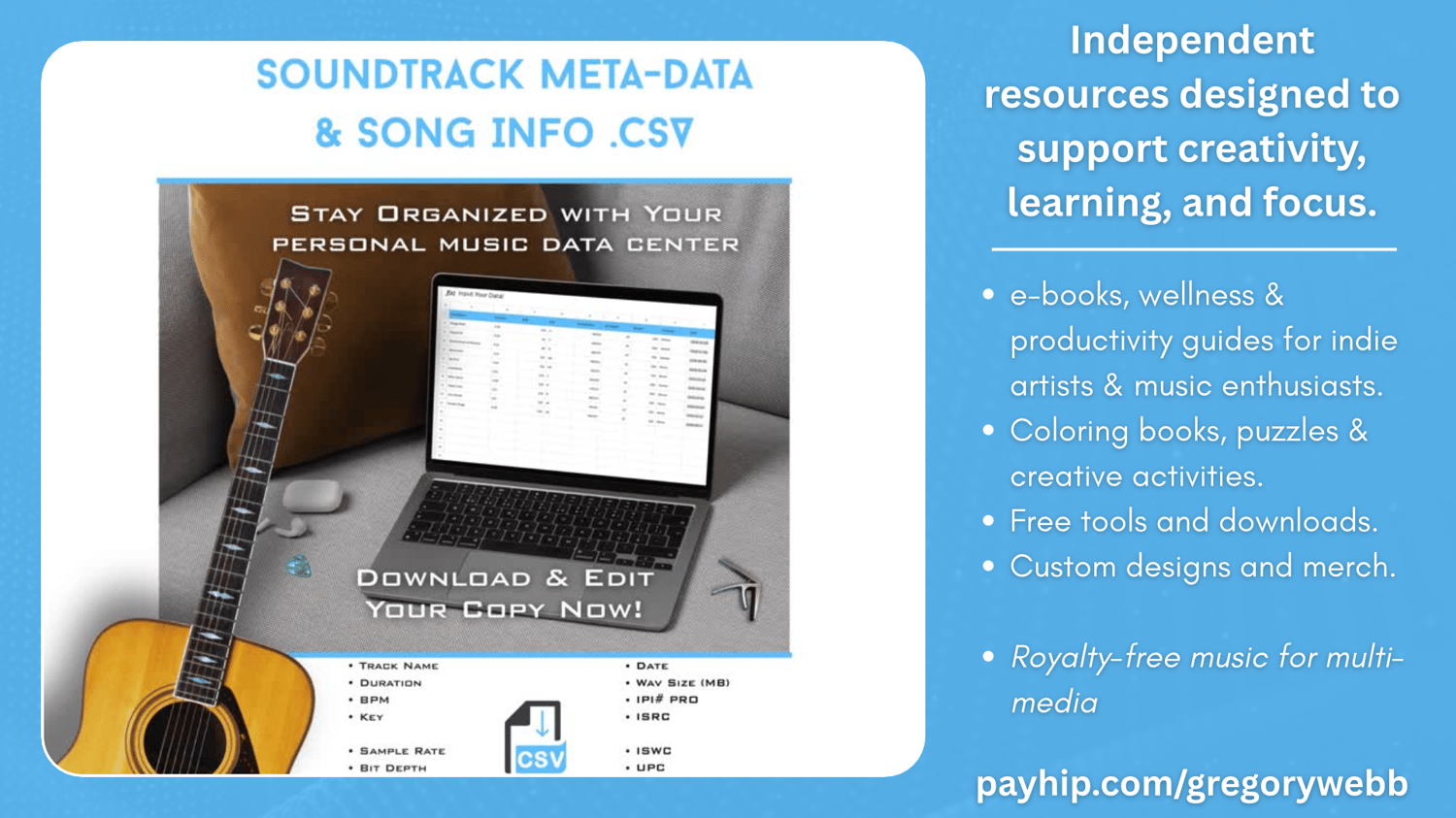
Stay organized with your Personal Music Data Center. This FREE downloadable, editable .CSV file is a comprehensive tool to track all essential metadata and song info. Keep your catalog sharp with fields for BPM, ISRC, IPI, key, sample rate, and more. Download and edit your copy now! Grab it HERE
Before Signing Any Agreement 📄
Every licensing agreement should be reviewed carefully.
Key areas to understand:
Ownership Rights
Who owns the music after signing?
Exclusivity Terms
Is it track-level, album-level, or catalog-wide exclusivity?
Contract Duration
How long does the agreement last?
Reversion Clauses
Can rights return to you later?
Publishing Splits
How is income divided?
Royalty Structure
How and when are payments made?
📌 No two agreements are the same. Always read the full contract.
This article is for educational purposes only and is not legal advice.
Common Mistakes New Creators Make ⚠️
- Ignoring metadata → music becomes hard to find
- Submitting unfinished tracks → lowers licensing potential
- Poor file organization → creates confusion and errors
- Prioritizing quantity over quality → weakens catalog value
- Signing contracts without understanding them → major long-term risk
Final Thoughts 🎯
Exclusive and non-exclusive licensing are not competing philosophies — they are tools.
Some tracks benefit from exclusive representation and targeted pitching. Others perform better through broader distribution.
Success in licensing is less about choosing one path and more about matching the right music to the right opportunity.
The most effective strategy is often not choosing one over the other, but knowing when to use both.
Before signing any agreement, always review the full terms and understand exactly what rights are being granted.
A well-organized catalog combined with informed decision-making creates long-term creative and financial opportunity.
🎼 Continue Learning About Music Licensing & Royalties
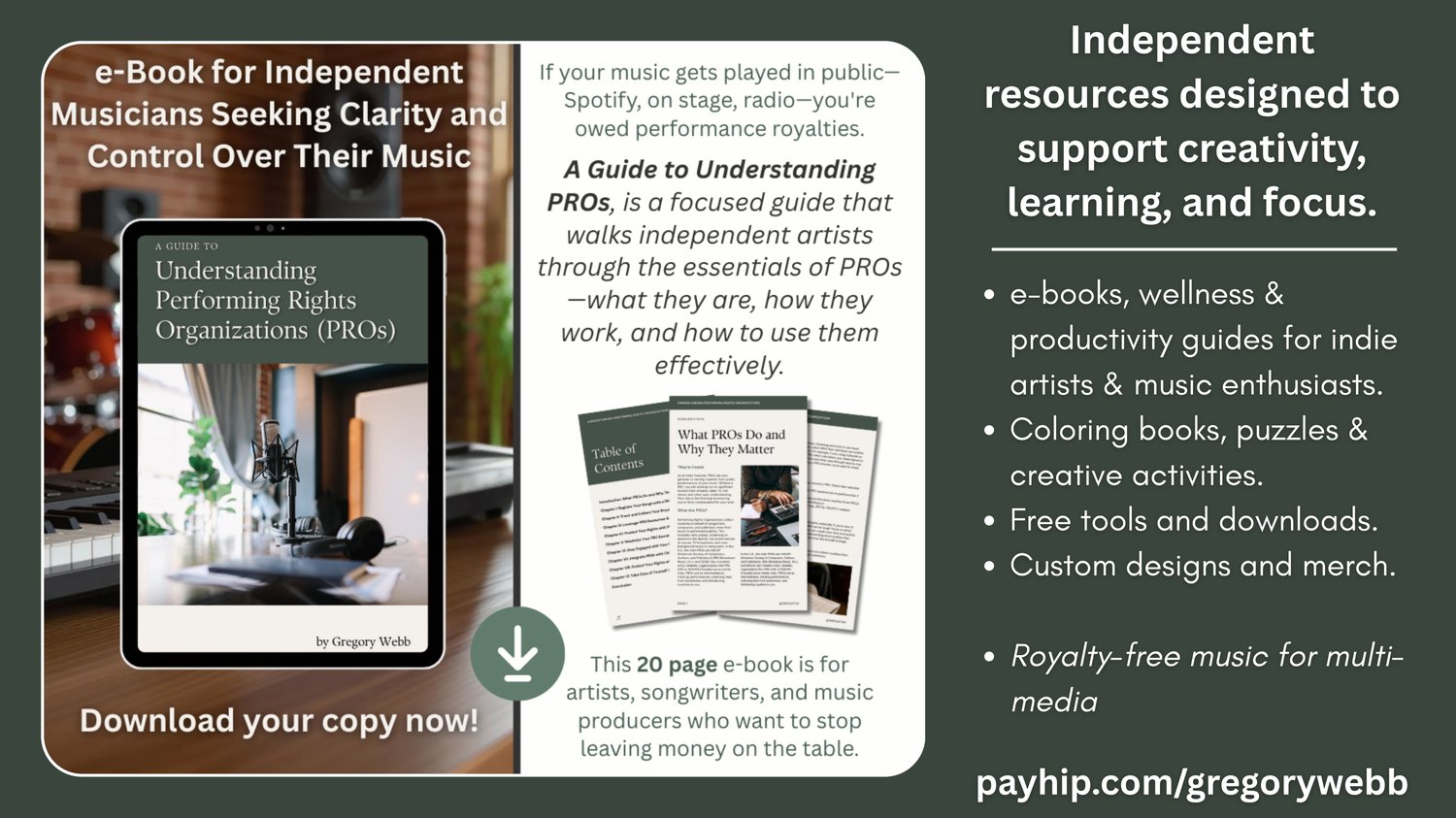
Understanding licensing is only part of the picture. To maximize income, creators should also understand how performance royalties work and how PROs (Performing Rights Organizations) collect and distribute them.
📘 A Guide to Understanding Performing Rights Organizations (PROs) explains:
- What PROs do
- How performance royalties are generated
- How royalty collection works
- Publishing vs performance income
- Common mistakes that cause lost royalties
- How to better manage your music rights
📖 Read it here: https://payhip.com/b/CwJQ3
🎵 Explore My Royalty-Free Music Library
Looking for music for your next project?
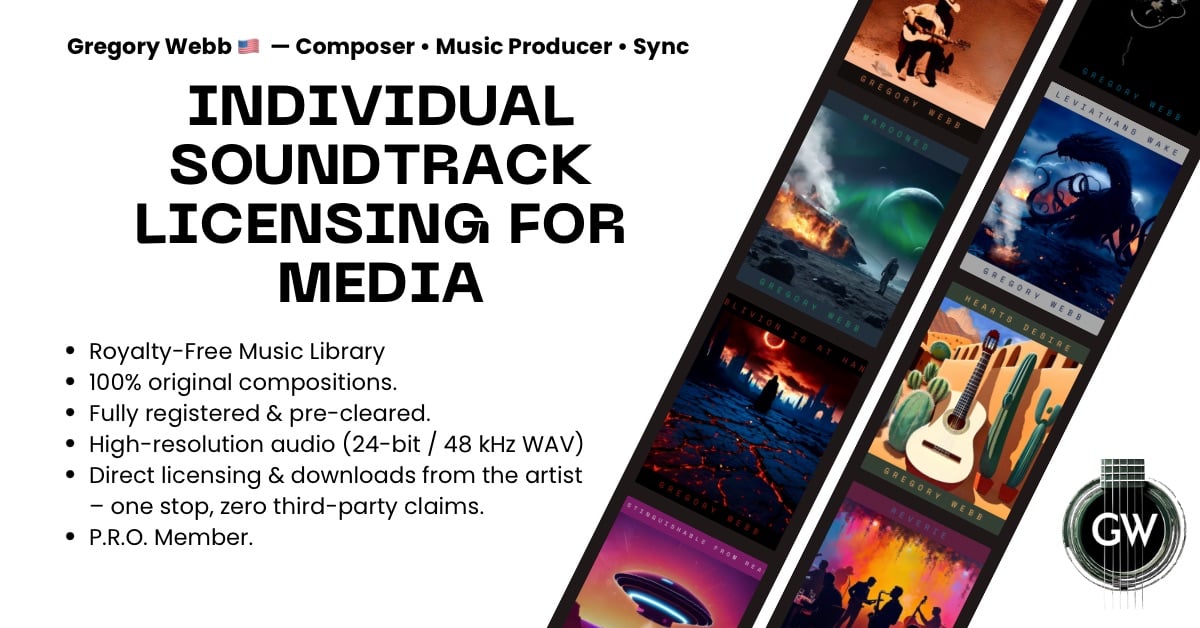
Browse a growing collection of original, pre-cleared music available for direct licensing.
Designed for filmmakers, editors, content creators, and media producers.
Includes:
- 🎧 Ambient
- 🏈 Sports
- 🎬 Cinematic
- 🎻 Orchestral
- 🤠 Western
- 🎹 Synth-driven
- 🧪 Experimental
- 💔 Emotional underscore
- 🌌 Atmospheric soundscapes
Every track is built for storytelling and real-world production use.
Whether you're working on a film, YouTube channel, podcast, documentary, commercial, or social media campaign, the music is designed to support narrative and emotion.
🎼 Browse the library:
https://payhip.com/GregoryWebb/royaltyfreemusic