

Welcome to Digital DNA, your guide to understanding and mastering music metadata.
The music landscape is evolving quickly, bringing new tools, challenges, and opportunities for creators. This ebook is designed for original musicians, composers, producers, and creators who want to take full control of their music career. Whether you release music independently, produce tracks for licensing, or aim for sync opportunities, metadata is your invisible backbone.
Understanding and owning the systems behind your work ensures your music is properly recognized, protected, and positioned so you can stay ahead of AI music prompters, industry changes, and evolving opportunities, while staying true to your creative vision.
If you want to move from understanding to execution, the full Digital DNA ebook is where the real work begins (available on my site). 🧬🎶
Music today is not just sound. It is data.
Every track you release lives inside a global digital system that decides how your music is discovered, categorized, licensed, and paid. That system does not listen the way humans do. It reads metadata.
Metadata is your music’s digital DNA. It defines identity, ownership, context, and value. When it is done correctly, your music moves cleanly through platforms, playlists, libraries, and royalty systems. When it is ignored or incomplete, your music becomes invisible, misattributed, or unpaid.
For independent musicians, understanding metadata is no longer optional. It is foundational.
Why Metadata Shapes Your Career
Each day, tens of thousands of new tracks are uploaded globally. Algorithms, music libraries, and licensing professionals rely on metadata to filter, sort, and surface music efficiently. They do not have time to guess.
Good metadata enables:
- Accurate discovery through search and recommendation systems
- Proper attribution and royalty tracking
- Faster licensing decisions
- Global clarity across territories and languages
- Long-term catalog value
Poor metadata creates friction. Friction leads to missed opportunities, lost income, and fragmented artist identities.
The Six Pillars of Modern Music Metadata
Modern metadata is structured across six core pillars. You do not need to master them all at once, but understanding their purpose is essential.
1. Descriptive Metadata
This tells the world what your music is.
Genre, subgenre, mood, instrumentation, and context help algorithms and humans understand where your music belongs. Without this layer, your music has no searchable identity.
2. Administrative Metadata
This defines who owns what.
Recording identifiers, composition identifiers, contributor information, and ownership splits ensure credit and compensation flow correctly. This pillar connects your music to money.
3. Technical Metadata
This describes how your music exists as a file.
Audio quality, tempo, key, format, and technical specs ensure your music meets professional standards and can be used across platforms, editors, and systems.
4. Video and Social Metadata
This supports modern discovery.
Short-form platforms depend on clearly defined hooks, lyric timing, and content descriptors. Music that is video-ready travels farther and faster.
5. AI and Rights Metadata
This protects your work in an automated world.
As AI systems ingest massive amounts of audio, metadata increasingly determines whether your music can be trained on, replicated, or altered. This pillar is about consent, control, and creative protection.
6. Geographic and Language Metadata
This governs global accuracy.
Territory rights, language tags, and regional context prevent conflicts, royalty leakage, and misclassification in international systems.
Together, these pillars form the structure that allows your music to move safely and profitably through the digital ecosystem.

Common Metadata Mistakes Artists Make
Most issues are not intentional. They come from treating metadata as an afterthought.
Common mistakes include:
- Using inconsistent artist names across platforms
- Leaving mood and instrumentation fields blank
- Confusing recordings with compositions
- Ignoring global language and territory data
- Assuming distributors handle everything
Metadata errors compound over time. Once incorrect data spreads across systems, it becomes difficult to unwind.
Why Metadata Is Becoming More Important, Not Less
Music is increasingly discovered, licensed, and monetized without direct human interaction. Algorithms, databases, and automated reporting systems depend entirely on structured information.
Metadata is no longer just about organization. It is about:
- Visibility
- Rights protection
- Revenue accuracy
- Longevity
Artists who understand this early build catalogs that scale. Artists who ignore it often struggle to understand why opportunities and income remain inconsistent.
Conclusion – Mastering Your Digital DNA 🧬
Metadata is the backbone of discovery, licensing, and revenue.
Key Takeaways
- Metadata is your digital DNA
- Six pillars ensure visibility and revenue
- Consistency is critical
- Organization prevents lost money
- Licensing depends on accurate metadata
Next Steps
- Audit your current catalog
- Follow pre/post release workflows
- Use free tools like CSV metadata toolkit
- Include localization, and video metadata
Want the Complete System?
This article is just an introduction, not the full map.
The complete Digital DNA ebook breaks down:
-How to implement metadata correctly
-How to organize your catalog professionally
-How metadata connects to licensing, royalties, and protection
-How to future-proof your music in a data-driven industry
If you want to move from understanding to execution, the full ebook is where the real work begins.
Download the complete ebook to go deeper and build your catalog the right way.

Music Metadata Toolkit (Your Free CSV Download)
This free, ready-to-use CSV template is designed to help you organize your music catalog professionally and avoid common metadata mistakes that lead to lost royalties or missed opportunities. Edit the file and make it your own.
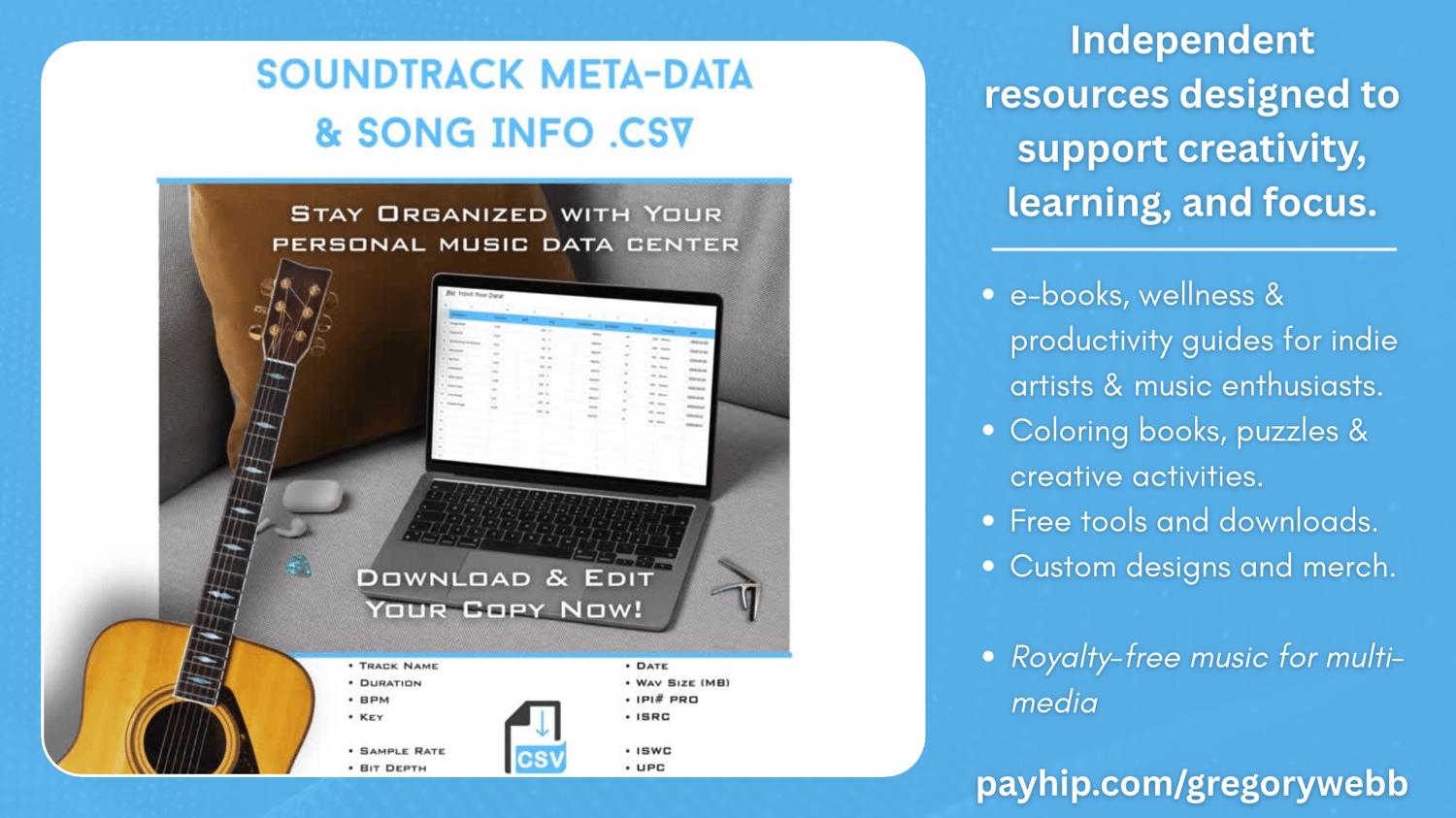
Use this toolkit to track:
-Track titles and artist names
-BPM, key, and time signature
-ISRC and ISWC codes
-IPI numbers for contributors
-Sample rate, bit depth, and file format
-Track versions (instrumental, clean, explicit, edits)
-Ownership splits and notes
This template is ideal for release preparation, licensing submissions, and long-term catalog management. Whether you have five songs or five hundred, this toolkit gives you a clear, centralized system to manage your digital DNA.
Foundations: Indie Guide to Navigating the Music Industry
Foundations is a comprehensive 50-page guide built for independent artists who want clarity, structure, and direction in today’s music landscape.

This guide covers:
- Music creation and release strategy
- Branding and artist identity
- Marketing fundamentals and audience growth
- Distribution and catalog management
- Rights protection and ownership basics
- Revenue streams and long-term sustainability
- Creative wellness and avoiding burnout
Foundations is designed to complement this metadata guide by addressing the broader picture of an independent music career. If Digital DNA shows you how to protect and structure your music, Foundations helps you understand where that music fits within a sustainable creative and professional ecosystem.
Final Thought 💭
Your music deserves to be discovered, understood, and compensated accurately. In a digital ecosystem driven by data, metadata is not optional or administrative, it is the infrastructure that determines visibility, attribution, and long-term income. A properly tagged file strengthens your professional footprint, protects your rights, and increases your music’s chance of reaching the audiences and opportunities it was created for.
Embedding your digital DNA is an investment in clarity, control, and sustainability. Start now, build it correctly, and let your catalog work for you everywhere it travels.
Thank you for reading! I hope this guide brings you some real value.
