
Making music is one thing. Getting paid for it? That is another story. For independent musicians, royalties can feel like a maze, but understanding them is key to keeping every dollar you earn.
Between performance royalties, mechanical royalties, sync licenses, streaming payouts, neighboring rights, and publishing splits, it is easy to leave money on the table. This guide explains how musicians earn money, who collects it, and how to make sure you are getting every dollar you deserve without confusion or guesswork.
For a more complete guide to managing your music career, check out Foundations, a resource designed to take these concepts deeper and help you turn knowledge into results.
What Are Music Royalties?
Music royalties are payments made to songwriters, composers, performers, and sometimes labels whenever their music is used publicly or commercially. They are the financial recognition for your creative work. 🎵
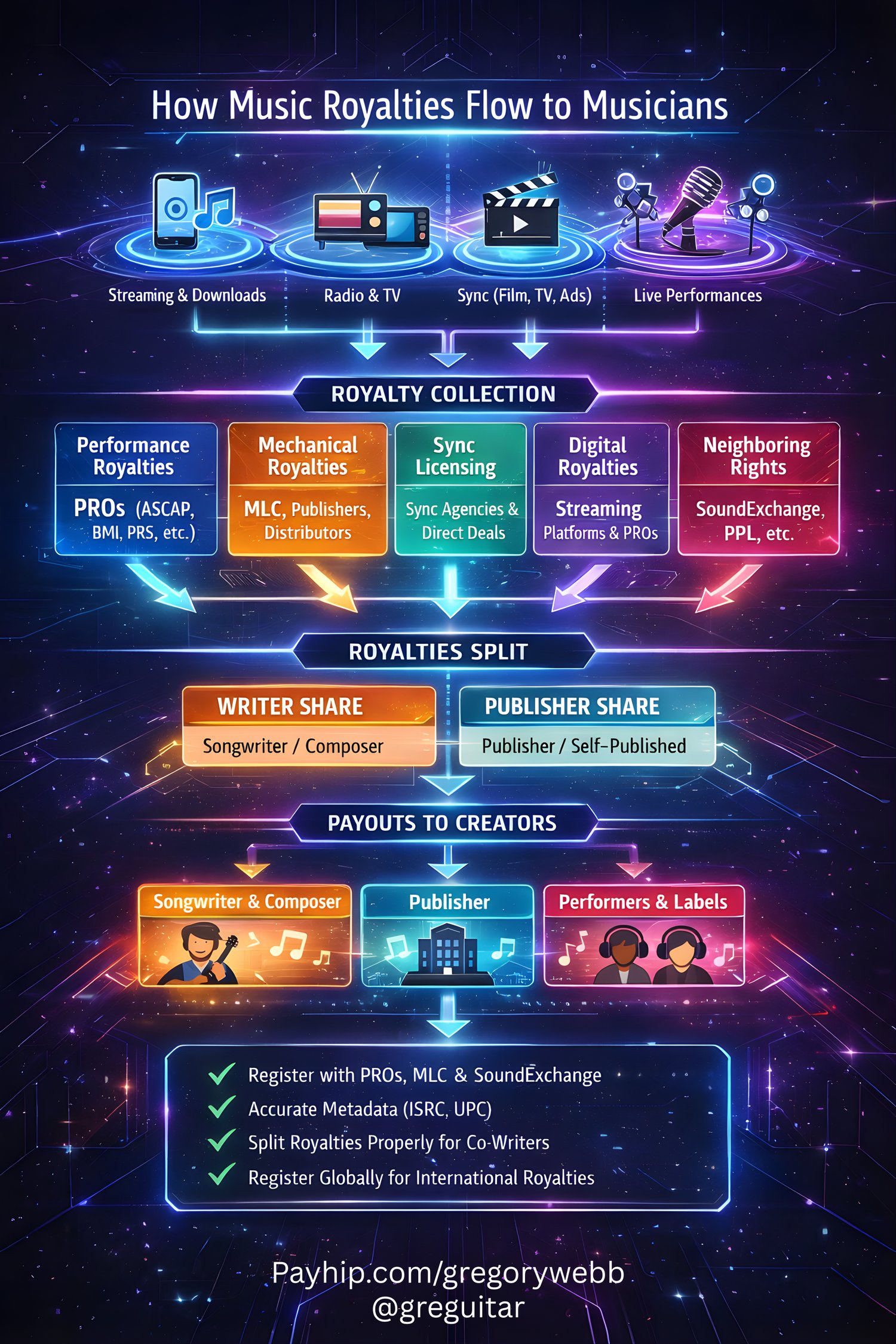
Every composition has two main copyright shares:
- Writer share – goes to the songwriter or composer
- Publisher share – goes to whoever owns the publishing rights, sometimes the artist themselves
Many independent musicians self-publish to capture both shares, maximizing income. 💰
Performance Royalties
Performance royalties are earned whenever your music is played publicly.
Where: Radio, TV, live venues, streaming services, bars, restaurants
Who collects: Performance Rights Organizations like ASCAP, BMI, SESAC(US), PRS(UK), SOCAN (Canada)
How it works: PROs track performances and pay songwriters and publishers based on usage. Register all your compositions with a PRO. For co-written songs, make sure splits are properly set so all contributors get paid.
Mechanical Royalties
Mechanical royalties come from reproductions of your music.
Where: CDs, vinyl, digital downloads, and streaming platforms 💿
Who collects: Agencies like The Mechanical Licensing Collective (MLC) (US) or your publisher
How it works: Every sale or stream generates a payment to the songwriter or publisher. Streaming counts, too. Always register your songs and consider mechanical licenses for covers or samples.
Sync Licenses
Sync royalties are earned when your music is used alongside visual media.
Where: TV shows, movies, commercials, video games, YouTube 📺
Who collects: Typically negotiated directly or via licensing agencies
How it works: You grant a license to use your music, often as a one-time fee or ongoing royalties. Sync placements are highly lucrative. Keep your catalog organized and ready for licensing opportunities.
Digital and Streaming Royalties
Digital royalties come from plays on platforms like Spotify , Apple Music , YouTube , TikTok
Who collects: Streaming platforms via distributors. Songwriters also earn mechanical royalties through PROs
How it works: Revenue is split among rights holders based on plays, region, and platform formulas. Streaming pays small amounts per play, so volume and multiple revenue streams are key. Make sure your distributor reports earnings accurately.
Neighboring Rights
Neighboring rights compensate performers and recording owners when sound recordings are played publicly, especially internationally.
Where: Radio, TV, and international streaming
Who collects: Organizations like SoundExchange (US) or PPL (UK)
How it works: Performers and labels register to collect royalties whenever recordings are broadcast or streamed abroad. Neighboring rights can be a significant income source for independent artists.
International Considerations
Royalties differ by country. Some PROs operate domestically only. Using services like SoundExchange, PPL, or global collection agencies helps you collect royalties worldwide. 🌍
Metadata Matters
Correct metadata ensures your songs are attributed correctly. Include:
- ISRC (International Standard Recording Code) – a unique identifier for each recording
- UPC (Universal Product Code) – a code for the album, single, or product used in digital and physical sales
- Work Code / ISWC (International Standard Musical Work Code) – identifies your composition, separate from the recording
- Correct songwriter and publisher information
Missing or incorrect metadata can lead to unclaimed royalties. ⚠️
Common Pitfalls That Leave Money Behind
- Not registering songs with PROs or the MLC
- Ignoring international neighboring rights
- Overlooking sync licensing opportunities
- Using distributors that do not ensure proper payouts
- Confusing publishing rights with recording rights
- Neglecting metadata and co-writer splits
How to Maximize Your Music Royalties ✅
- Register everything: PROs, MLC, neighboring rights societies
- Track your music usage and revenue across platforms
- Leverage multiple streams: streaming, sync, licensing, merchandising
- Use professional tools: publishing administrators, sync agents, or rights management platforms
- Keep your catalog organized: metadata, splits, licensing-ready files
Following these steps ensures you capture every opportunity and get paid fully for your creative work.
Tools and Resources
- PROs: ASCAP, BMI, SESAC, PRS, SOCAN
- Mechanical: MLC (US), local mechanical societies internationally
- Neighboring Rights: SoundExchange (US), PPL (UK), Global Rights Management services
- Distributors: DistroKid, CD Baby, TuneCore, Songtrust, Ditto Music
For your FREE download and printout of "Music Royalties Flow Chart" - Click Here
If your music gets played in public—Spotify, live, or on radio—you’re owed performance royalties. A Guide to Understanding PROs walks indie artists through the essentials: what they are, how they work, and how to use them effectively. This 20-page e-book is for musicians who want to stop leaving money on the table.

Additionally
Foundations - Indie Guide to Navigating the Music Industry Starting here gives you a complete roadmap to turn your music into a sustainable, thriving career, tying together everything covered in this guide.
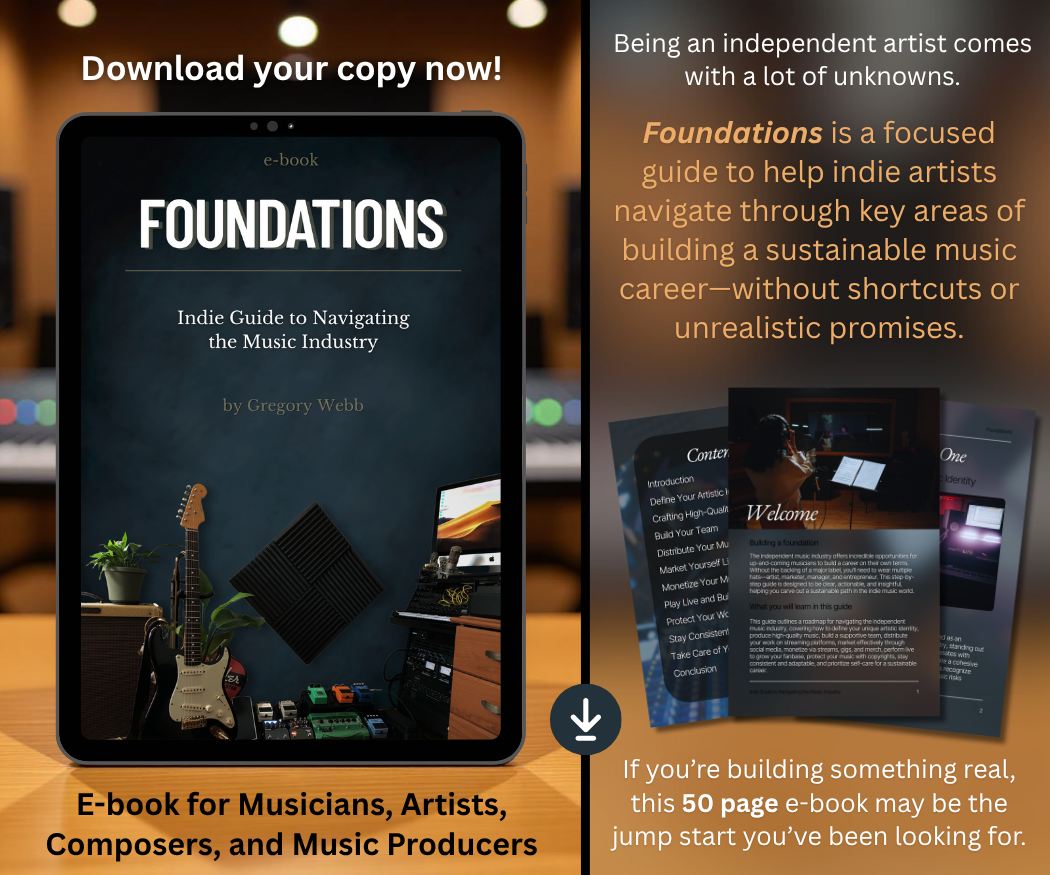
Being an independent artist comes with a lot of unknowns. Foundations is a focused guide to help indie artists navigate through key areas of building a sustainable music career—without shortcuts or unrealistic promises. This 50-page e-book covers: your artistic mission, high-quality music creation, building your team, distribution, marketing, monetization, branding, protection, consistency, and wellness. If you're building something real, this e-book may be the jump start you've been looking for.
🖨️📱 Print or enjoy your PDF on your favorite device
Disclaimer: For educational purposes only, not legal or financial advice.