
Sound shapes how we experience everything. Movement, emotion, and scale are all influenced by what we hear. A single moment can feel powerful or empty depending entirely on the sound behind it.
Sound design did not begin with software or libraries. It began with performance, limitation, and creative intent. Every stage of its evolution reflects how creators solved problems with the tools they had.
The Origins: Sound as Performance 🎭
Before recording existed, sound had to be created live every time. In theater and early radio, artists developed techniques to simulate reality using physical objects:
- footsteps matched to character and surface
- thunder built from metal sheets or rolling objects
- doors, wind, and impacts performed in sync with action
This practice became known as Foley, named after Jack Foley.
What defined this era was not just creativity. It was precision under constraint. There was no editing, no layering, and no second pass.
Every sound had to:
- match timing perfectly
- feel believable
- translate instantly to the audience
This established a core principle that still applies today.
Sound is not separate from the visual. It is part of the performance.
Recording and Layering 🎞️
The introduction of recorded sound changed how sound could be designed.
For the first time, sound became something you could:
- revisit
- reshape
- combine
Using reel-to-reel tape, editors physically cut and rearranged audio.
This process was slow, but it introduced a powerful concept, sound could be constructed, not just captured. This led to the widespread use of layering.
Instead of relying on a single recording, designers began combining multiple elements to control:
- texture
- weight
- clarity
- perceived impact
A single sound could include:
- a transient for attack
- a body layer for presence
- a low-frequency layer for power
Sound design shifted from documenting reality to shaping perception.
Sound as Identity🎧
By the 1970s, sound design became central to storytelling.
Designers like Ben Burtt approached sound as a way to create recognizable identities. In Star Wars, sounds were crafted to feel unique and believable using transformed recordings rather than direct real-world sources.
This introduced a new way of thinking, if it feels right, it does not have to be real.
Films like Jurassic Park expanded this further by blending multiple animal recordings into entirely new creatures.
Sound design became responsible for:
- defining objects that do not exist
- reinforcing character and scale
- shaping emotional response
The Digital Shift 💻
Digital tools changed both workflow and expectation.
With platforms like Pro Tools:
- editing became non-destructive
- layering became unlimited
- precision became standard
What once required hours of manual work could now be done in minutes. This introduced a key shift, creativity was no longer limited by tools. It was guided by decisions. At the same time, sound libraries expanded rapidly. Creators gained instant access to high-quality material.
Two approaches became standard:
- building sounds from scratch
- assembling sounds from curated elements
Both define modern sound design.
Modern Sound Design 💥
Today, sound design operates at the intersection of creativity and efficiency.
It is used across:
- film and trailers
- video editing and content creation
- games and interactive media
- apps and digital products
Modern workflows focus on three priorities:
Impact - Sounds must translate immediately. They need to be clear, controlled, and intentional.
Efficiency - Creators rely on drag-and-drop assets, modular elements, and fast iteration.
Immersion - Sound enhances depth, space, and realism. In interactive media, it can respond in real time to user input.
Sound design is no longer just linear. It is layered, responsive, and contextual.
Understanding Sound in Practice 🎛️
As sound design evolved, so did the language around it. These concepts are not just theory. They are tools used daily across film, video editing, and digital media. Understanding how and when to use them is what separates basic edits from fully realized work.
Diegetic sound exists inside the world of the scene. Characters can hear it.
Examples include:
- dialogue
- footsteps
- environmental sounds within the frame
Non-diegetic sound is added for the audience, not the characters.
This includes:
- music
- impacts
- transitions
- cinematic enhancements
Foley refers to custom-recorded sounds created to match on-screen actions. It enhances realism and adds detail beyond what production audio captures.
Whooshes and transitions create movement between scenes, cuts, and visual elements. They guide attention and make edits feel intentional and smooth.
Common uses include:
- scene transitions
- motion graphics
- swipes and camera movement
- fast-paced edits
Risers increase tension and anticipation leading into a moment.
They are often used before:
- drops
- reveals
- major transitions
They help control pacing and emotional buildup.
Falls release tension and bring energy downward.
They are typically used:
- after impacts
- to transition into calmer moments
Together, risers and falls shape the emotional flow of a sequence.
Impacts and stingers are short, sharp sounds used to emphasize key moments.
They are essential for:
- cuts
- reveals
- transitions
- dramatic beats
They add weight and make moments feel finished.
Atmosphere plays a critical role. Ambient and background layers define the environment and space of a scene, adding depth, realism, and continuity.
Examples include:
- wind
- room tone
- city noise
- environmental textures
Professional sound design is rarely built from a single element. Instead, sounds are layered to create depth and impact:
- high-frequency detail for clarity
- mid-range elements for presence
- low-end layers for weight
These elements are combined to create movement, tension, and emotional impact.
A single moment might include:
- ambience to establish space
- a riser to build anticipation
- a whoosh to carry the transition
- an impact to land the moment
This is where sound design becomes storytelling.
From Sound to World-Building 🌐
From physical props to digital precision, sound design has evolved significantly. Its purpose has remained consistent.
Early creators worked within strict limitations. Every sound had to be performed, timed, and executed in real time. There was no editing. Only decision and delivery.
With recording and layering, sound became something that could be shaped and constructed. Designers gained control over texture, weight, and impact. Then came identity. Sound began to define characters, environments, and entire worlds.
Today, sound design is both creative and systemic.
You are no longer just placing sounds, you are:
- shaping movement
- guiding attention
- reinforcing emotion
- building depth and space
Most importantly, you are building a complete experience.
Sound effects provide structure and motion. Music provides emotion and narrative. Individually, they enhance a moment. Together, they define it. Modern sound design is not just support. It is world-building. With today’s tools, that process is faster and more accessible than ever. High-quality sounds and ready-to-use music allow creators to move quickly without sacrificing impact.
Start Building Your Sound
Whether you are shaping transitions or enhancing visuals, the right sound effects are your foundation.
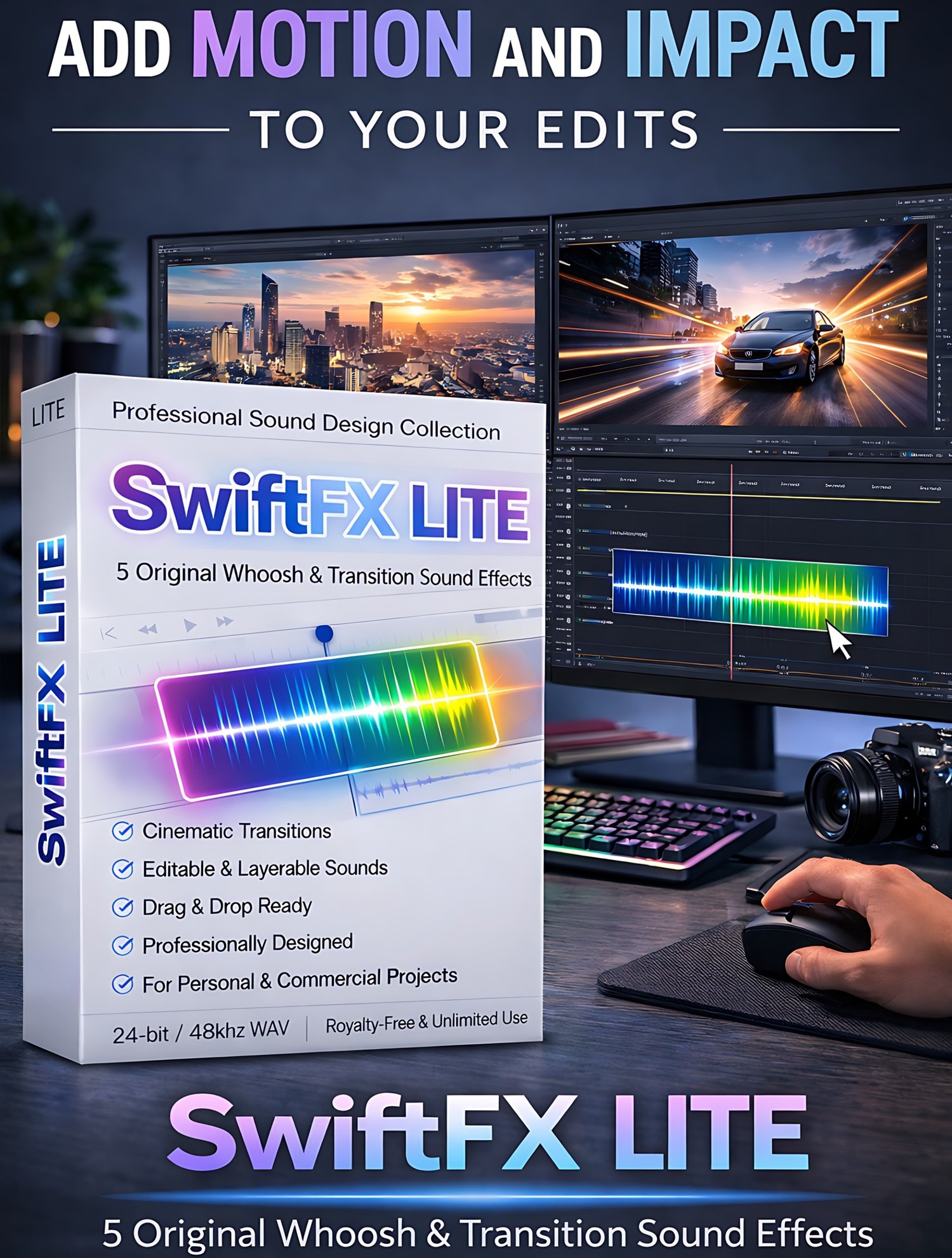
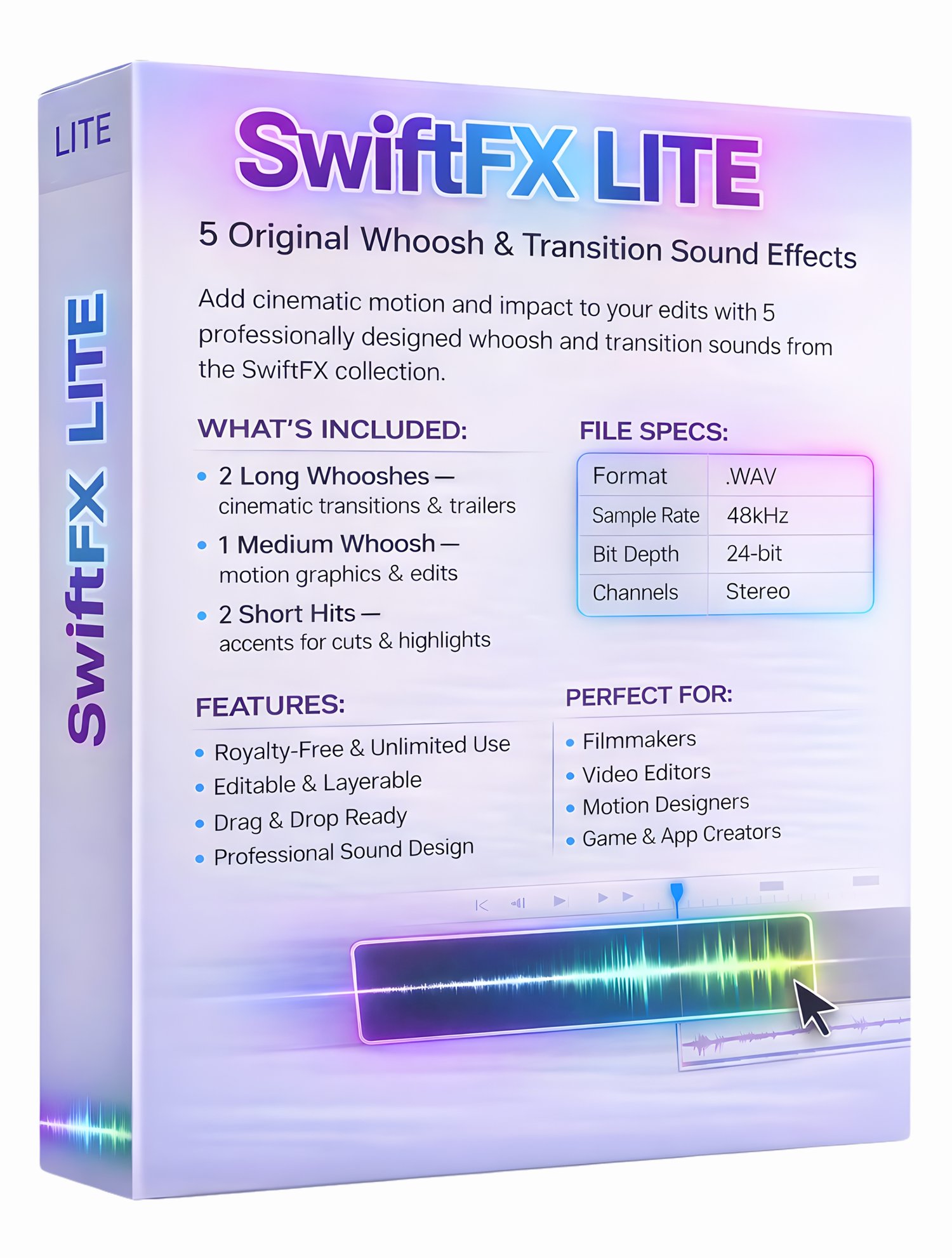
SwiftFX LITE – 5 Cinematic Whoosh & Transition Sound Effects
What’s Inside
- 2 Long Whooshes for cinematic movement
- 1 Medium Whoosh for versatile transitions
- 2 Short Hits for quick accents and impacts
Specs
- WAV • 48kHz • 24-bit • Stereo
Features
- Clean, professional sound
- Drag-and-drop ready
- Fully editable and stackable
- Free for personal and commercial use
👉 Free Access - Download Here 💫
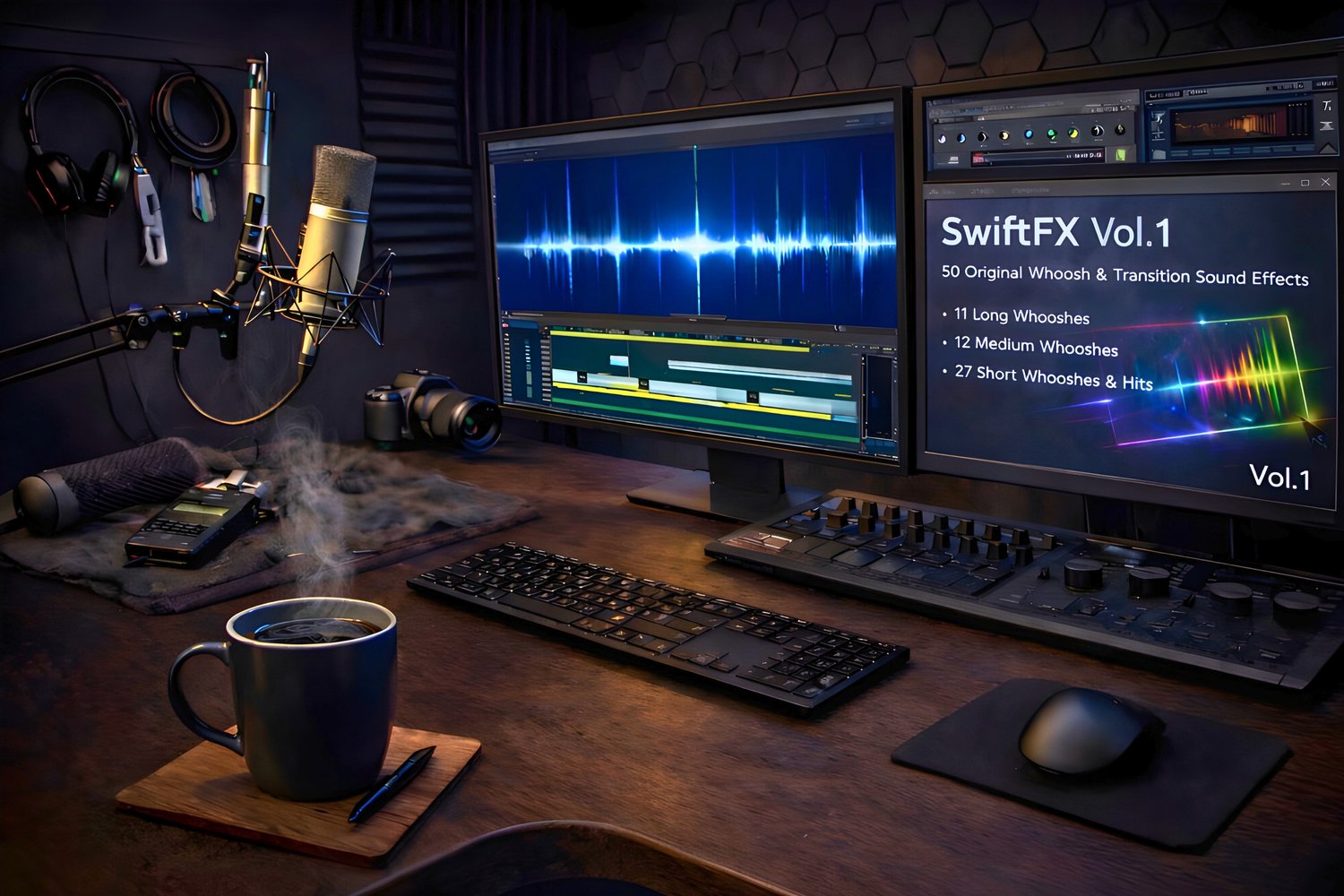
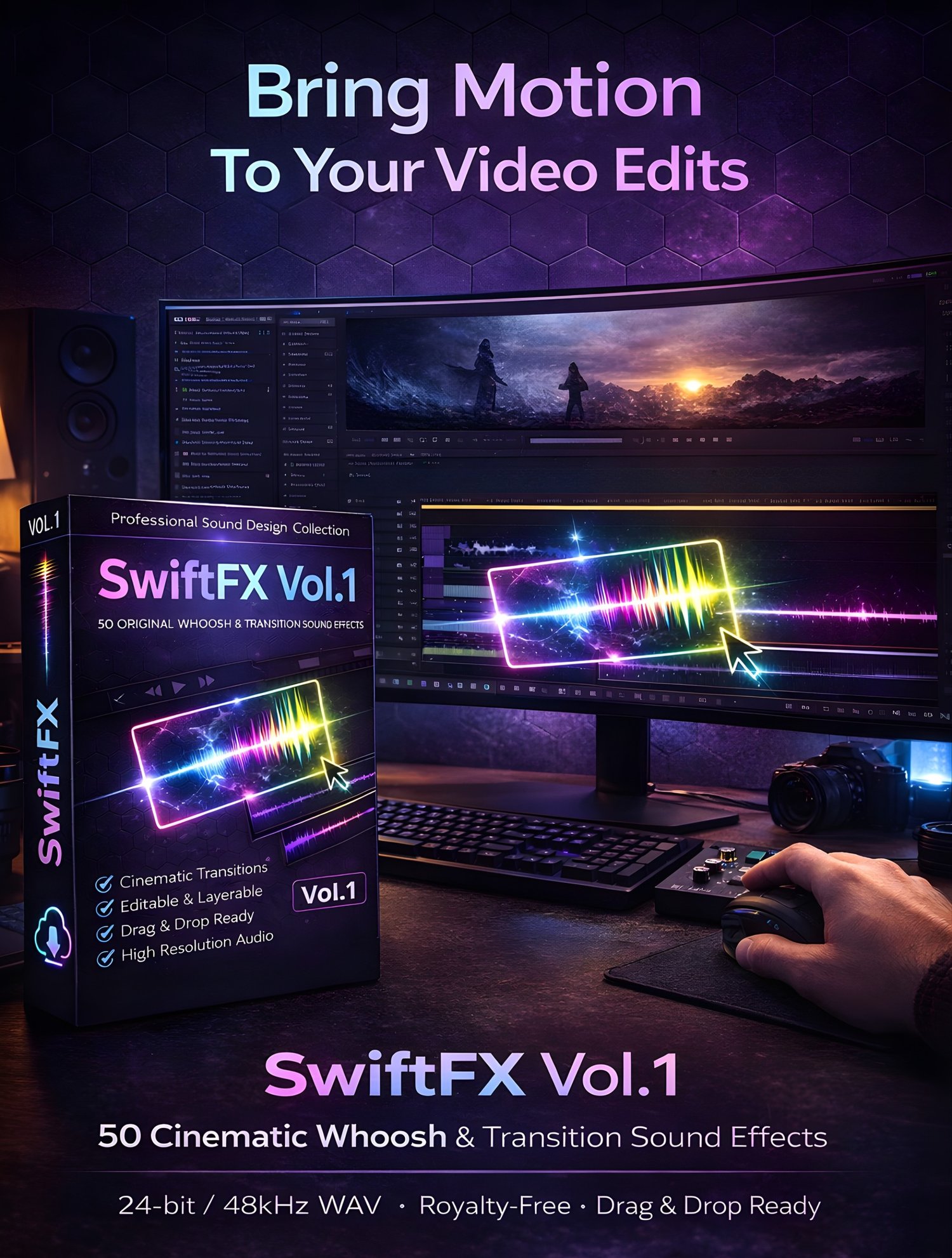
SwiftFX Vol. 1
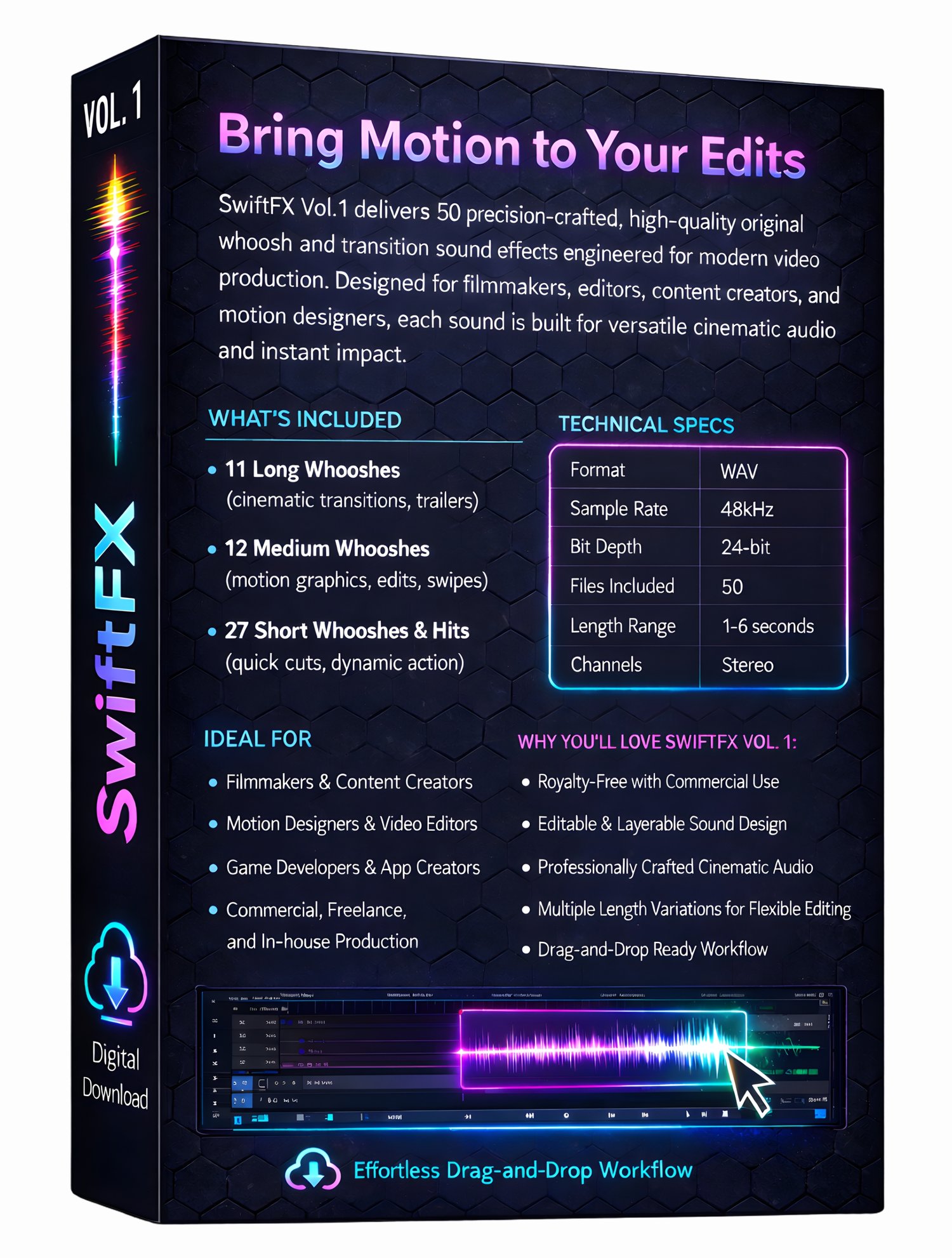
SwiftFX Vol. 1 – 50 Cinematic Whoosh & Transition Sound Effects
A complete toolkit for building polished, professional edits.
What’s Inside
- 11 Long Whooshes for dramatic transitions
- 12 Medium Whooshes for swipes and motion
- 27 Short Whooshes and Hits for accents and impacts
Specs
- WAV • 48kHz • 24-bit • Stereo
Key Features
- 50 original sound effects
- Clean, mix-ready design
- Drag-and-drop workflow
- Fully editable and layerable
- Royalty-free for personal and commercial use
Download 👉 SwiftFX Vol. 1
Build the Full Experience
Sound effects create movement. Music creates emotion. Together, they turn edits into complete experiences.
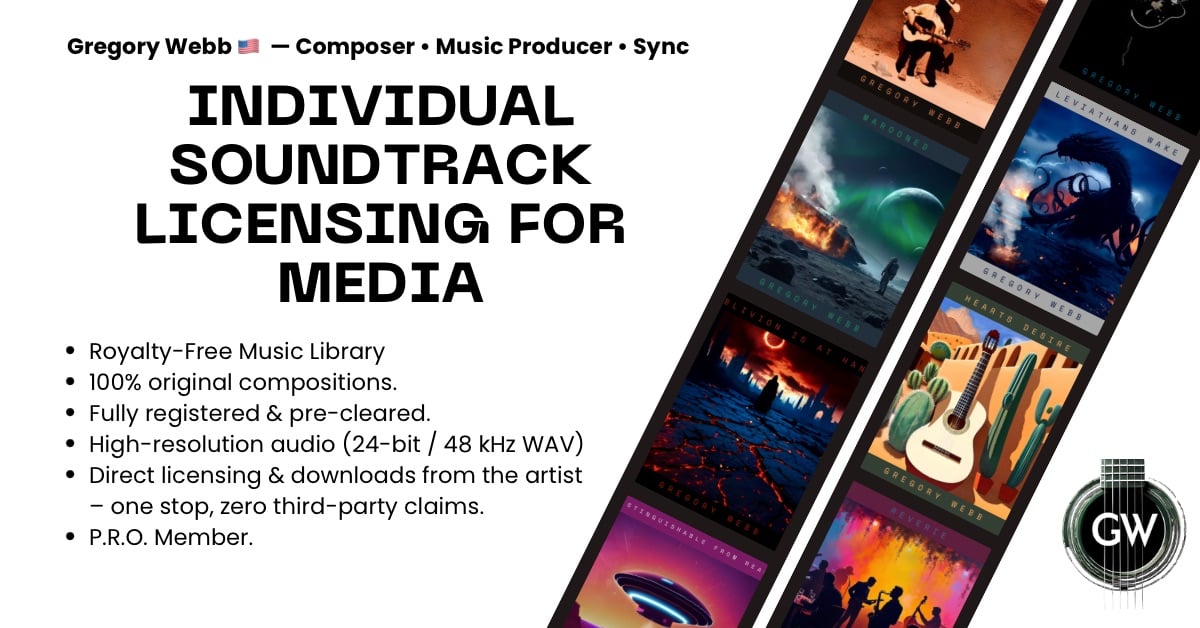
Explore My Music Collections🎶🎥🎮
Find the perfect soundtrack for any media project with my curated collections:
- Synth, Rock & Experimental Beats — cyberpunk, sci-fi, tech, high-energy action 🚀
- Dark & Thrilling — horror, suspense, psychological tension, villain reveals 👻
- Orchestral & Hybrid Cues — epic trailers, heroic builds, emotional storytelling 🎬
- Americana & Period Piece — rootsy folk and heartfelt historical vibes 🤠
- Pop & Funk — upbeat, catchy, perfect for vlogs and commercials 🎉
- Western & Flamenco Vol. 1 — dusty trails and Spanish-guitar fire 🌵
- Western & Flamenco Vol. 2 — deeper frontier emotion and cinematic landscapes 🏜️
- Ambient & Underscores Vol. 1 — gentle, meditative, documentary-ready textures 🌿
- Ambient & Underscores Vol. 2 — expansive, ethereal, space and nature soundscapes ✨
- Contemporary Blues & Jazz — soulful, noir, classy modern grooves 🎷🎸
👉 Find the right sound for your next project - License Here 🎶
🔮 What’s Ahead
This is just the beginning.
More sound effects and original music are on the way.
More tools. More sound. More worlds to build.
Thank you for reading “How Sound Became Design: A Brief History of Sound Effects”
I hope you enjoy your download and that these audio assets inspire your creativity!
Wait there’s more! 😉
Craving more history?
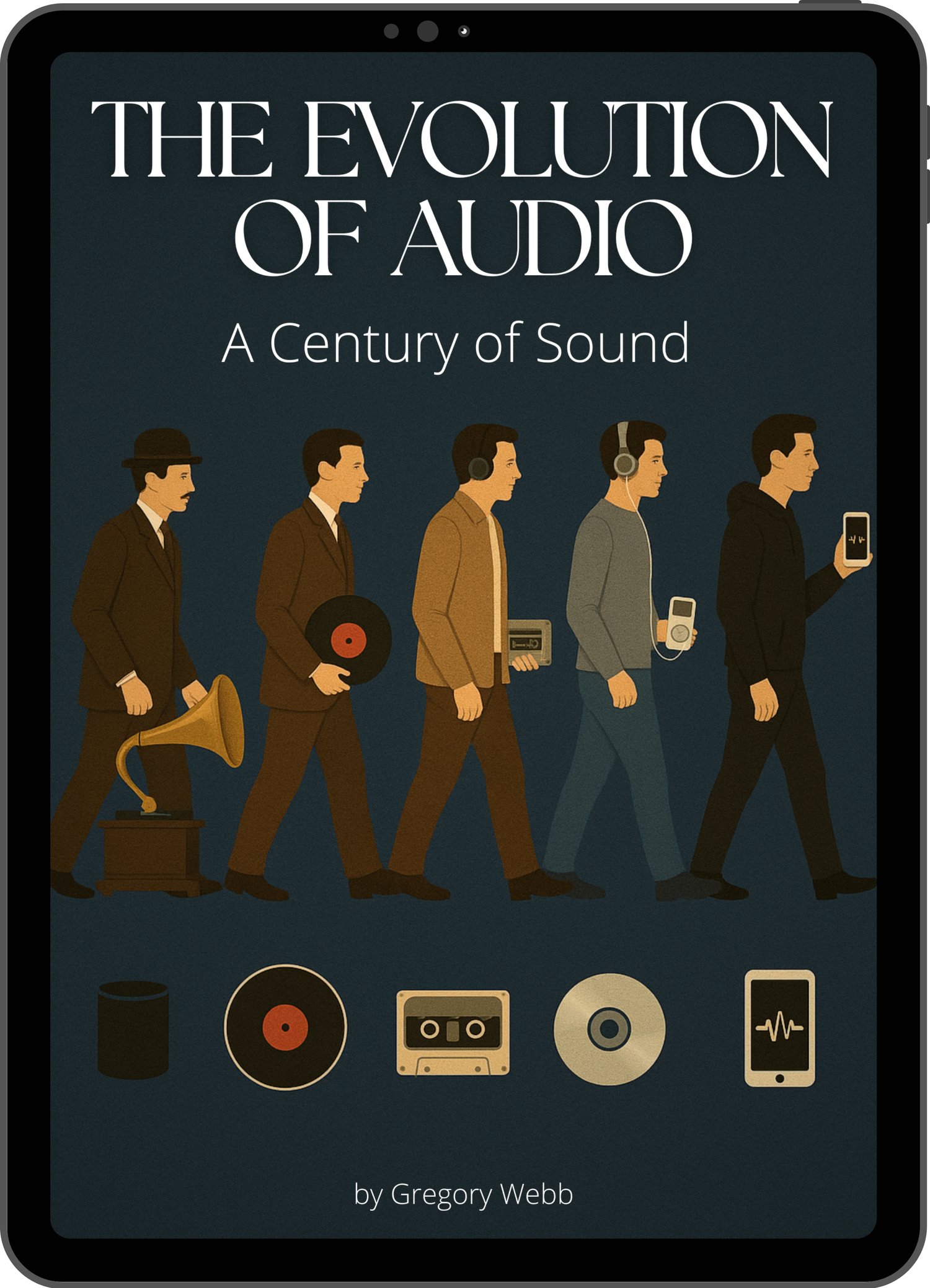
Download my ebook, The Evolution of Audio - A Century of Sound for FREE
The Evolution of Audio takes you through a century of sound innovation. Explore the formats that shaped music history and glimpse the future of listening in this 15-page journey.