
Gentle cleansers are the foundation of a healthy skincare routine—especially if you have dry, sensitive, or easily irritated skin. Harsh surfactants can strip the skin’s natural moisture barrier, leaving it feeling tight, uncomfortable, and prone to irritation. That’s where a milky cleanser comes in.
In this post, I’ll show you how to make a gentle DIY milky facial cleanser formulated with hydrolyzed milk protein, an ingredient known for its conditioning and skin-softening benefits. This cleanser is designed to cleanse without over-drying, making it perfect for everyday use and suitable for beginners who are new to cosmetic formulating.
Let’s break down the ingredients, why they work, and how you can make this soothing milky cleanser step by step.
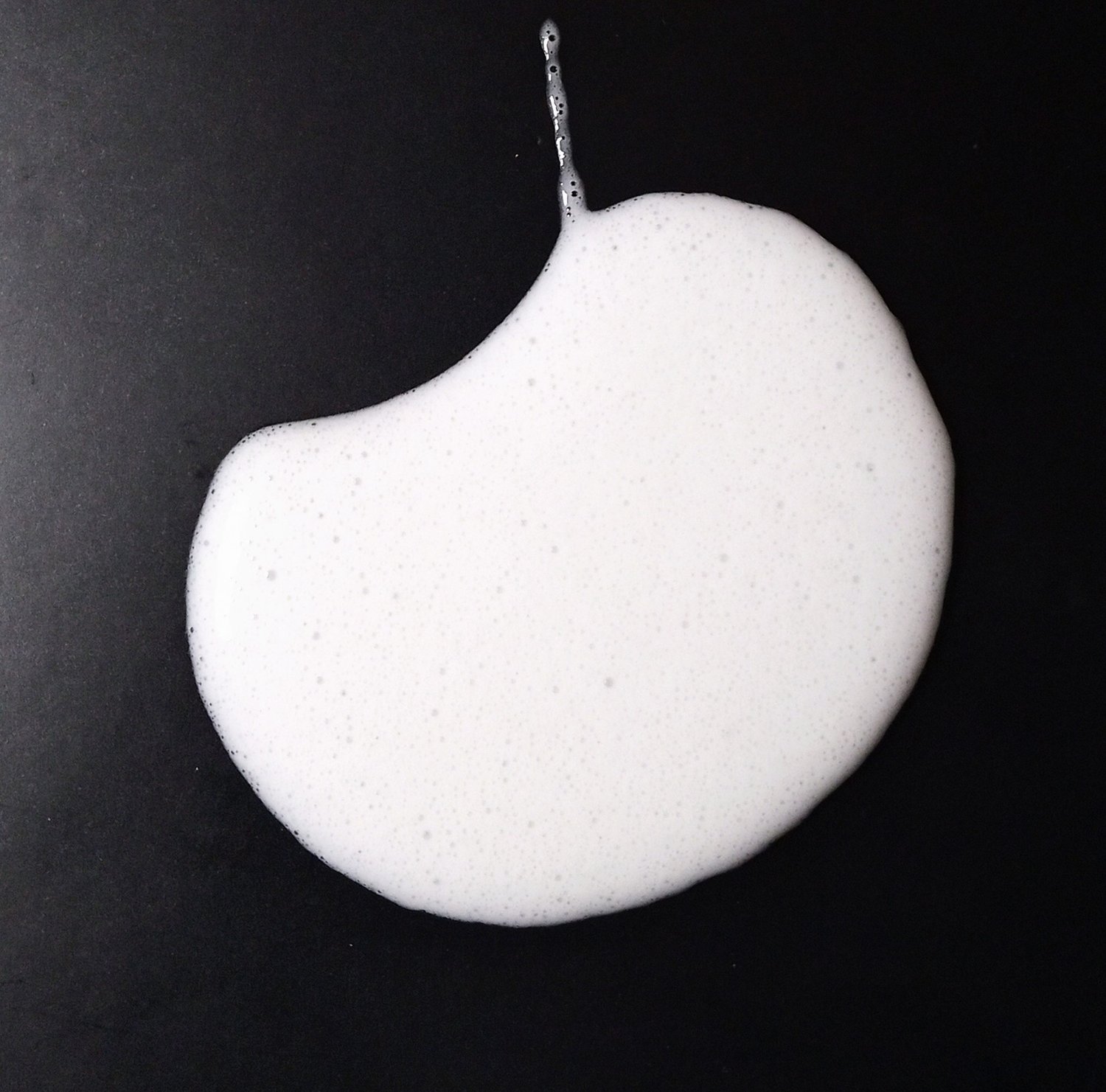
Texture shot of the milky cleanser
Key Ingredients & Their Benefits
Glycerin
•Humectant
•Draws moisture into the skin to help prevent dryness and tightness during cleansing. Supports the skin’s natural moisture barrier.
Guar Gum Cationic
•Conditioning Polymer
•Improves slip and skin feel, reduces friction, and leaves the skin feeling soft and smooth after rinsing. Enhances the milky texture.
Meadowfoam Seed Oil
Emollient
Softens and nourishes the skin without feeling greasy. Helps support the skin barrier and adds a lightweight, conditioning feel.
Plantamulse™ Pastilles
•Emulsifier
•Allows oil and water to blend into a stable, milky cleanser. Creates a smooth, creamy texture while remaining gentle on the skin.
Hydrolyzed Milk Protein
•Penetrating protein
•Improve softness, reduce dryness, and support moisture balance. Leaves skin feeling smooth, comfortable, and non-stripped after cleansing.
Coco Glucoside
•Mild Surfactant
•Gently cleanses by removing dirt and impurities without stripping the skin’s natural oils. Ideal for dry and sensitive skin.
Euxyl® K 900
•Preservative
•Protects the formula from bacteria, yeast, and mold to ensure product safety and shelf life.
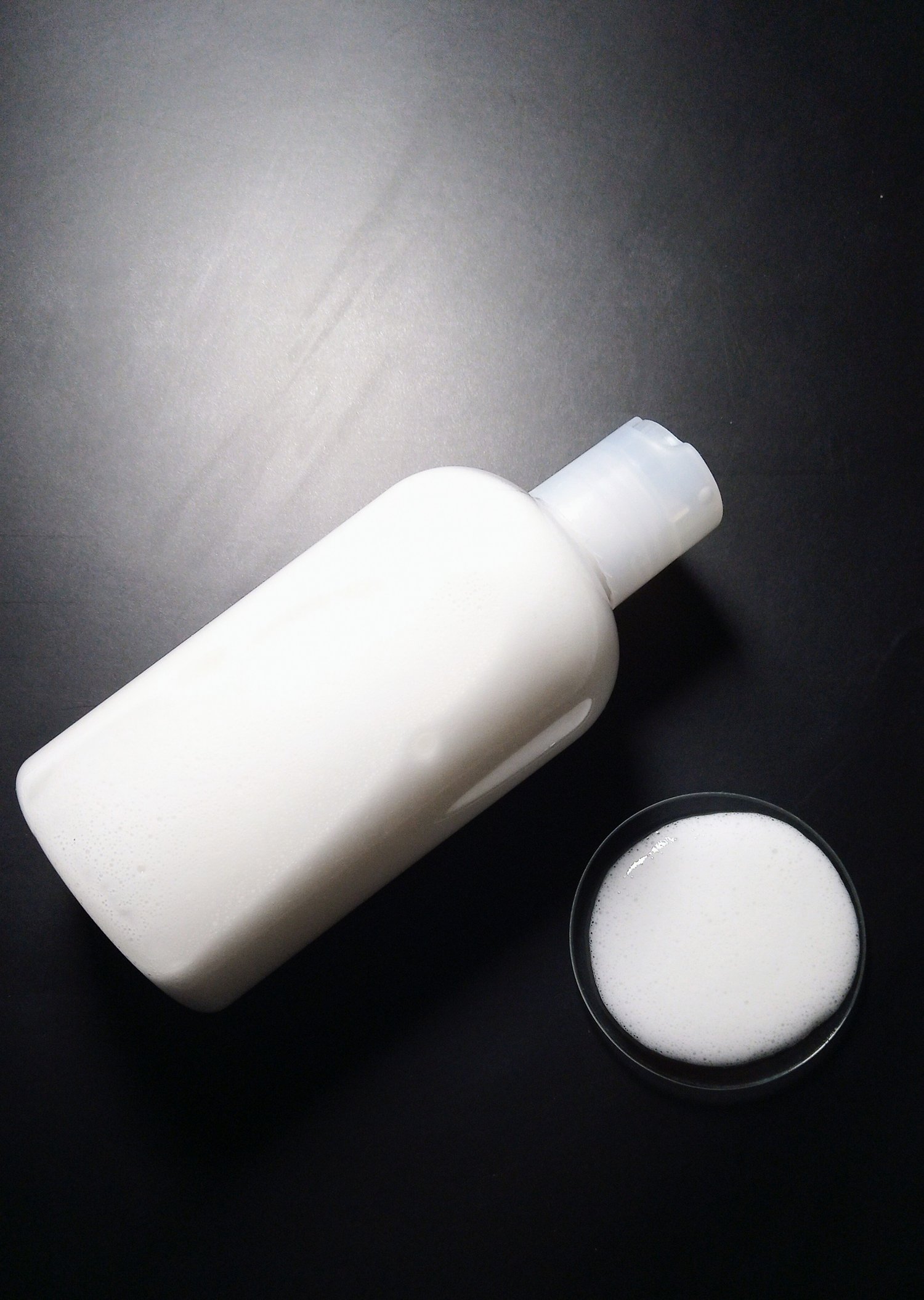
Milky white cleaner
Tools
Beaker/ heatproof jar
Gloves
Emersion blender
Ramekins
Scale
4oz bottles(2)
Pot/pan
Heat source
Silicone spatula
Stainless steel bowl
pH strips/ pH meter
Thermometer
Pot holder
Formula
Phase A( heated)
Distilled Water 77.95%|233.85g
Glycerin 5%|15.00g
Cationic Guar gum 0.75%|2.25g
Citric acid 0.1% | 0.30g
Phase B( heated)
Plantamulse pastilles 3% |9.00g
Meadow seafoam oil 1.7% | 5.10g
Phase C
Coco Glucoside 4.5% |13.50g
Vitamin E 0.2% |0.60g
Rose essential oil 0.3% | 0.90g
Hydrolyzed milk protein 0.3% | 1.50g
Phase D
Euxyl k 900 1% | 3.00g
Propylene glycol 1% | 3.00g
Shampoo concentrate 4% |12.00g
Batch Size 300g
Finale pH 4.8
Instructions
Prep First
Sanitize all equipment and containers before you begin.
Weigh out all ingredients in advance and separate them by phase.
Phase A – Water Phase
•In a heat-safe beaker, combine the water and glycerin.
•Slowly sprinkle the guar gum into the mixture while stirring continuously to prevent clumps.
•Add the citric acid and mix well. A gel should begin to form.
Phase B – Oil Phase
•Add the Plantamulse pastilles to the Phase A mixture.
•Place the beaker into a water bath and heat on medium heat until the Plantamulse pastilles are fully melted.
•Remove from heat and allow the mixture to cool slightly.
•Add the meadowfoam seed oil, then emulsify using an immersion blender for 20–30 seconds until smooth and uniform.
•Allow the mixture to cool fully to 70°C (158°F) or below.
Phase C – Cool-Down Phase
•Add Phase C ingredients one at a time to the combined Phase A/B mixture, stirring gently between each addition.
•Phase D – Preservative Phase
•In a small container, combine Euxyl K 900 and propylene glycol and mix well.
•Add this mixture to the A/B/C phase and stir thoroughly.
•check the final pH and place in desired packaging.
New to Formulating?
Want to move beyond coping recipes? My easy beginner guide can teach you the basics of formulating in a clear, easy-to-understand tone. So you can start creating your own formulas with confidence.Just click this Beginner Friendly Guide .
Substitutions
Distilled Water | Hydrosol or Essence Water
Glycerin | Propolyen Glycol
Cationic Guar | Guar Gum
Plantamulse pastilles | Montanov 68 MB
Meadowfoam seed oil | Hemp seed oil
Coco Glucoside | Decyl Glucoside
Rose essential oil| Any essential/ fragrance oil
Hydrolyzed milk protein | Any hydrolyzed protein
Euxyl k 900 | Any broad spectrum perservative system
Tips
- The shampoo concentrate is not necessary for this formula you can leave it out. If you have Glycol distearate in chip form you can you that too in the heated Phase B.
- Use a scale that measures in 0.01-500 grams or larger for pin point accuracy.
- If you use any substitutions it's will alter the final pH always check and adjust pH to a skin friendly pH level of a 4-5.5.
- Don't over emulsify with the emersion blender it's will incorporate to much air and leave you with a lot of bubbles.Blend for 20-30 second with the emersion blender.
- Always sanitize all your equipment and work space.I like to use 75-99% Isopropyl or denatured alcohol.
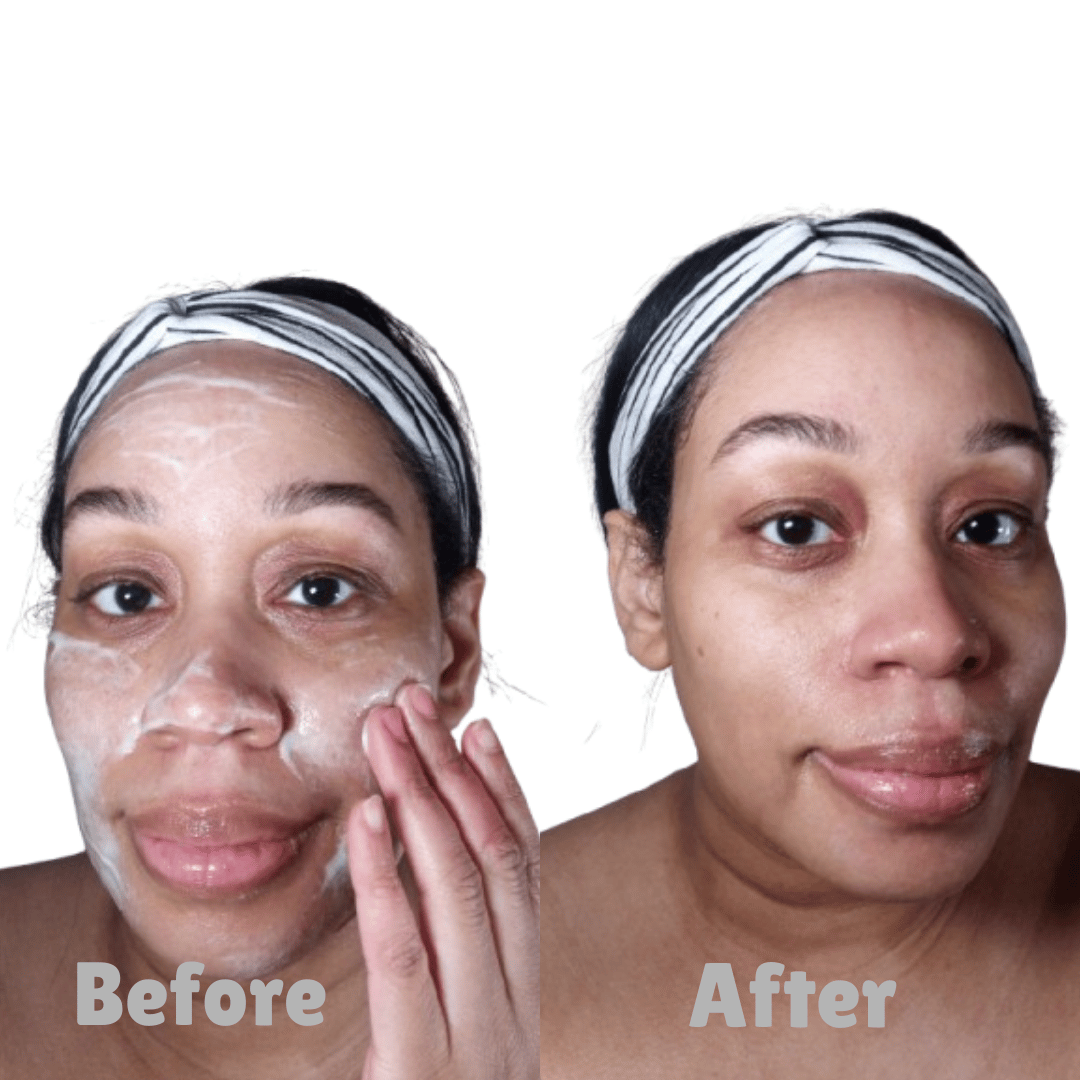
Smooth skin after just one wash
Where to buy
Distilled water | Grocery store
Glycerin | Lotion Crafter
Cationic Guar | TheHerbarie
Plantamulse pastilles | TheHerbarie
Meadowfoam seed oil | TheHerbarie
Coco Glucoside | TheHerbarie
Rose essential oil | TheHerbarie
Hydrolyzed milk protein | Lotion Crafter
Euxyl k 900 | Lotion Crafter
Propylene glycol | Lotion Crafter
Citric acid | TheHerbarie
Shampoo concentrate | Chemistry Store
Shampoo concentrate ( sulfate free) Wholesale Supplies Plus
Finale Thoughts 💬
Learning how to make a milky cleanser at home is a great way to take control of your skincare routine. This gentle, beginner-friendly formula cleanses the skin without stripping moisture, making it ideal for dry and sensitive skin types. With the right ingredients and proper formulation steps, you can create a creamy cleanser that leaves skin soft, balanced, and refreshed. As you gain confidence, you can customize the formula to suit your skin’s unique needs.
Disclaimer
All formulas and methods shared here are for educational purposes only. I’m not responsible for how you use them or any results, reactions, or issues that may occur. Please patch test and do your own research before trying any DIY product. Use at your own risk.
Comments ()