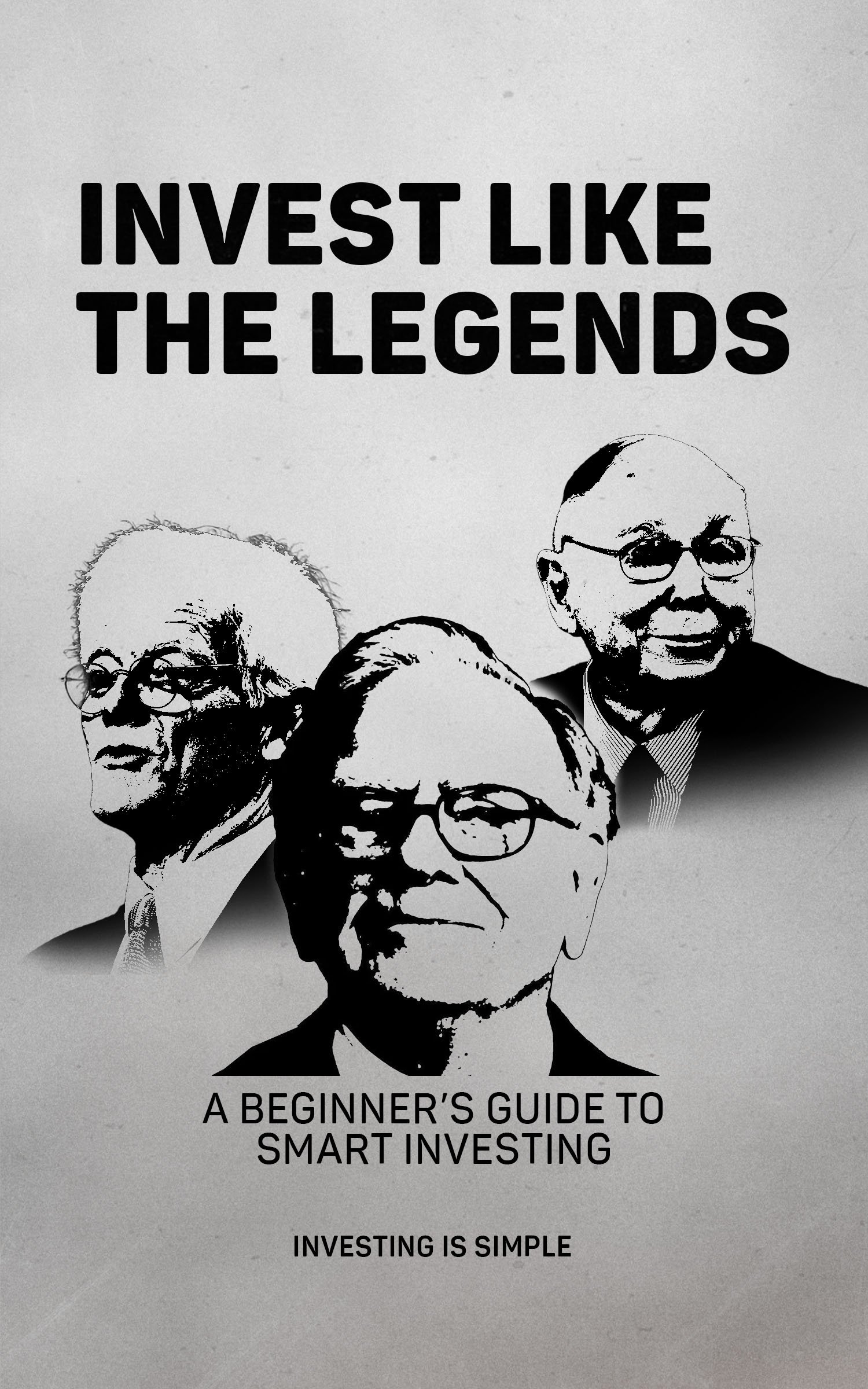
The Right Way to Pick Stocks (Without Guesswork)
For many beginners, investing in stocks feels like a mix of excitement and anxiety. On one hand, you’ve heard stories of people building wealth in the market. On the other, you’ve also seen headlines about stocks crashing, investors losing money, and the constant chatter of “hot stock tips” that never seem to pan out.
So, the big question is: How do you know if you’re picking the right stocks?
The good news? You don’t need to be a Wall Street expert to invest successfully. The best investors—like Warren Buffett and Charlie Munger—follow a simple, repeatable process to identify great businesses. And you can do the same.
In this guide, you’ll learn a 3-step formula to:
✅ Reveal how a company really makes money (and why some businesses are way riskier than they seem).
✅ Uncover the hidden advantage that separates winning stocks from future failures (and how to spot it instantly).
✅ Expose financial red flags that can sink your investment—before it’s too late.
By the end, you’ll have a clear, beginner-friendly process to evaluate any stock—without relying on hype or guesswork.
Now, let’s dive in.
Step 1: The Secret to Avoiding Bad Investments (Most Beginners Skip This!)
One of the biggest mistakes beginners make is buying stocks without truly understanding the companies behind them. Maybe you hear about a “hot stock” on social media, or a friend tells you about the next big thing in tech. But here’s the problem:
If you don’t understand how a company makes money, you’re investing blindly.
That’s why successful investors like Warren Buffett follow a simple rule: Stay within your Circle of Competence.
What Is Your Circle of Competence?
Your Circle of Competence is the area where you have knowledge and understanding. It includes businesses, industries, or markets you naturally “get” based on your work, interests, or experience.
💡 Buffett’s Advice: “Know what you don’t know and stay within what you do know.”
By sticking to companies you understand, you reduce the risk of making bad investments and increase your chances of picking winners.
How to Evaluate a Business Before Investing
Before you invest in any stock, ask yourself these simple questions:
✅ What does the company do? Can you clearly explain its products or services?
✅ How does it make money? What are its revenue streams? (For example, Apple makes money from iPhones, MacBooks, and services like iCloud.)
✅ Who are its customers? Is it selling to businesses, everyday consumers, or both?
✅ What could go wrong? Are there major risks like competition, regulation, or shifting consumer trends?
Example: Understanding Apple vs. a Complex Tech Startup
- Apple (AAPL): Easy to understand—sells iPhones, MacBooks, and services.
- Complex Tech Startup: If you don’t know exactly how it makes money or what its long-term advantage is, it’s a red flag.
How to Find Your Circle of Competence
If you’re unsure where your strengths lie, start with industries you already understand:
💡 If you work in retail: Look at companies like Walmart or Target.
💡 If you love technology: Research Apple, Microsoft, or Google.
💡 If you’re in healthcare: Check out companies like Johnson & Johnson or Pfizer.
Pro Tip: The Circle of Competence Questionnaire in the Investing Is Simple System helps you quickly identify industries and companies you understand best—so you can invest with confidence.
By staying within your Circle of Competence, you’ll avoid risky, hype-driven investments and focus on strong, understandable businesses—just like the world’s best investors do.
Step 2: The Hidden Advantage That Makes Some Stocks Soar (While Others Struggle!)
Ever wonder why some companies dominate their industry for decades, while others fade into obscurity? It’s not just luck. The best businesses have something powerful that protects them from competition—a moat.
Legendary investor Warren Buffett swears by this concept. He looks for businesses with a strong competitive advantage, or as he calls it, an economic moat—a unique strength that makes it difficult for competitors to steal market share.
The bigger the moat, the stronger the company’s long-term potential. If a company doesn’t have a moat, its success may not last.
How to Spot a Strong Competitive Advantage
Before investing in a stock, ask: What protects this company from competition? Here are four types of moats that make businesses unstoppable:
1️⃣ Brand Power (Trust and Recognition)
Some companies are so well-known that customers choose them without even thinking. This kind of brand loyalty protects profits and pricing power.
Example: Coca-Cola (KO)—Even with hundreds of soda brands on the market, Coke dominates because of its global brand recognition and customer loyalty.
2️⃣ Network Effects (The More, The Stronger)
Some businesses get more valuable as more people use them. This creates a self-reinforcing advantage that competitors can’t easily replicate.
Example: Visa (V)—Millions of merchants accept Visa, which encourages more customers to use Visa cards. The more businesses that accept it, the harder it is for competitors to catch up.
3️⃣ Cost Advantages (Being the Lowest-Cost Provider)
If a company can produce and sell products cheaper than competitors, it can keep prices low and still make big profits—a powerful competitive edge.
Example: Walmart (WMT)—Because of its massive scale, Walmart can buy products in bulk at lower costs than smaller retailers, allowing it to sell at lower prices while still making money.
4️⃣ Switching Costs (Too Painful to Leave)
Some companies make it so inconvenient to switch that customers stick around for years—even if a competitor offers something cheaper.
Example: Microsoft (MSFT)—Many businesses rely on Microsoft Office and cloud services. Switching to another system is so expensive and time-consuming that most companies just stay with Microsoft.
How to Use This to Pick Winning Stocks
✅ Look for businesses that have at least one (ideally more) of these moats.
✅ Ask yourself: If a competitor tried to copy this business, how hard would it be?
✅ The stronger the moat, the more likely the company will dominate for years.
Avoid Companies Without a Moat
Warning: If a company lacks a competitive advantage, it’s at risk of being overtaken by competitors.
Think about past giants that collapsed: Blockbuster, Kodak, MySpace. They had no lasting moat, so when better competitors emerged, they disappeared.
This is why understanding moats is critical before investing. It separates temporary hype from true long-term winners.
Pro Tip: The Competitive Advantage Checklist in the Investing Is Simple System helps you instantly evaluate if a stock has a strong moat—or if it’s at risk of fading away.
Step 3: The One Simple Test That Separates Strong Stocks from Risky Traps
A company can have a great product, a strong brand, and even a powerful competitive advantage—but if its financial health is weak, it can still be a terrible investment.
Many beginners skip this step and end up buying stocks that look exciting on the surface but are financially unstable. The good news? You don’t need to be a finance expert to check a company’s financial health—just a few simple numbers can tell you everything you need to know.
Here’s how to spot financially strong companies and avoid businesses that could drain your portfolio.
3 Simple Numbers to Check Before Buying Any Stock
1️⃣ Revenue & Profit Growth (Is the Business Actually Making Money?)
A company isn’t worth investing in if it isn’t consistently growing. Look for:
✅ Steady revenue growth over the last 5–10 years (not just one great year).
✅ Consistent profits—If a company makes billions in sales but isn’t profitable, that’s a red flag.
Example: Apple (AAPL) has grown its revenue and profits year after year, making it a strong long-term investment.
Warning Sign: Companies with no profit for years (like many unproven tech startups) are often risky bets.
2️⃣ Debt Levels (Is This Company in Financial Trouble?)
Too much debt can crush a business, especially during economic downturns. The easiest way to check this?
Look at the Debt-to-Equity Ratio (D/E ratio):
- Below 1 = Safe, manageable debt
- Above 2 = Risky, could struggle in a downturn
Example: Microsoft (MSFT) has low debt and massive cash reserves, giving it financial stability even in recessions.
Red Flag: A company with high debt and no consistent profits is one market crash away from disaster.
3️⃣ Free Cash Flow (Is This Company Generating Real Money?)
Free cash flow (FCF) is the ultimate stress test for a company. It tells you if the business is actually bringing in cash after expenses or just surviving on borrowed money.
Positive & growing free cash flow = Company is financially strong
Negative free cash flow for years = Might be burning cash to stay alive
Example: Amazon (AMZN) has consistently high free cash flow, allowing it to reinvest in growth and expand its business without taking on too much debt.
Warning Sign: Companies that burn through cash (like failed startups) often collapse when they run out of funding.
How to Quickly Check a Company’s Financial Health
✅ Look for steady revenue & profit growth—not just hype.
✅ Check debt levels—too much debt = high risk.
✅ Positive free cash flow? That’s a great sign.
If a company fails these tests, move on—there are plenty of financially strong businesses to invest in.
Pro Tip: The Financial Health Checklist inside the Investing Is Simple Bundle walks you through this step in minutes, so you can confidently pick financially strong companies.
Invest With Confidence, Not Guesswork
By following this 3-step formula, you can separate great investments from risky traps:
✅ Step 1: Understand the business (Circle of Competence).
✅ Step 2: Look for a strong competitive advantage (Moat).
✅ Step 3: Check financial health (Avoid weak companies).
Most beginners skip these steps and rely on hype or stock tips. But smart investors follow a process.
Want to make this even easier? The Investing Is Simple Bundle gives you step-by-step checklists to analyze stocks with confidence—so you never have to guess again.