

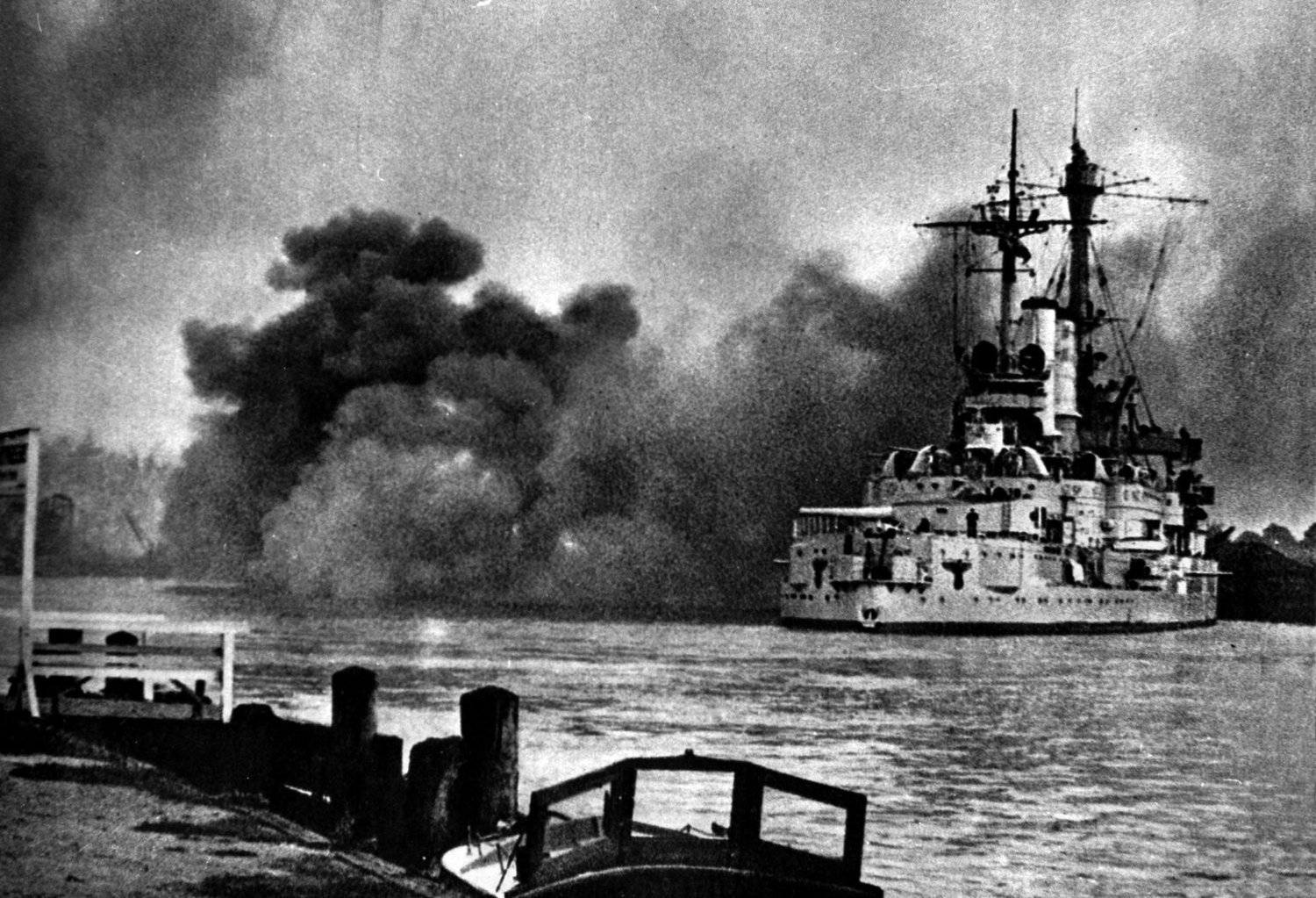
The morning mist hung low over Gdańsk Bay on 1 September 1939, when history pivoted on the smallest of hinges. At precisely 4:45 a.m., the German battleship Schleswig-Holstein—a relic from the Kaiser’s navy pressed into service for Hitler’s new war—opened fire on a modest Polish garrison occupying a thumb of land called Westerplatte.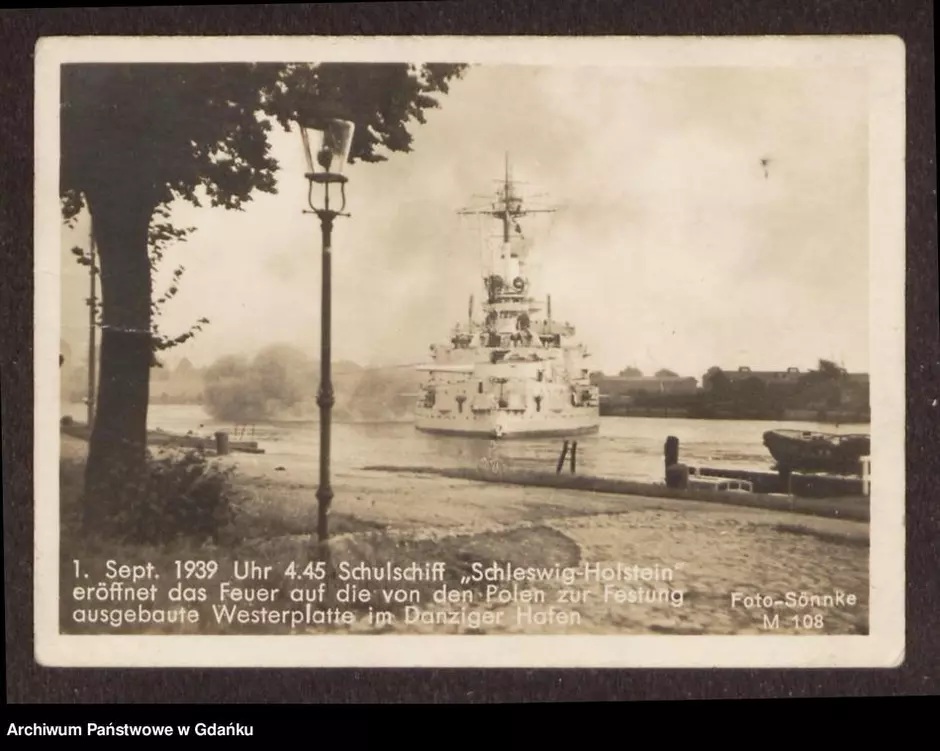
The morning mist hung low over Gdańsk Bay on 1 September 1939, when history pivoted on the smallest of hinges. At precisely 4:45 a.m., the German battleship Schleswig-Holstein—a relic from the Kaiser’s navy pressed into service for Hitler’s new war—opened fire on a modest Polish garrison occupying a thumb of land called Westerplatte.
In that thunderous moment, the opening shots of the Second World War began not with massed tanks, but with a grotesque mismatch: a pre-dreadnought battleship against a peninsular outpost. The Third Reich expected a victory within hours; instead, they were stymied for seven days by men who refused to acknowledge the obvious.
The Strategic Importance of the "Free City of Danzig"
To understand why 180 men found themselves facing the guns of a battleship, one must grasp the peculiar diplomatic fiction of the Free City of Danzig. Created by the Treaty of Versailles, Danzig existed in a state of suspended animation between Polish sovereignty and German longing.
The Westerplatte Military Transit Depot was Poland’s tenuous lifeline to the sea—a symbol of sovereignty planted on increasingly hostile soil. Officially, the depot was permitted only 88 soldiers. However, sensing the rising threat, Major Henryk Sucharski had secretly expanded the garrison to 180 men by September 1939.
Fortress Westerplatte: A Masterpiece of Deception
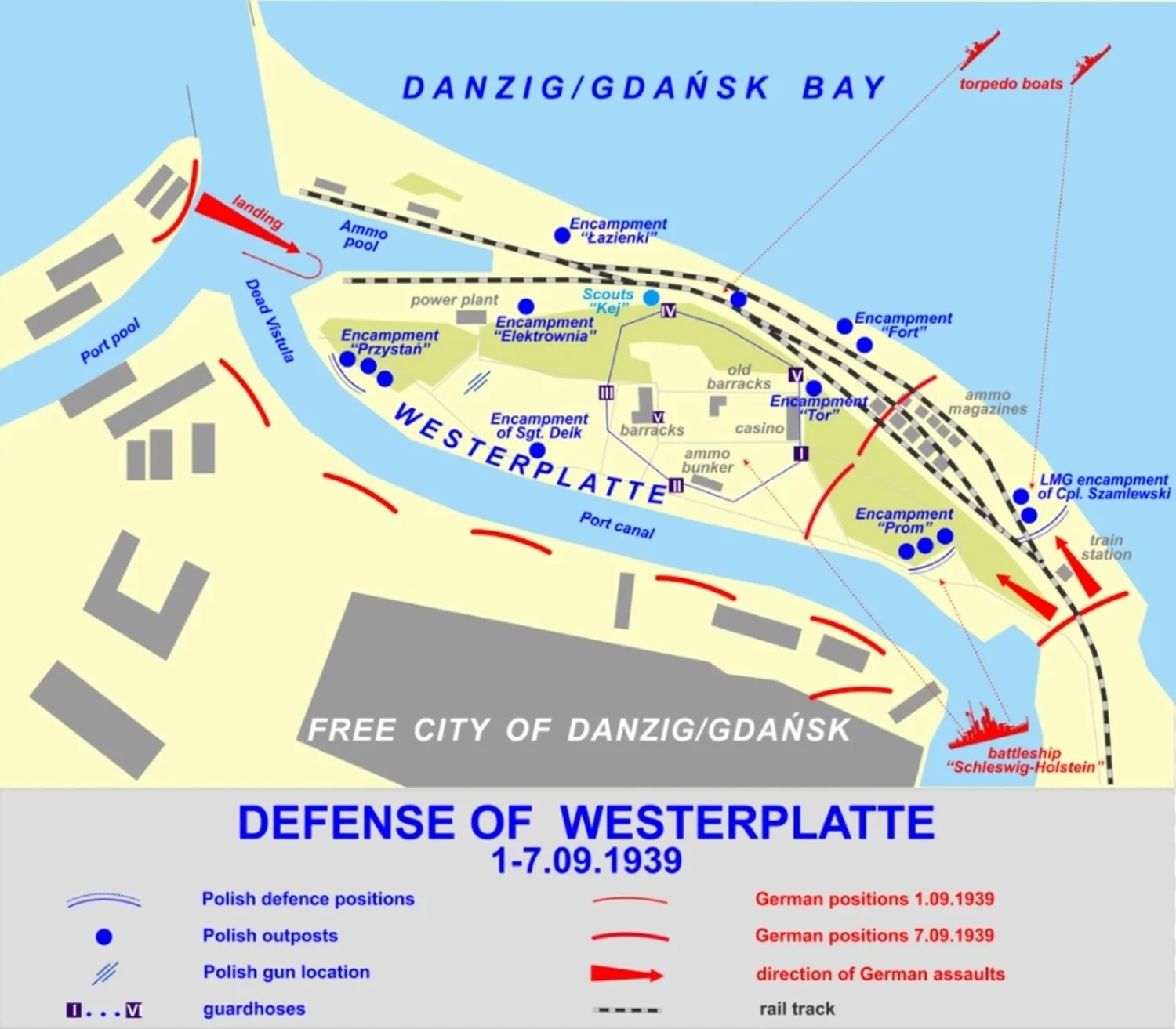
The peninsula, barely 1,800 meters long, was transformed through "patient deception" into a fortress that would have impressed the greatest military engineers. While international law forbade fortifications, the Poles used the "peculiarly Polish art" of ignoring the rules to build bunkers disguised as warehouses and administrative buildings.
Key defensive features included:
- Deceptive Barracks: Cleverly segmented to contain explosions and shield the wounded, with fireproof doors masquerading as office features.
- Interlocking Guardhouses: Five guardhouses were designed to appear innocuous while providing fields of fire that turned any assault into "tactical suicide".
- Secret Armament: The garrison utilized concealed Wz. 30 machine guns and a 37mm Bofors anti-tank gun that proved devastating to German landing craft.
Seven Days of Endurance: The Siege Timeline
The Wehrmacht’s reputation rested on swift victory and surgical precision, yet Westerplatte evolved into an embarrassment for German high command.
- September 1: The Schleswig-Holstein fires the first 11-inch shells. German marines are cut down by disciplined Polish fire at Guardhouse No. I.
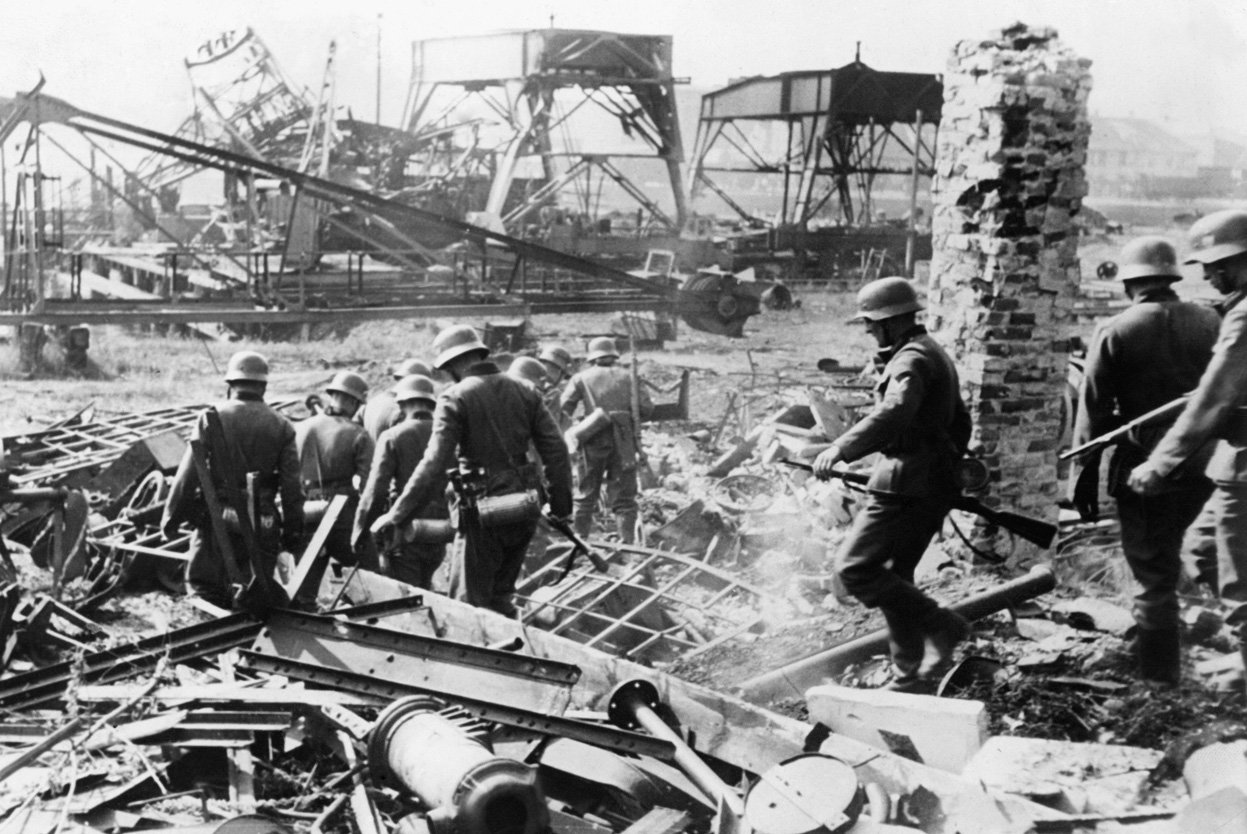
- September 2–4: Stukas scream from the sky, adding psychological terror to high-explosive destruction. Despite mounting casualties and contaminated water, the Polish flag continues to fly over the ruins.
- September 7: With ammunition depleted and the wounded suffering in a cellar-turned-hospital, Major Sucharski finally surrenders to save his remaining men.
The Legacy of the First Resistance
The surrender was conducted with rare military formality; the German commanders allowed the Polish officers to retain their swords as a gesture of respect. While the defence did not change the outcome of the campaign, it established a "standard of resistance measured by endurance".
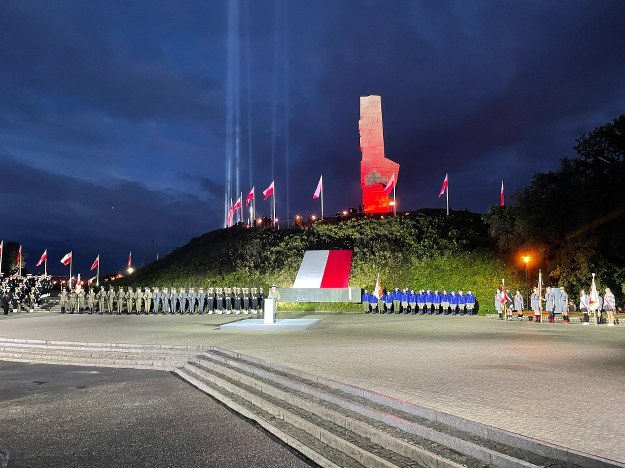
Westerplatte remains a symbol of the conviction that some things are worth fighting for even when they cannot be won.
Download the Free Ebook: Westerplatte – The First Resistance
Get the full, unvarnished narrative history of the 168-hour siege that stunned the Reich. Join author Ivo Vichev’s community of history enthusiasts and receive your copy of the complete 79-page edition immediately.
About the Author: Ivo Vichev
Ivo Vichev was born in Varna, Bulgaria, and later moved to Warsaw, Poland, where he studied history and public relations at the Polish Academy of Sciences. His work focuses on narrative history—serious research presented through the lens of human decisions and moments of uncertainty. Westerplatte: The First Resistance reflects his commitment to treating history not as a dry summary, but as a living memory.