

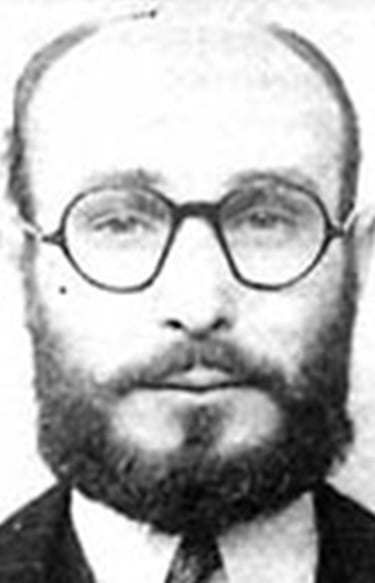
In the winter of 1941, a thirty-year-old Spaniard with no training in espionage, no connections to any intelligence service, and no particular qualifications beyond an overactive imagination decided to take down Adolf Hitler. Juan Pujol García had emerged from the Spanish Civil War with a burning hatred for totalitarianism in all its forms, having witnessed the brutalities of both the Republican and Nationalist factions. He had served on both sides of that conflict, an experience that left him profoundly changed. He would later claim, with no small amount of pride, that he had managed to fight for both armies without firing a single bullet for either. This was the man who would become the most consequential double agent of the Second World War. 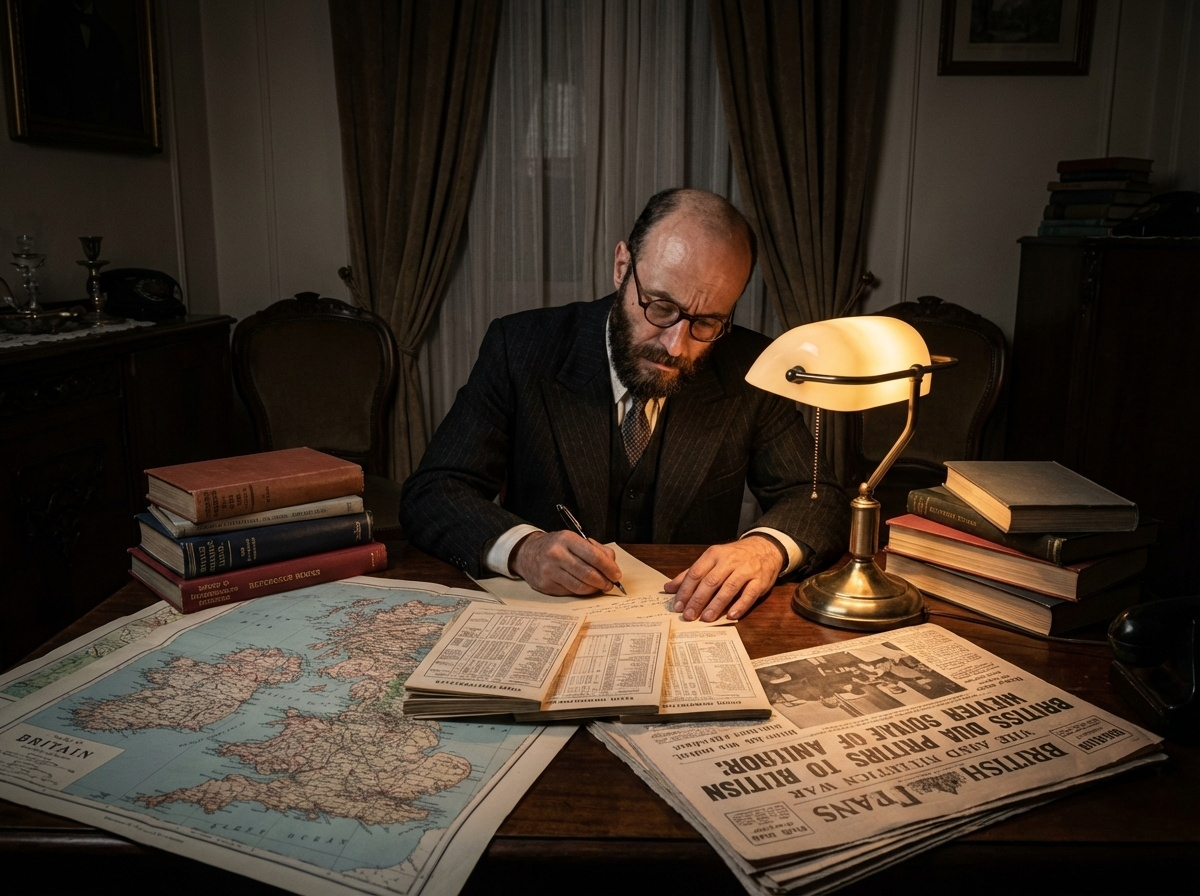
The journey began with rejection. García approached the British Embassy in Madrid three separate times in early 1941, offering his services as a spy against Nazi Germany. His wife Araceli even made her own approach on his behalf. Each time, the British dismissed him. They had no use for an unknown chicken farmer with no credentials and no apparent means of penetrating German operations. The embassy officials could not have known that they were turning away a man whose imagination would prove more valuable than entire networks of trained operatives.
Undeterred by British indifference, García formulated a plan of remarkable audacity. If the British would not accept him as a spy, he would become a German agent first and then offer himself to the Allies as a double agent with proven access. He created a fictional identity as a fanatically pro-Nazi Spanish government official with the ability to travel to Britain on diplomatic business. He even fooled a Lisbon printer into producing a fake Spanish diplomatic passport, convincing the man that García worked for the Spanish embassy. Armed with this fabricated persona, he approached the German Abwehr in Madrid. Where the British had shown only suspicion, the Germans exhibited enthusiasm. They enrolled him, gave him a crash course in espionage techniques including the use of invisible ink, provided him with a codebook, and handed him six hundred pounds for expenses. His mission was to travel to Britain and recruit a network of agents.
García never went to Britain. Instead, he relocated to Lisbon, where he embarked on an extraordinary campaign of fiction-writing disguised as intelligence reporting. Working from a tourist guidebook to Britain, reference materials, train timetables, newspaper shipping schedules, and newsreel footage he watched in local cinemas, he constructed elaborate reports that purported to come from various locations across the United Kingdom. His command of the material was imperfect. He once claimed that his contact in Glasgow "would do anything for a litre of wine," unaware of Scottish drinking preferences or the fact that Britain did not use the metric system. His expense reports were itemized rather than totaled because he could not navigate the British currency's non-decimal system of pounds, shillings, and pence. These errors might have exposed him had his German handlers possessed greater familiarity with British life, but they did not.
From Lisbon, García began constructing an imaginary espionage network. He invented sub-agents with detailed backstories, geographic postings, and distinct personalities. There was the KLM steward who served as a courier. There was a Swiss-German businessman in Liverpool. There was a Venezuelan student in Glasgow. The network grew with each passing month. When information proved incorrect or when British counterintelligence operations made certain reports impossible to verify, García simply blamed his invented agents for incompetence or created stories to explain the discrepancies. One of his fictional agents fell conveniently ill before a major fleet movement that García could not have known about, explaining why no report had been filed. Later, that same agent "died," and García arranged for an obituary to appear in a local newspaper as evidence. The Germans were persuaded to pay a pension to the agent's "widow."
The British became aware of García not through his repeated offers to work for them, but through Ultra, their program for intercepting and decrypting German communications. They had observed that someone was feeding the Germans intelligence from Britain, intelligence that appeared credible enough to influence German operations. In February 1942, the Kriegsmarine expended considerable resources attempting to locate a British convoy that García had reported sailing from Liverpool to Malta. No such convoy existed. It was a complete fabrication. The British counterintelligence service MI5 had launched a full-scale hunt for the spy responsible for these reports before they realized that the information was entirely invented by someone who had never set foot in Britain.
In April 1942, after the Americans had entered the war, García finally made contact with U.S. Navy Lieutenant Patrick Demorest in Lisbon, who recognized his potential and connected him with British intelligence. García was smuggled out of Lisbon, through Gibraltar, and arrived in Plymouth on April 24, 1942. There, he was received by MI5 officers Cyril Mills and Tomás Harris. Mills, who spoke no Spanish, quickly faded from the picture. Harris, a Spanish-speaking officer whose family had roots in Spain through the art dealing business, became García's partner in what the Official History of British Intelligence would later describe as "one of those rare partnerships between two exceptionally gifted men whose inventive genius inspired and complemented each other."
Mills had one enduring contribution: he suggested that García's codename be changed from "Bovril" to something more fitting for what he called "the best actor in the world." García became "Garbo," after Greta Garbo. The Germans, meanwhile, knew him as "Alaric," and they referred to his network as "Arabal."
Under MI5 control, the operation expanded dramatically. García and Harris wrote 315 letters averaging two thousand words each, all addressed to a post-office box in Lisbon. The correspondence was crafted to maintain García's persona as a verbose, fanatical Nazi willing to risk everything for the Führer's new world order. Together, they invented additional agents until the network comprised twenty-seven fictitious operatives, each with complete life histories, family relationships, character traits, and geographic postings. The invented agents included a Venezuelan in Glasgow, an indiscreet American army sergeant, a Greek deserter, and a Welsh nationalist leading a group of Fascists called the "Brothers of the Aryan World Order" in Swansea. The Official History notes that German intelligence in Spain became so inundated with material from García's network that they made no further attempts to infiltrate Britain with additional agents.
The information García supplied was a careful mixture of complete fabrication, genuine intelligence of minimal military value, and accurate information delivered too late to be useful. In November 1942, just before Operation Torch, the Allied landings in North Africa, one of García's agents on the River Clyde reported that a convoy of troopships and warships painted in Mediterranean camouflage had departed from port. The letter was sent by airmail and postmarked before the landings, but it was deliberately delayed by British Intelligence to arrive after the operation had commenced. The Germans could not fault García's reliability. They cabled back: "We are sorry they arrived too late but your last reports were magnificent."
In 1943, the Germans requested faster communication. García and Harris invented a radio operator who, by happy coincidence, was willing to offer his services. From August 1943 onward, virtually all of García's reports were transmitted by wireless. The Germans provided García with their strongest hand encryption system, which British codebreakers at Bletchley Park exploited. García's encrypted messages were received in Madrid, manually decrypted, and re-encrypted with an Enigma machine for retransmission to Berlin. Having both the original text and the Enigma-encoded version gave the codebreakers ideal material for attacking the Germans' Enigma key.
The deception operation reached its culmination in 1944. In January, the Germans informed García that they believed the Allies were preparing for a large-scale invasion of Europe and looked to him to keep them informed. This was Operation Overlord, and García was to play a central role in Operation Fortitude, the elaborate deception designed to convince the Germans that the main invasion would occur not at Normandy, but at the Pas de Calais.
Between January 1944 and D-Day, García sent more than five hundred radio messages to Madrid, sometimes transmitting more than twenty messages in a single day. The reports came from all corners of his fictitious network. The objective was not merely to disguise the preparations for Overlord, but to persuade the Germans that the actual landings in Normandy were a diversionary feint and that the true invasion would strike at the Pas de Calais.
At the heart of the deception was the First U.S. Army Group, known as FUSAG. This formation supposedly comprised eleven divisions totalling one hundred fifty thousand men under the command of General George S. Patton, whom the Germans considered one of the finest tank commanders in the Allied forces. FUSAG appeared to be stationed in Kent and Essex, positioned for a short crossing to Calais. The problem was that FUSAG did not exist. It was a ghost army, sustained by fake planes, inflatable tanks, and vans driving through the countryside transmitting simulated radio chatter. German reconnaissance aircraft photographed what appeared to be vast military encampments. García's reports confirmed the presence of these formations.
Special arrangements were made for the night of June 5-6, 1944. García informed the Germans that a sub-agent was about to arrive with urgent information and requested that the German radio operators stand by through the night to receive his transmission. The critical message was to be sent at 3:00 AM on June 6, reporting that troops were being issued embarkation kits including vomit bags and that the invasion force was about to depart. The message would arrive too late for the Germans to prevent the landings, but early enough to cement García's credibility as an agent who had warned them in advance.
The German radio operators failed to keep the scheduled appointment. No one answered García's transmission until 8:00 AM. By then, the invasion was already underway. This blunder allowed García to add more genuine but now obsolete operational details to his message, enhancing his standing with his handlers. He also expressed theatrical outrage: "I cannot accept excuses or negligence. Were it not for my ideals I would abandon the work."
Three days after D-Day, on June 9, García transmitted what may have been the most consequential message of the entire operation. It was very long and described a meeting he had convened with his top agents. He asked that it be conveyed urgently to the German High Command. The message pointed out that units from Patton's First U.S. Army Group had not participated in the Normandy landings and therefore the initial assault should be considered a diversion. The real blow would fall on the Pas de Calais.
The Germans accepted this assessment completely. The message was passed to Adolf Hitler and the Oberkommando der Wehrmacht. The deception held throughout July and August 1944. Field Marshal Gerd von Rundstedt, the German Commander-in-Chief in the west, refused General Erwin Rommel's proposal to move two armoured divisions and nineteen infantry divisions from the Pas de Calais to reinforce the defence in Normandy. A post-war examination of German records revealed that no fewer than sixty-two of García's reports had been included in German High Command intelligence summaries during Operation Fortitude. There were more German troops in the Pas de Calais region at the end of June than there had been on D-Day.
In late June, the Germans instructed García to report on the landing points of V-1 flying bombs. Unable to provide false information without arousing suspicion and unwilling to provide accurate information that would help the Germans improve their targeting of London, Harris arranged for García to be "arrested." He returned to duty several days later with an official letter of apology from the Home Secretary for his unlawful detention and a convenient reason to avoid traveling into London.
On July 29, 1944, García received a message that the Führer had personally authorized the award of the Iron Cross, Second Class, in recognition of his extraordinary services. This decoration was normally reserved for front-line combatants and required Hitler's direct approval. The irony was complete. The Germans had bestowed one of their highest honours on a man who had done more than perhaps any other individual to deceive them about the most consequential military operation of the war. García, through Harris, transmitted his humble thanks for such an honour, expressing that he was truly unworthy.
Four months later, on November 25, 1944, García received the Member of the Order of the British Empire from King George VI. He had achieved the distinction, possibly unique in the history of the Second World War, of receiving military decorations from both sides of the conflict. The Germans never discovered they had been fooled.
Over the course of the war, the Germans paid García approximately three hundred forty thousand dollars to support his network of agents. Every mark went to fund the operations of people who did not exist, whose elaborate life stories and espionage activities flowed entirely from the combined imaginations of a former chicken farmer and a Spanish-speaking British intelligence officer working out of a London office.
After the war, García feared reprisal from surviving Nazis who might learn the truth of his activities. With the help of MI5, he travelled to Angola in 1949, where he staged his death from malaria. He then relocated to Venezuela, settling in Lagunillas, where he lived in obscurity running a bookstore and gift shop. He divorced his first wife Araceli, who had endured considerable strain during the war years trapped in a small house in Harrow with their child while her husband conducted his elaborate deceptions, and married Carmen Cilia. They had three children together.
For decades, García's story remained hidden. In 1971, British politician and historian Rupert Allason, writing under the pen name Nigel West, began investigating the identity of the legendary Garbo. Former intelligence officers recalled the operation but none knew Garbo's true name. Eventually, through Anthony Blunt, the Soviet spy who had penetrated MI5during the war, Allason learned that Garbo was "either Juan or José García." The investigation stalled until 1984, when a former MI5 officer provided García's full name. Allason hired a research assistant to telephone every J. García in the Barcelona telephone book, an extremely common name in Spain. Eventually they reached García's nephew, and a meeting was arranged in New Orleans on May 20, 1984.
At Allason's urging, García traveled to London and was received by Prince Philip at Buckingham Palace in an unusually extended audience. He was reunited with surviving colleagues at the Special Forces Club. On the fortieth anniversary of D-Day, June 6, 1984, García toured the beaches of Normandy and paid his respects to the dead.
Juan Pujol García died in Caracas on October 10, 1988, at the age of seventy-six. He is buried in Choroní, a town inside Henri Pittier National Park on the Caribbean coast of Venezuela.
Tomás Harris, the MI5 handler whose partnership with García had produced the greatest deception operation of the war, left the Service after the conflict ended. He spent much of his time in Spain and died in an automobile crash on Majorca in 1964.
The legacy of what García and Harris created extends beyond the immediate tactical success of protecting the Normandy landings. They demonstrated that in the realm of intelligence operations, imagination could prove more powerful than vast networks of genuine agents. A single inventive mind, given the right support, could construct an entire fictional world that seasoned intelligence professionals accepted as real. The twenty-seven agents of García's network never existed except as entries in German files and figments of extraordinary literary collaboration. The Germans trusted them completely. They paid their salaries. They mourned their deaths. They awarded their creator one of their highest military honours for services rendered. The whole edifice was made of nothing more substantial than the words García and Harris put on paper and the signals Charles Haines transmitted into the ether.
The operation also revealed something about the nature of deception itself. The Germans were not fools. The Abwehr officers who ran García as an agent were experienced intelligence professionals. They evaluated his reports, cross-referenced his information, and tested his reliability over years. The deception succeeded not because the Germans were incompetent, but because García understood intuitively how to construct a narrative they would believe. He created failures and setbacks for his fictional agents because real networks experience failures and setbacks. He complained about his sub-agents' unreliability because real handlers complain about their sources. He expressed frustration with missed communications because real operatives experience frustration. The texture of authenticity came from García's instinct for the small, humanizing details that made his fiction indistinguishable from fact.
In the end, the man who could not convince the British Embassy in Madrid to take him seriously became, in the words of MI5's official history, "the greatest double agent of the Second World War." He achieved this not through training, connections, or resources, but through the simple determination that he would find a way to make his contribution "for the good of humanity." When one door closed, he created his own entrance. When the British would not have him, he made himself indispensable. The entire vast apparatus of German intelligence in Britain was, in the final analysis, one Spanish chicken farmer who hated Adolf Hitler and possessed a gift for telling stories that people believed.