

The Monster That Fell From Heaven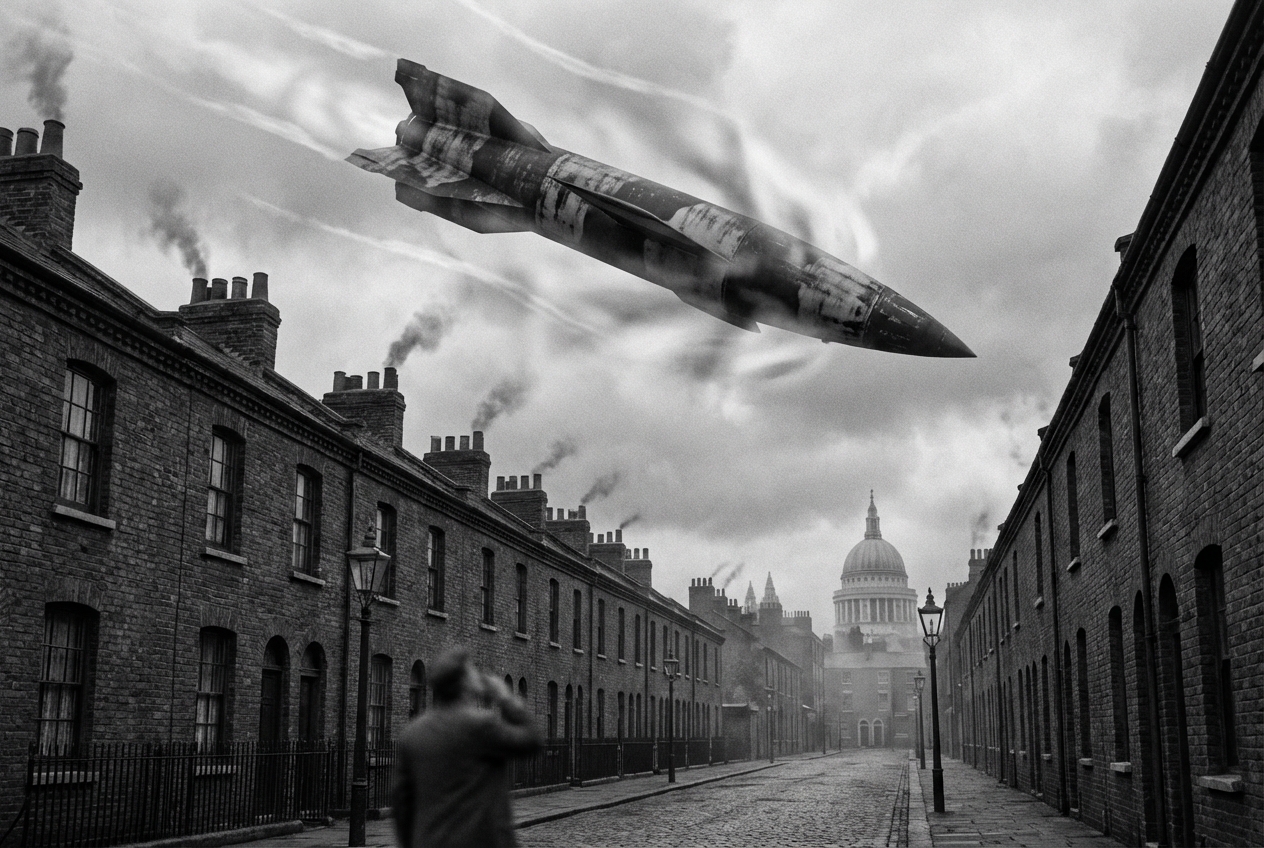
Picture this: You’re in London, it’s September 1944, and you’ve just survived years of the Blitz. The war’s turning, everyone knows it, and there’s this cautious optimism creeping back into daily life. Then suddenly, without any warning whatsoever - no air raid sirens, no drone of engines, nothing - there’s an absolutely massive explosion. Buildings gone, people dead, and nobody has the foggiest idea what just happened.
That was the V2, and it was like nothing anyone had ever seen before. This wasn’t your typical bomb or even the V1 “buzz bomb” that at least gave you a few seconds’ warning when its engine cut out. The V2 was death from a clear blue sky, travelling faster than sound itself. The first thing you heard was the explosion - the sound of its arrival only caught up after it had already obliterated a city block.
The technical specifications are genuinely mind-boggling for the 1940s. We’re talking about a ballistic missile that stood 14 metres tall, weighed nearly 13 tonnes when fully fuelled, and could hurl a one-tonne warhead roughly 300 kilometres. It burned a mixture of liquid oxygen and ethanol that would make your eyes water, reaching speeds of over 5,000 kilometres per hour in its descent - that’s faster than Mach 4. The bloody thing climbed to 80-90 kilometres altitude, touching the fringe of space, before plummeting back down in a silent, supersonic dive.
The engineering here was a quantum leap beyond anything that existed. While the Allies were building thousands of heavy bombers - clunky, slow, vulnerable things that could be shot down - Wernher von Braun and his team at Peenemünde were essentially inventing the future. They had to create everything from scratch: guidance systems using gyroscopes and analogue computers, fuel injection systems, aerodynamic fins that could work in both atmosphere and near-vacuum. It was rocket science in the most literal sense, and they were making it up as they went along.
The Blood-Soaked Foundation of Wonder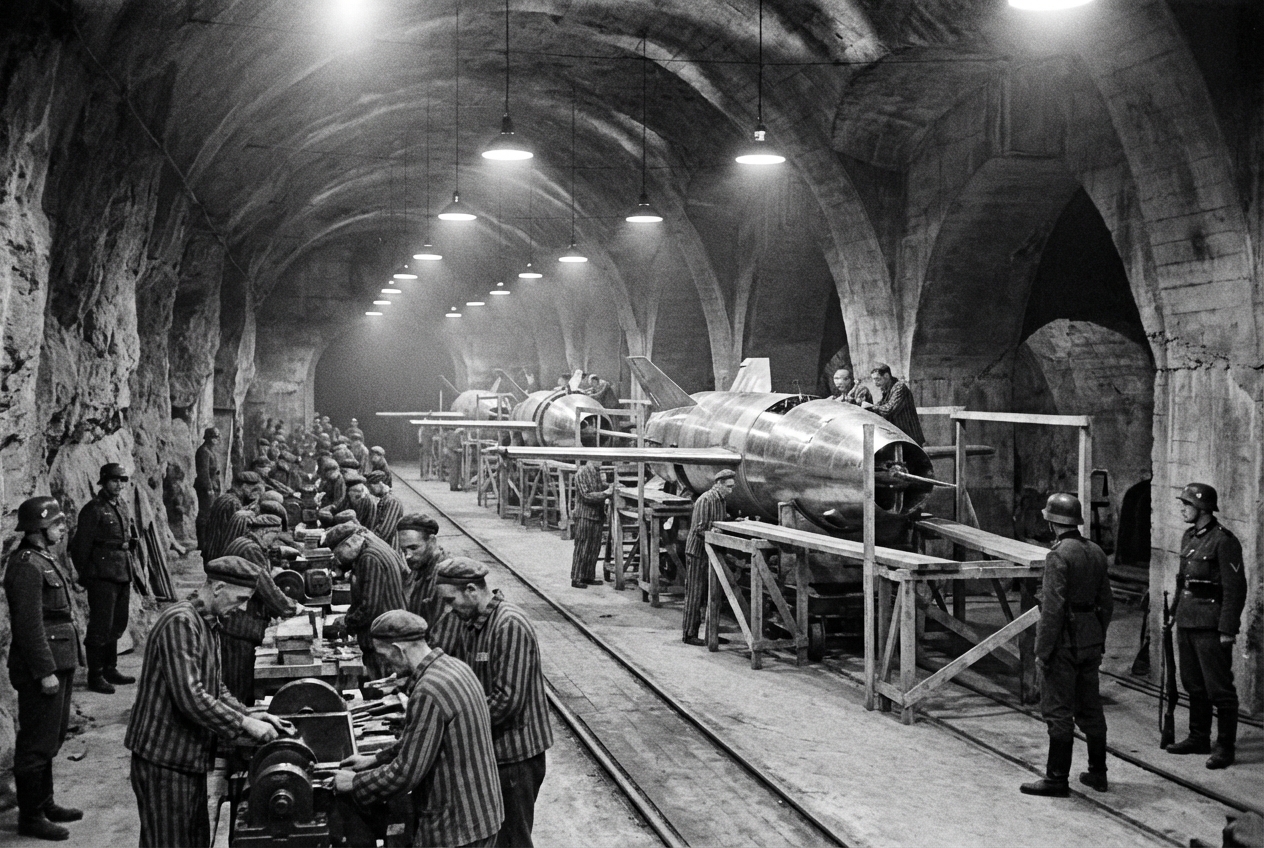
Now, here’s the part that usually gets glossed over in the shiny documentaries about space exploration, but we absolutely cannot ignore it. The V2 holds a unique and horrific record in the history of warfare: it’s the only weapon system that killed more people in its production than in its deployment.
Let that sink in for a moment.
After the RAF bombed Peenemünde in August 1943, production was shifted to an underground factory complex called Mittelwerk, buried deep in the Harz Mountains. It was literal hell on earth. The workforce wasn’t made up of well-paid German technicians working patriotically for the Fatherland. It was slave labour from the Mittelbau-Dora concentration camp - Russians, French, Poles, Jews, political prisoners - worked to death in damp, freezing tunnels while assembling the most advanced technology the world had ever seen.
The conditions were appalling even by concentration camp standards. Prisoners worked 12-14 hour shifts in tunnels choked with dust and toxic fumes, with virtually no safety equipment, subsisting on starvation rations, disease everywhere, and beatings as routine management practice. They slept in underground barracks or overcrowded wooden huts outside, and corpses piled up daily. People were hanged in front of their fellow workers as “examples” of what happened to saboteurs.
Here’s the statistical horror that should make us all pause: an estimated 12,000 to 20,000 prisoners died building these rockets, while the V2 attacks themselves killed roughly 7,000 to 9,000 civilians across London, Antwerp, Liège, and other targets. That’s a ratio of roughly three deaths in production for every death in combat. It was a weapon of mass destruction at both ends of its trajectory, consuming human lives in its creation and deployment with equal ruthlessness.
The Strategic Blunder: Genius Wasted on Folly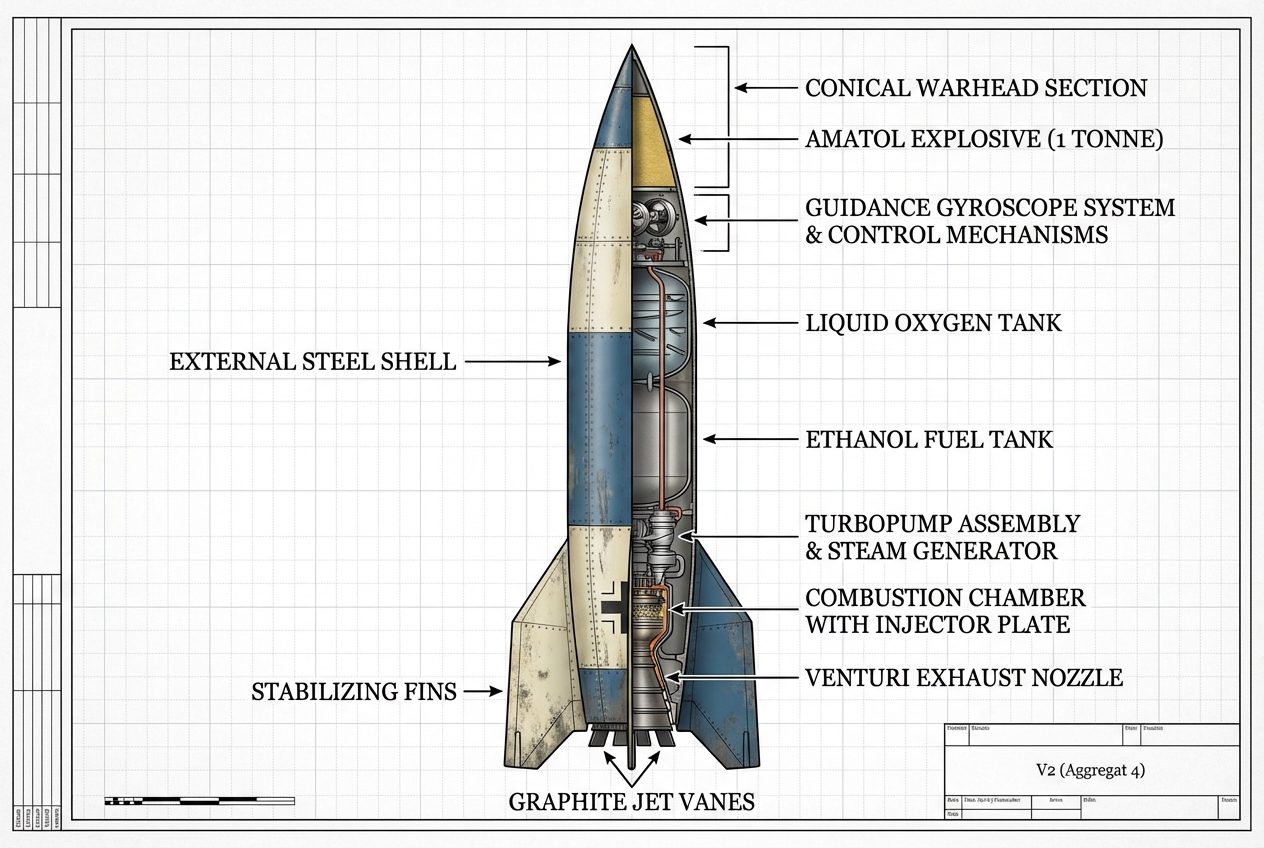
So if this technological marvel was so advanced, why didn’t Germany win the war? Why are we sitting here speaking English instead of German? The answer lies in what Tuchman would have recognised as classic governmental folly - the pursuit of policies contrary to one’s own interests, driven by pride, wishful thinking, and the intoxicating appeal of dramatic gestures.
The V2 was obscenely expensive. Each rocket cost roughly as much as a fighter aircraft, but unlike a plane that could fly dozens of sorties, the V2 was a one-shot deal. It delivered its payload and then vaporised. From a purely military perspective, it was a colossal waste of resources. A single V2 caused damage comparable to what an RAF Lancaster bomber could deliver in one mission, but the Lancaster could return the next night and do it again.
The numbers are stark: Germany fired approximately 3,000 V2s during the entire war, mostly at London and Antwerp. The total civilian casualties were roughly equivalent to what a handful of heavy conventional bombing raids could achieve. Meanwhile, the resources poured into the V2 program - the scarce metals, precision instruments, skilled labour, fuel, and transportation networks - could have produced thousands more fighter planes or anti-tank weapons that might have actually delayed Germany’s defeat.
Albert Speer, Hitler’s armaments minister, later claimed that redirecting V2 resources to conventional weapons could have prolonged the war significantly. He wasn’t wrong about the scale of the resource drain, even if his post-war testimony was self-serving.
But Hitler was obsessed with “Vergeltungswaffen” - weapons of retaliation. He loved the psychological terror, the dramatic symbolism of striking back at London without warning. The V2 fed his megalomaniacal fantasy that some sudden, spectacular blow could reverse Germany’s strategic position. It was magical thinking elevated to state policy, and it made defeat more certain, not less.
The Terrifying What-Ifs That Keep Historians Awake
Here’s where the story becomes genuinely chilling, though. While the V2 as actually deployed couldn’t have won the war, several alternative scenarios could have changed everything.
Timing: If the V2 had been operational in 1942 or early 1943, before the strategic tide had turned, the psychological impact could have been devastating. Imagine London under sustained ballistic missile attack while the Afrika Korps was still advancing and the Eastern Front was in doubt. Britain’s resolve, already tested by the Blitz, might have cracked under the strain of indefensible attacks.
Scale: If Germany had managed to produce not 3,000 but 30,000 V2s, the cumulative effect could have been war-changing. The weapon’s terror value increased exponentially with frequency - one or two attacks were shocking, but a sustained campaign of daily strikes might have forced Britain to negotiate.
Nuclear Capability: This is the nightmare scenario that haunts every historian who studies this period. The V2 was the perfect nuclear delivery system - fast, uninterceptable, with sufficient range to hit any target in Britain from occupied Europe. If Germany had developed atomic weapons and married them to V2 technology, the war would have ended very differently. London could have been simply erased, and there wouldn’t have been a thing Churchill could have done about it.
Fortunately, Germany’s nuclear program was fragmented, underfunded, and conceptually behind the Allied Manhattan Project. But the margin wasn’t as comfortable as we might like to think.
The Moral Paradox of Wernher von Braun
At the centre of this story stands one of history’s most morally complex figures: Wernher von Braun himself. Tall, charismatic, and brilliant, he was a man who genuinely dreamed of exploring the cosmos but ended up raining death on civilians to fund his research.
Von Braun started as a space enthusiast, the sort of bloke who might have been building model rockets in his backyard if he’d been born in a different time and place. But to pursue his dreams, he needed funding, and in 1930s Germany, the only institution willing to back rocket research was the military. So he made his Faustian bargain: join the Nazi Party, become an SS officer, and build weapons of terror to advance the cause of space exploration.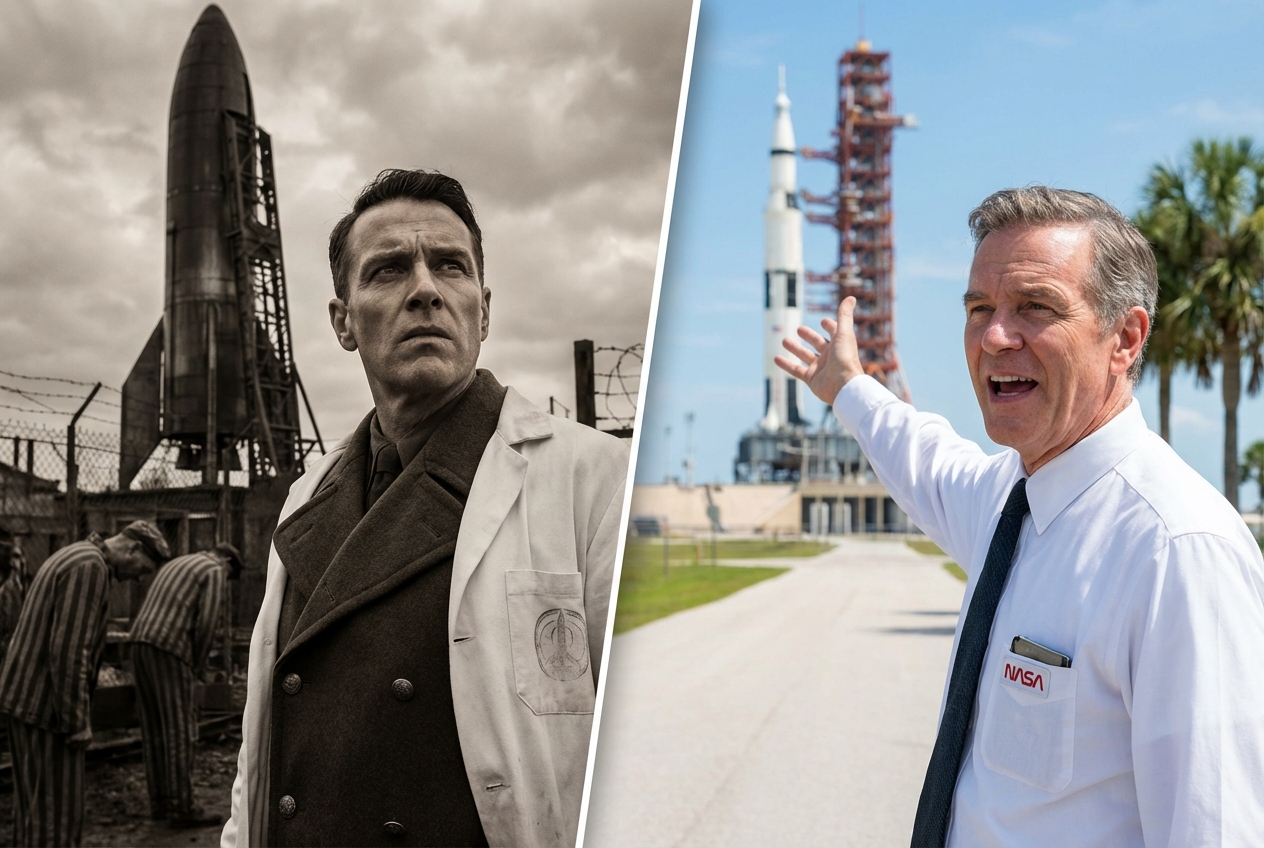
This is what makes the V2 story so unsettling - von Braun wasn’t a cartoon villain or a raving ideologue. He was a brilliant, ambitious pragmatist who chose to collaborate with a murderous regime because it gave him the resources to pursue his passion. He knew about the slave labour, witnessed the conditions at Mittelwerk, and kept working. After the war, he claimed his job was simply to get rockets into space - what they carried wasn’t his department.
History suggests that moral evasion isn’t good enough. The V2 reminds us that you can’t easily separate the beauty of scientific achievement from the horror of its application. Genius without conscience can be just as destructive as outright malevolence.
The Legacy That Conquered the World
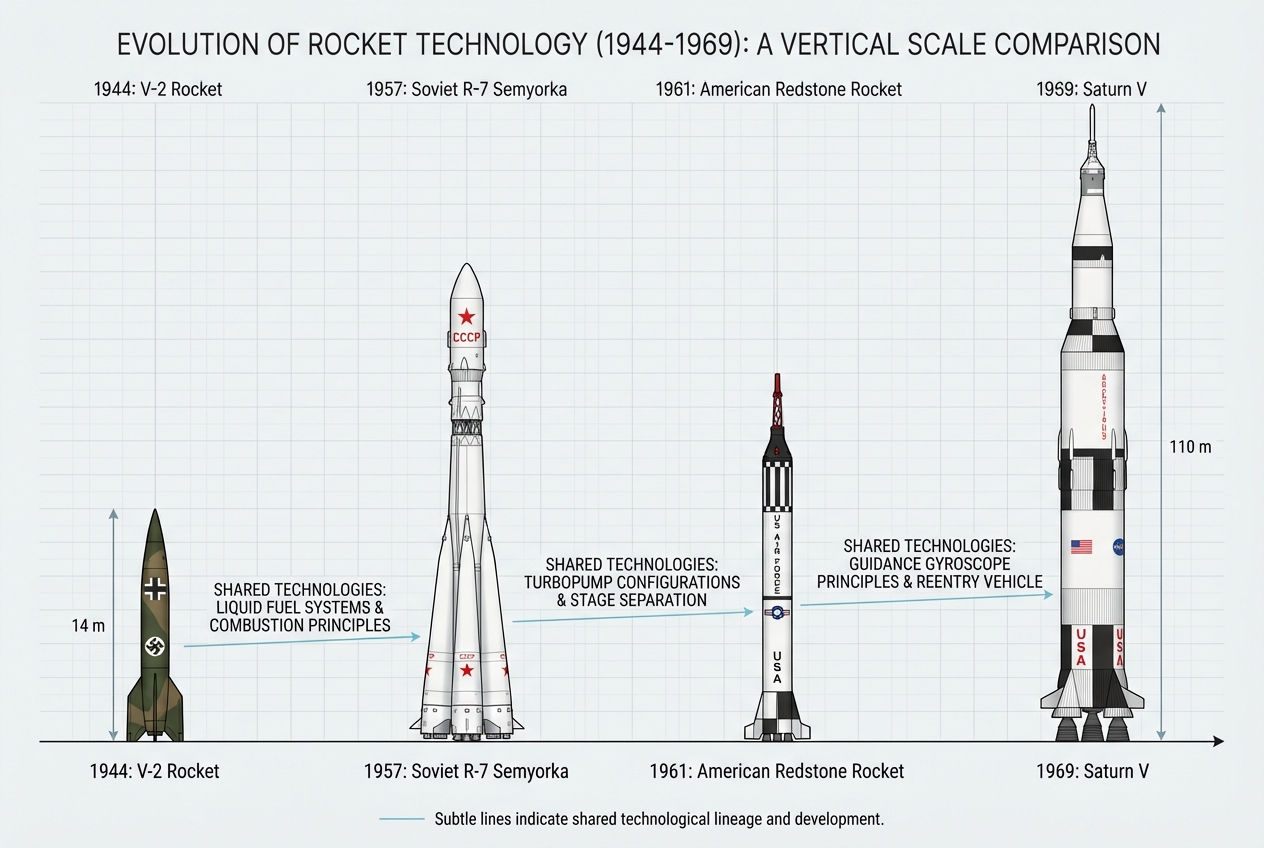
The V2’s real impact wasn’t on World War II itself, but on everything that came after. This weapon fundamentally changed warfare and geopolitics for the remainder of the 20th century and beyond. Every ballistic missile that followed, from Cold War ICBMs to the rockets that put satellites in orbit and humans on the Moon, can trace its lineage directly back to Peenemünde.
After Germany’s surrender, both superpowers launched frantic operations to capture German rocket scientists and V2 technology. Operation Paperclip saw the Americans spirit away von Braun and his key team members, whitewash their records, and set them up in Alabama to build rockets for the US military. The Soviets grabbed what they could of the remaining scientists and hardware, reverse-engineering V2 technology into their own missile programs.
The bitter irony is profound: the weapon built by slave labour to terrorise civilians became the foundation for humanity’s greatest exploratory achievement. The Redstone rocket that carried Alan Shepard into space was a direct descendant of the V2. The R-7 that launched Sputnik incorporated V2 design principles. The Saturn V that took Neil Armstrong to the Moon was designed under von Braun’s leadership, using knowledge gained from those underground factories where thousands died.
Every time we see a rocket launch, every time we use GPS satellites or watch the International Space Station pass overhead, we’re looking at the technological legacy of the V2. We built the modern world on a foundation laid in the slave tunnels of Mittelwerk, and that uncomfortable truth can never be entirely separated from our achievements in space.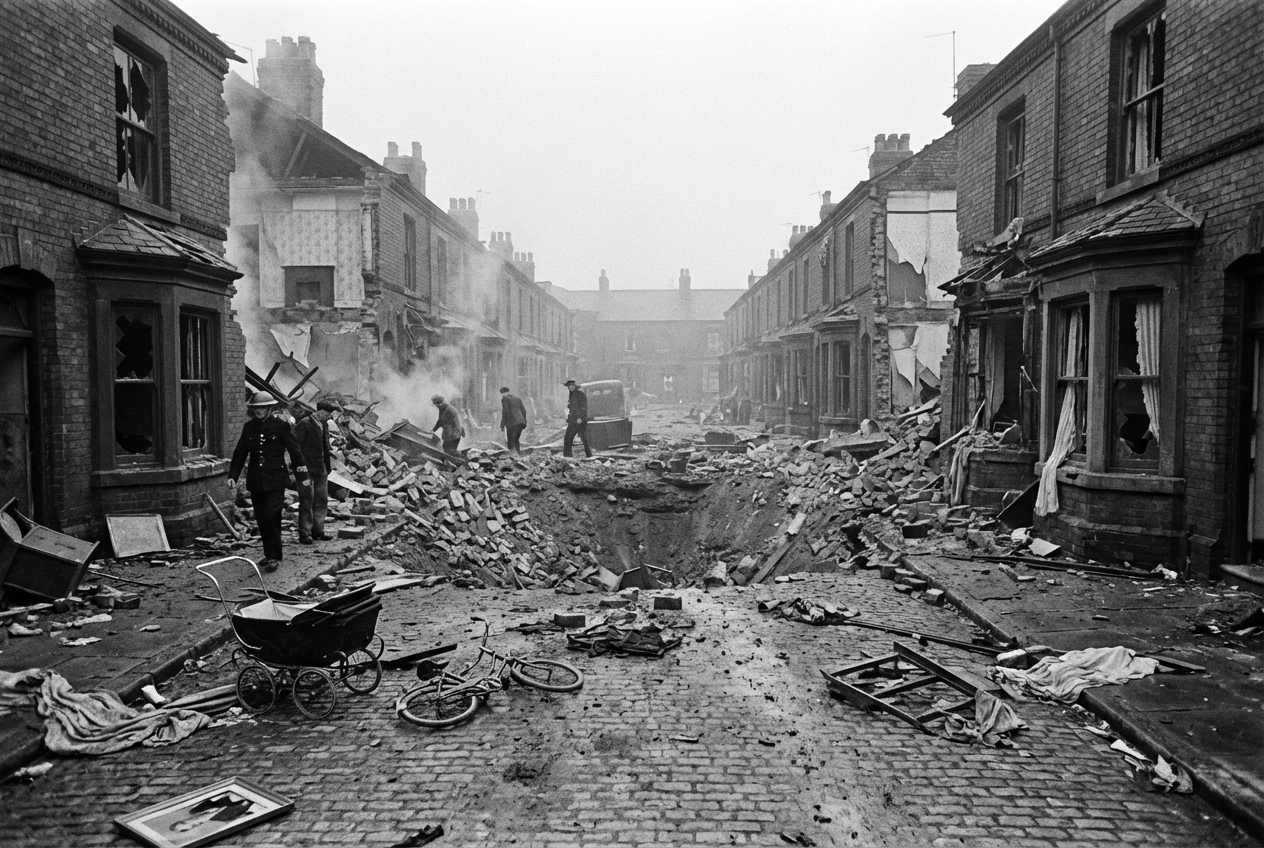
The Real Terror: The Banality of Technological Evil
When people ask whether the V2 could have won the war, they’re actually engaging in a form of comfortable thinking. They’re suggesting that wars are decided by wonder weapons and technological breakthroughs - neat, tidy, cinematic explanations that make complex history feel manageable.
The terrifying truth is messier and more disturbing. The V2 represents something far more chilling than a weapon that might have changed military outcomes. It demonstrates how easily a society can channel genius, resources, and human lives into projects that are simultaneously technologically brilliant and morally catastrophic.
The real horror isn’t that the V2 nearly won the war - it’s that it shows how ordinary, intelligent people can enable monstrous systems while telling themselves they’re just doing their jobs, advancing science, or serving a greater cause. Von Braun and his team weren’t all fanatical Nazis; many were simply engineers and scientists who chose career advancement and scientific achievement over moral courage.
This is the lesson that should keep us awake at night: we don’t need our monsters to be invincible to do lasting damage. We just need them to be believable enough, glamorous enough, and wrapped in sufficient scientific prestige to make otherwise decent people shrug and say, “Well, someone’s going to build it - might as well be us.”
What We Take Away From This Madness
The V2 story offers several uncomfortable truths that remain relevant today. First, technology is morally neutral - the same innovations that can explore the cosmos can also rain destruction on cities. The path from scientific breakthrough to human benefit is never guaranteed and often runs through very dark places.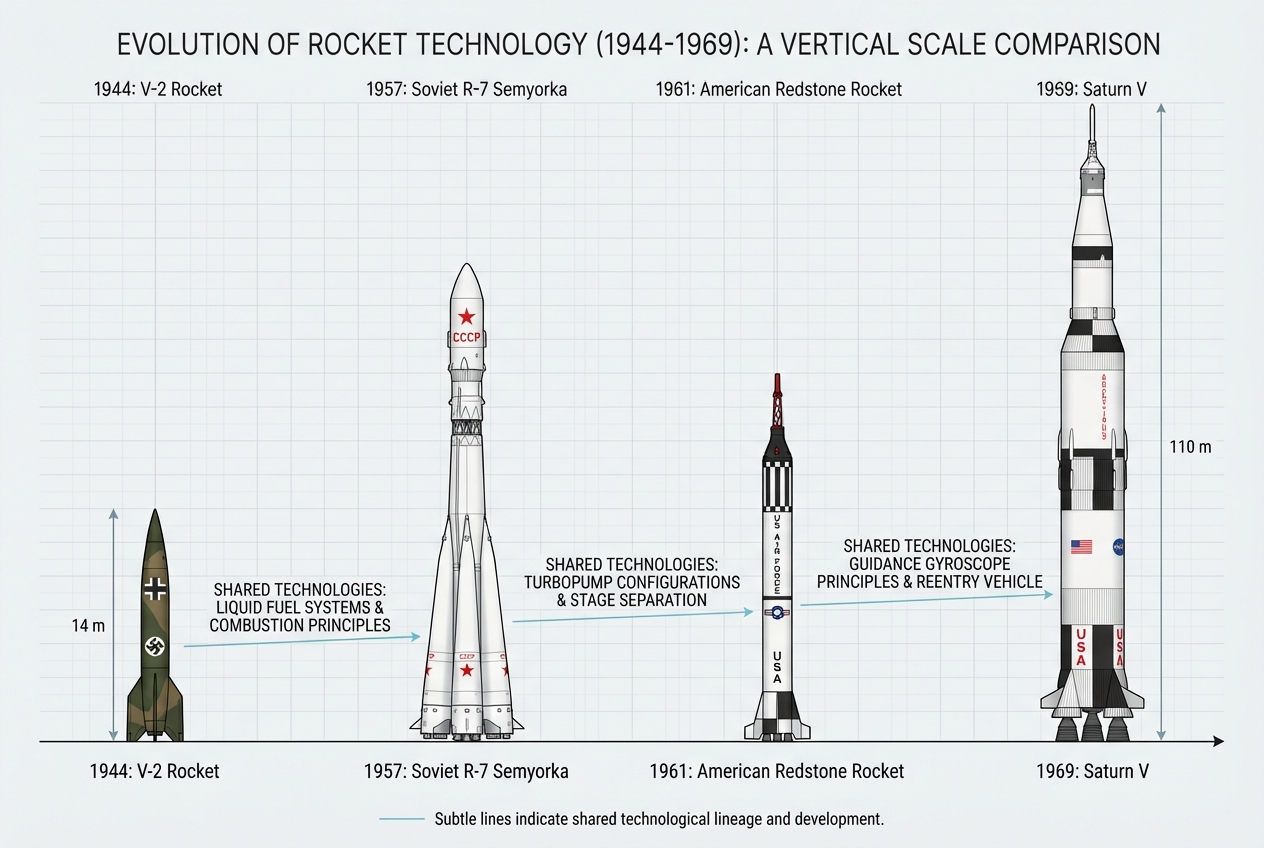
Second, “wonder weapons” are frequently symptoms of strategic desperation rather than solutions to strategic problems. Leaders under pressure are drawn to dramatic, symbolic fixes that look powerful but don’t address underlying realities. The V2 was ultimately Hitler’s refusal to face the fact that Germany was outproduced, outnumbered, and strategically doomed.
Third, the line between scientific progress and complicity in evil is thinner than we’d like to admit. The V2 program shows how easily brilliant minds can rationalise collaboration with terrible systems when the alternative might mean abandoning their life’s work.
The weapon that could have won the war didn’t, but it did something arguably more significant: it showed us the future. Not just the future of warfare, but the future of human capability married to human folly. We learned to touch the stars, and we did it by building better ways to kill each other.
That’s the terrifying truth about the V2 - not that it nearly changed history, but that it perfectly represents our species’ greatest strength and most dangerous weakness: our ability to achieve the impossible, regardless of whether we should.
So next time you watch a rocket launch or use your smartphone’s GPS, remember where that technology came from. Remember the price that was paid in those underground tunnels, and remember that the next great technological breakthrough might demand similar moral choices from all of us.
The V2 couldn’t have won the war, but it did win the future. Whether that’s ultimately a victory or a defeat remains an open question.