

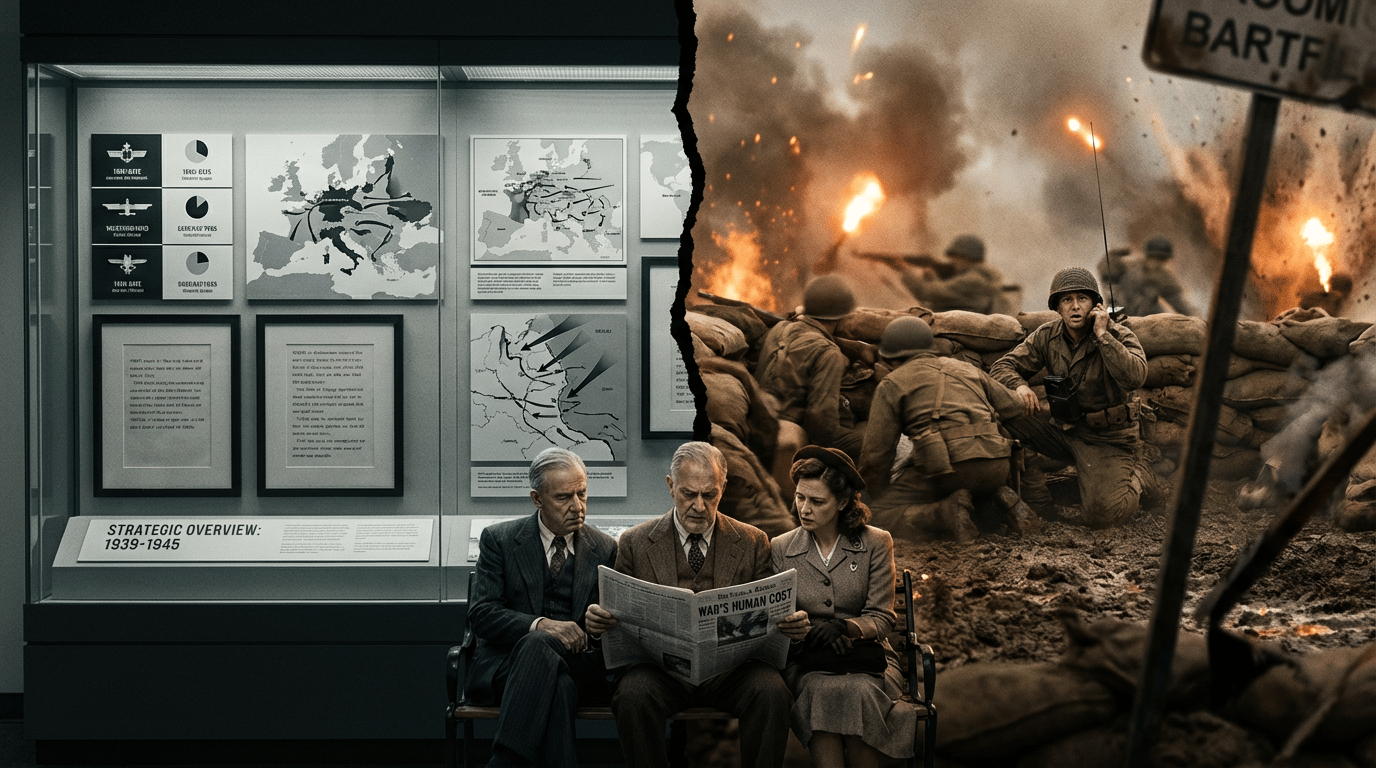
In the winter of 1944, a nineteen-year-old German conscript crouched in a frozen foxhole somewhere east of the Vistula, his fingers too numb to feel the trigger of his rifle. He did not know that the Reich was collapsing, that the war would end in four months, or that the strategic withdrawal his officers spoke of was merely a euphemism for catastrophe. He knew only that he was hungry, that the man beside him had not moved in several hours, and that the sound of Soviet artillery was growing closer. Somewhere across the shattered landscape, a Polish woman his mother's age was hiding her last sack of flour beneath the floorboards of a farmhouse that had already been looted twice. She did not know which army would come next, or whether it would matter.
These two people—whose names appear in no official record, whose fates remain unknown—experienced the Second World War in a manner that no textbook has ever captured. Their war was not made of arrows sweeping across maps or percentages of industrial output. It was made of cold, of silence, of the particular terror that comes from not knowing what the next hour might bring. And it is precisely this dimension of history—the lived, the felt, the uncertain—that conventional accounts have so thoroughly erased.
The Problem With How We Tell This Story
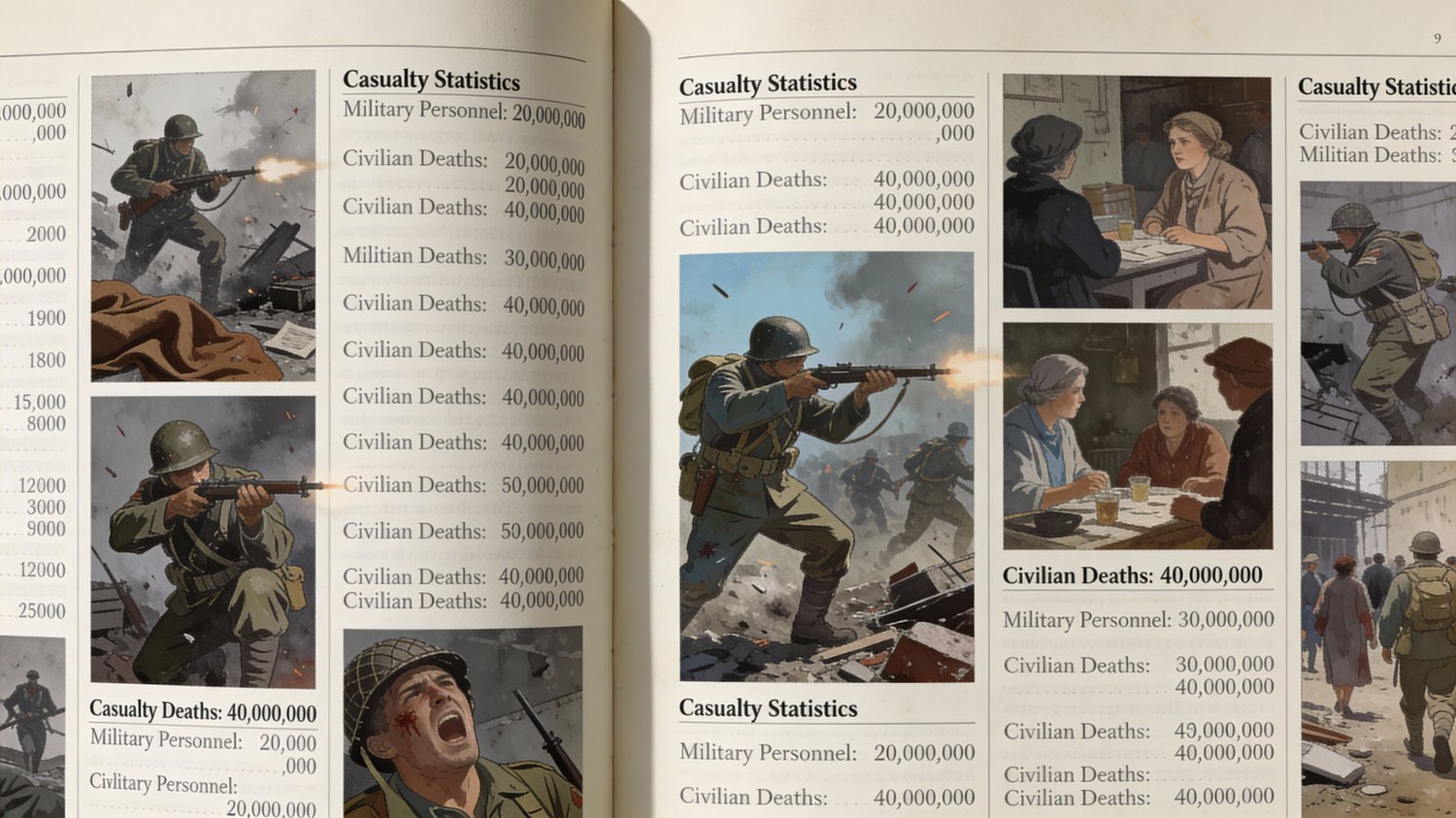
Open any secondary school textbook, any popular summary, any documentary voice-over script, and you will encounter the Second World War as a kind of vast mechanism. Dates click into place with reassuring precision: September 1939, June 1941, December 1941, June 1944, May 1945. Arrows indicate offensives and retreats. Figures enumerate the dead in neat columns. The narrative proceeds with the confidence of a story whose ending is already known, because of course it is—we are telling it backwards, from the vantage point of victory and judgement.
This approach is not wrong, precisely. The dates are accurate, the figures broadly correct, the strategic analysis often sophisticated. The textbook does what textbooks are meant to do: it organises, it simplifies, it renders comprehensible. The trouble is that comprehensibility comes at a cost, and the cost is truth—not factual truth, but experiential truth, the kind that makes history meaningful rather than merely informative.
When we reduce the war to outcomes and explanations, we perform a subtle but profound distortion. We transform chaos into order, contingency into inevitability, human beings into abstractions. The soldier becomes a unit, the civilian becomes a statistic, the refugee becomes a flow. Moral complexity flattens into the comfortable binary of good against evil, as though sixty million deaths could be tidily sorted into categories of heroism and villainy. The war becomes something that happened to History, rather than something that happened to people.
The Chasm Between Knowledge and Understanding
Consider for a moment what it meant to be a British infantryman on the morning of 6 June 1944, packed into a landing craft pitching through the grey Channel swell towards a beach whose defences he could not see. He had been briefed, certainly. He had studied maps and sand tables, memorised objectives and rally points. He knew, in an abstract sense, what was supposed to happen. What he did not know—could not know—was whether the bombardment had worked, whether the man beside him would still be alive in ten minutes, whether he himself would make it across fifty metres of open sand. The strategic overview that would later fill chapters of military history was, to him, a rumour at best. His war was the taste of vomit and salt water, the weight of wet equipment, the sound of machine-gun fire that seemed to come from everywhere at once.
This is the chasm that separates textbook history from lived history. The textbook explains what happened; it rarely attempts to convey how it felt. Strategic overviews present decisions as rational calculations, the logical responses of informed commanders to known circumstances. In reality, those decisions were made in fog—literal and metaphorical—by exhausted men working from incomplete intelligence, contradictory reports, and the ever-present pressure of time. What looks inevitable in retrospect was anything but in the moment. The Allied victory in Europe was not written in the stars; it was cobbled together from a thousand improvised solutions to problems that should not have been survivable.
Soldiers did not know the war's ending while living it. This obvious fact bears repeating because our retrospective knowledge constantly distorts our understanding. We know that Germany would surrender, that the camps would be liberated, that the mushroom clouds over Japan would end the Pacific war. The people who lived through those years knew nothing of the sort. They inhabited a present tense of radical uncertainty, and that uncertainty shaped everything—their choices, their fears, their moral calculations. To strip that uncertainty away is to misunderstand the most fundamental texture of their experience.
What Vanishes When History Is Sanitised
The conventional narrative of the Second World War is, above all, a tidy narrative. It proceeds from cause to effect with the logic of a well-constructed argument. Mistakes are acknowledged, but only as preludes to eventual correction. Suffering is noted, but only as the price of ultimate victory. The mess, the confusion, the sheer bloody chaos of the thing—these elements appear only at the margins, if they appear at all.
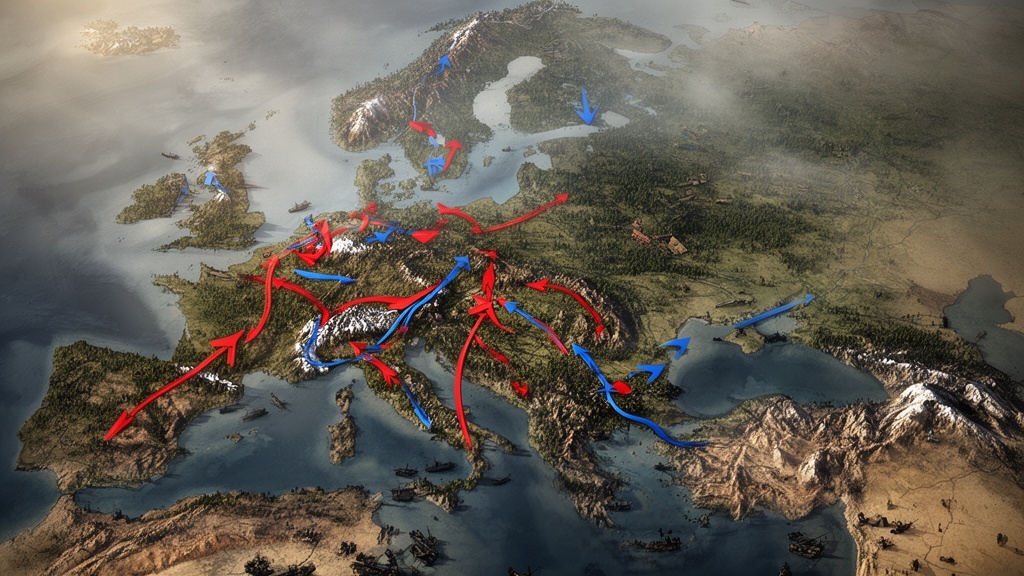
Consider what this tidiness obscures. The chaos of combat, first and foremost: the miscommunication, the friendly fire, the orders that never arrived or arrived too late, the plans that disintegrated upon contact with reality. The history of any major battle, honestly told, is a history of things going wrong—of units lost, of objectives missed, of desperate improvisations that sometimes succeeded and sometimes did not. The neat arrows on the map represent not choreographed manoeuvres but thousands of individual decisions made under conditions of terror and confusion.
Then there is the moral ambiguity that sanitised history prefers to ignore. War forces impossible choices upon ordinary people: the mother who must decide which child to feed, the prisoner who must decide whether to inform on a fellow inmate, the soldier who must decide whether to shoot a figure that might be enemy or might be civilian. These decisions cannot be judged from the comfort of peacetime certainty. They can only be understood—if understood at all—through the radical empathy that narrative history demands.
The trauma carried long after battles end is another casualty of the clean account. The textbook closes with the surrender ceremony, the liberation parade, the tribunal verdict. The veteran's nightmares, the refugee's rootlessness, the survivor's guilt—these belong to a different story, one that official history has little interest in telling. The war did not end in 1945 for the people who lived through it. It continued in their silences, their flinches, their inability to explain to children who had not been there.
And then there are the small, human moments that change outcomes—the letter that arrived at the wrong moment, the chance encounter, the split-second hesitation that meant life instead of death. History told at scale cannot accommodate these details; they are too particular, too resistant to generalisation. Narrative history insists upon them precisely because they remind us that the past was not a process but an accumulation of individual human acts, each one contingent, each one mattering.
The Case for Narrative History
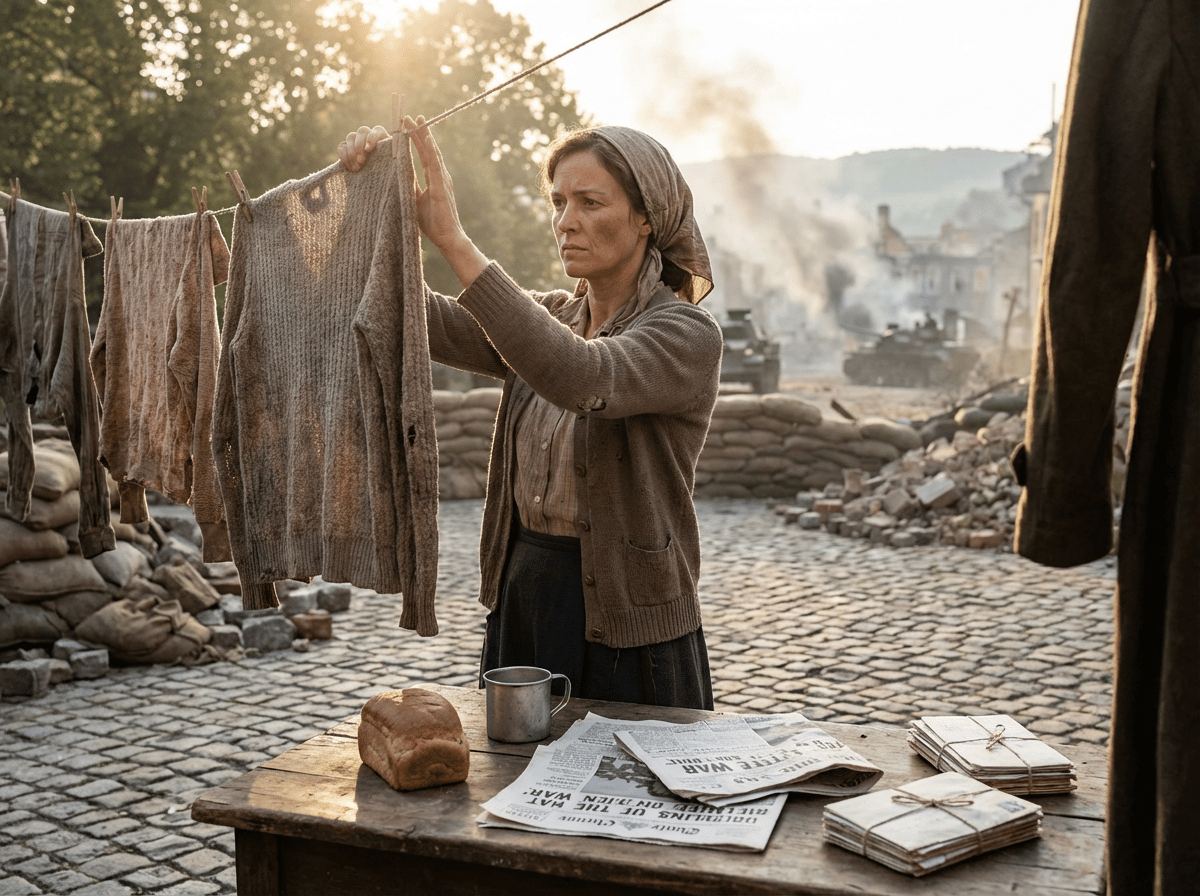
To restore these lost dimensions is the task of narrative history. It is not a matter of replacing facts with feelings, or of substituting sentiment for analysis. The research must be as rigorous, the sources as carefully weighed, the conclusions as scrupulously defended. What changes is the mode of telling: not the lecture but the scene, not the overview but the particular, not the explanation but the evocation.
Narrative history restores agency to individuals—not just the generals and politicians who dominate conventional accounts, but the ordinary men and women whose choices, in aggregate, constitute the actual substance of historical events. It shows war as lived in real time, without the false clarity of hindsight, without the reassurance of known outcomes. It forces readers to confront discomfort rather than consuming myths. It makes history emotionally intelligible, which is not the same as making it emotionally comfortable.
This approach has its critics, of course. Academic historians sometimes dismiss narrative history as mere popularisation, a dumbing-down of serious scholarship for readers who lack the patience for proper analysis. This criticism misunderstands both the difficulty and the purpose of the enterprise. To write history as lived experience requires not less research but more, not less precision but greater—the precision of the novelist who must know what the weather was like on a particular afternoon, what people ate for breakfast, how a street smelled after rain. It requires the ability to hold complexity without simplifying it, to present multiple perspectives without false equivalence, to render judgement without moralising.
Why Sanitised History Is Dangerous
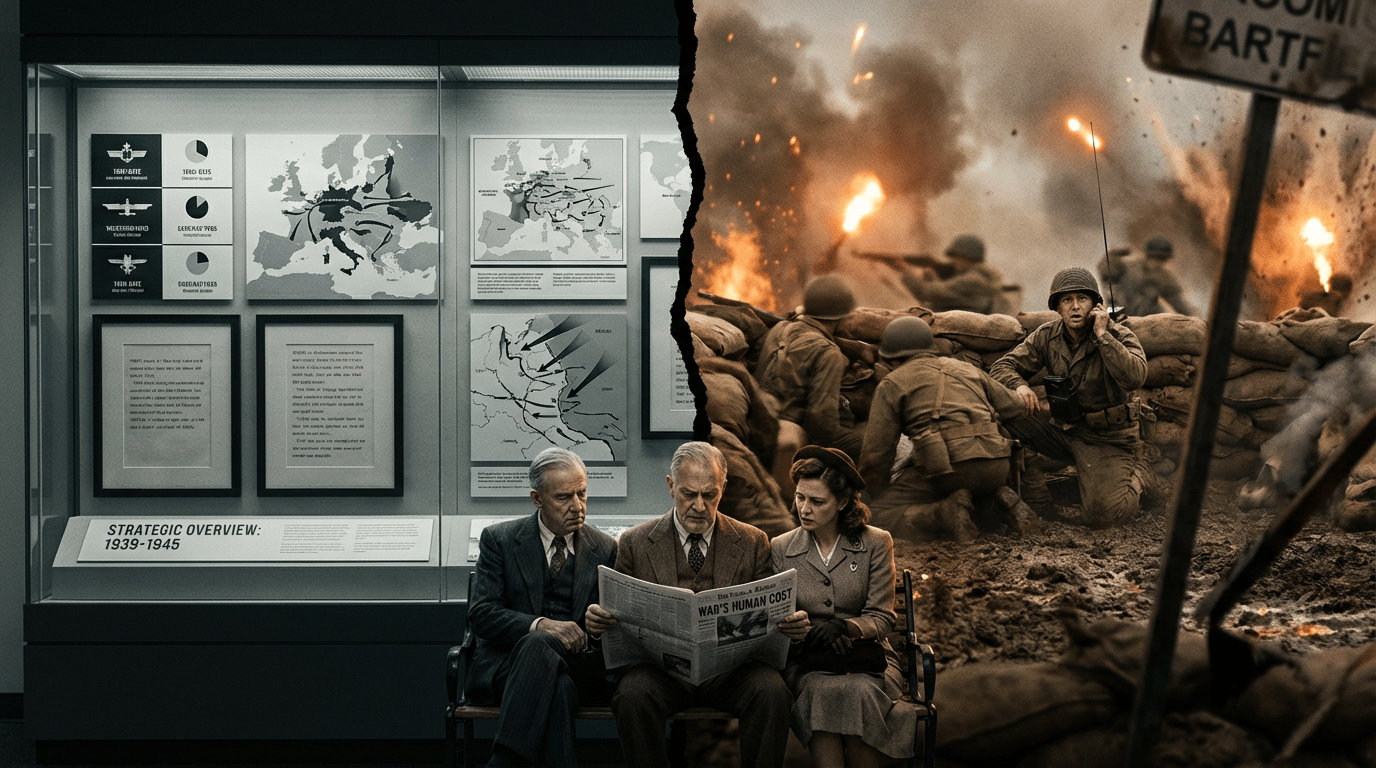
The stakes of this argument extend well beyond historiographical method. How we tell the story of the Second World War shapes how we understand war itself—and that understanding has consequences that are anything but academic.
Sanitised history makes war easier to repeat. When the chaos is edited out, when the suffering is summarised in statistics, when the moral ambiguities are flattened into simple heroism, war begins to seem manageable, even noble. The reality—that war is a catastrophe that destroys everything it touches, that its outcomes are never certain and rarely worth the cost, that its victims are overwhelmingly those who had no part in starting it—this reality becomes harder to grasp. The comfortable distance of the clean narrative allows us to imagine that next time might be different, that our war would be the justified one, the necessary one, the one conducted with precision and restraint.
Mythologising violence dulls moral responsibility. When we transform the Second World War into a story of good against evil, we implicitly excuse ourselves from the harder questions. We do not have to ask how ordinary Germans became complicit in atrocity, because we have already decided that they were different from us, that the evil was theirs alone. We do not have to ask what our own nations did wrong—the area bombing, the internment camps, the refusal of refugees—because the greater evil of the enemy obscures all lesser wrongs. Moral clarity, in this sense, is a form of moral evasion.
When suffering is hidden, empathy erodes. The capacity to imagine what others endure is not a fixed human trait; it must be cultivated, exercised, renewed. History that reduces suffering to numbers, that moves briskly past the inconvenient details of what happened to actual human beings, is history that trains us to look away. And once we have learned to look away from the past, it becomes easier to look away from the present.
The Echoes in Our Own Time
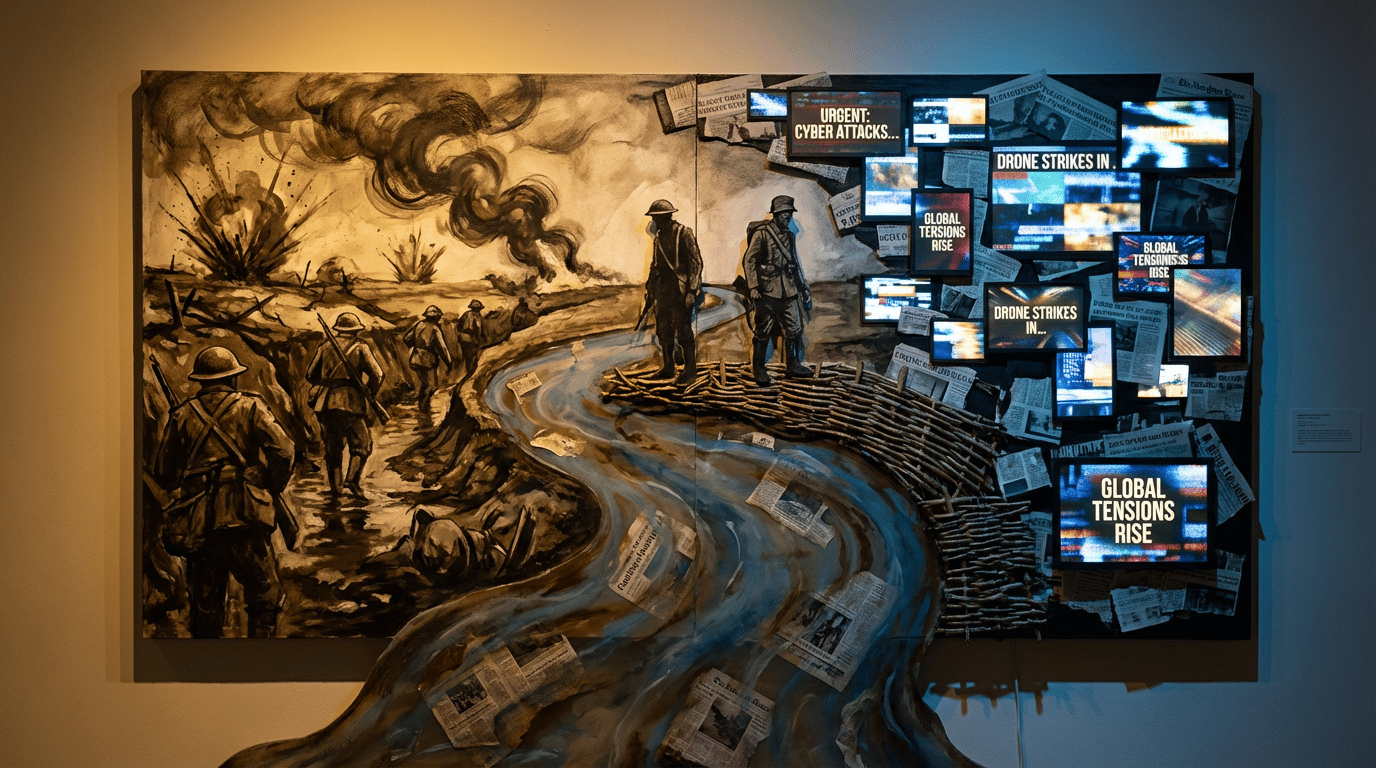
Modern conflicts continue to demonstrate the patterns that the Second World War revealed: the mobilisation of fear, the mechanisms of obedience, the processes by which human beings are stripped of their humanity in the eyes of others. These patterns do not repeat exactly—history is not a cycle but a river, never the same water twice—but they rhyme, they echo, they should sound familiar to anyone who has learned to listen.
Political narratives still rely on simplified historical myths. The invocation of the Second World War as precedent—this leader is Hitler, that policy is appeasement, these people are the resistance—has become a staple of contemporary rhetoric. Almost always, these invocations are lazy, self-serving, and historically illiterate. They work because the audience knows only the myth, not the reality. They could not survive contact with the actual complexity of the period.
Media cycles compress conflict into soundbites, just as textbooks compress it into chapters. The same processes of abstraction operate: the body becomes a number, the refugee becomes a flow, the city becomes a target. Dehumanisation begins with abstraction, with the refusal to see the particular in the general, the individual in the mass. This is not a failure of information; it is a failure of imagination, and narrative history exists to repair it.
Remembering lived history strengthens critical thinking. When we learn to ask not just "what happened?" but "what was it like?", we develop habits of mind that are useful well beyond the study of the past. We become sceptical of neat explanations, alert to missing voices, suspicious of narratives that seem too clean. We understand that the people making decisions did not know how things would turn out, and we extend that understanding to our own present, where we are similarly ignorant of the future.
History should make us uneasy. That unease is not a flaw but a feature—it is the friction that prevents us from sliding too easily into comfortable certainties. History that does not disturb is history that has failed in its most important function: to remind us that the present is not inevitable, that things could have gone otherwise, and that the choices we make now will one day be scrutinised by those who come after.
This is the philosophy that guides every piece of historical writing I produce. History told through scenes, people, and lived moments. Grounded in facts, but written with human perspective. No heroic gloss, no cinematic shortcuts. Focus on memory, consequence, and moral weight. History as lived experience, not academic detachment.
The past deserves better than the sterile summaries we have made of it. The dead deserve to be remembered as they were—confused, frightened, brave, ordinary, human. And we, the living, deserve a history that might actually teach us something, that might make us think twice before we repeat the old mistakes.