
The beginning of a new school year brings so many exciting changes—new teachers, new friends, new classrooms, and new expectations. For young children, however, all that “new” can sometimes feel overwhelming.
One of the simplest ways we can help children feel comfortable and confident at school is by establishing consistent routines.
For preschool, Pre-K, and kindergarten students, routines aren't just about keeping the classroom organized. They help children understand what comes next, what is expected of them, and how to become more independent.
🌼 Routines Create a Sense of Security
Imagine walking into a brand-new place and not knowing what you're supposed to do. That's exactly how the first few days of school can feel to a young child.
When children begin learning routines such as where to put their backpacks, how to line up, when to use different voice levels, and what happens during morning meeting, their school day starts to become predictable.
And predictability can build confidence.
Instead of constantly wondering, “What am I supposed to do?”, children begin thinking, “I know what to do!”
That's a big step toward independence.
🎒 Start With the Most Important Routines
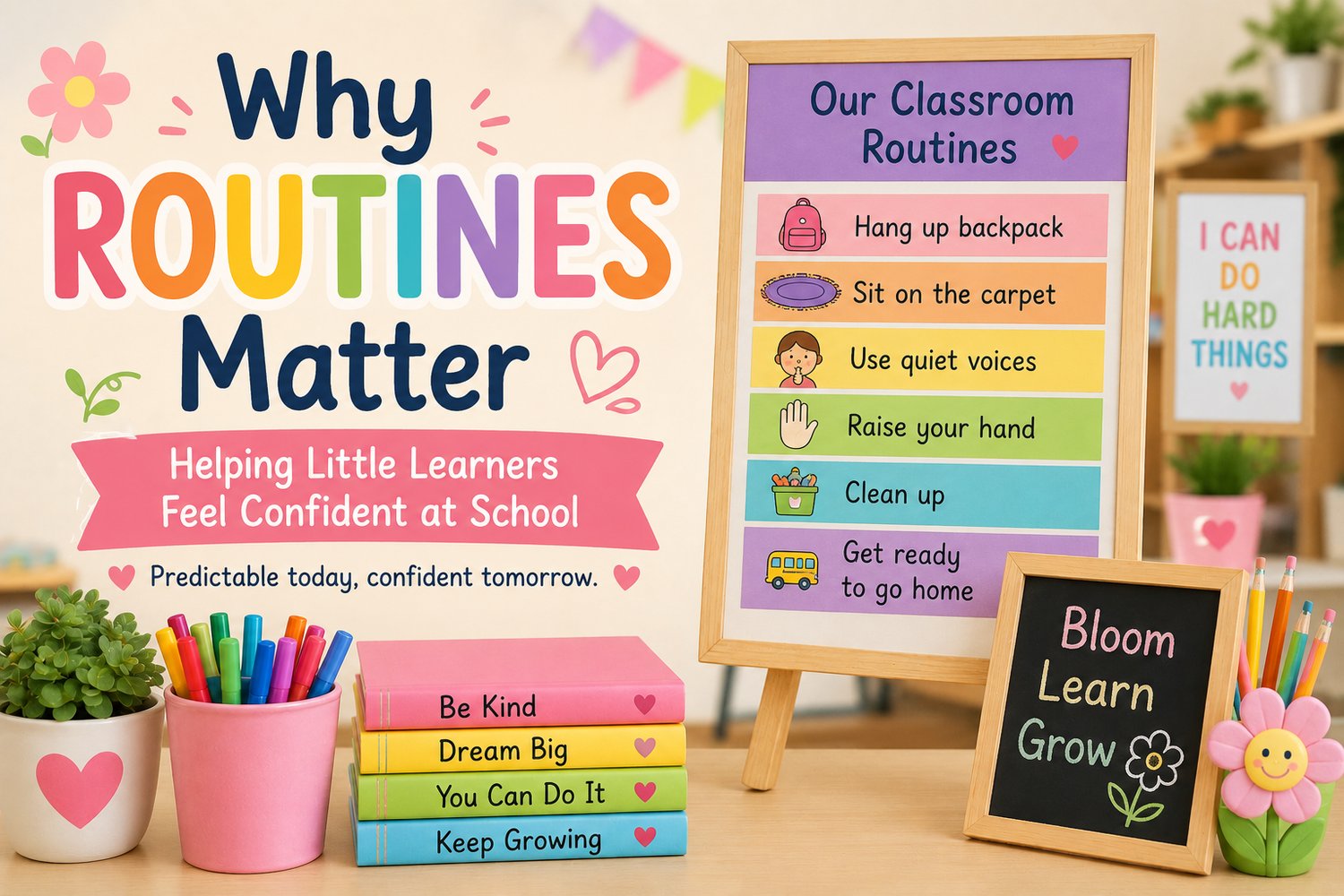
Teachers don't have to teach every classroom procedure on the first day. Start with the routines children will use most often.
Practice things like:
- Entering the classroom
- Putting away backpacks and belongings
- Sitting on the carpet
- Choosing the appropriate voice level
- Lining up
- Walking in the hallway
- Using classroom materials
- Cleaning up
- Asking for help
- Getting ready to go home
Remember that these skills may seem simple to adults, but they are new learning experiences for children.
🌸 Show, Practice, Repeat!
Young learners need more than verbal directions.
Instead of only telling children how to complete a routine, show them.
Model what the routine should look like and then give students an opportunity to practice it themselves.
You can even make it fun!
Ask:
“Can we show what a KinderBloom-ready line looks like?”
Then celebrate when students demonstrate the expectation correctly.
Continue practicing routines throughout the first few weeks. If children forget, that's okay—teach and practice again.
Repetition helps routines become habits.
🏡 Families Can Practice Routines Too
Classroom independence can begin at home.
Families can help children practice simple routines such as packing their backpack, putting away toys, washing their hands, opening lunch containers, putting on their jacket, and cleaning up after an activity.
You can also create predictable morning and bedtime routines.
The goal isn't perfection. It's giving children opportunities to say:
“I can do it!”
💛 Don't Forget to Celebrate Progress
Learning classroom routines is learning.
When a child remembers to push in their chair, walks safely in line, cleans up without being reminded, or remembers which voice level to use, acknowledge that growth.
A simple:
“You remembered exactly what to do!”
can help reinforce the behavior while building confidence.
🌱 Routines Help Independence Bloom
The first weeks of school aren't only about letters, numbers, and academics. They're also about helping children learn how to be students.
With clear expectations, plenty of modeling, patience, and lots of practice, routines that seem difficult in August can become second nature.
And every time a child learns to complete something independently, we're helping them become a little more confident.
Because at KinderBloom Co., we believe little learners need more than knowledge to grow—they need opportunities to discover just how capable they are.
🌸 Keep Growing. Keep Learning. Keep Blooming.
KinderBloom Co. — Where Little Learners Grow.