

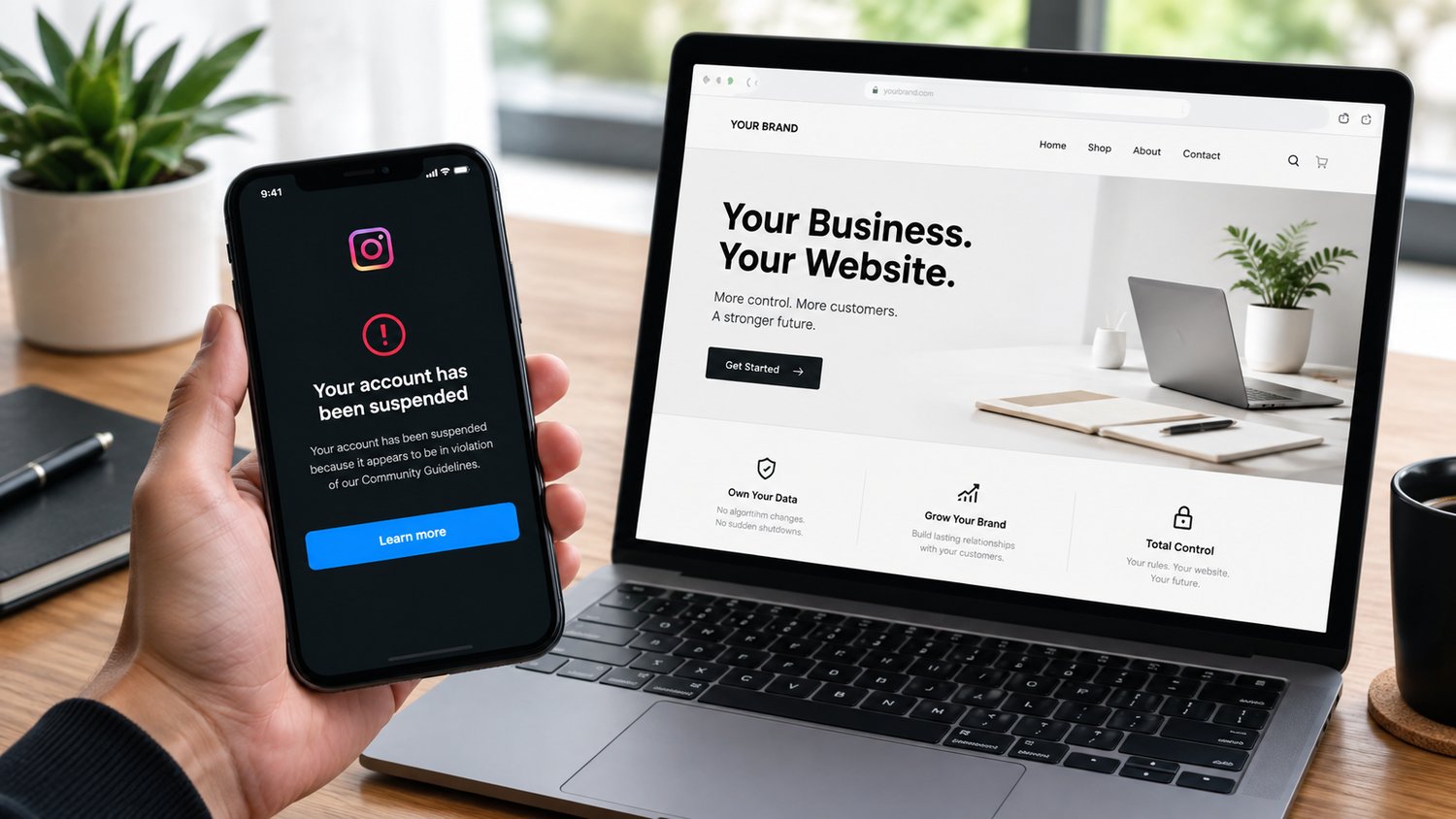
One morning your Instagram account gets flagged. Wrong reason, doesn't matter. Locked. No warning, no real appeal process, just a blank screen where your business used to be.
Every order you were tracking in your DMs is gone. Every customer number, gone. Every saved payment screenshot, gone. Your bio link, your grid, your "shop," your entire storefront — gone, in the time it takes to load a page that says "we found unusual activity."
This isn't a scare story. It happens every week to small business owners who built their entire operation inside a platform they don't own. Instagram is not your business. It's a landlord. You've been paying rent with your attention and your content, and you never signed a lease that guarantees you can stay.
Here's the part that stings more: you probably don't even have a list of your own customers. Not a spreadsheet, not an email list, not a phone directory. Just a thread of usernames buried in a DM inbox you can no longer access. That's not a customer base. That's a rental agreement you forgot you signed.
Think about what actually lives only in your DMs right now:
Who ordered what, and when. Who still owes you money. Who's a repeat buyer versus a one-time tire-kicker. Your pricing conversations, your custom order details, your "yes I can do Saturday" commitments. None of that is backed up anywhere. None of it is searchable. None of it is yours in any way that survives a platform decision made by an algorithm on the other side of the world.
And it's not just bans. It's smaller things that bleed you slowly. Instagram changes its algorithm and your reach drops 40% overnight — nobody emails you a warning. You switch phones and don't migrate two-factor auth properly — locked out for four days during your busiest week. You get shadowbanned for a hashtag you didn't know was flagged — new customers stop finding you and you don't even know it's happening.
A website doesn't ask permission from an algorithm to show up. It doesn't get flagged for "unusual activity" because someone reported you out of spite. It doesn't disappear because a moderation system somewhere made a mistake it won't explain. It sits on your own domain, under your own name, and it answers to nobody but you.
This is the actual argument for having a website — not the polish, not looking "more professional," though that helps too. It's ownership. It's having a piece of your business that cannot be switched off by a company that has never met you and never will.
With a real site, your product list lives somewhere permanent. Your customer emails get collected and stored somewhere you control. Your order history doesn't vanish when an app updates. If Instagram banned you tomorrow, you'd still have a business. Right now, for a lot of DM-only sellers, you wouldn't. You'd have a phone full of screenshots and a very bad week.
And here's the thing most people get wrong: they think building that safety net requires hiring a developer or learning to code. It doesn't. You can build a real, working website yourself this weekend — using no-code tools, or by directing an AI coding assistant to build it for you, step by step, in plain English. You don't need permission, a budget for an agency, or six months. You need a few focused hours and the right instructions.
That's exactly what Stop Losing Sales in Your DMs walks you through — how to take the business you've been running entirely inside Instagram and give it a real home that you own outright. Not a replacement for your DMs. A backup that turns into your main channel, so a bad morning with a moderation algorithm doesn't turn into a bad year for your business.
You don't get to choose when Instagram decides to have a problem with your account. You do get to choose whether your business survives it.
Comments ()