
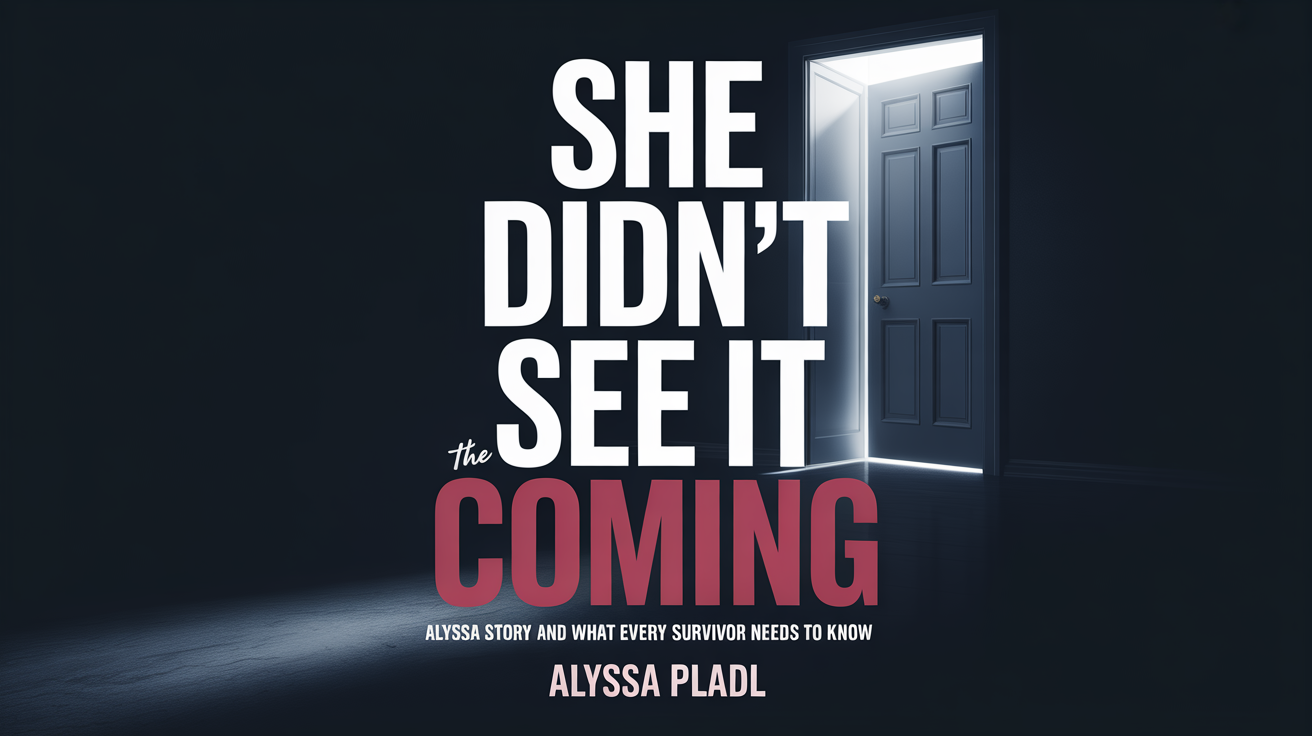

Nancy Duarte, Life Coach · Advocate · Counselor
I want to talk to you today about a story that broke my heart, and that I know will break yours. But I also want to tell you why it matters and remind you that hope is woven into even the worst tragedies.
Embedded in the story of Alyssa Pladl are the same unseen chains that have held women I've sat across from in my counseling chair for decades. Yet, within these stories, I have also witnessed moments of fortitude, courage, and the beginning of new chapters.
No matter how heavy this story feels, I want you to remember that healing and hope are always possible.
This isn't merely a true crime story. This is a mirror. Now, let's move from the general experience to the specifics: if you've ever loved someone who slowly dismantled you, if you've ever wondered how a woman ends up staying in something that was killing her, this is for you.
How It Started: Young, Lonely, and Looking for Love

In 1995, fifteen-year-old Alyssa Garcia met twenty-year-old Steven Pladl online. Let that sink in for a moment. She was a teenager. He was an adult. And he discovered her in the most vulnerable place a lonely young girl can be, pursuing connection.
"He became her habit. Even when the love was gone, the trauma bond stayed."
This is how predatory relationships begin. Not with a monster wearing a mask. With someone who sees your hunger for love and decides to feed it, just enough to keep you coming back.
Steven was charming. He made her feel chosen. And when you've never felt sincerely chosen, that feeling becomes everything.
They had a daughter together, a baby girl named Denise. But before that baby could even learn to smile, Steven showed his true nature. He was abusive toward the infant. And here is where Alyssa did something that would trouble her for the rest of her life, something that took more courage than most people will ever understand.
She placed her daughter for adoption.
Not because she didn't love her. Because she looked at this tiny life and said: I cannot protect you from him, and I will not let him destroy you the way he is destroying me. In the back of her mind, she carried the silent hope that one day, one day, she would see her baby again.
The Isolation: 2,000 Miles from Everyone Who Loved Her

This is the chapter that every woman in a toxic relationship will recognize, even if the geography is different.
Steven moved Alyssa 2,000 miles away from her family. He didn't do it violently. He didn't drag her. He convinced her. And that is what gaslighting looks like in its earliest form: it looks like a decision you think you're making freely.
"Isolation is always the first tool. Before he can control what you think, he has to remove everyone who might tell you the truth."
He refused to work. He refused to provide. They had no money, no stability, no community. When you are broke, far from home, and dependent on a man who tells you every day, in a hundred small ways, that you are nothing without him, leaving stops feeling like an option. It starts to feel like a cliff.
Her parents were devastated when they first learned of the relationship. But when her baby was born, they came around, because that is what love does. Love shows up even when it disagrees. And then he moved her away from that love. Away from the one lifeline that could have helped her see clearly.
Why She Stayed: The Truth About Trauma Bonds

I need to pause here because this is the question the world always asks about women like Alyssa: Why didn't she just leave?
And I need to answer it with everything I have as a counselor, because the question itself is part of the problem.
She stayed because he had become her normal. Because when chaos is all you've known, calm feels suspicious.
Because he had devoted years to slowly convincing her that her gut feelings were wrong, her perceptions were faulty, and her feelings were too much. That is gaslighting. It doesn't happen overnight.
It happens in a thousand paper cuts.
"You don't leave a toxic relationship the way you walk out of a bad movie. You leave slowly, in pieces, and usually after you've tried to fix it a hundred times first."
They eventually slept in separate bedrooms. The romantic relationship ended, but a hidden tether of fear, familiarity, and urgent hope, hoping each time for change, kept her bound. Even after love ended, the pattern lingered.
This is not a weakness. This is neuroscience. Trauma bonds are physiological. They rewire the brain's reward system. Walking away from them requires more than willpower; it requires support, safety, and time.
When Evil Wore the Face of Family: The Grooming of Katie

In 2015, eighteen-year-old Katie, the daughter Alyssa had placed for adoption, reached out to find her birth parents. She was curious. She was looking for a connection. She was looking for belonging.
What she found was a predator.
Steven began grooming Katie almost immediately after she moved in. He used every tactic in the abuser's playbook: flattery, secrecy, manufactured intimacy, and the ultimate manipulation: convincing a young woman who had grown up without her birth father that what she was feeling was love, not exploitation.
He impregnated her. He married her. He had already stolen one child from Alyssa. Now he was using another one as a weapon.
"This is what malignant narcissistic abusers do at their most dangerous; they don't just hurt you. They use the people you love most to extend the damage."
When authorities finally uncovered the relationship, Steven Pladl murdered Katie and her adoptive father, Anthony Fusco, in Connecticut in April 2018. Then he took his own life.
Alyssa's worst fear had always been that she couldn't protect her daughter. She was right. But the failure was never hers. It was his. It was always, entirely, his.
Red Flags: What Alyssa's Story Teaches Every Survivor
 A collection of various warning and danger signs marked with red flags to highlight hazards
If any part of Alyssa's path mirrors your own, review these takeaways carefully. See them as a map highlighting what happened to you, not as a measure of what you overlooked.
Healing starts with honest self-compassion and recognition of what you’ve endured.
- The Age Gap at the Start: A 20-year-old pursuing a 15-year-old is not romance. It is predation. Adults who seek out teenagers are not looking for a partner; they are looking for someone they can shape.
- Isolation from Family and Support: When someone loves you, they want you surrounded by people who love you. When someone wants to control you, they remove every person who might see what they cannot.
- Financial Control and Dependency: Refusing to work, refusing to provide, making you dependent, this is not a flaw. It is a strategy. Financial abuse is one of the most effective chains.
- Gaslighting Your Reality: When you begin to distrust your own memory, your own feelings, your own perceptions, that is not you losing your mind. That is someone else taking it.
- Love Bombing Followed by Devaluation: The highs that kept you hoping were manufactured to keep you chasing. The cycle of idealization and devaluation is the engine of every narcissistic relationship.
- Using Children as Leverage: Taking the baby. Threatening to take the baby. This is control at its most primal. And it works because you love your child more than you love your own safety.
- The Habit of Staying: When someone has been your entire world, even a painful one, leaving feels like self-destruction. This is not a weakness. This is the architecture of trauma.
To Every Woman Reading This
You are not stupid for not seeing it. Predators are skilled. They study you. They learn your hunger, and they feed it just enough. You were targeted because of your capacity to love, not because of a flaw in you.
You are not weak for staying. You stayed because leaving appeared impossible, and in many cases, it actually was. Danger is real. Isolation is real. Trauma bonds are real. Your survival instincts were working exactly as designed.
You are not responsible for what he did. Not to you. Not to your children. Not to anyone who came after you. His choices belong to him. Every single one of them.
"You were not broken by what happened to you. You were revealed. And what was revealed is someone who loved passionately, endured silently, and survived impossibly. That is not damage. That is strength."
Alyssa placed her baby for adoption to save her from a monster. That was not abandonment. That was the most sacrificial act of love a mother can make. She was trying to protect her daughter with the only tool she had left.
And even that was taken from her.
So today I want to say to Alyssa, and to every woman walking through something like what she walked through:
Remember the key takeaways: You are not the problem. You deserve to be treated with respect and care. Take one small step toward wellness today, make contact, seek support, or write down your feelings. One gentle move forward is enough to start the process. You are worthy of kindness, help, and a brighter destiny.
With love and fierce advocacy,
Nancy Duarte
Life Coach · Advocate · Counselor
If you or someone you know is going through abuse, remember that you do not have to face it alone. Asking for help is a sign of strength. In addition to crisis hotlines, ongoing support options such as speaking with a counselor, joining a support group, or confiding in trusted friends or family can make a meaningful impact on your healing journey.
National Domestic Violence Hotline: 1-800-799-7233 (available 24/7)
Crisis Text Line: Text START to 88788