

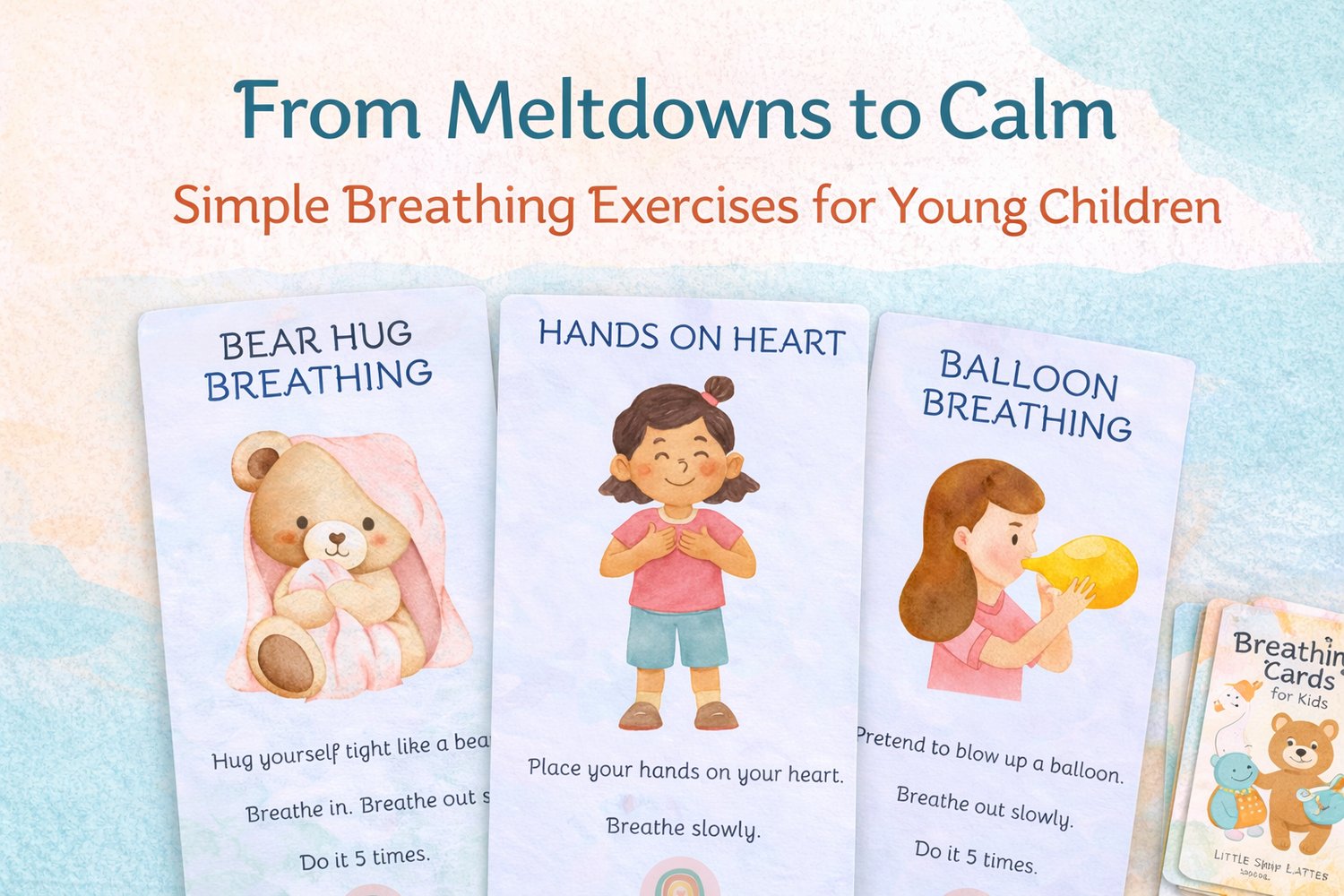
When a child is in the middle of a meltdown, it can feel overwhelming for everyone involved. Big emotions often arrive quickly, and young children don’t yet have the skills to slow themselves down.
One of the most effective calm down strategies for kids is also one of the simplest: breathing.
Breathing exercises help children calm their bodies first — which is essential for emotional regulation in early childhood. In this post, we’ll explore why breathing works, how it supports emotional regulation, and a few simple breathing exercises parents can use with young children.
Why Breathing Exercises Help Kids Calm Down
For young children, emotions are deeply connected to the body. When a child feels upset, anxious, or overwhelmed, their nervous system shifts into a stress response. This makes it hard for them to listen, think clearly, or regulate their emotions.
Slow, intentional breathing helps by:
- Signaling safety to the nervous system
- Slowing the heart rate
- Reducing physical tension
- Helping children feel more in control of their bodies
Because breathing is something children can do, not just talk about, it becomes a powerful emotional regulation tool.
When to Use Breathing Exercises
Breathing exercises work best:
- At the first signs of overwhelm
- During transitions (before bed, before school, after play)
- In a calm corner
- As part of a daily routine — not only during meltdowns
Practicing these exercises regularly helps children remember them when emotions feel big.
Simple Breathing Exercises for Young Children
Here are four gentle, child-friendly breathing exercises that support calm and emotional regulation.
🎈 Balloon Breathing
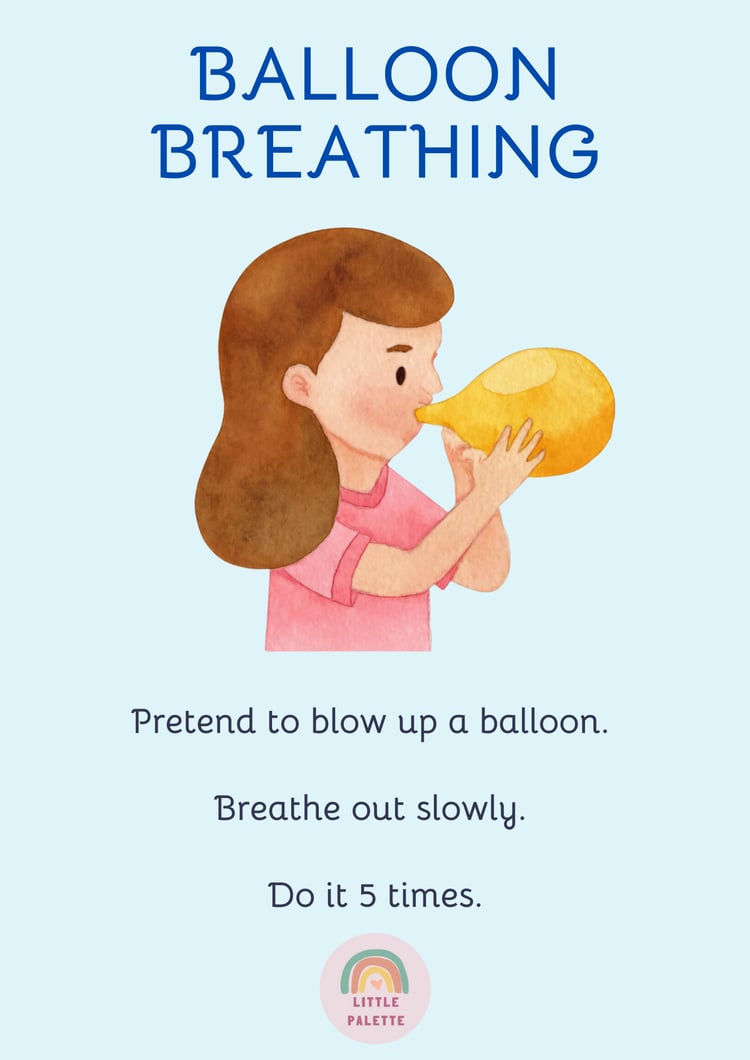
Ask your child to pretend they are blowing up a balloon.
- Take a breath in through the nose
- Slowly breathe out through the mouth, as if inflating a balloon
- Encourage slow, steady breaths
- Repeat 5 times
This exercise helps slow breathing and releases tension in the body.
🧸 Bear Hug Breathing
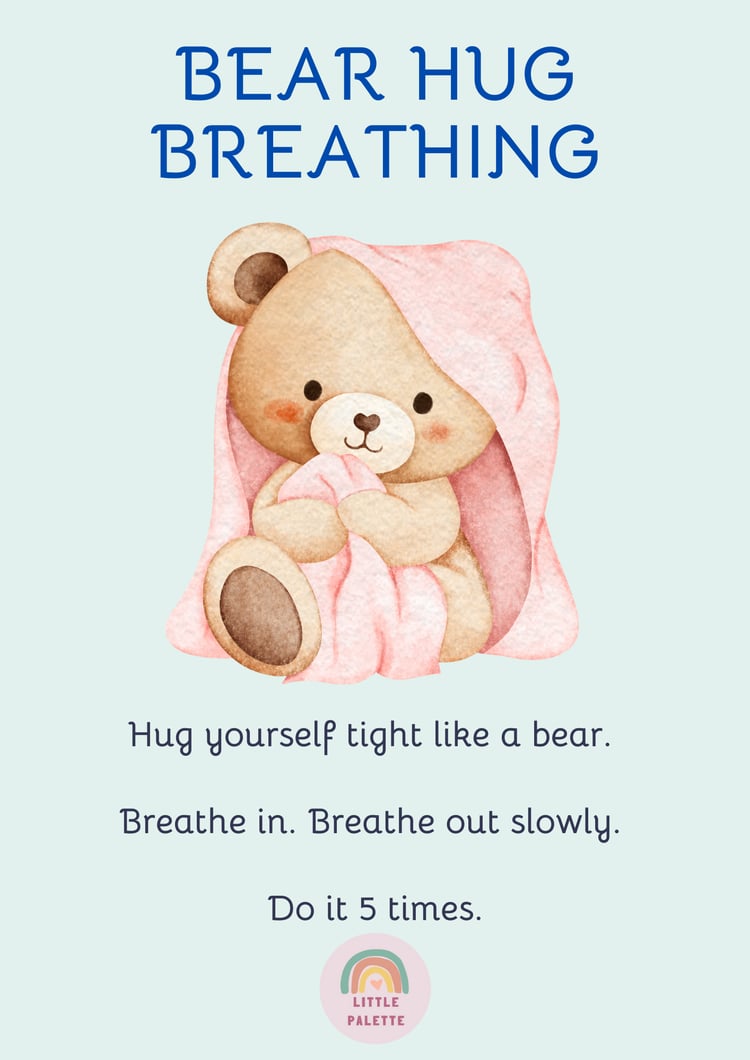
This exercise combines breathing with deep pressure, which many children find comforting.
- Hug arms tightly around the chest like a bear hug
- Take a slow breath in
- Breathe out slowly while squeezing gently
- Repeat 3–5 times
Bear hug breathing helps children feel grounded and secure.
❤️ Hand-on-Heart Breathing
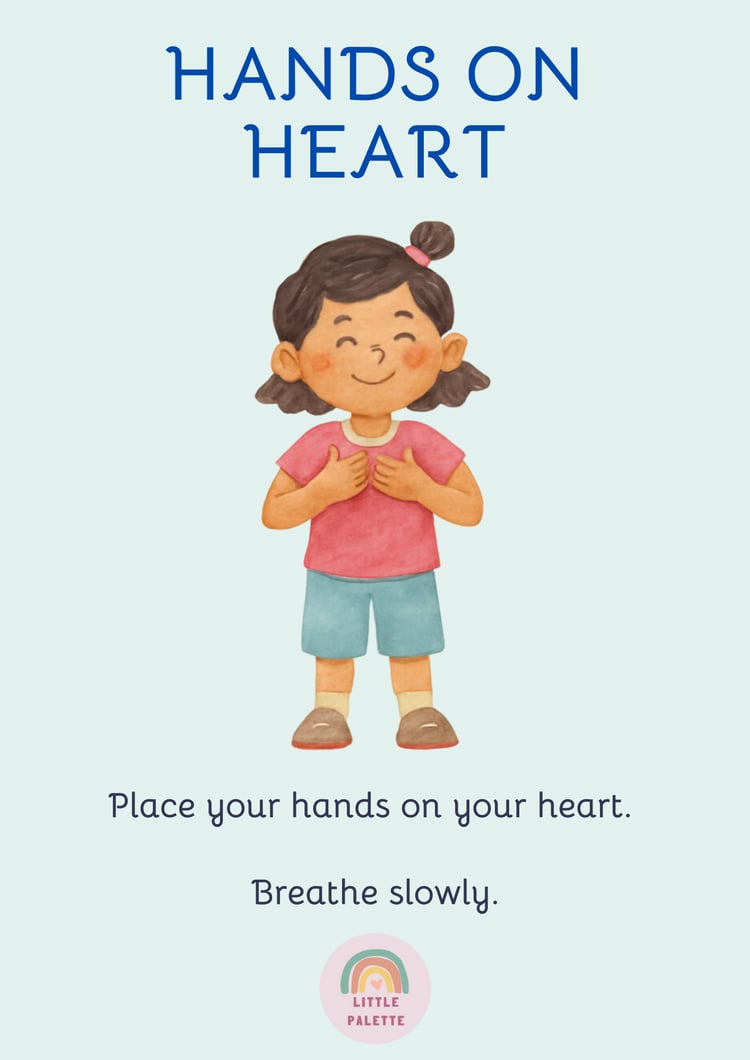
This is a calming exercise that helps children tune into their bodies.
- Place one or both hands on the heart
- Take a slow breath in
- Breathe out gently
- Notice the chest rise and fall
This exercise encourages body awareness and emotional connection.
🔢 Counting Breaths With Visuals
Counting adds structure and predictability, which helps children feel safe.
- Breathe in while counting to 3
- Breathe out while counting to 3
- Repeat for 5 rounds
Visual supports can make this easier, especially for younger children who benefit from seeing each step.
Making Breathing Easier to Remember
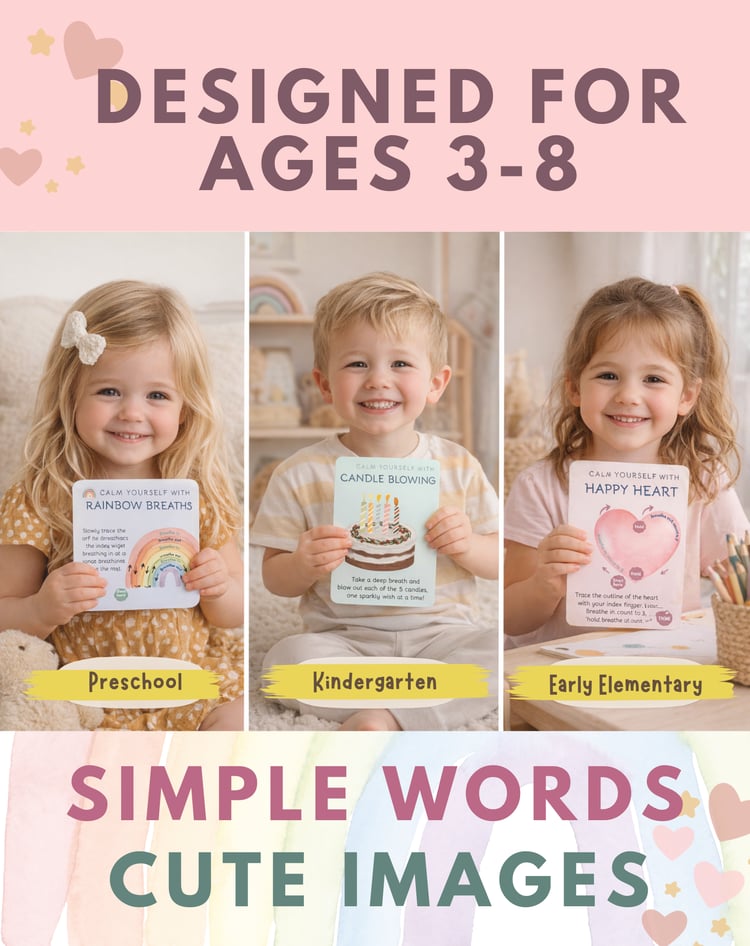
When emotions run high, children may forget what to do — even if they’ve practiced before. Many parents find it easier when children can see the steps.
Visual breathing cards make these exercises more engaging and child-friendly by guiding children through each step in a clear, simple way. They reduce the need for verbal instructions and help children take ownership of their calming skills.
👉 You can explore Little Palette’s 16 Breathing Cards for Kids and 40 Somatic Therapy Coping Skills Cards as gentle emotional regulation tools designed for young children.
Final Thoughts
Breathing exercises give children a practical way to move from meltdowns to calm. With regular practice, these simple tools help children build emotional regulation skills that support them at home, at school, and beyond.
Calm doesn’t come from forcing emotions away — it comes from helping the body feel safe first.