

Can your students or children spot nouns and verbs in everyday sentences? What about in their favorite storybooks? Grammar doesn’t have to feel difficult. It all starts with nouns and verbs. Nouns introduce the characters and places, while verbs show actions or states of being. Recognizing them helps children read, write, and communicate with confidence.
Early practice with nouns and verbs lays the foundation for more advanced language skills. These worksheets give kids simple, focused practice in identifying nouns and verbs. With these resources, children build skills step by step, with support from parents and teachers along the way.
Why Kids Need Noun and Verb Practice
Nouns and verbs are like little building blocks of language—they are the foundation of every sentence. Once children master the basics, regular practice helps them turn that knowledge into real skills. Here’s what they gain along the way:
Builds strong sentence structure
A child may begin with a simple phrase like “Dog run,” which gradually develops into a complete sentence such as “The dog runs fast.” That small change shows a big step in learning how to build complete sentences. Practicing nouns and verbs helps kids see how words work together to express complete ideas.
Through fun, hands-on activities like word sorting and fill-in-the-blank exercises, children begin to connect subjects with actions more confidently. As they learn how these parts of a sentence fit together, their writing and speaking become clearer.
Improves reading and writing skills
When reading a simple story, a child might notice words like “run”, “play”, or “teacher”, and start to understand what’s happening. For example, in the sentence “The dog runs in the park”, the child can see that “dog” is a noun and “runs” is a verb, which helps them understand who is doing what. These little moments show how recognizing nouns, verbs, and other parts of speech can improve comprehension.
Learning grammar in context also helps students use words effectively in their own writing. For instance, after reading “The cat jumps on the chair”, a child might write, “The dog jumps on the bed.” This helps them practice nouns and verbs in a meaningful way.
Helps with grammar confidence
A child who once felt unsure about writing or speaking can gradually become more confident with practice. Through activities like reading stories, playing word games, and having short conversations, grammar starts to feel more natural and easier to use in everyday communication.
Parents can support this growth by offering guidance and positive feedback. Instead of focusing only on mistakes, it helps to explain corrections kindly and recognize what the child is doing well. As their confidence grows, children make fewer grammar mistakes and begin to enjoy learning even more.
What’s Included in Our Nouns and Verbs Worksheet
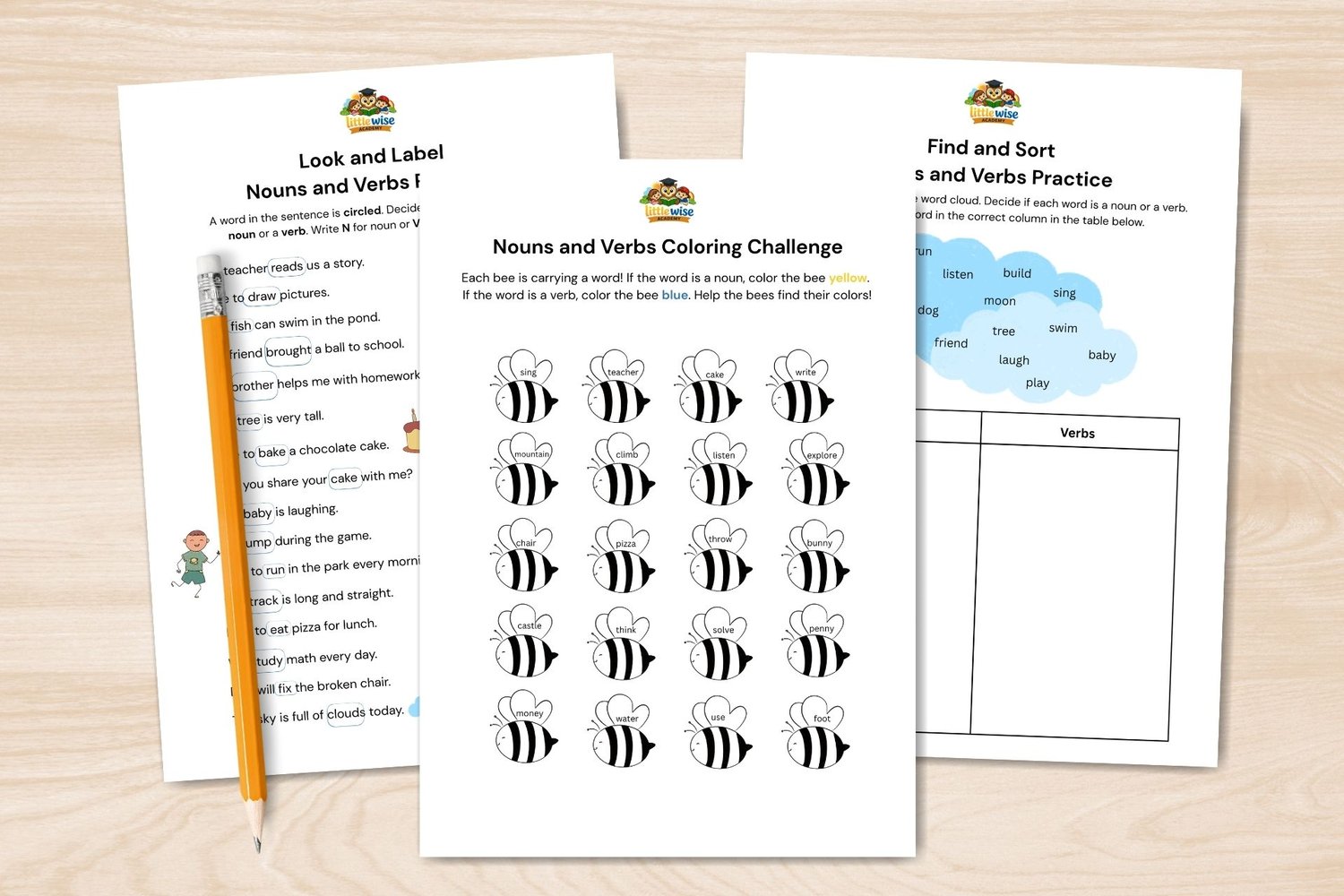
This set of worksheets gives children different ways to practice nouns and verbs through fun, hands-on activities. Here’s what they include:
- Child-friendly instructions: Each worksheet comes with clear and easy-to-follow directions, so kids can understand what to do without feeling confused. Simple instructions help them stay focused and complete each task with confidence, whether they are working independently or with guidance.
- Fun and engaging noun and verb activities: The worksheets include a mix of interactive tasks to keep learning interesting. Kids can sort words into nouns and verbs, identify them in sentences, and even enjoy a coloring challenge where they match words with colors. These varied activities make practice feel less like work and more like play.
- Answer keys: Answer keys are included to make checking quick and easy for parents and teachers. They also give kids the chance to review their work, understand mistakes, and build confidence as they learn.
Printable Noun and Verb Worksheets
Who says grammar can’t be fun? These worksheets guide kids through nouns and verbs with simple, interactive tasks that make learning feel natural. Check out each activity.
Nouns and Verbs Coloring Challenge
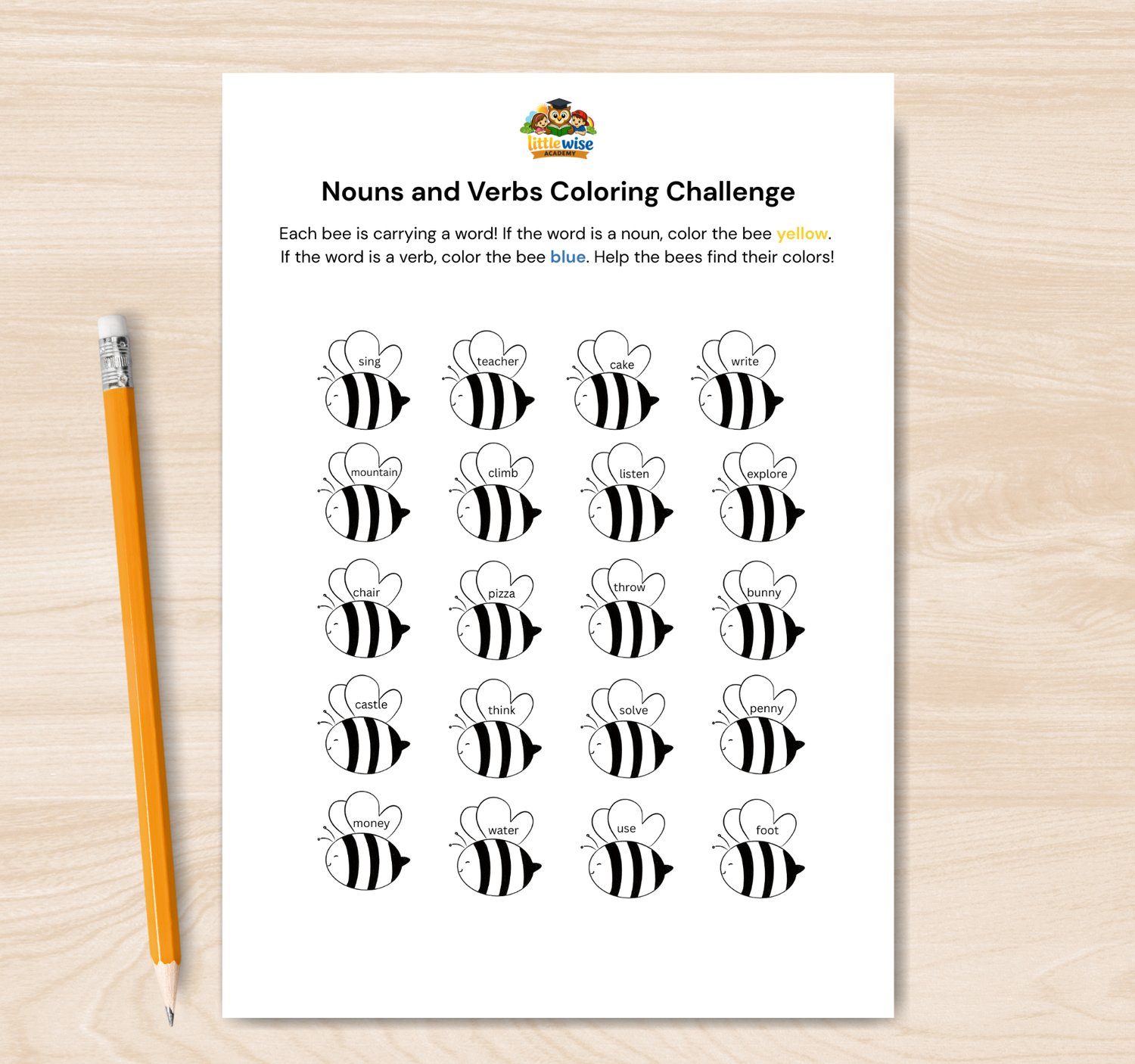
In this activity, each bee carries a word, and kids color it yellow if it is a noun and blue if it is a verb. This simple color-coding approach helps children quickly recognize the difference between naming words and action words. Encourage them to focus on accuracy before speed so they clearly understand each word.
You can also ask kids to say the word out loud and use it in a sentence before coloring. This helps reinforce understanding and makes the activity more meaningful.
Look and Label Nouns and Verbs
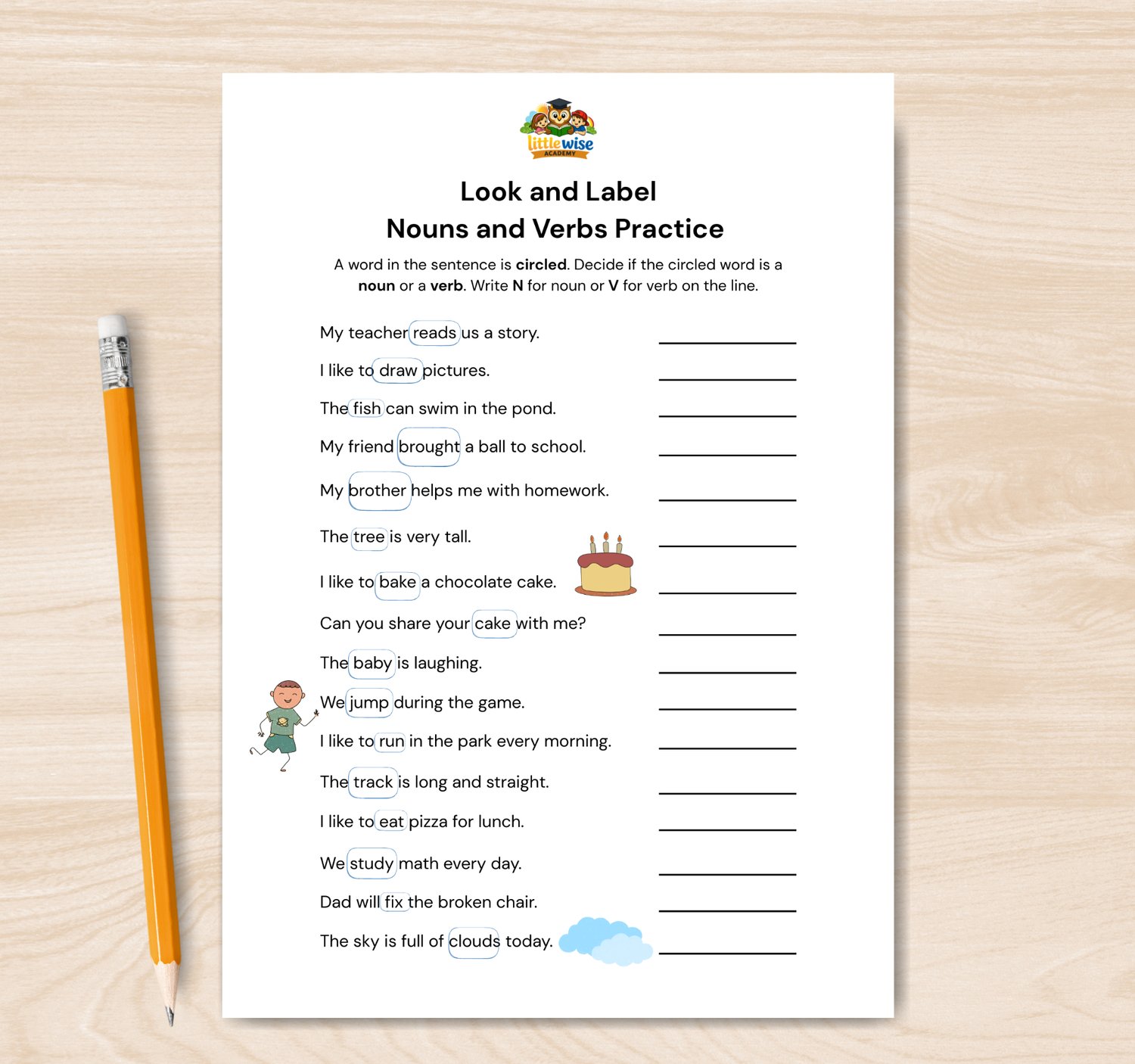
In this worksheet, children read short sentences and decide if the circled word is a noun or a verb. By writing N or V, they get to practice what they’ve learned.
Turn it into a quick-thinking game by asking, “Is it a name or an action?” to guide their thinking. Then have them reread the sentence to check if their answer makes sense.
Find and Sort Nouns and Verbs
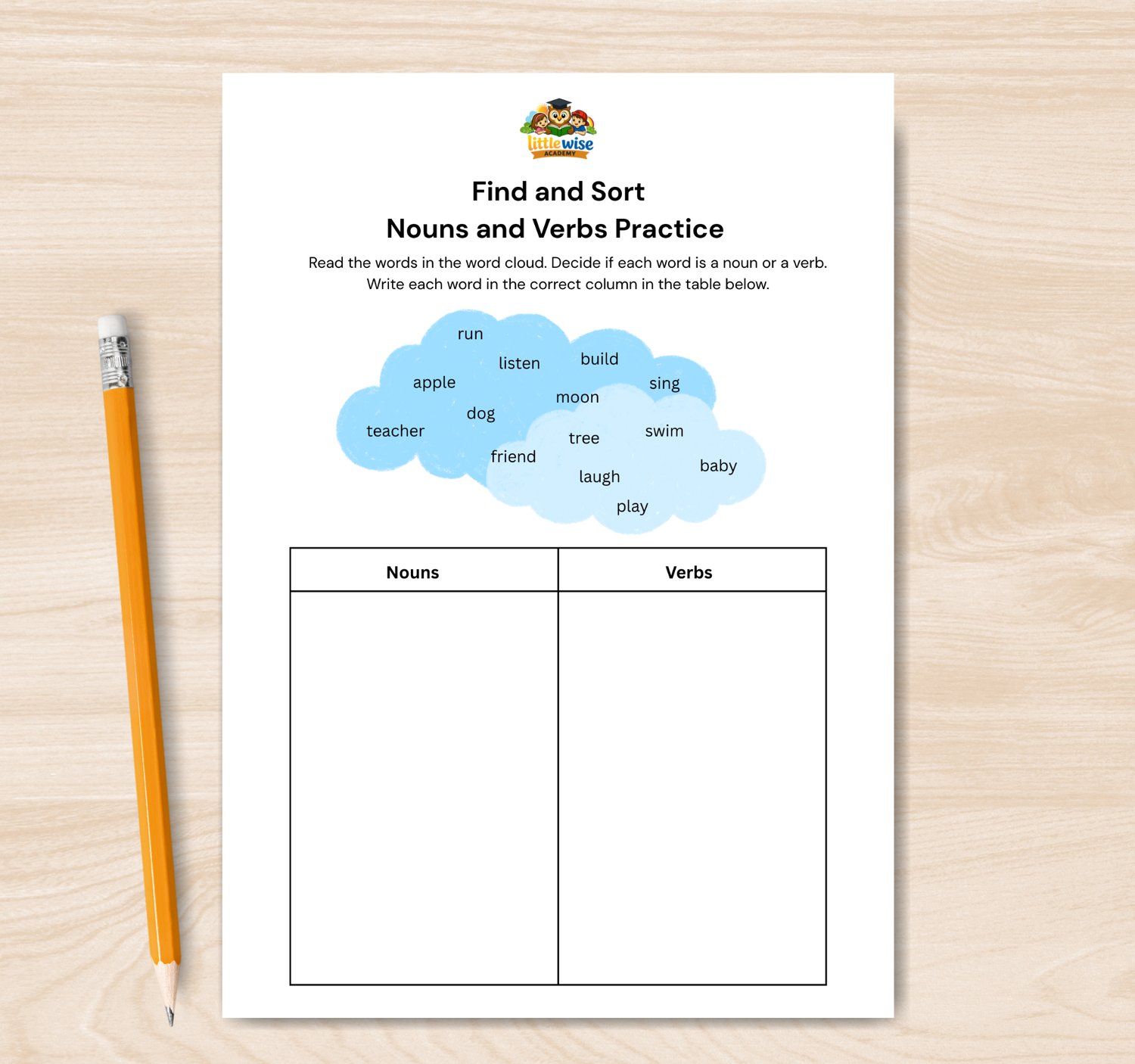
This activity turns a simple word cloud into a fun sorting game, where children separate nouns from verbs. As they group the words, they start spotting patterns and understanding how language works.
Make it a mini challenge by asking children to explain why each word belongs in its category. This encourages deeper thinking and language awareness. Start small with a few words at a time to keep it light, fun, and stress-free!
DOWNLOAD ALL THESE NOUNS AND VERBS WORKSHEETS HERE
Summary
Many parents and teachers struggle to make grammar practice both engaging and effective. Finding activities that are fun, easy to follow, and support independent learning can be a challenge.
These worksheets make grammar practice more interactive and purposeful. They help children build confidence, express ideas more clearly, and strengthen reading and writing skills, while giving parents and teachers a simple and organized way to guide learning. Most importantly, remind children to have fun as they learn!