

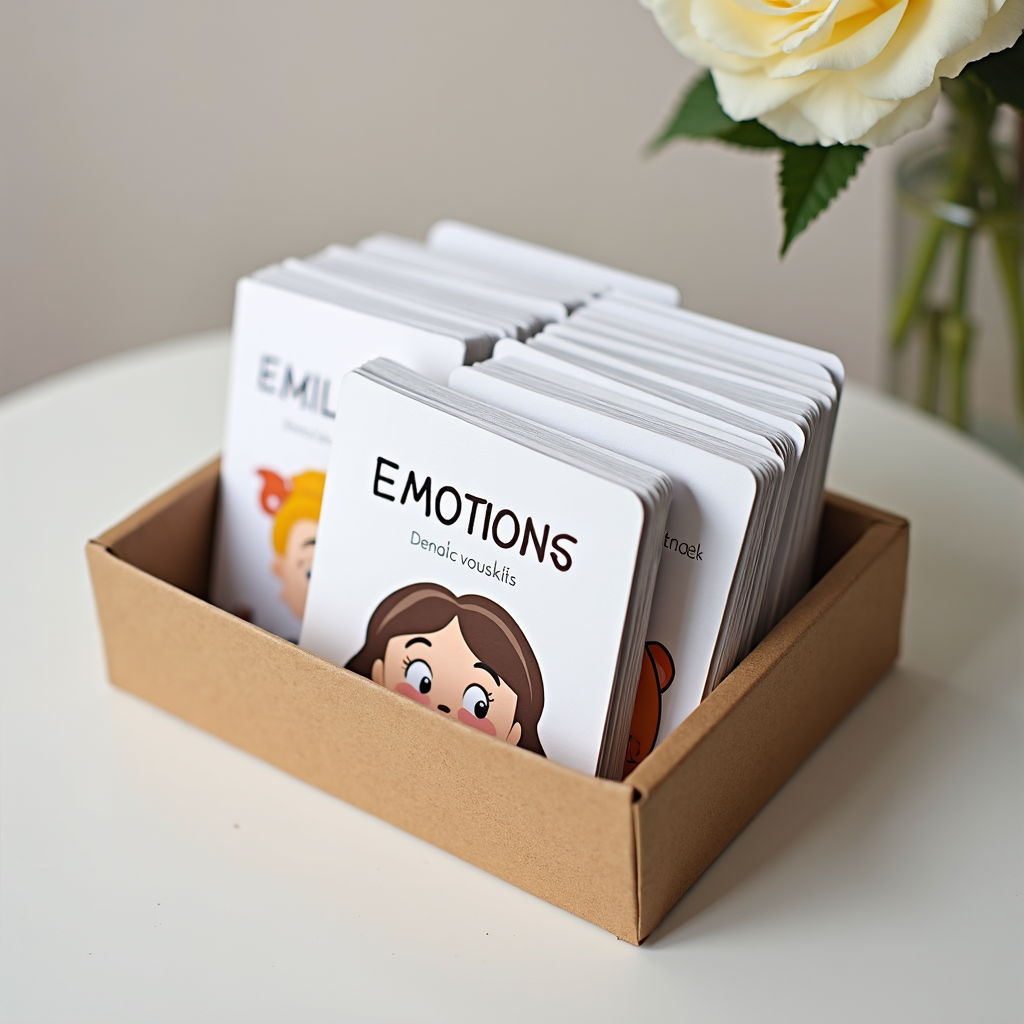
Does your child get overwhelmed, frustrated, or struggle to explain how they feel?
Many children experience big emotions but don’t have the words to express them — which often leads to meltdowns, frustration, or silence. As a parent, it can feel confusing and stressful when you don’t know how to help.
__________________________________________________________________________
The truth is, emotional intelligence isn’t something children are born with — it’s something they learn over time.
When kids can’t name their feelings, they often:
- Act out instead of communicating
- Feel misunderstood or frustrated
- Struggle to calm themselves down
But the good news?
With the right tools and simple daily practice, you can help your child recognize, understand, and express emotions confidently.
___________________________________________________________________________________
One of the easiest ways to teach emotions is through visual tools and simple activities like emotion flashcards, combined with everyday conversations.
Let’s explore the 10 essential emotions every child should learn — along with easy ways to teach them at home.
The 10 Emotions + Practical Tips
1. Happy 😊
Why it matters: Helps children recognize positive feelings and what brings them joy.
👉 Try this: When your child smiles, say: “You look happy! What made you feel that way?”
2. Sad 😢
Why it matters: Teaches children that it’s okay to feel and express sadness.
👉 Try this: Encourage talking or drawing: “It’s okay to feel sad. Do you want to tell me why?”
3. Calm 😌
Why it matters: Helps children recognize peaceful moments and learn self-regulation.
👉 Try this: Practice deep breathing together or quiet time and say: “You look calm right now.”
4. Angry 😠
Why it matters: Unrecognized anger can lead to frustration and outbursts.
👉 Try this: Teach a calm-down routine like counting to 10 or taking deep breaths.
5. Proud 🏅
Why it matters: Builds confidence and encourages positive behavior.
👉 Try this: Ask: “What made you feel proud today?” and celebrate small wins.
6. Confused 🤔
Why it matters: Helps children learn to ask for help instead of feeling stuck.
👉 Try this: Model it: “I’m confused — can you help me?”
7. Excited 🎉
Why it matters: Teaches children to recognize and manage high-energy emotions.
👉 Try this: Let them express excitement through movement like clapping or jumping.
8. Shy 🙈
Why it matters: Helps children understand social hesitation without feeling pressured.
👉 Try this: Gently encourage: “It’s okay to feel shy. Take your time.”
9. Tired 😴
Why it matters: Helps children connect emotions with physical needs like rest.
👉 Try this: Say: “You seem tired — maybe your body needs rest.”
10. Nervous 😟
Why it matters: Helps children understand anxiety and new situations.
👉 Try this: Ask: “Are you feeling nervous? What’s making you feel that way?”
____________________________________________________________________________________
Make It Stick (Practical System)
Teaching emotions isn’t about one conversation — it’s about daily small moments.
You can make learning stick by:
- Naming emotions out loud
- Asking simple questions
- Encouraging drawing or storytelling
- Practicing through play
Even 5 minutes a day can make a big difference.
If you want to make this easier and more consistent, using visual tools like emotional flashcards can really help.
They give children a clear way to see, name, and practice emotions daily, without parents having to think of new ideas every time.
_______________________________________________________________________________
Tips for Busy Parents
- Start with just 2–3 emotions at a time
- Use emotions during real-life moments (meals, playtime, bedtime)
- Model your own feelings: “I feel tired today”
- Celebrate small wins: “Great job telling me you’re sad!”
Helping your child understand emotions doesn’t have to be complicated.
👉 If you want a simple, ready-to-use way to teach these 10 emotions daily, you can use our Emotional Flashcards — designed to make learning fun, visual, and easy for both you and your child.
Download instantly and start building emotional confidence today.
__________________________________________________________________________________
Thanks for stopping by — we’re so excited to grow bright minds with you!
Warmly,
The LumenSapling Team
Comments ()