

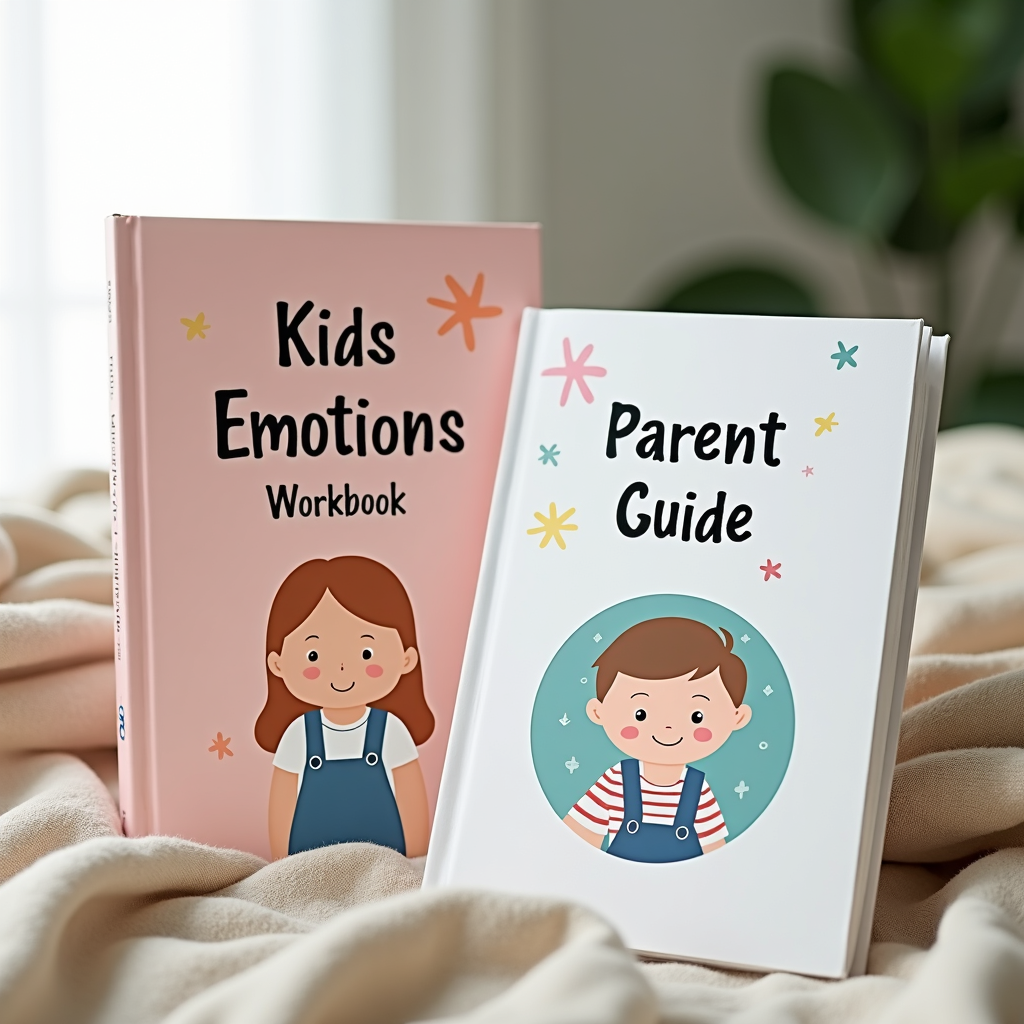
If your child struggles to express emotions…
you’re not alone.
Many parents notice daily situations like:
- sudden meltdowns over small things
- “I don’t know” when asked how they feel
- emotional outbursts with no explanation
- difficulty calming down after being upset
And it often leaves parents thinking:
👉 “I don’t know what my child is feeling…”
👉 “Why do they react like this?”
______________________________________________________________________________
🧠 PROBLEM (Empathy + Awareness Shift)
The truth is:
Children are not ignoring their emotions.
They simply don’t yet have the words, awareness, or tools to express them.
Without guidance, emotions come out as:
- crying
- anger
- silence
- or behavioral reactions
This is not misbehavior.
It is undeveloped emotional vocabulary.
______________________________________________________________________________
🌱 SOLUTION INTRO (Shift to system thinking)
One of the simplest and most powerful ways to support emotional development is:
👉 a daily feelings check-in routine
Just 2–5 minutes a day can help children:
✔ understand what they feel
✔ learn emotional words
✔ communicate better
✔ reduce emotional overwhelm
✔ feel more secure and understood
________________________________________________________________________________
🎯 WHAT IS A FEELINGS CHECK-IN?
A feelings check-in is a short daily routine where children:
- identify how they feel
- express emotions in words, drawings, or actions
- reflect on what caused the feeling
It’s simple—but it builds lifelong emotional intelligence.
________________________________________________________________________________
🧩 7 DAILY FEELINGS CHECK-IN ACTIVITIES
1. Emotion Flashcard Check-In
Show your child emotion cards (happy, sad, angry, etc.) and ask:
👉 “Which one feels like you today?”
This visual method is perfect for younger children who struggle with words.
💡 Tip: Using visual tools makes this activity much easier. Printable emotion flashcards allow children to see and choose their feelings, rather than struggle to explain them.
2. “Point to Your Feeling” Chart
Create or print a simple feelings chart and let your child point to their emotion each morning.
You can turn this into a routine:
- Morning check-in
- After school reflection
- Bedtime discussion
Consistency helps children open up more naturally over time.
3. Draw Your Feeling
Ask your child:
👉 “Can you draw how you feel today?”
Drawing gives children a safe space to express emotions they may not be able to say out loud.
✏️ Guided worksheets can really help here. When children are given prompts or structured pages, they find it easier to express their feelings clearly instead of feeling stuck.
4. Feelings with Colors
Let children associate emotions with colors:
- Happy = Yellow
- Sad = Blue
- Angry = Red
Ask:
👉 “What color are you feeling today?”
This is a fun and creative way to build emotional awareness.
5. Emotion Mirror Activity
Stand in front of a mirror and make different facial expressions together.
Ask:
👉 “Can you show me your ‘excited’ face?”
👉 “What does a nervous face look like?”
This helps children recognize emotions in themselves and others—an important social skill.
6. High–Low of the Day
At the end of the day, ask:
- “What was the best part of your day?”
- “What was the hardest part?”
This builds reflection skills and encourages emotional expression in a natural way.
7. Feelings + Body Connection
Help children connect emotions to physical sensations:
👉 “Where do you feel that in your body?”
Example:
- Nervous → tummy feels funny
- Angry → tight fists
🧠 This step is key for emotional regulation.
If you’re unsure how to explain these connections, a structured parent guide can help you walk your child through emotions in a simple, supportive way—without guessing what to say.
_______________________________________________________________________________
⚠️ IMPORTANT GAP (THIS BOOSTS SALES)
Even though these activities are simple…
many parents still struggle with:
- what to say during emotional moments
- how to help children find the right words
- how to stay consistent every day
- how to turn emotions into learning instead of chaos
Because emotional learning is not just an activity…
👉 it’s a guided system.
________________________________________________________________________________
That’s why visual, structured tools make such a difference.
👉 10 Emotional Flashcards for Kids
Help children:
- visually identify emotions
- connect feelings with words
- respond to daily check-ins easily
Instead of guessing emotions, children can SEE them.
👉 Parent Guide
Gives you:
- ready-made check-in activities
- simple emotional prompts
- structured daily routines
- guidance on what to say in real situations
So emotional learning becomes:
👉 consistent
👉 easy
👉 stress-free
__________________________________________________________________________________
❤️ FINAL SHIFT (Emotional closure)
You don’t need perfect parenting moments.
You just need small daily emotional check-ins that build:
✔ awareness
✔ communication
✔ confidence
✔ emotional safety
Over time, these small moments shape how your child understands and expresses emotions for life.
_________________________________________________________________________________
💬 CTA (STRONGER VERSION)
If you want to make emotional learning simple and consistent:
👉 Start with the Emotional Flashcards + Activity Pack
and turn daily feelings check-ins into an easy routine your child actually enjoys.
__________________________________________________________________________
Thanks for stopping by — we’re so excited to grow bright minds with you!
Warmly,
The LumenSapling Team
Comments ()