

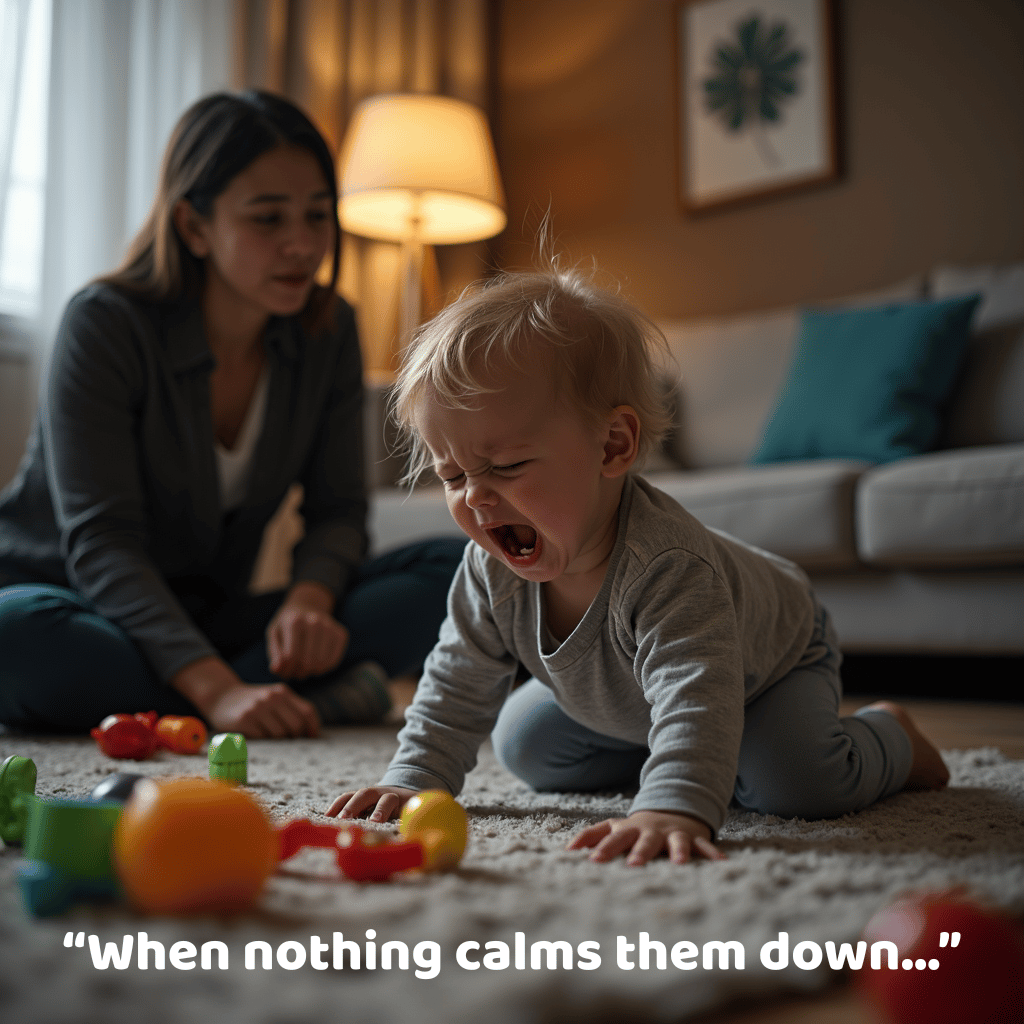
It’s the end of a long day.
You’re tired. Dinner is done. All you want is a calm, quiet evening.
But your child refuses to turn off the TV.
You ask once. No response.
You ask again. They whine.
Then suddenly—it explodes.
Crying. Screaming. “NO!” over and over again.
You feel your frustration rising.
“That’s enough,” you say, trying to stay calm.
But they don’t stop. If anything, it gets louder.
You raise your voice.
They cry harder.
Now everything feels out of control.
And in that moment, it’s not just about the TV anymore.
It’s the exhaustion.
The constant battles.
The feeling that no matter what you do… nothing works.
So you react.
Maybe you yell.
Maybe you give in just to make it stop.
Maybe you walk away, feeling completely drained.
And later, when the house is finally quiet, a different feeling hits:
Guilt.
You think:
“I didn’t handle that well.”
“Why does this keep happening?”
“What am I supposed to do in that moment?”
And the hardest part?
You know it’s going to happen again.
If this feels familiar, you’re not alone. And more importantly—this isn’t something you should ignore or hope will pass.
_________________________________________________________________________________
This Isn’t Just a Phase (And That’s What Makes It So Stressful)
Most parents hope:
“They’ll grow out of it.”
But here’s what actually happens if nothing changes:
- The meltdowns keep repeating
- Your reactions start becoming automatic
- Your child still doesn’t learn how to handle emotions
And over time, it turns into:
- Bigger emotional outbursts
- More frustration (for both of you)
- A cycle that feels impossible to break
👉 This is why it feels so exhausting.
Not because of one meltdown—but because it keeps happening.
_________________________________________________________________________________
What’s Really Happening During a Meltdown
In that moment, your child is not choosing to misbehave.
They are overwhelmed.
Their brain literally cannot:
- Think logically
- Communicate clearly
- Calm down on their own
And here’s the part most parents aren’t told:
👉 If a child isn’t taught how to handle emotions, they don’t “figure it out” later.
They just keep reacting the only way they know how.
_______________________________________________________________________________
Why Most Parents Still Feel Stuck
You’ve probably already tried:
- Staying calm
- Talking it through
- Giving consequences
- Ignoring the behavior
And sometimes… it works.
But in the real meltdown moment?
Everything you know disappears.
Because:
- You’re overwhelmed too
- You don’t know what to say fast enough
- Your child can’t respond to logic anyway
👉 So you end up reacting instead of guiding.
And that’s the gap most advice doesn’t solve.
_______________________________________________________________________________
What Actually Works in the Moment (Simple but Powerful)
1. Control Your Reaction First
Your child’s emotions will rise or fall based on yours.
Instead of reacting:
- Pause for 2 seconds
- Lower your voice
- Slow your movements
Even if your child is still escalated, this prevents things from getting worse.
2. Say Less, But Say the Right Thing
During a meltdown, long explanations don’t work.
Use short, clear phrases:
- “I see you’re really upset.”
- “I’m here.”
- “We’ll figure this out.”
👉 These calm the emotional brain—not trigger more frustration.
3. Give Them a Way to Express What They Can’t Say
This is where most meltdowns spiral.
Your child feels something—but can’t explain it.
So it turns into:
crying, screaming, hitting
Instead of:
communication
4. Stay Through the Storm (Without Fixing It Immediately)
You don’t need to stop the meltdown instantly.
You need to:
- Stay present
- Stay steady
- Let the emotion pass safely
This is how children learn emotional regulation over time.
_________________________________________________________________________________
The Missing Piece (Why This Still Feels Hard)
At this point, you might be thinking:
“This makes sense… but in the moment, I still don’t know what to do.”
And that’s completely real.
Because during a meltdown:
- You don’t have time to think
- Your child isn’t listening
- And everything feels urgent
👉 This is exactly where most parents feel unprepared.
Not because they don’t care.
But because they don’t have something immediate to rely on.
__________________________________________________________________________________
Why Most Parents Stay Stuck (Even When They Know What to Do)
At this point, you understand what your child needs.
But here’s the real problem:
👉 In the middle of a meltdown, you don’t have time to think.
You don’t have time to:
- Figure out the right words
- Guess what your child is feeling
- Remember strategies you read earlier
And your child?
They can’t explain what’s wrong either.
So the same thing happens again:
- They cry
- You react
- And afterward, you both feel overwhelmed
Not because you don’t care.
But because in that moment—
You don’t have the right tools in your hands.
What You Need in That Moment (Not Later)
You don’t need more theory.
You need something that works:
- Immediately
- In the middle of the meltdown
- When both of you are overwhelmed
The Tool That Changes the Moment for Your Child
During a meltdown, your child isn’t trying to be difficult.
They’re trying to express something they don’t understand.
And when they can’t say it—they act it out.
These flashcards give them something they’ve been missing:
- A way to show what they feel without screaming
- A way to be understood instantly
- A way to reduce frustration before it explodes
👉 Instead of guessing what’s wrong…
your child can point to it.
That one shift can stop a meltdown from escalating.
Because let’s be honest—
Even if you know what to do,
it’s hard to stay calm and say the right thing every time.
This guide gives you:
- Exact words to use when emotions are high
- Step-by-step responses for real situations
- Clear direction so you don’t freeze or react out of frustration
👉 So instead of:
“I’ll try to handle it better next time…”
You actually know how.
________________________________________________________________________________
Why Waiting Makes This Harder
Every meltdown that repeats without a better approach:
- Reinforces the same reaction in your child
- Builds more frustration in you
- Makes the pattern harder to break
And the truth is:
👉 The next meltdown is coming.
The only question is:
Will it feel exactly the same as the last one…
or will you handle it differently?
_______________________________________________________________________________
You don’t need to figure this out alone.
And you don’t have to go through another meltdown feeling unprepared.
👉 Get the Emotional Flashcards & Parents Guide now
So the next time your child is overwhelmed…
You’re not guessing.
You’re ready.
__________________________________________________________________________
Thanks for stopping by — we’re so excited to grow bright minds with you!
Warmly,
The LumenSapling Team
Comments ()