

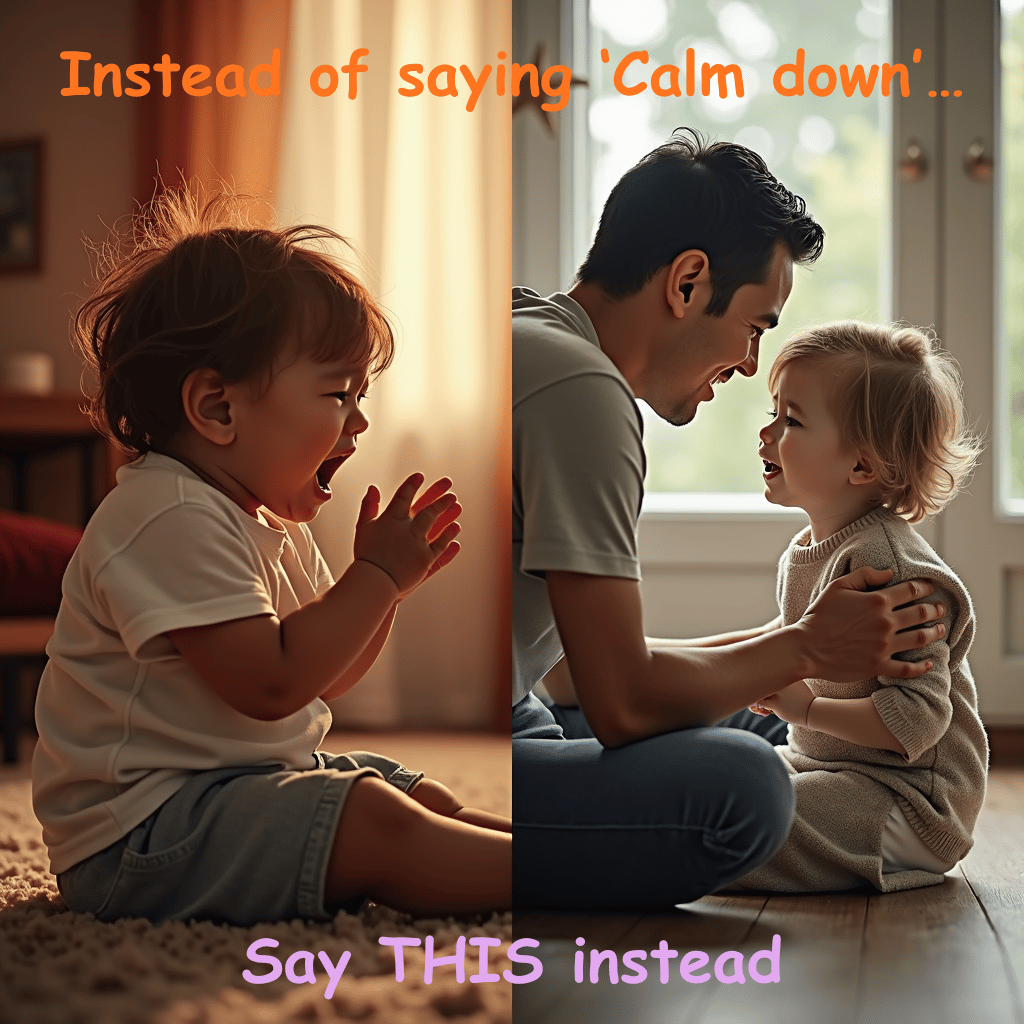
Your child is angry.
They’re yelling… crying… maybe even throwing things.
And in that moment, most parents say something like:
👉 “Stop it.”
👉 “Calm down.”
👉 “That’s not a big deal.”
But instead of helping… it makes things worse.
The meltdown gets bigger.
The emotions get louder.
And you’re left feeling overwhelmed and unsure what to do.
_________________________________________________________________________________
🧠 PROBLEM
If this feels familiar, you’re not doing anything wrong.
You just haven’t been shown what actually works.
Because here’s the truth:
👉 Children don’t calm down when they’re told to calm down.
👉 They calm down when they feel understood.
When a child is angry, their brain is overwhelmed.
They don’t need correction first.
They need connection first.
Without that, anger turns into:
- bigger tantrums
- shutdowns
- repeated emotional outbursts
_________________________________________________________________________________
🌱 SOLUTION INTRO (Reframe)
The way you respond in these moments matters more than you think.
Your words become your child’s inner voice.
So instead of reacting automatically…
you can use simple, intentional phrases that help your child:
✔ feel safe
✔ understand their emotions
✔ learn how to express anger in a healthy way
_________________________________________________________________________________
🧩 WHAT TO SAY (PRACTICAL SCRIPTS)
❌ Instead of: “Calm down”
👉 Say:
“I can see you’re really angry right now.”
✔ Why it works:
You’re naming the emotion, not dismissing it.
❌ Instead of: “Stop crying”
👉 Say:
“It’s okay to feel upset. I’m here with you.”
✔ Why it works:
It creates emotional safety.
❌ Instead of: “That’s not a big deal”
👉 Say:
“That felt really frustrating for you.”
✔ Why it works:
What feels small to you can feel big to a child.
❌ Instead of: “Go to your room”
👉 Say:
“Let’s take a moment together and figure this out.”
✔ Why it works:
You’re guiding, not isolating.
❌ Instead of: “Why are you acting like this?”
👉 Say:
“Do you want to tell me what made you feel this way?”
✔ Why it works:
It invites communication instead of shame.
__________________________________________________________________________________
🧠 WHAT THIS TEACHES YOUR CHILD
When you respond this way consistently, your child learns:
✔ how to name their emotions
✔ that feelings are safe to express
✔ how to communicate instead of react
✔ how to calm down with support
This is how emotional regulation is built.
_________________________________________________________________________________
⚠️ THE REAL STRUGGLE
But here’s where most parents struggle:
👉 remembering what to say in the moment
👉 finding the right words quickly
👉 staying calm during emotional chaos
👉 helping children who say “I don’t know”
Because in real life, these moments are fast and overwhelming.
And without tools…
it’s easy to fall back into automatic reactions.
_________________________________________________________________________________
🧩 MAKING THIS EASIER
This is exactly where simple emotional tools can make a huge difference.
👉 10 Emotional Flashcards for Kids
These help children:
- recognize what they’re feeling
- connect emotions with words
- express anger before it escalates
Instead of guessing, they can SEE and choose their feelings.
👉 Parent’s Guide to Emotions
This gives you:
- real-life scripts (like the ones above)
- step-by-step ways to respond in emotional moments
- simple routines to build emotional skills daily
- guidance so you don’t have to “figure it out” under pressure
Together, these tools turn emotional moments into learning moments.
__________________________________________________________________________________
❤️ FINAL THOUGHT
You don’t need perfect responses.
You just need better ones.
Every time you:
👉 pause
👉 validate
👉 guide
you are teaching your child how to handle emotions for life.
_________________________________________________________________________________
💬 CTA (STRONG + CLEAR)
If you want to feel more confident during your child’s emotional moments:
👉 Start using the Emotional Flashcards + Parent Guide
and turn everyday meltdowns into opportunities for connection and growth.
__________________________________________________________________________
Thanks for stopping by — we’re so excited to grow bright minds with you!
Warmly,
The LumenSapling Team
Comments ()