
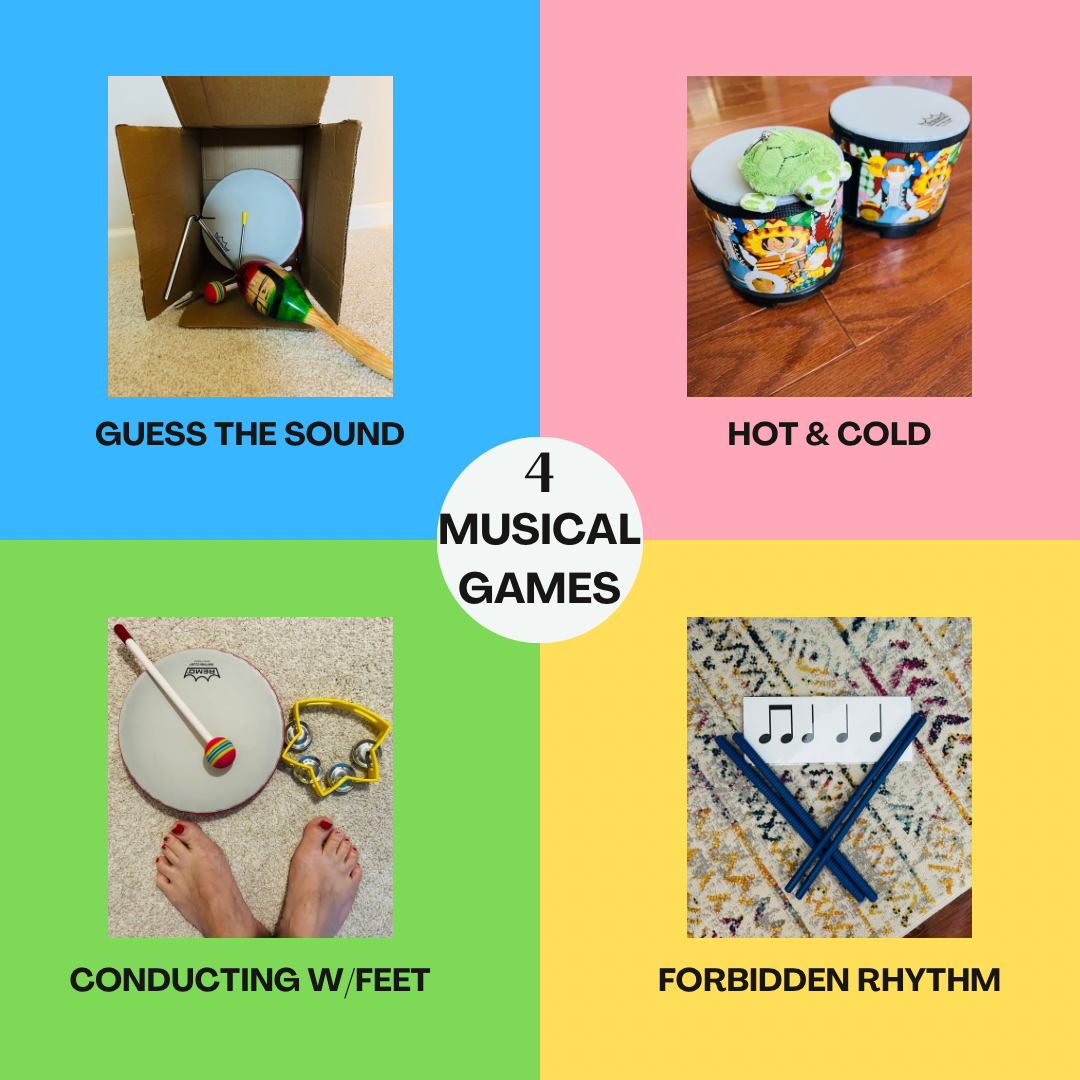
Games for kids like musical chairs and freeze dance can be fun to play, but if we're being completely honest, they don't teach kids anything. If you're ready to take your music games up a notch and actually help kids practice music skills - this post is for you!
What you'll find in this blog post:
- Four ideas for games that teach music skills
- How to set up each game, with or without instruments
- Explanation of what kids are learning
Game #1 - Guess the Sound
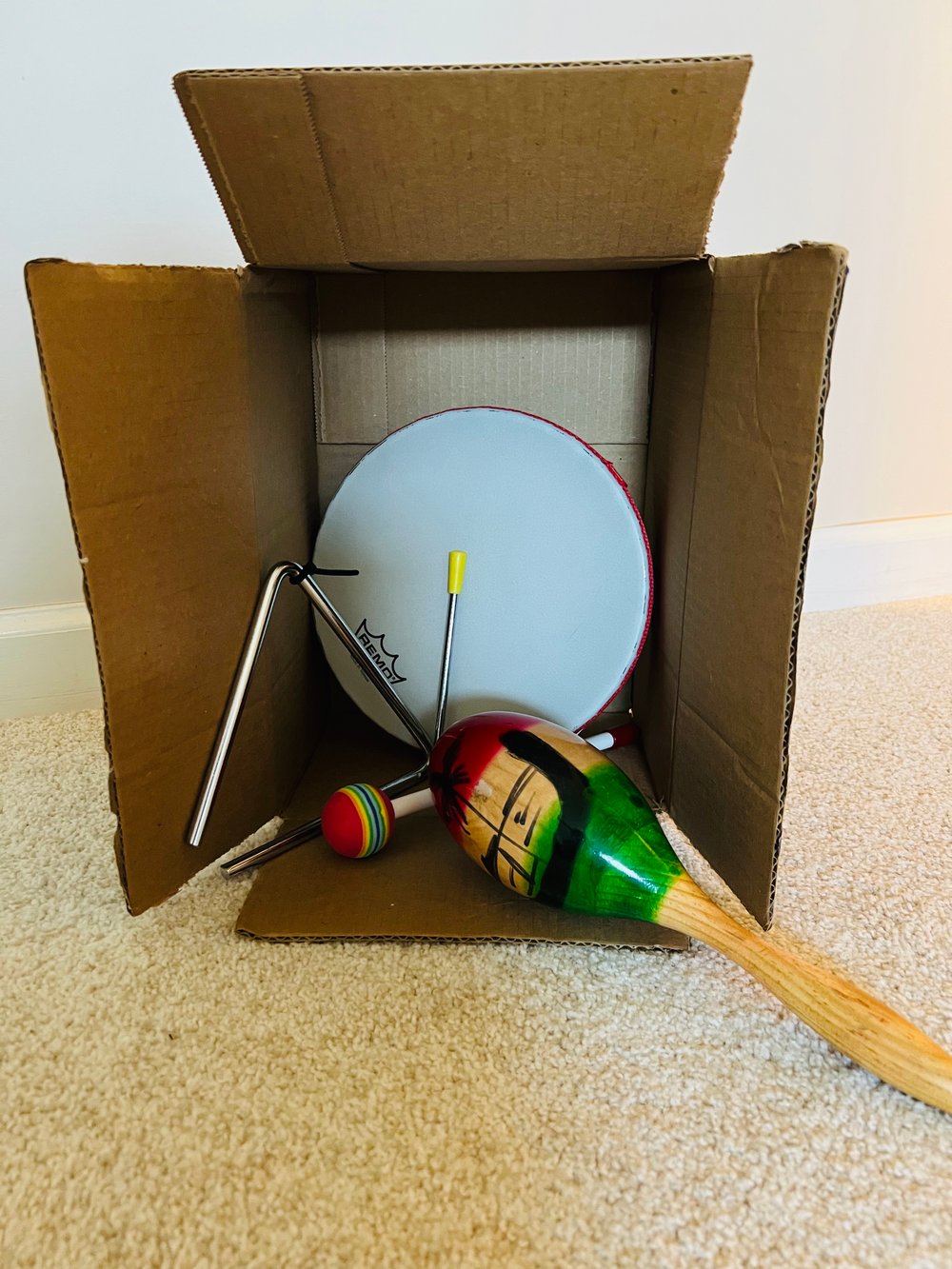
This game is perfect for young learners as it can help them learn the names of basic instruments. If you don't own any instruments - no worries - simply take a trip through the house and see what other sound sources you can find! Examples: a dog collar with a jingly tag, a jacket with a zipper, a jar of dry popcorn kernels.
How to set it up:
Keep each instrument or sound item hidden in a box where kids cannot see what is making the sound. For younger kids, only play one sound at a time for easier identification. When they are ready for a challenge you can play two different sounds in a row, or two instruments at the same time to see if the can name what they hear.
What they're learning:
'Guess the Sound' encourages kids to practice listening skills, and identify various sound sources. I also like to add on classification of sounds. For example, if I'm playing percussion instruments I might ask them to classify how the instrument is played (tap, shake, or scrape). If you are using household items you could choose to have them identify the type of materials it's made from.
Game #2 - Hot & Cold
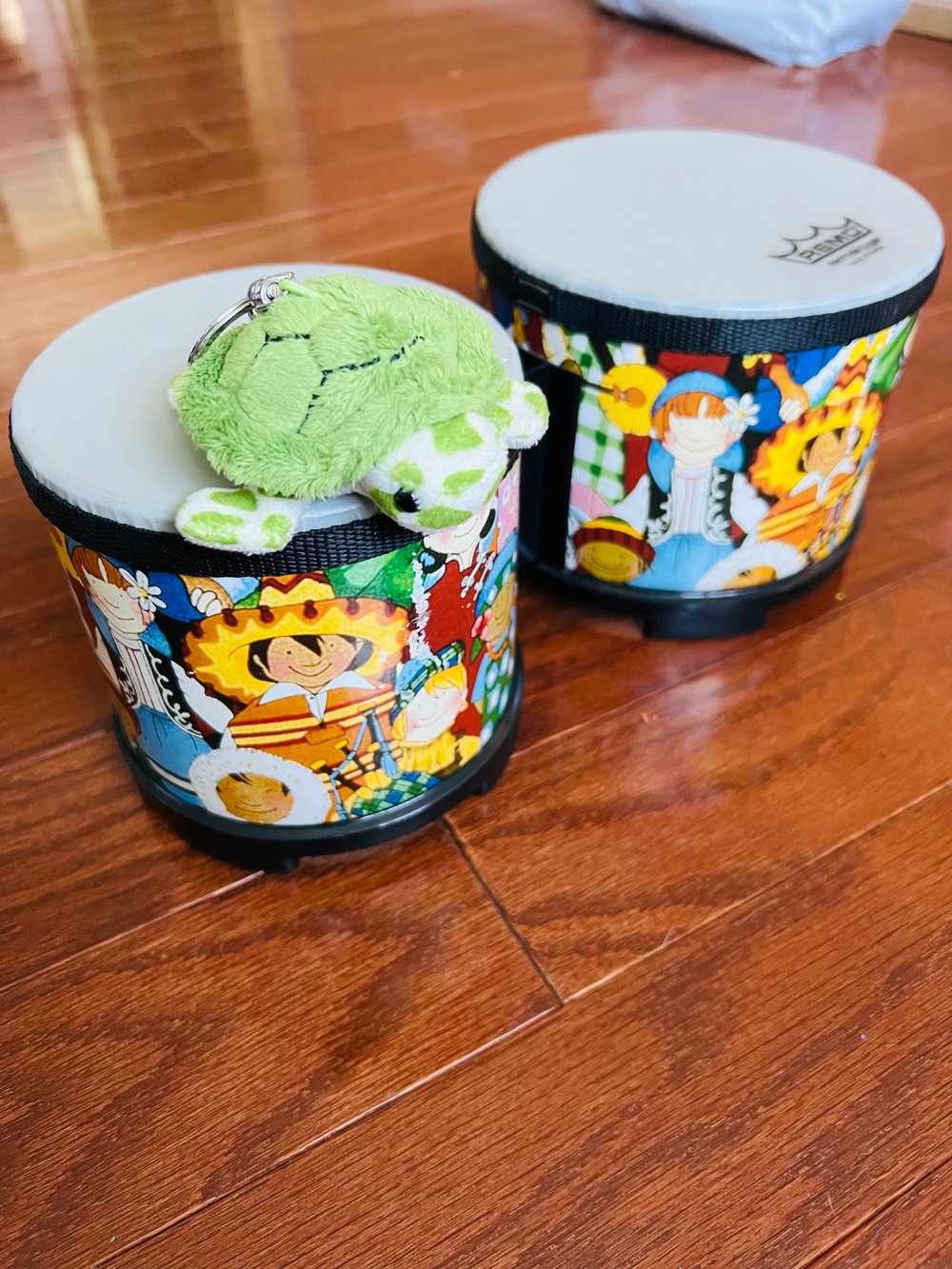
This is a fun game whether you're playing with just one or two kids, up to a large class of students. There are many opportunities for kids to take turns being the "seeker" and also the "clue givers".
How to set it up:
One small item will be hidden somewhere in the room, where the seeker will then go looking for that object. The game is played sort of like a traditional Hot & Cold game; when the seeker gets close to the hidden item you give clues like, "You're getting warmer, warmer, you're hot!" or if they move farther away you say, "You're getting colder, colder, you're freezing!"
Now, replace the hot and cold words with sounds made on instruments or body percussion (clapping, patting, etc.). The clue giver can play sounds that are faster/louder as the seeker gets close, and slower/softer as the seeker moves farther away. Repeat this process until the child finds the hidden item.
What they're learning:
The seeker, or person trying to find the hidden object, is developing their close listening skills. They will quickly learn how to identify the different sounds that give them clues. The clue giver, or person making the sounds on an instrument, must accurately give non-verbal clues and play the sounds correctly to lead the seeker in the right direction. This gets more challenging when you have multiple kids acting as the clue giver(s) because it requires whole group cooperation, a wonderful thing!
Game #3 - Conducting with Feet
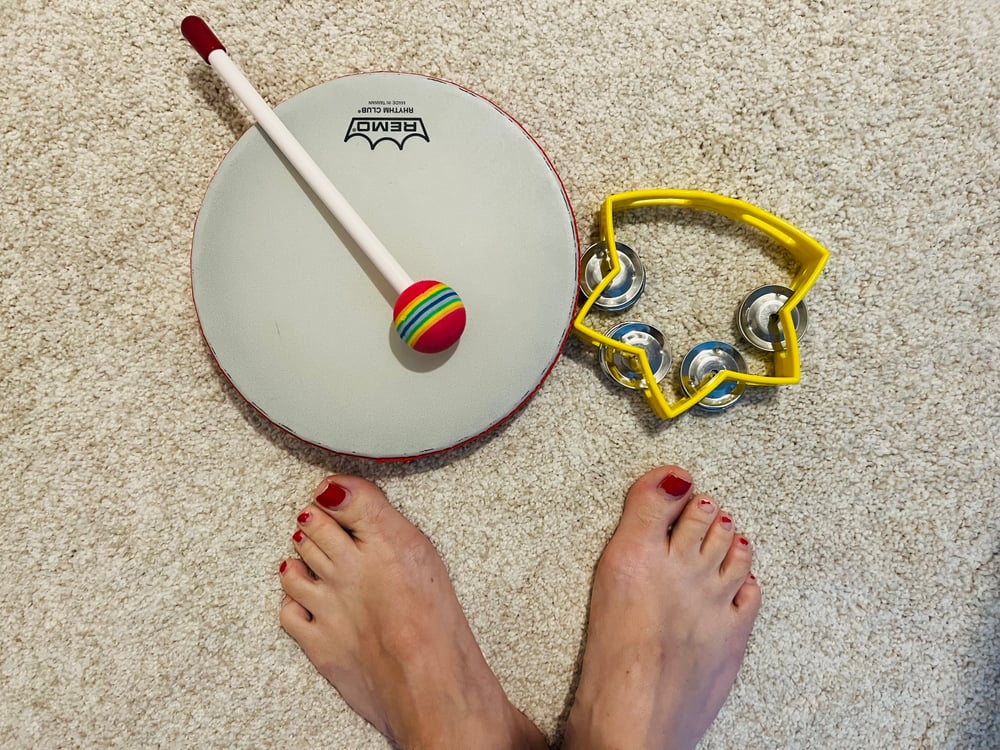
Yes, this game is as silly as it sounds. And no, I did not hire a foot model to take this picture. 😉
How to set it up:
Each musician in the pretend 'orchestra' needs a way to make sound, preferably using rhythm instruments, but it can also be played using body percussion sounds. They will practice following the conductor (parent or child) who is standing facing them. The conductor is tasked with communicating how they want the group of musicians to play - loud, quiet, fast, slow, smooth, bumpy, steady beat, rest, etc. - but the catch is that they can only communicate through foot motions. *It's a good idea to first discuss with kids how a conductor would normally do these types of motions with their hands, and get them to brainstorm how they would show similar things with their feet.
What they're learning:
While this game does have a tendency to bring on a lot of giggles (as it should), the participants are practicing important skills too! For the conductor, he/she is exploring ways to use the body for non-verbal communication, and he/she has the freedom to explore different ways of doing this. For the musicians who are producing sounds, they must pay close attention to the conductor who could change the foot motions at any given moment.
Game # 4 - Forbidden Rhythm
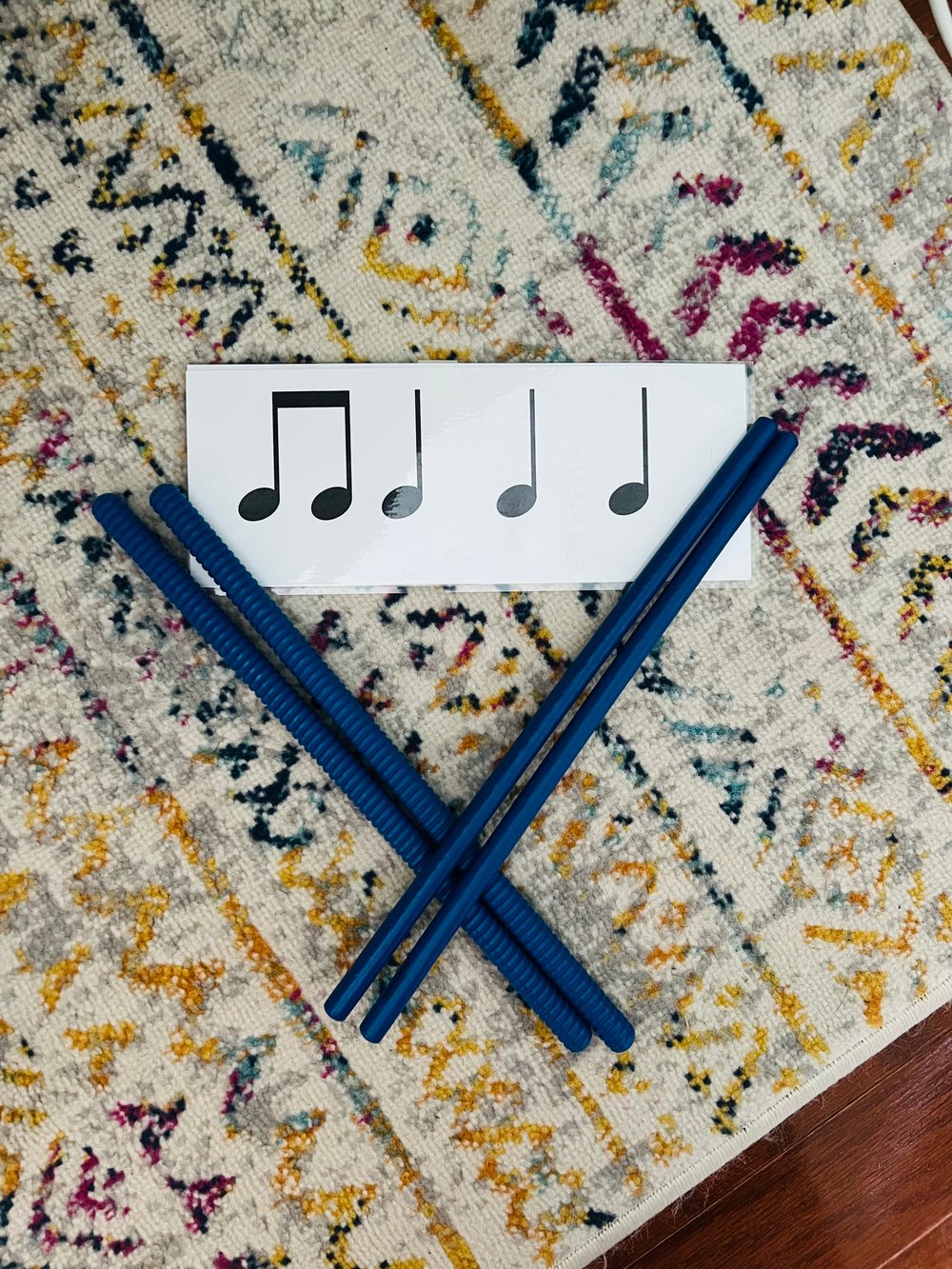
This last game is better suited for older elementary, because it does require a basic understanding of rhythm patterns using quarter and eighth notes. I would recommend it mostly for 2nd - 5th grade. If you're curious about how to teach these beginner rhythms, check it this blog post.
How to set it up:
The parent/teacher will begin by playing or clapping 4-beat rhythm patterns. Teacher plays the rhythm pattern - students echo it back - repeat, repeat, repeat. Once this habit has been established, you are going to draw or display a forbidden rhythm on the board. Make sure all the players have a chance to read it and are allowed to practice it out loud once just so everyone is familiar with it. Now, for the following round when you echo patterns back and forth with the kids, they are allowed to play/echo back anything they hear EXCEPT the forbidden rhythm. You can play with a points system (teacher vs. students) for added fun. The parent/teacher gets a point if someone accidentally plays the forbidden rhythm, but the kids earn a point if they listen correctly and they all stop playing when they hear the forbidden rhythm.
What they're learning:
Like all the previously mentioned games here, kids are developing their listening skills! This is a game where you can't just space out and not pay attention, because if you do you'll play a rhythm pattern when you weren't supposed to and (gasp!) the teacher will earn a point. 'Forbidden Rhythm' is also great for reinforcing notation skills.
Want to see these games in action??
I hope you'll be inspired to try one of these games in your homeschool or music class. If you're the type of person (like me) who needs a visual, then check out this YouTube video from Morning Basket Music where I model how to teach all four games.
Happy music making!
Comments ()