
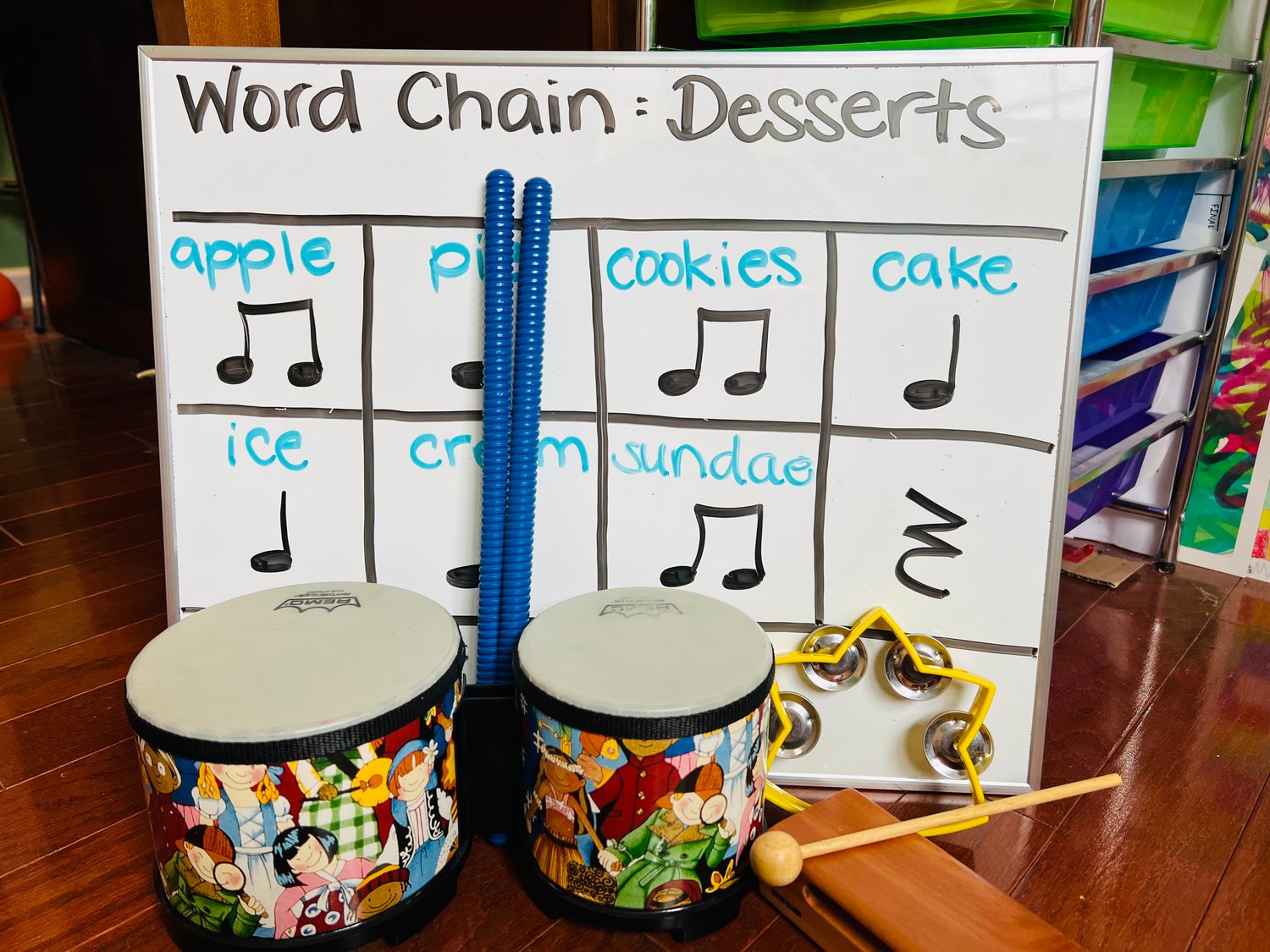
If you're looking for a great resource to teach beginning rhythm, I'd love to introduce you to Word Chains. What are they? A Word Chain is a set of words all based on a central topic, where students get to practice speaking/clapping/playing various rhythm patterns.
What you'll find in this blog post:
- Step-by-step instructions to create a Word Chain
- How to perform by speaking and playing instruments
- Ideas for extension based on the level of your students
Beginning rhythm: quarter notes and paired eighth notes
The first thing you'll need to do to start a Word Chain is let children pick a topic. Suggestions might be: favorite foods, sports, animals, or holiday-themed words. I always like to go with desserts because it's a crowd favorite. 😋
Next, let students brainstorm a list of words. An example list for desserts might look like this:
apple pie
brownies
cookies
cake
fudge
ice cream sundae
cupcake
s'mores
You as the teacher will need to make some decisions about which words to use for the actual Word Chain. One of the challenges I often face is that some child will give me a very long answer...
"My favorite dessert is an ice cream sundae with hot fudge sauce and whipped cream and cherries on top!"
I would handle this by thanking them for the suggestion, but also offering that we might shorten it a bit to just say "ice cream sundae." You will decide ahead of time how many beats you want to fill in your Word Chain. For younger elementary - 8 beats is enough, but older elementary could extend to 16 beats.
Once the words have been selected, you are ready to write them into the Word Chain template. At first it will look like this:
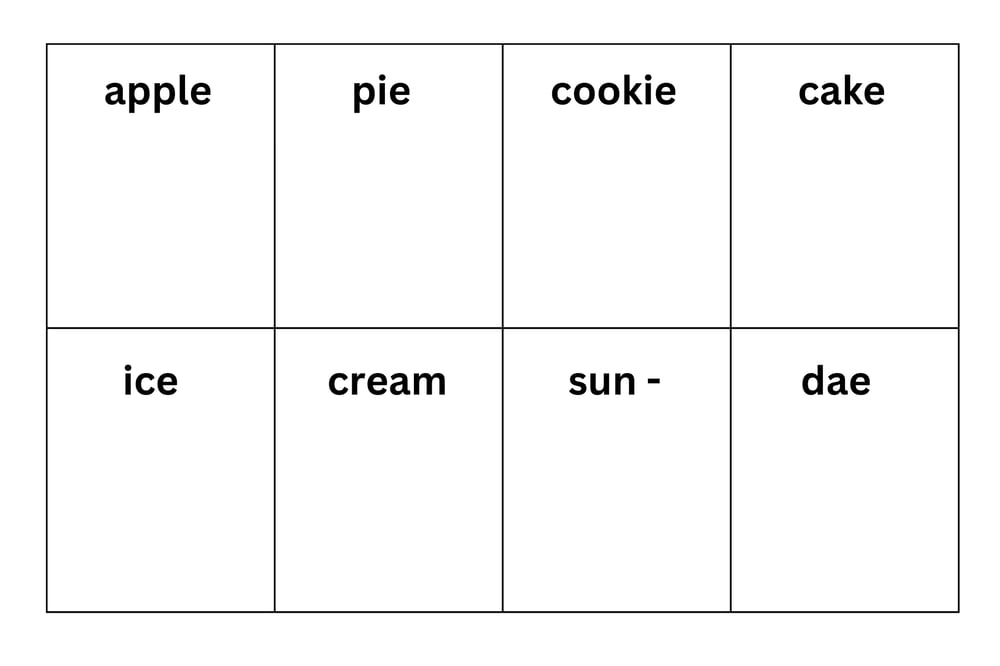
Here's where you start to teach the process of counting rhythm sounds - similar to syllables. At this age, you want kids to start differentiating between one rhythm sound (quarter note) and two rhythm sounds (paired eighth notes). As you help them clap each word, draw in the correct rhythm symbol that matches. When it's all completed it will look like this:
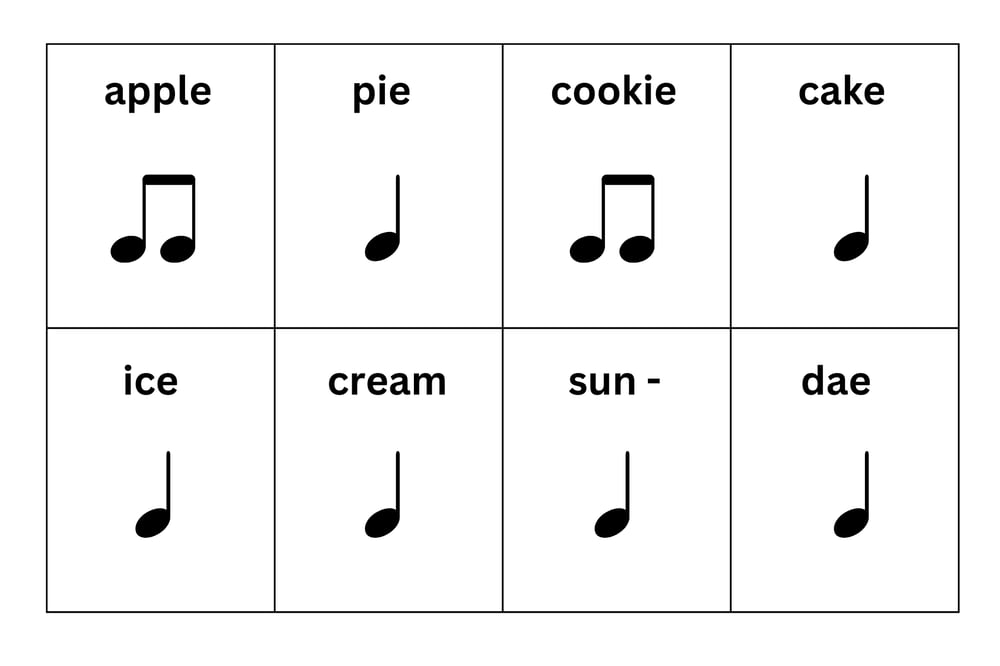
How to perform a Word Chain
Now comes the fun part, make it a performance! It is always best practice to have students speak the words and clap the rhythms to make sure they can do it correctly before putting instruments in their hands. Also, since 8 beats of rhythm might feel pretty short you can have them repeat the whole thing.
Once the kids are ready to play, have them transfer the Word Chain to a percussion instrument. Good examples are drums, rhythm sticks, wood blocks, and tambourines. I would not recommend something like a shaker because it can be a little tricky to hear the defined rhythm sounds.
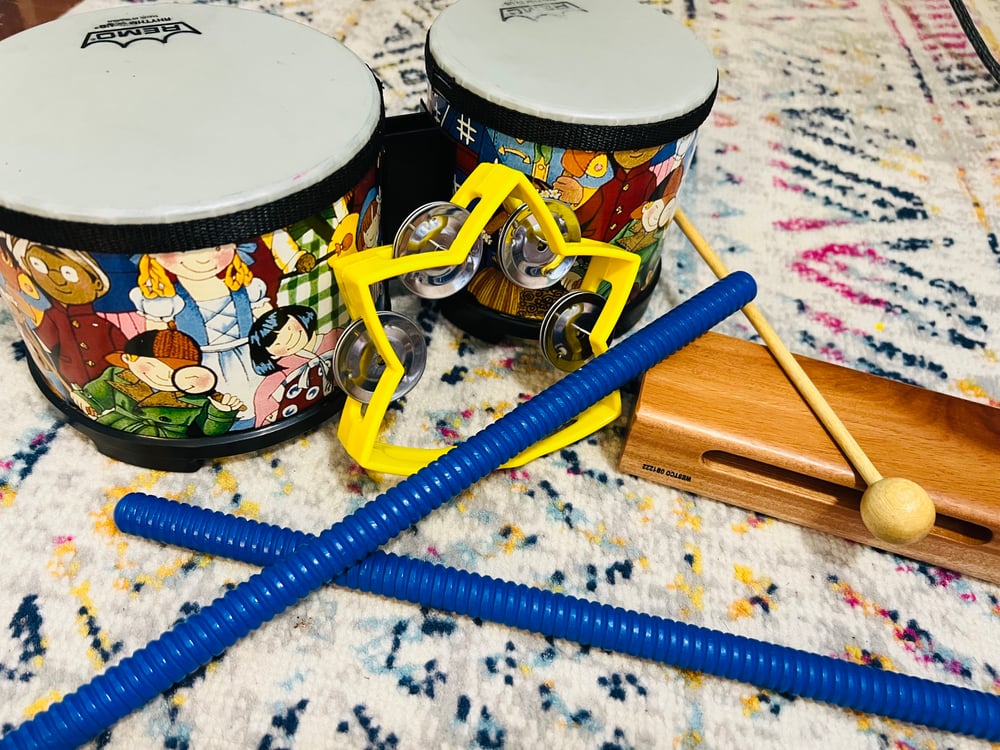
I like to have students perform their chain in three different ways:
- Speak the words only
- Speak the words while also tapping the rhythm
- Tap the rhythm by itself (continue to think the words in your head)
By step #3 in the process you should have a good idea of whether they are playing the sounds accurately or not. And if they are really getting the hang of each step, then consider letting them mix up the order.
Ready for a challenge?
Now that you know the basic process for creating and performing a Word Chain, you might want to add a bonus round to the activity. Here are two ways you can extend this to challenge your students.
Option #1: Erase at least one of the beats and replace it with a quarter rest. Teach the students that any beat with this symbol means that beat is silent, and you should not play any sound. Easier said than done, especially if you choose to put a rest at the very end!
Option #2: Turn it into a game. For example, "This time you are only allowed to play the boxes that contain paired eighth notes. You must be silent on all the quarter notes." This helps students to internalize the rhythm as they continue to think the words in their head. It can be tricky and will often turn into giggles when someone accidentally plays at the wrong time, but that's all part of the fun learning process.
Want to find out more about Word Chains and see one in action? Check out this YouTube video from Morning Basket Music, and see exactly how I model it.
Comments ()