
Many people begin their musical journey by learning songs, copying what they hear, or memorising patterns on an instrument. While these approaches can be helpful, they often leave musicians dependent on imitation rather than understanding.
Learning to read music changes that.
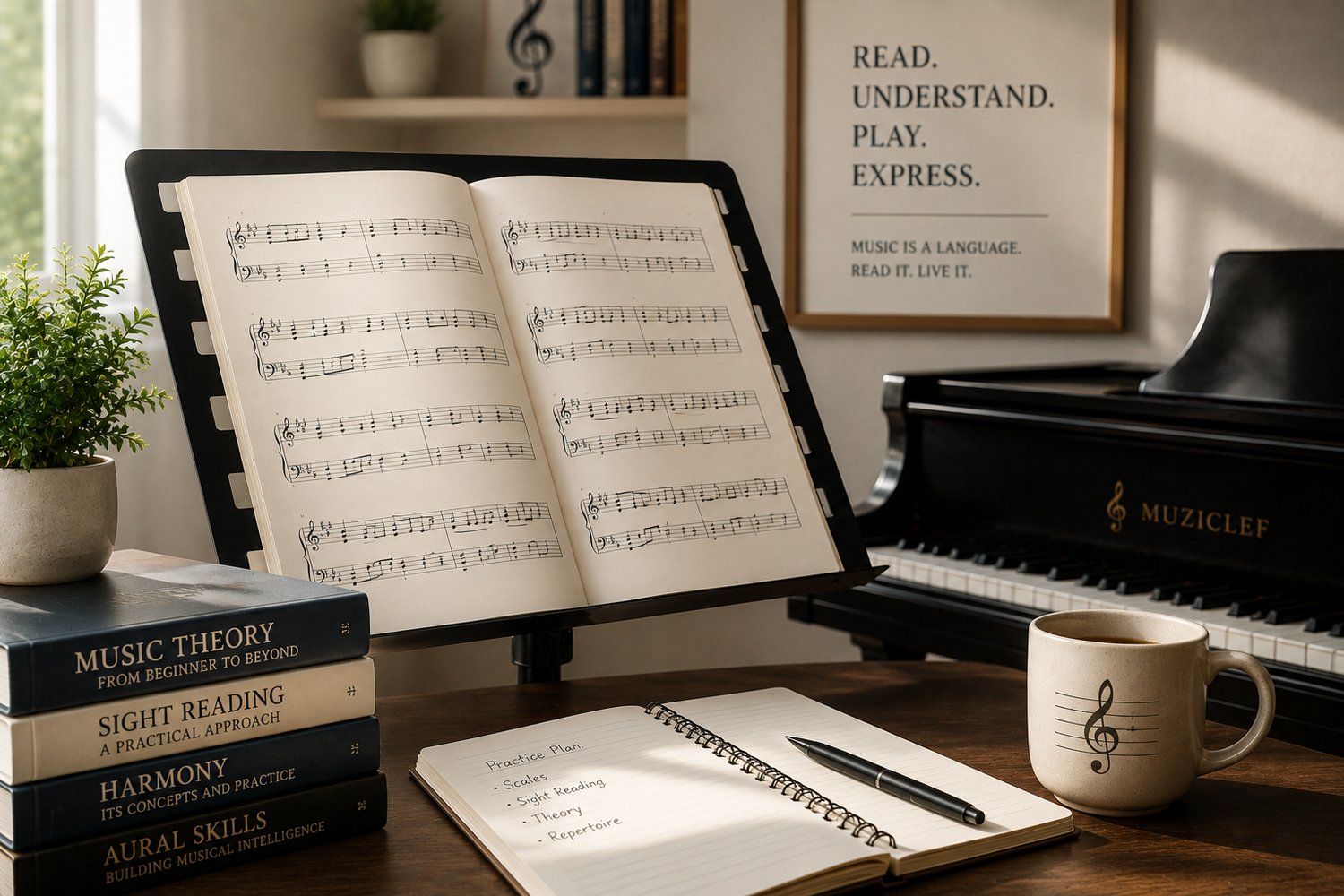
Music notation is a universal language that allows musicians to communicate ideas, interpret compositions, and develop independence. Whether you are a singer, keyboard player, instrumentalist, or aspiring composer, the ability to read music opens doors to deeper musical understanding and greater opportunities.
Music Reading Builds Independence
A musician who can read music is not limited to what someone else teaches them. They can explore new pieces, learn from scores, and continue developing their skills without relying entirely on demonstrations or recordings.
Reading music gives you the freedom to learn, practise, and perform with confidence.
It Strengthens Musical Understanding
Music notation does more than show which notes to play. It reveals rhythm, pitch relationships, harmony, dynamics, articulation, and structure.
As you learn to read music, you begin to understand how music works rather than simply memorising it.
It Improves Performance Skills
Strong music-reading skills help musicians learn new repertoire more efficiently and perform more accurately. Instead of guessing or relying solely on memory, musicians can refer directly to the written score.
This leads to greater confidence during rehearsals, examinations, performances, and ensemble work.
It Supports Ear Training and Singing
Reading music and developing the ear work together. As musicians learn to recognise notes on the page, they also become better at recognising sounds, intervals, rhythms, and melodies by ear.
This connection is particularly important for singers and developing musicians.
Begin Your Musical Journey
At Muziclef, we believe that musical literacy is one of the most valuable skills a musician can develop. Through our programmes in Staff Notation, Tonic Solfa Notation, Voice & Singing, Piano & Keyboard Studies, and our Practice Hub, we help students build the knowledge and skills needed to become complete musicians.
No matter your age or experience level, it is never too late to start learning the language of music.
Comments ()