
In modern cybersecurity, visibility is everything.
Organizations invest heavily in firewalls, antivirus software, access controls, and endpoint protection systems. These tools are essential for defending networks and systems against external threats.
But one critical question often remains unanswered:
What actually happened during a user session?
This is where session recording becomes one of the most valuable tools in modern security operations.
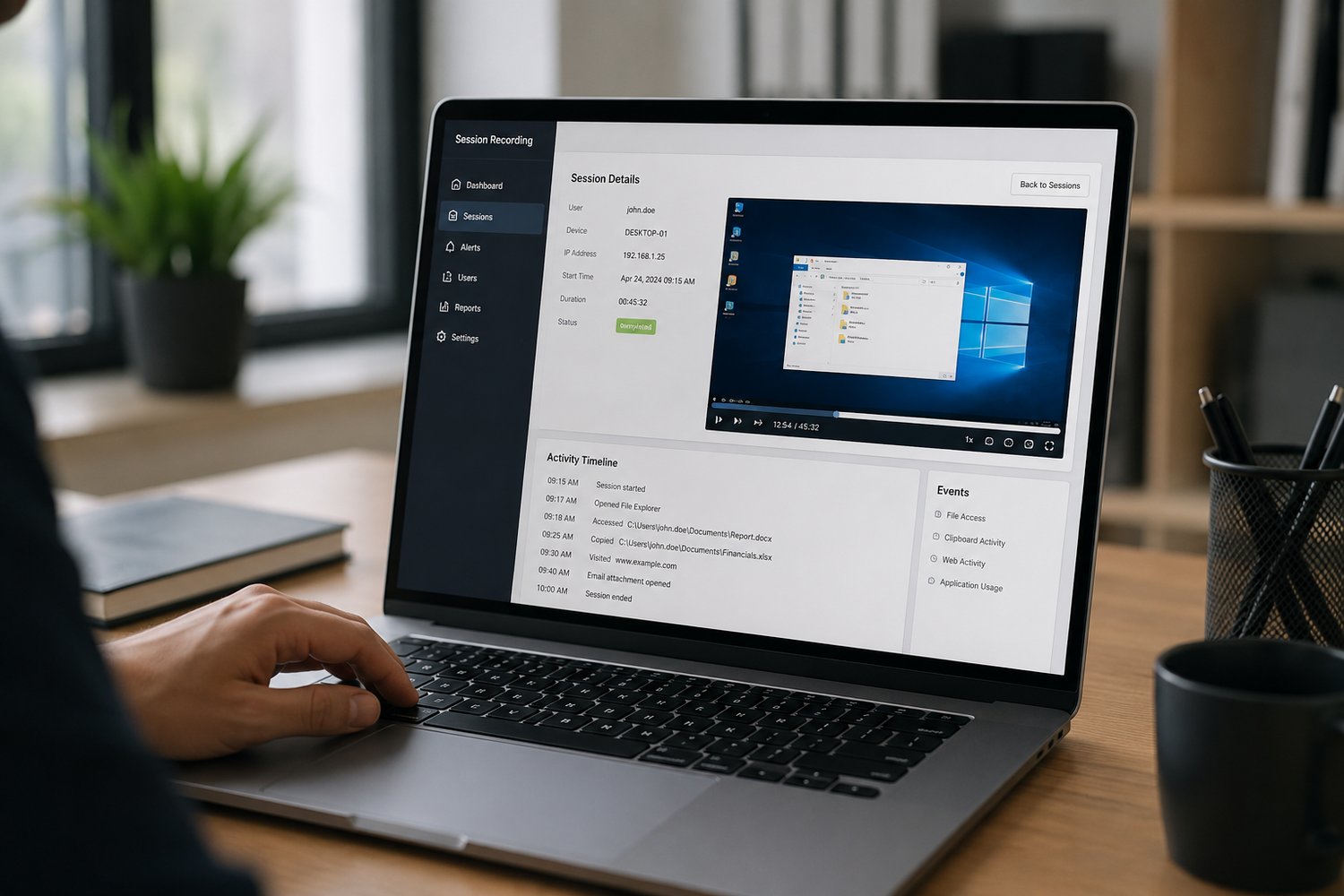
Session recording provides organizations with the ability to capture and review user activity as it happens across systems, applications, and endpoints. It transforms isolated logs into clear behavioral evidence, helping security teams understand not only what occurred, but how it happened.
In an era where insider threats, remote work, and data exposure continue to rise, session recording has become a powerful layer of operational visibility and security intelligence.
What Is Session Recording?
Session recording refers to the process of capturing user interactions during active sessions on systems or devices.
Depending on the solution, this may include:
- screen activity
- application usage
- website interactions
- typed actions
- file access behavior
- system navigation
The result is a replayable visual record of user activity.
Instead of relying only on technical logs, organizations gain contextual visibility into how systems were actually used.
Why Traditional Logs Are Not Enough
Most organizations already collect logs.
However, logs often provide fragmented information such as:
- login times
- IP addresses
- access attempts
- system events
While useful, logs rarely tell the full story.
For example:
A log may show that a file was accessed.
But it may not explain:
- what happened afterward
- whether the file was copied
- where the information was transferred
- what applications were involved
Session recording fills these visibility gaps by providing behavioral context.
Session Recording and Insider Threat Prevention
Insider threats are particularly difficult to detect because they often involve authorized users operating within legitimate access boundaries.
This means:
- credentials are valid
- access permissions appear normal
- activity may initially seem routine
Session recording helps identify subtle behavioral indicators that traditional monitoring may miss.
Examples include:
- navigating repeatedly through sensitive folders
- copying confidential information
- transferring files externally
- attempting to bypass security controls
- unusual application behavior
When reviewed together, these actions can reveal intent and risk escalation.
The Investigative Power of Session Recording
One of the greatest strengths of session recording is its forensic value.
When incidents occur, security teams often need answers quickly.
Session playback allows investigators to:
- reconstruct events accurately
- understand user behavior step by step
- verify suspicious activity
- confirm policy violations
- reduce uncertainty during investigations
Instead of relying on assumptions, organizations can work with visual evidence.
This dramatically improves response speed and investigative confidence.
Monitoring Privileged Users and High-Risk Roles
Privileged accounts represent one of the highest-risk areas in any organization.
Administrators, finance personnel, developers, and executives often have access to highly sensitive systems and information.
Session recording helps monitor:
- administrative actions
- configuration changes
- privileged account activity
- access to restricted systems
- sensitive operational tasks
This additional layer of accountability helps reduce both intentional misuse and accidental errors.
Supporting Compliance and Audit Requirements
Many industries require organizations to demonstrate stronger oversight and accountability.
Session recording helps support:
- compliance investigations
- internal audits
- security governance
- operational transparency
- evidence collection
Having replayable records of critical activity strengthens both compliance posture and organizational trust.
Remote Work and the Need for Visibility
The rise of remote and hybrid work has increased the importance of session visibility.
Employees now access systems from:
- home offices
- mobile environments
- shared networks
- remote devices
Without visibility into remote sessions, organizations lose insight into how sensitive systems are being used outside traditional office environments.
Session recording helps restore operational awareness in distributed workplaces.
Balancing Security and Employee Trust
Like all monitoring technologies, session recording must be implemented responsibly.
Organizations should:
- communicate monitoring policies clearly
- focus on security and operational protection
- avoid unnecessary personal intrusion
- comply with applicable privacy regulations
Transparency helps create a balance between organizational protection and employee trust.
The Business Benefits of Session Recording
Beyond security, session recording provides operational value through:
- faster incident investigations
- stronger accountability
- improved operational visibility
- reduced insider risk exposure
- better training and compliance reviews
It transforms activity monitoring into actionable intelligence.
Final Thought
In cybersecurity, visibility determines response.
The faster organizations can understand what happened inside their systems, the faster they can contain risk, investigate incidents, and protect critical information.
Session recording provides that visibility.
At NTKays Innovation, we help organizations implement intelligent session recording and user activity monitoring solutions that strengthen insider threat prevention, improve investigations, and provide deeper operational awareness across modern digital environments.
Because in modern security, knowing that something happened is no longer enough.
Organizations must understand exactly how it happened.