
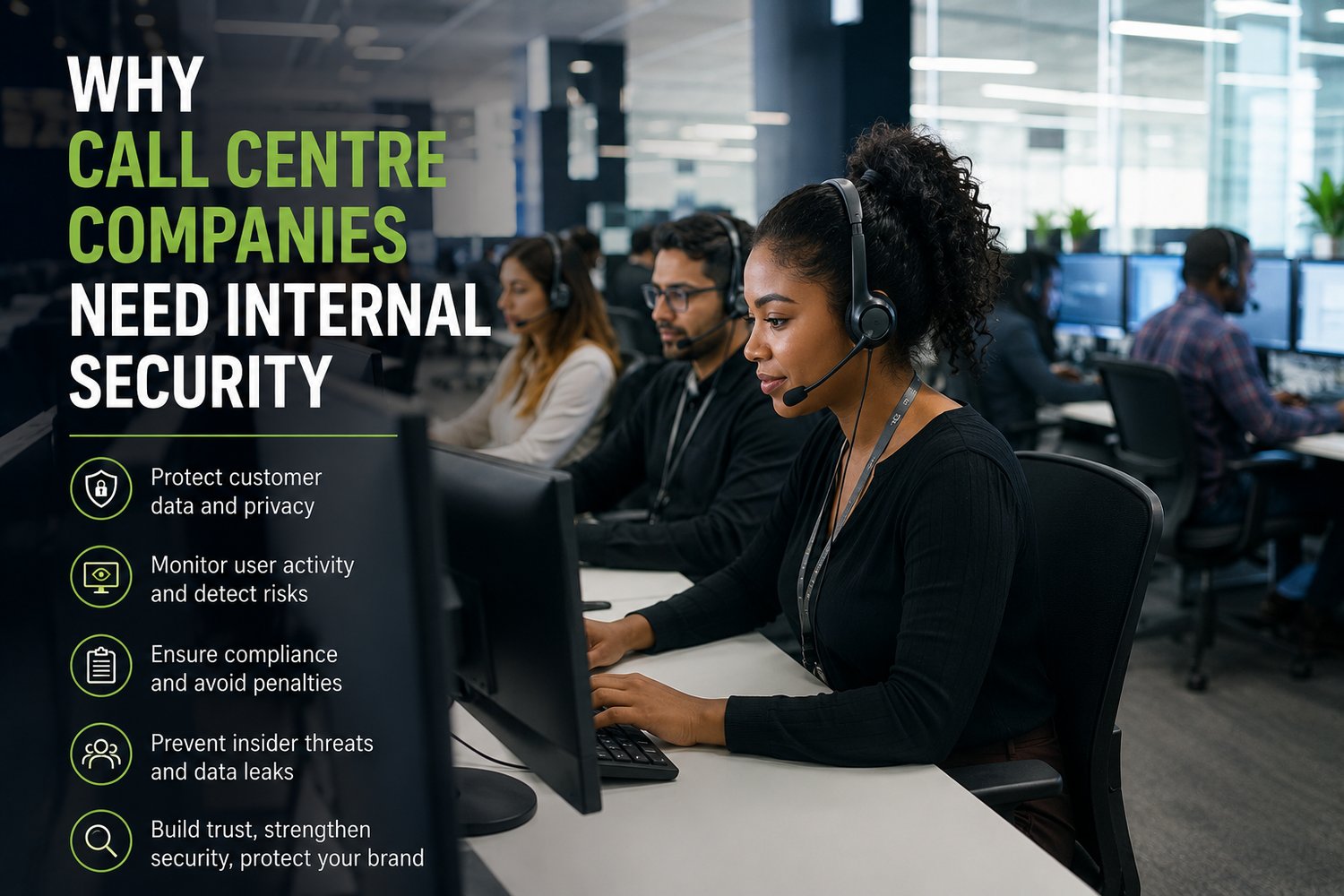
Call centres are among the most data-intensive business environments in the modern economy.
Every day, customer service agents, sales representatives, technical support teams, and administrators handle large volumes of sensitive information, including personal details, financial records, account credentials, payment information, and confidential business data.
While many organizations invest heavily in protecting their networks from external cyberattacks, one critical area is often overlooked: internal security.
Insider threats, accidental data leaks, and unauthorized access can pose just as much risk as external hackers. For call centres, where employees have direct access to customer information throughout the workday, strong internal security is essential for protecting data, maintaining customer trust, and ensuring regulatory compliance.
The Unique Security Challenges of Call Centres
Unlike many other industries, call centre employees interact with sensitive information almost continuously.
A typical agent may access:
- Customer personal information
- Banking or payment details
- Account credentials
- Service records
- Contracts
- Internal business systems
This constant access creates opportunities for both accidental mistakes and intentional misuse if proper monitoring and controls are not in place.
Insider Threats Are a Growing Concern
Not every security incident begins with a hacker.
Some originate from within the organization.
Examples include:
- copying customer information
- taking screenshots of confidential data
- sharing sensitive information externally
- unauthorized file downloads
- using personal storage devices
- accessing customer records without a business reason
Because these actions are often performed by authorized users, traditional security systems may not immediately detect them.
Remote and Hybrid Work Increases Risk
Many call centres now operate with remote or hybrid teams.
While remote work offers flexibility, it also introduces additional security challenges such as:
- home networks with weaker security
- personal devices
- limited physical supervision
- increased use of cloud applications
Organizations need visibility into user activity regardless of where employees work.
Protecting Customer Trust
Customers expect their personal information to remain confidential.
A single data breach can result in:
- loss of customer confidence
- reputational damage
- financial penalties
- legal action
- customer attrition
Strong internal security demonstrates a commitment to protecting customer data and maintaining service excellence.
Supporting Regulatory Compliance
Many call centres must comply with regulations governing the handling of personal and financial information.
Internal security measures help support compliance by providing:
- activity monitoring
- audit trails
- evidence for investigations
- accountability
- controlled access to sensitive information
The Importance of User Activity Monitoring
Knowing who logged into a system is only part of the picture.
Organizations also need visibility into what users do after they log in.
User activity monitoring helps security teams understand:
- applications being used
- websites visited
- files accessed
- clipboard activity
- USB device usage
- login patterns
- unusual behavior
This visibility enables earlier detection of suspicious activity.
Session Recording and Investigations
When incidents occur, session recording provides valuable evidence by showing exactly how events unfolded.
Security teams can:
- reconstruct incidents
- verify policy violations
- investigate insider threats
- improve response times
Visual evidence often provides context that logs alone cannot.
Preventing Data Loss
Call centres frequently process confidential customer information.
Monitoring technologies can help detect:
- unauthorized copying
- excessive downloads
- suspicious email activity
- transfers to external storage
- unusual application usage
These controls reduce the likelihood of sensitive information leaving the organization without authorization.
Improving Workforce Accountability
Internal security is not about creating distrust.
It is about creating accountability.
When employees understand that systems are monitored responsibly and transparently, organizations often experience:
- improved policy compliance
- greater awareness of data protection
- reduced risky behavior
- stronger operational discipline
A secure workplace benefits both the organization and its employees.
Building a Comprehensive Internal Security Strategy
An effective call centre security program combines multiple layers of protection, including:
- User Activity Monitoring
- Insider Threat Detection
- Session Recording
- Screenshot Monitoring
- File Activity Monitoring
- Clipboard Monitoring
- Website and Application Monitoring
- USB Device Monitoring
- Behavioral Analytics (UEBA)
- Data Loss Prevention (DLP)
Together, these technologies provide comprehensive visibility into user activity and help identify potential risks before they become serious incidents.
Final Thought
Call centres are built on trust.
Customers trust organizations with their personal information every time they make a call, send an email, or use an online service.
Protecting that trust requires more than firewalls and passwords.
It requires visibility into internal activity, proactive monitoring, and the ability to detect and respond to risks before sensitive information is compromised.
At NTKays Innovations, we help call centres strengthen internal security through intelligent workforce monitoring, insider threat prevention, and data protection solutions that provide the visibility needed to secure customer information and support regulatory compliance.
Because in a call centre environment, every interaction matters, and every piece of customer data deserves protection.