

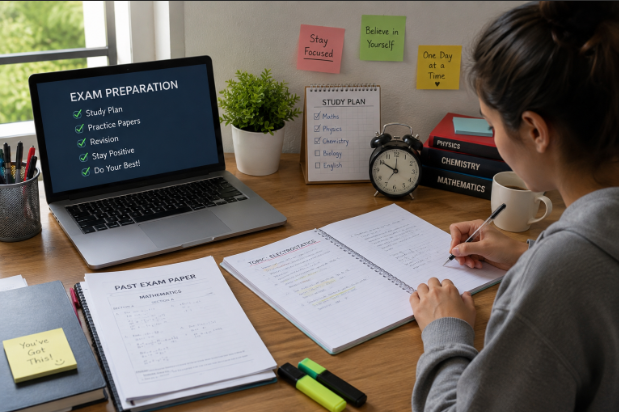
Exams often arrive carrying pressure, sleepless nights, and crowded thoughts. Many students believe stress is simply part of academic life, yet preparation does not have to feel like running through a storm with papers flying everywhere. With the right habits and mindset, exam season can become far more manageable and productive
Start Preparing Early
One of the biggest causes of exam stress is last-minute studying.
When students wait too long:
- Topics pile up
- Confidence drops
- Panic increases
- Sleep suffers
Starting early gives the brain time to absorb information gradually instead of forcing everything into a few exhausting days.
Even studying one hour daily can create powerful results over time.
Create a Simple Study Plan
A study plan turns confusion into structure.
Instead of thinking:
“I have too much to study.”
Break subjects into smaller sections:
- Monday: Chapter 1
- Tuesday: Past questions
- Wednesday: Revision
Small targets feel easier to complete and reduce mental overload.
Focus on Understanding, Not Memorizing
Memorizing without understanding often creates anxiety because forgotten details feel catastrophic during exams.
Understanding concepts helps students:
- Answer questions more confidently
- Remember information longer
- Apply knowledge in different ways
Learning should feel like building connections, not stacking random facts.
Practice With Past Papers
Past exam papers reduce fear because they make the unknown familiar.
They help students:
- Understand question styles
- Improve speed
- Identify weak areas
- Build confidence under pressure
Confidence grows when the brain recognizes patterns instead of surprises.
Take Care of Your Body
A tired brain struggles to learn effectively.
Before exams, students should:
- Sleep properly
- Drink enough water
- Eat balanced meals
- Take short breaks while studying
The brain is not a machine powered only by pressure. It performs better when properly rested and supported
Avoid Comparing Yourself to Others
Exam stress often grows when students constantly compare progress with classmates.
Someone else studying differently does not mean you are failing.
Focus on:
- Your improvement
- Your timetable
- Your pace of learning
Growth is personal.
Reduce Distractions
Studying while constantly checking notifications is like trying to read during a fireworks display
Helpful strategies include:
- Turning off notifications
- Keeping phones away during study sessions
- Using quiet environments
- Studying in focused time blocks
Even one distraction-free hour can outperform several distracted ones.
Use the Right Study Resources
Clear and organized study materials reduce confusion and save time.
Platforms like NTKayzbookworld provide educational eBooks that help students prepare effectively while supporting learning, motivation, and self-development.
Final Thought
Exams test preparation more than panic.
Students who prepare consistently, rest properly, and study with structure often experience less stress and better results. Calm preparation may seem quiet, but it is one of the strongest forms of confidence.
Comments ()