

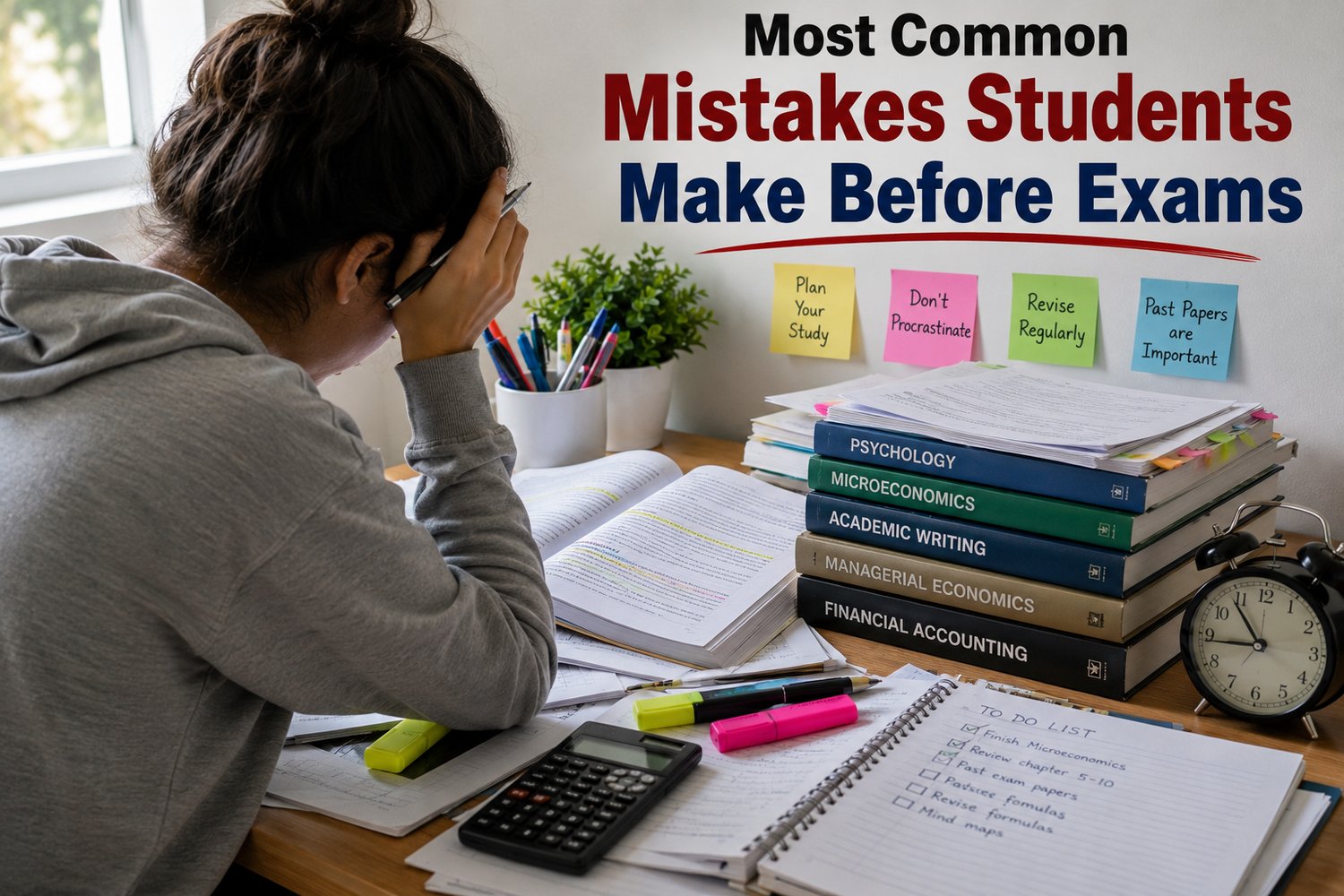
Examinations are not only a test of knowledge. They are also a test of preparation, discipline, planning, and emotional control. Every year, many students enter exam rooms carrying stress, confusion, and regret, not necessarily because they are incapable, but because of mistakes made during the preparation process.
What makes these mistakes dangerous is that many of them seem harmless at first. A little procrastination, poor sleep for a few nights, skipping revision plans, or relying on last-minute cramming may not feel serious in the moment. Yet together, these habits quietly weaken confidence and performance before exams even begin.
Understanding these common mistakes is important because success is often less about perfection and more about avoiding preventable problems. Students who recognize these patterns early place themselves in a far stronger position academically and mentally.
Leaving Everything Until the Last Minute
One of the most common and damaging mistakes students make is procrastination.
Many learners delay studying because:
- The workload feels overwhelming
- They believe there is still enough time
- They wait to “feel motivated”
- They underestimate the amount of preparation needed
The problem with last-minute studying is that it creates panic instead of understanding.
Cramming large amounts of information into a short period often leads to:
- Mental exhaustion
- Poor memory retention
- Increased anxiety
- Lack of confidence during exams
Learning works better when information is reviewed gradually over time. Consistent daily study sessions allow the brain to absorb and organize knowledge more effectively.
Studying Without a Plan
Some students study for hours but still perform poorly because their preparation lacks structure.
Without a study plan:
- Important topics may be ignored
- Too much time may be spent on easy subjects
- Revision becomes disorganized
- Stress increases closer to exam dates
A proper study timetable helps students divide subjects into manageable sections while tracking progress realistically.
Effective planning includes:
- Daily study goals
- Time allocation for difficult subjects
- Revision sessions
- Practice exam periods
- Rest and break times
A plan transforms studying from chaos into direction.
Relying Only on Passive Reading
Many students believe reading notes repeatedly is enough preparation. Unfortunately, passive reading creates familiarity, not mastery.
A student may recognize information on the page yet struggle to recall it during exams.
More effective methods include:
- Active recall
- Flashcards
- Practice questions
- Teaching others
- Writing summaries from memory
The brain remembers information better when it actively retrieves knowledge instead of only recognizing it.
Ignoring Past Exam Papers
Some students avoid past papers until the last few days before exams or ignore them completely.
This is a major mistake because past papers help students:
- Understand question patterns
- Improve time management
- Identify weak areas
- Become familiar with exam structure
- Reduce fear of the unknown
Exams become less intimidating when students practice under conditions similar to the real environment.
Comparing Yourself to Other Students
Comparison creates unnecessary pressure.
Students often panic after hearing:
- “I finished studying already.”
- “I studied all night.”
- “This exam is easy.”
Every student learns differently.
Constant comparison damages confidence and shifts attention away from personal progress.
Successful preparation focuses on:
- Your understanding
- Your growth
- Your study strategy
- Your pace
Academic success is not a competition of appearances. It is a process of consistent preparation.
Sacrificing Sleep to Study More
Many students believe sleeping less creates more study time. In reality, poor sleep weakens concentration, memory, and problem-solving ability.
Sleep plays a critical role in:
- Memory consolidation
- Mental recovery
- Focus and attention
- Emotional regulation
A tired brain struggles to process information effectively.
Students who consistently sacrifice sleep often enter exams mentally exhausted despite spending many hours studying.
Neglecting Physical and Mental Health
Exam preparation becomes harder when students ignore their well-being.
Common unhealthy habits include:
- Excessive caffeine consumption
- Skipping meals
- Studying without breaks
- Isolating themselves completely
- Ignoring stress levels
Mental and physical health directly affect academic performance.
Healthy routines improve:
- Energy levels
- Concentration
- Emotional balance
- Productivity
A balanced student usually performs better than a burnt-out one.
Using Too Many Study Resources
Some students collect endless notes, videos, textbooks, and websites without properly mastering any of them.
Too many resources can create:
- Information overload
- Confusion
- Lack of focus
- Wasted time
It is often better to use a few high-quality, organized study materials consistently.
Platforms like NTKayz Educational E-Book Centre provide educational and self-development ebooks that help learners access structured resources designed to support effective preparation and continuous learning.
Letting Fear Control Preparation
Fear of failure causes many students to avoid studying altogether.
Instead of confronting difficult subjects, some students:
- Distract themselves constantly
- Delay revision
- Avoid practice tests
- Pretend there is still plenty of time
Fear grows stronger when avoided.
Confidence develops through action, preparation, and repeated effort.
Even small daily progress helps reduce anxiety over time.
Forgetting to Revise Properly
Studying once is rarely enough for long-term retention.
Without revision:
- Information fades quickly
- Confidence decreases
- Retrieval becomes harder during exams
Strong exam preparation includes regular review sessions that reinforce previously learned material.
Revision works best when spread over time rather than concentrated into one exhausting night.
The Long-Term Impact of Good Preparation Habits
Avoiding these mistakes does more than improve exam performance.
Students who develop healthy preparation habits often improve:
- Time management
- Discipline
- Stress management
- Confidence
- Problem-solving skills
These abilities continue helping beyond school and examinations.
Final Thought
Exams often reveal preparation habits more than intelligence.
Many students fail not because they lack ability, but because avoidable mistakes quietly weaken their performance before the exam even begins.
Success usually belongs to students who prepare consistently, manage themselves wisely, and remain disciplined long before exam day arrives
The goal is not perfect preparation.
The goal is better preparation.
Key Takeaways
- Avoid last-minute cramming
- Create a realistic study timetable
- Practice active learning methods
- Use past exam papers regularly
- Protect your sleep and health
- Focus on your own progress
- Revise consistently over time
For learners looking for structured educational and self-development resources, NTKayz Educational E-Book Centre offers accessible ebooks designed to support academic growth, motivation, and lifelong learning.
Comments ()