
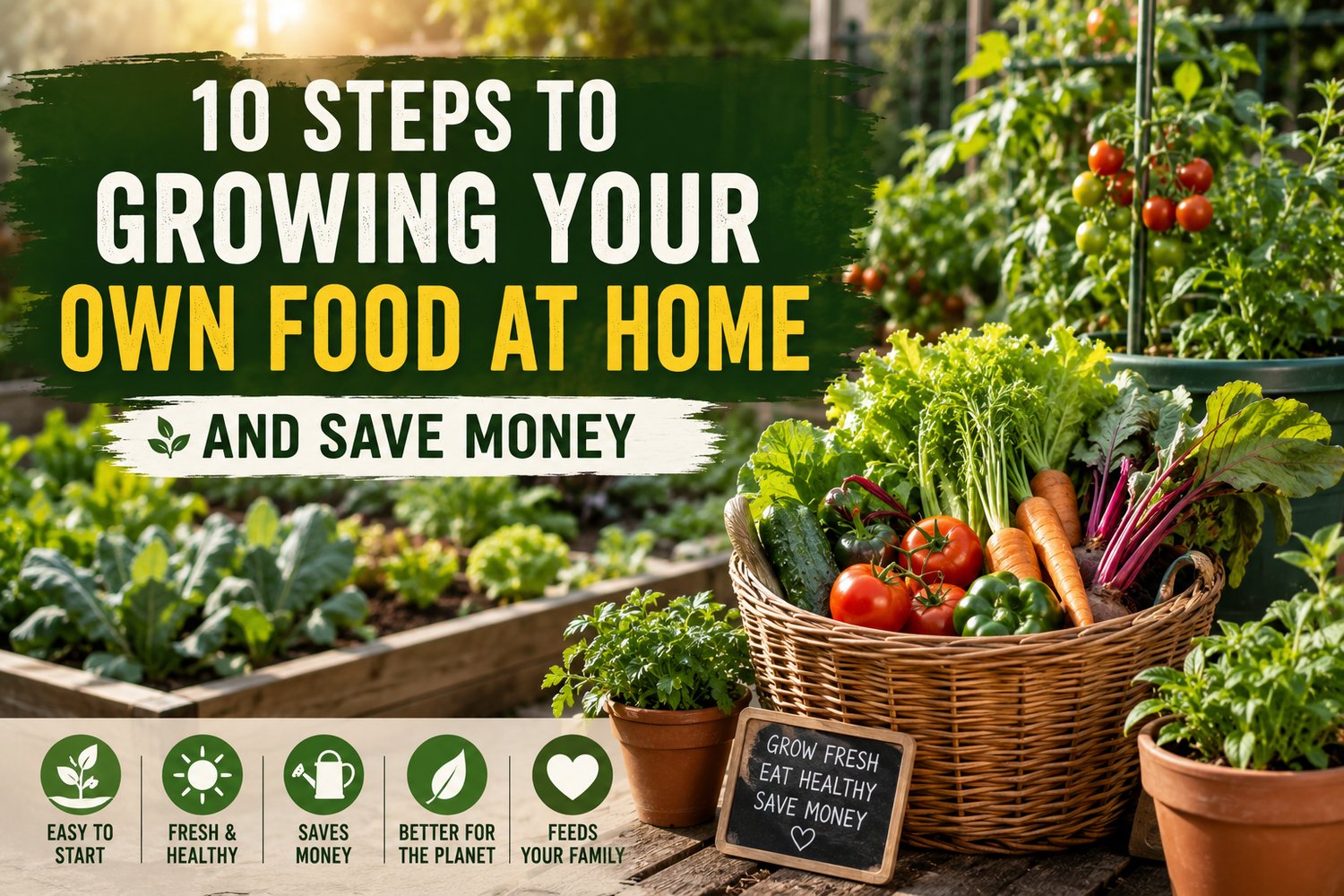
A Complete Beginner's Guide to Starting a Productive Home Food Garden
Growing your own food is one of the smartest investments you can make for your health, your family, and your wallet. With food prices continuing to rise, more people are discovering the benefits of producing fresh vegetables, herbs, and fruits right at home.
The good news is that you don't need a large farm or expensive equipment to get started. Whether you have a backyard, a small patio, a balcony, or even a sunny windowsill, you can grow a surprising amount of fresh produce with proper planning and care.
This practical guide will walk you through everything you need to know to start growing your own food, even if you've never planted anything before.
Why Grow Your Own Food?
Home gardening offers benefits that go far beyond saving money.
Save Money on Groceries
Fresh vegetables and herbs can be expensive, especially when purchased regularly.
By growing your own food, you can harvest exactly what you need without making frequent trips to the supermarket. A few productive plants can supply your household with fresh ingredients for months.
For example:
• One tomato plant can produce dozens of tomatoes during the growing season.
• A healthy spinach bed can provide multiple harvests.
• Herbs such as basil, parsley, and mint continue producing new leaves when harvested correctly.
Over time, your savings can be significant.
Enjoy Fresher, Healthier Food
Store-bought vegetables are often harvested before they fully ripen so they can survive transportation and storage.
Homegrown produce can be picked when fully mature, giving you:
• Better flavour
• Higher nutritional value
• Fresher ingredients
• Greater food safety because you know how your crops were grown
Reduce Food Waste
Instead of buying more vegetables than you need, simply harvest what you will use that day.
This means:
• Less spoilage
• Less waste
• More efficient food use
Improve Physical and Mental Well-being
Gardening is excellent exercise.
Regular gardening activities such as digging, watering, pruning, and weeding help improve flexibility, strength, and mobility.
Many people also find gardening relaxing because it reduces stress and encourages spending time outdoors.
Step 1: Choose the Right Growing Space
Your garden should receive enough sunlight.
Most vegetables require:
6 to 8 hours of sunlight each day
Suitable growing areas include:
• Backyard gardens
• Patios
• Balconies
• Rooftops
• Raised garden beds
• Containers and pots
If space is limited, container gardening is an excellent option.
Step 2: Start with Easy-to-Grow Crops
Beginners should choose plants that are reliable and easy to maintain.
Best Vegetables
• Tomatoes
• Spinach
• Lettuce
• Carrots
• Green beans
• Beetroot
• Spring onions
Best Herbs
• Basil
• Parsley
• Mint
• Chives
• Coriander
• Oregano
Best Fruits for Beginners
• Strawberries
• Lemons (in large containers)
• Blueberries (where suitable)
• Dwarf citrus trees
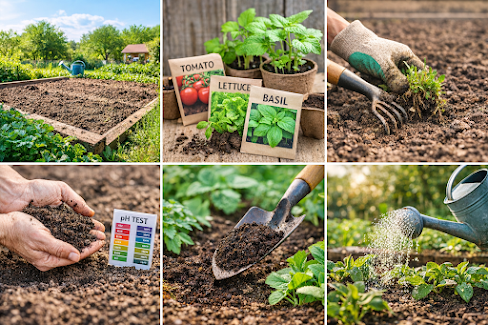
Step 3: Prepare Healthy Soil
Healthy soil is the foundation of every successful garden.
Good soil should be:
• Rich in nutrients
• Loose and well-drained
• Able to retain moisture without becoming waterlogged
Improve your soil by adding:
• Compost
• Well-rotted manure
• Organic matter
• Mulch
Avoid planting directly into hard, compacted soil.
Step 4: Plant Correctly
Always follow the spacing recommendations for each crop.
Crowded plants compete for:
• Water
• Sunlight
• Nutrients
• Air circulation
Proper spacing improves plant health and reduces disease.
After planting:
• Water thoroughly
• Label your crops
• Add mulch around plants
Step 5: Water Properly
Water is essential, but too much can be just as harmful as too little.
Best practice
• Water early in the morning
• Water deeply rather than lightly
• Direct water to the base of the plant
• Check soil moisture before watering again
Avoid watering leaves whenever possible, as this can encourage fungal diseases.
Step 6: Feed Your Plants
Plants remove nutrients from the soil as they grow.
Replace these nutrients regularly using:
• Compost
• Organic fertilisers
• Liquid plant feeds
• Worm castings
Healthy plants produce larger and better-quality harvests.
Step 7: Control Weeds Naturally
Weeds compete with crops for nutrients and water.
Reduce weeds by:
• Applying mulch
• Pulling weeds while they are small
• Keeping pathways clean
Never allow weeds to produce seeds, as this creates future problems.
Step 8: Protect Your Crops from Pests
Inspect plants at least twice each week.
Look for:
• Holes in leaves
• Yellowing foliage
• Sticky residue
• Visible insects
• Damaged stems
Many small pest problems can be controlled naturally by:
• Removing affected leaves
• Spraying plants with water
• Using homemade natural sprays
• Encouraging beneficial insects such as ladybirds
Early action prevents major infestations.
Step 9: Harvest at the Right Time
Do not wait too long before harvesting.
Regular harvesting:
• Encourages new growth
• Improves plant productivity
• Prevents vegetables from becoming tough or overripe
For herbs, harvest a few stems regularly rather than removing the entire plant.
Step 10: Keep Learning and Expanding
Start with a few crops and build your garden over time.
As your confidence grows, you can add:
• More vegetables
• Fruit trees
• Raised beds
• Vertical gardens
• Compost systems
• Rainwater harvesting
Small improvements each season lead to a productive and sustainable food garden. For more on learning, check out NTKayz Educational E-book Centre that offers all various kind of eBooks and free courses.
Common Beginner Mistakes
Planting Too Much
Start with a manageable number of plants.
Overwatering
Always check soil moisture before watering.
Ignoring Sunlight Requirements
Plants need the correct amount of light to grow well.
Poor Soil Preparation
Healthy soil produces healthy crops.
Giving Up Too Soon
Gardening is a learning process. Every season teaches valuable lessons.
Simple Weekly Food Garden Routine
Daily
• Check soil moisture
• Inspect plants for pests
• Harvest ripe produce
Weekly
• Remove weeds
• Add mulch if needed
• Trim damaged leaves
• Clean around plants
Monthly
• Add compost or organic fertiliser
• Check plant supports
• Review your garden's progress
Money-Saving Tips for Home Gardeners
✔ Save seeds from healthy plants for the next season.
✔ Make your own compost using kitchen scraps and garden waste.
✔ Collect rainwater for irrigation where practical and permitted.
✔ Reuse containers, buckets, and wooden crates as planters.
✔ Grow herbs that you use regularly instead of buying them repeatedly.
Final Thought
Growing your own food is more than just a hobby. It is a practical way to reduce household expenses, enjoy fresher meals, and become more self-sufficient.
You do not need a large property or years of experience to begin. A few pots, healthy soil, quality seeds, and consistent care are enough to start your journey.
Every tomato you harvest, every handful of spinach you pick, and every herb you cut is proof that even a small garden can make a big difference.
Start small, stay consistent, and enjoy the satisfaction of putting homegrown food on your table.
Comments ()