
A Complete Guide to Healthier Soil and Stronger Plants.
Many beginner gardeners focus only on watering and planting, but one of the most powerful gardening techniques is often overlooked: mulching.
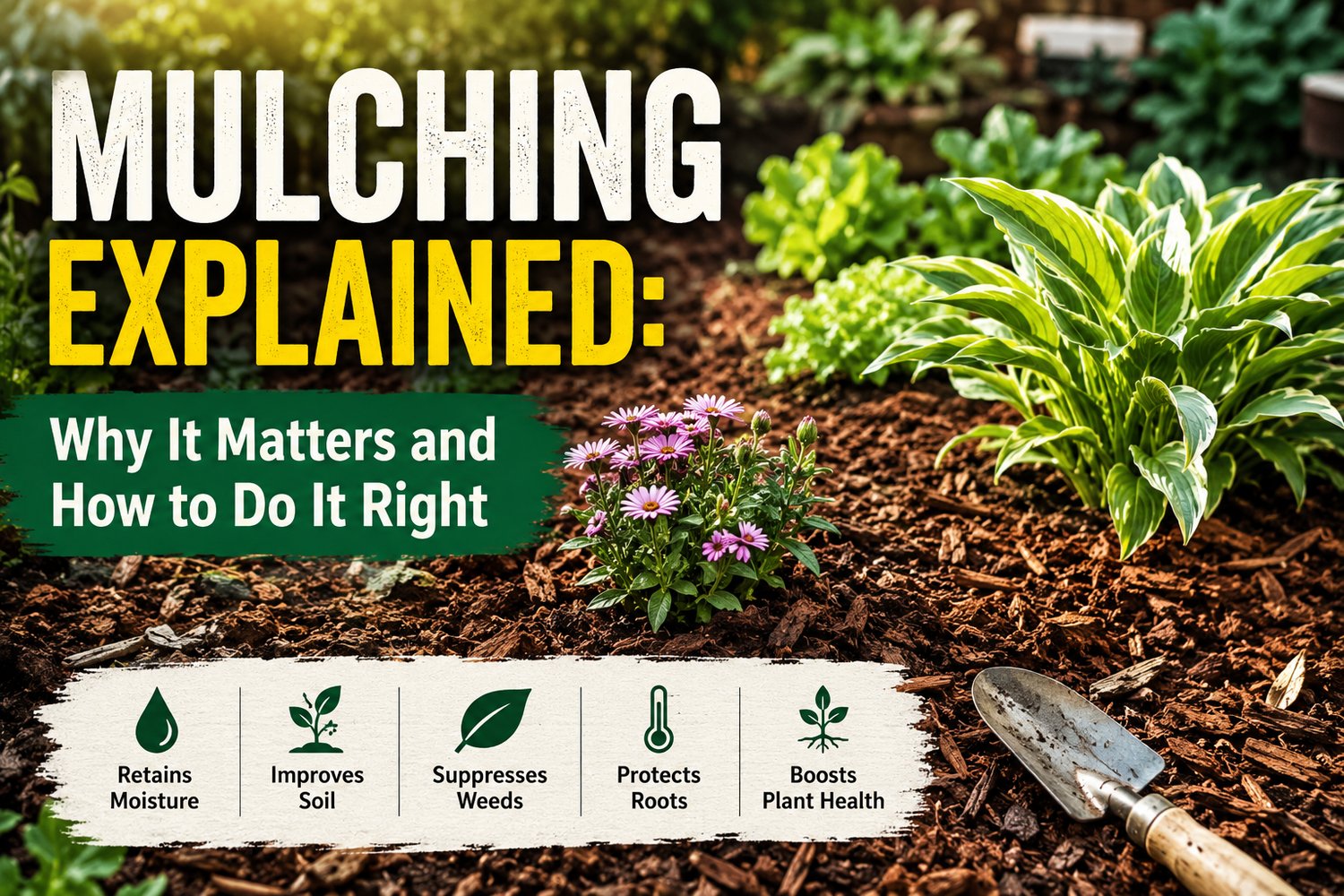
Mulch acts like a protective blanket for your garden. It helps the soil hold moisture, protects plant roots from extreme temperatures, reduces weeds, and improves soil quality over time.
When used correctly, mulch can make gardening easier, healthier, and more productive.
This guide explains exactly what mulch is, why it matters, and how to apply it properly step-by-step.
What Is Mulch?
Mulch is any material spread over the surface of soil to protect and improve it.
It creates a barrier between the soil and the outside environment.
Why Mulching Matters
Without mulch, soil is directly exposed to:
• Hot sun
• Heavy rain
• Wind
• Fast moisture loss
• Weed growth
Mulch helps solve these problems naturally.
Main Benefits of Mulching
1. Mulch Helps Soil Retain Moisture
One of the biggest gardening problems is soil drying out too quickly.
How mulch helps:
• Slows water evaporation
• Keeps moisture around roots longer
• Reduces how often you need to water
This is especially important during summer heat.
2. Mulch Protects Plant Roots
Roots are sensitive to extreme temperatures.
During summer:
Mulch keeps soil cooler.
During winter:
Mulch acts like insulation against cold weather.
Stable soil temperature helps plants grow better.
3. Mulch Reduces Weed Growth
Weeds compete with plants for:
• Water
• Nutrients
• Space
How mulch helps:
It blocks sunlight from reaching weed seeds, making it harder for weeds to grow.
Less weeding means less work.
4. Mulch Improves Soil Quality Over Time
Organic mulch slowly breaks down into the soil.
This adds:
• Nutrients
• Organic matter
• Better soil structure
Healthy soil grows healthier plants.
5. Mulch Prevents Soil Erosion
Heavy rain and wind can wash away topsoil.
Mulch helps by:
• Holding soil in place
• Reducing water impact
• Protecting exposed ground
Types of Mulch
Mulch is generally divided into two categories.
Organic Mulch
Organic mulch breaks down naturally over time.
Common examples:
• Straw
• Dry leaves
• Grass clippings
• Bark chips
• Compost
• Wood chips
Benefits:
• Improves soil quality
• Adds nutrients
• Supports soil organisms
Best choice for most home gardens.
Inorganic Mulch
This type does not decompose easily.
Examples:
• Stones
• Gravel
• Plastic sheeting
Benefits:
• Long-lasting
• Good for pathways and decorative areas
Disadvantage:
Does not improve soil quality.
Best Mulch for Beginners
For most beginner gardens, start with:
- Dry leaves
- Straw
- Compost
- Bark mulch
These are affordable, easy to apply, and safe for most plants.
Step-by-Step: How to Mulch Properly
Step 1: Remove Weeds First
Before adding mulch:
- Pull weeds completely
- Remove roots if possible
- Clear dead plant material
Mulch should cover clean soil.
Step 2: Water the Soil Before Mulching
Moist soil performs better under mulch.
Why:
Mulch traps existing moisture in the ground.
Step 3: Spread Mulch Evenly
Recommended thickness:
Apply about:
• 5–8 cm for most gardens
Important:
Too little mulch:
• Will not suppress weeds properly
Too much mulch:
• Can trap excess moisture
• May suffocate roots
Step 4: Keep Mulch Away from Plant Stems
This is one of the most important rules.
Do NOT:
Pile mulch directly against stems or trunks.
Why:
This can cause:
• Rot
• Mold
• Pest problems
Correct method:
Leave a small gap around the base of plants.
Step 5: Maintain Mulch Regularly
Mulch naturally breaks down over time.
Check regularly for:
• Thin spots
• Mold buildup
• Weed growth
Refresh mulch when needed.
When to Apply Mulch
Best Times:
Spring:
Helps retain moisture before summer heat.
Summer:
Protects roots during high temperatures.
Autumn/Winter:
Insulates roots from cold weather.
Mulch is useful almost year-round.
Common Mulching Mistakes Beginners Make
1. Using Too Much Mulch
Too much mulch can:
• Trap moisture
• Reduce airflow
• Cause root problems
2. Mulching Dry Soil
Always water first before applying mulch.
3. Piling Mulch Against Plants
This encourages disease and pests.
4. Ignoring Weed Removal First
Mulch should not simply cover large weeds.
5. Using Fresh Grass Too Thickly
Fresh grass clippings can:
• Smell bad
• Become compacted
• Reduce airflow
Apply thin layers only.
Best Plants That Benefit from Mulching
Mulch works especially well for:
• Vegetables
• Fruit plants
• Herbs
• Flower beds
• Trees and shrubs
Simple Mulching Routine for Beginners
Weekly:
• Inspect mulch condition
• Remove weeds pushing through
Monthly:
• Add more mulch if thinning
• Check moisture levels underneath
Final Thought
Mulching is one of the simplest gardening techniques with some of the biggest long-term benefits.
It saves water, protects plants, improves soil, and reduces maintenance all at the same time.
A well-mulched garden is healthier, easier to manage, and more productive throughout the year
Comments ()