
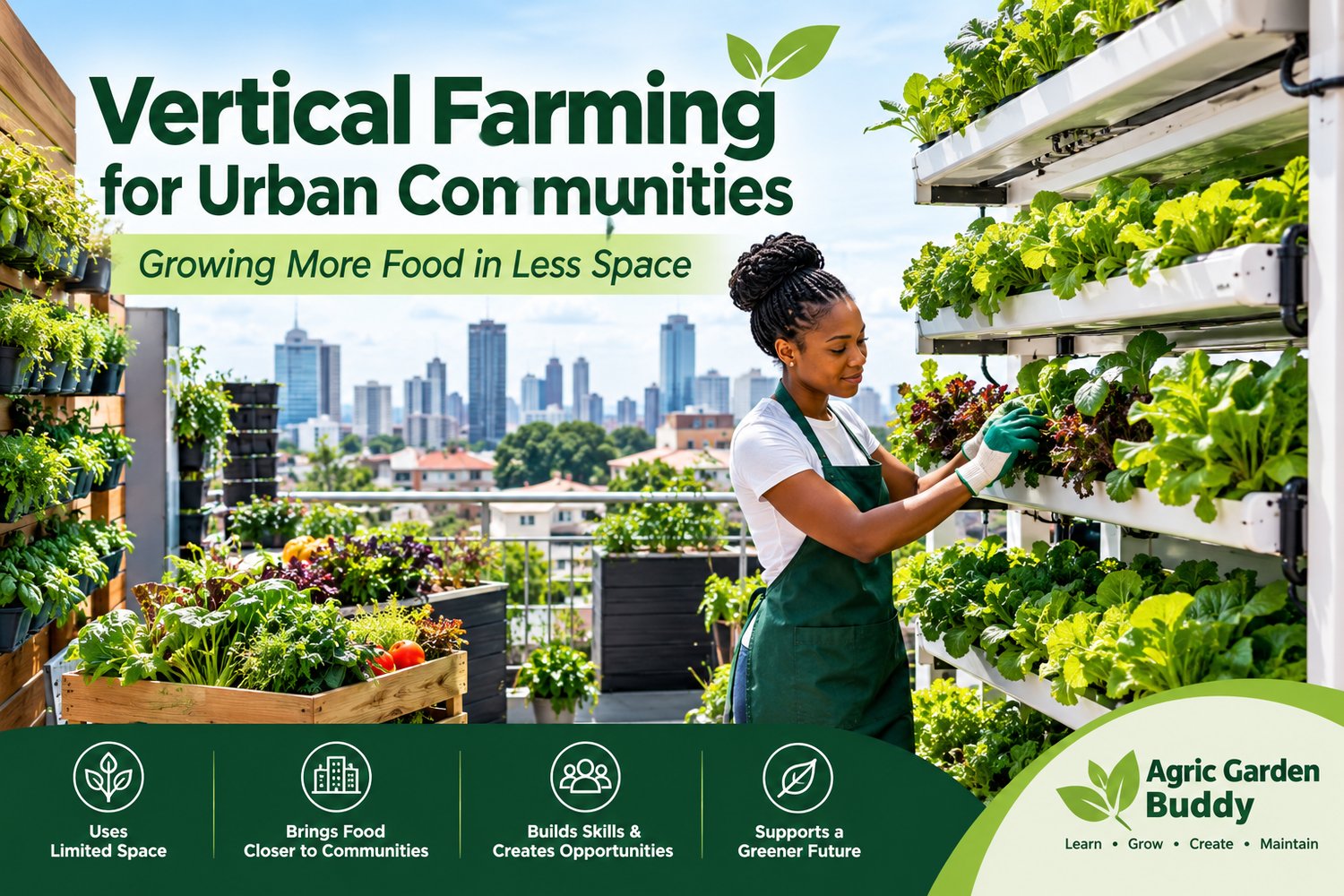
As cities continue to grow, access to suitable land for traditional farming and gardening can become increasingly difficult. Many people live in apartments, townhouses, small properties, or densely populated communities where there simply isn't enough ground space for a conventional vegetable garden.
But limited land doesn't have to mean limited food production.
Vertical farming offers an innovative way to grow crops by making use of vertical space. Instead of spreading plants across a large area of ground, crops can be grown upwards using shelves, towers, wall systems, racks, containers, or other structures.
For urban communities, this can create opportunities to grow fresh produce in places that might otherwise remain unused.
From balconies and rooftops to community gardens, courtyards and small backyards, vertical farming can bring agriculture closer to where people live.
What Is Vertical Farming?
Vertical farming is a method of growing plants in vertically arranged layers or structures rather than relying entirely on traditional horizontal farmland.
Depending on the system, plants may grow in:
- Stacked containers
- Shelving systems
- Vertical towers
- Wall-mounted planters
- Hanging structures
- Greenhouses
- Hydroponic systems
- Controlled indoor environments
Some vertical systems use soil, while others use growing media or hydroponic techniques.
The basic idea is simple:
Use vertical space to produce more plants within a smaller footprint.
Why Is Vertical Farming Useful in Urban Communities?
Urban areas often have several challenges when it comes to food production.
There may be:
- Limited available land
- Expensive land
- Small residential properties
- High population density
- Long distances between farms and consumers
- Limited access to fresh produce in some communities
Vertical farming doesn't solve all of these challenges, but it provides another option for producing food closer to where people live.
A small unused area that cannot support a traditional field may still be able to accommodate a vertical growing system.
It Makes Better Use of Limited Space
Space is one of the biggest advantages of vertical farming.
Imagine you have an area measuring only a few square metres.
A traditional garden might only use the ground surface.
A vertical system can use:
Ground level + second level + third level + additional growing levels
This can significantly increase the amount of growing space available within the same footprint.
Example
A community could have a small unused courtyard.
Instead of planting only a few crops directly into the ground, residents could install vertical structures containing multiple growing levels.
The result is a productive growing area without requiring a large piece of land.
It Can Bring Food Production Closer to Communities
Traditional agriculture often takes place outside cities.
Produce must then travel through distribution networks before reaching consumers.
Urban and community-based growing can bring at least some food production closer to consumers.
This can be particularly useful for crops that are:
- Frequently consumed
- Relatively quick to grow
- Suitable for small-scale production
- Best harvested fresh
Examples may include:
- Lettuce
- Spinach
- Herbs
- Spring onions
- Microgreens
- Certain leafy vegetables
- Strawberries in suitable systems
The exact crops will depend on the growing environment and system being used.
It Can Support Community Food Projects
Vertical farming doesn't have to be an individual activity.
A community can establish a shared growing project.
For example, a community organisation could identify an unused space and develop a small vertical garden.
Residents could participate by:
- Preparing the growing system
- Planting
- Watering
- Monitoring plants
- Managing pests
- Harvesting
- Maintaining equipment
This turns food production into a community activity.
It can also create opportunities for people to share knowledge.
It Can Provide Learning Opportunities
A vertical farm can become a practical classroom.
Children, students, community members, aspiring farmers, and gardening beginners can learn about:
- Plant growth
- Seeds
- Soil and growing media
- Water management
- Nutrients
- Pest management
- Harvesting
- Food production
- Agricultural technology
Instead of learning only from books or videos, people can observe the entire growing process.
For example:
Seed → Seedling → Growing Plant → Mature Crop → Harvest
That practical experience can make agricultural education much more meaningful.
It Can Help Beginners Start Small
One of the biggest barriers to starting agriculture is the belief that you need a large farm.
Vertical farming demonstrates that people can begin with a much smaller system.
A beginner might start with:
- A few containers
- A small vertical tower
- Wall planters
- Shelving
- A compact hydroponic setup
The goal should not necessarily be to build a huge farm immediately.
Start with a manageable system, learn how it works, identify problems, and expand gradually.
Vertical Farming Can Be Suitable for Rooftops
Some urban buildings have unused rooftop areas that could potentially be used for growing.
However, rooftop farming requires careful planning.
Before installing a growing system, you need to consider:
- Structural capacity
- Waterproofing
- Wind
- Sun exposure
- Water availability
- Drainage
- Access
- Safety
- Security
Never assume that a roof can safely support heavy containers, water tanks, soil, structures, and people.
A suitable professional assessment may be necessary before developing a rooftop growing project.
It Can Make Use of Small Backyards
You don't need a commercial building to experiment with vertical farming.
A homeowner with a small backyard can use vertical systems to increase growing capacity.
For example, a small backyard could include:
- Vertical herbs
- Leafy vegetables
- Climbing vegetables
- Container crops
- Raised beds
Instead of choosing between a beautiful garden and food production, vertical gardening can help combine the two.
It Can Be Used on Balconies and Small Outdoor Areas
For apartment or townhouse residents, outdoor space may be extremely limited.
Vertical containers and suitable compact systems can potentially make better use of balconies or small outdoor spaces.
However, residents should check:
- Building rules
- Weight restrictions
- Water drainage
- Safety
- Wind exposure
- Access to sunlight
A balcony is not automatically suitable for a heavy vertical farm.
Lightweight systems may be more appropriate in some situations.
Water Management Becomes Important
Water is one of the most important considerations in any growing system.
A vertical structure can create challenges because water must reach plants at different heights.
Poor irrigation can result in:
- Overwatering
- Underwatering
- Uneven growth
- Root problems
- Water wastage
Depending on the system, growers may use:
- Drip irrigation
- Reservoir systems
- Timed irrigation
- Hydroponic circulation
- Manual watering
The system should be designed around the plants being grown and the available resources.
Hydroponics Can Take Vertical Farming Further
Some vertical farming systems use hydroponics, which involves growing plants without traditional soil.
Plants receive water and nutrients through a carefully managed growing system.
Hydroponic vertical systems can be particularly useful where space is extremely limited.
However, they also require additional knowledge.
Growers may need to understand:
- Nutrient management
- Water quality
- pH
- Electrical equipment
- Pump systems
- Temperature
- Lighting
- System maintenance
Hydroponics can be highly productive, but it isn't simply a matter of putting a plant into water and waiting for vegetables to appear.
Training and careful monitoring are important.
Choose Crops Carefully
Not every crop is ideal for vertical farming.
Beginners should generally start with plants that are:
- Compact
- Relatively quick-growing
- Suitable for containers or the chosen system
- Appropriate for the available climate and light
Possible options include:
Leafy vegetables
- Lettuce
- Spinach
- Kale
- Swiss chard
Herbs
- Basil
- Coriander
- Parsley
- Mint
- Chives
Other possibilities
- Strawberries
- Spring onions
- Certain peppers
- Some compact vegetables
The best choices depend on the system, climate, sunlight, growing medium, and intended market.
Sunlight Is Critical
A common mistake is building a beautiful vertical structure and then discovering that the plants don't receive enough light.
Before installing your system, observe the area throughout the day.
Ask:
- How many hours of direct sunlight does it receive?
- Which parts receive the most light?
- Does a building create shade?
- Do nearby trees block sunlight?
- Does the sunlight change seasonally?
For indoor vertical farms, artificial lighting may be necessary.
That introduces additional costs for:
- Lights
- Electricity
- Equipment
- Ventilation
- Temperature management
For a small community project, natural sunlight may be preferable where practical.
Pest Management Still Matters
Growing vertically doesn't mean plants are immune to pests.
You may still encounter:
- Aphids
- Caterpillars
- Whiteflies
- Thrips
- Fungal problems
- Other plant diseases
Regular inspection is essential.
Look underneath leaves and check for:
- Discolouration
- Holes
- Sticky residue
- Curling leaves
- Wilting
- Unusual growth
Early identification usually makes plant problems easier to manage.
Maintenance Should Be Planned From the Beginning
A vertical farm can become difficult to manage if its design doesn't consider maintenance.
Ask:
Can I reach every plant?
If a plant develops a problem at the top of a tower, how will you inspect it?
Can I easily harvest the crops?
Can the irrigation system be cleaned?
Can damaged plants be removed?
Can equipment be repaired?
A system that produces plenty of food but is extremely difficult to maintain may not be sustainable.
Vertical Farming Can Create Small Business Opportunities
Urban agriculture isn't limited to household food production.
With appropriate planning and market demand, small-scale growers may explore opportunities to sell:
- Fresh herbs
- Leafy vegetables
- Microgreens
- Seedlings
- Vegetable plants
- Gardening services
- Growing systems
- Agricultural products
However, profitability depends on many factors, including:
- Production costs
- Electricity
- Water
- Labour
- Equipment
- Packaging
- Transport
- Crop selection
- Selling price
- Customer demand
A business should therefore be planned carefully before significant investment.
Community Vertical Farms Can Create Employment and Skills
A well-organised urban agriculture project can potentially create more than food.
It can provide opportunities to develop skills in:
- Agriculture
- Gardening
- Irrigation
- Equipment maintenance
- Landscaping
- Marketing
- Sales
- Business management
Young people in particular can benefit from practical exposure to agriculture and entrepreneurship.
A community growing project can become a place where people learn by doing.
Combine Vertical Farming With Landscaping
Vertical farming doesn't have to look industrial.
With careful design, productive growing systems can become part of attractive landscapes.
For example, a residential or community space could combine:
- Vertical vegetable gardens
- Ornamental plants
- Seating
- Pathways
- Trees
- Decorative containers
- Herbs
This creates a multifunctional environment.
The result can be a space that produces food while also contributing to the appearance and usability of the property.
Start With a Small Pilot Project
If a community wants to introduce vertical farming, don't immediately build a huge system.
Start with a pilot project.
Phase 1: Identify the space
Find a suitable area with adequate sunlight and access to water.
Phase 2: Choose crops
Select a few crops that are appropriate for the environment.
Phase 3: Build a simple system
Start with a manageable number of growing levels.
Phase 4: Monitor
Record:
- Water use
- Growth
- Pest problems
- Harvest quantities
- Labour requirements
Phase 5: Learn
Identify what worked and what didn't.
Phase 6: Expand
Only increase the size once the community understands the system.
This reduces risk and creates an opportunity to learn before making larger investments.
Challenges of Vertical Farming
Vertical farming has many potential benefits, but it isn't a magic solution.
There are challenges to consider.
Initial Costs
Structures, containers, irrigation systems, pumps, lighting, and other equipment can require investment.
Electricity
Indoor or technologically advanced systems can consume significant electricity.
Technical Knowledge
Hydroponics and controlled growing environments require additional knowledge.
Maintenance
More equipment can mean more components that need maintenance.
Water Management
Poor irrigation design can create problems quickly.
Crop Selection
Not every crop performs well in compact vertical systems.
Market Demand
If you're growing for commercial purposes, you need customers who actually want the crops you're producing.
Understanding these challenges is just as important as understanding the potential benefits.
How Communities Can Get Started
A community interested in vertical farming can begin by bringing together people with different skills.
For example:
Gardeners can contribute growing knowledge.
Agricultural learners can help with crop planning.
Technical people can assist with irrigation or equipment.
Business-minded members can investigate markets.
Community leaders can coordinate participation.
Landscaping specialists can help integrate the growing area into the surrounding environment.
This collaborative approach can make the project stronger.
How Agric Garden Buddy Can Help
Vertical farming sits at the intersection of agriculture, gardening, landscaping, training, and the use of appropriate tools and products, making it a natural area for practical learning and support.
Agric Garden Buddy provides solutions across these areas to help individuals, communities, homeowners, and aspiring growers take their outdoor and agricultural projects further.
Training
Interested in learning more about agriculture, gardening, landscaping, and practical growing techniques?
Agric Garden Buddy provides training opportunities designed to help people develop useful knowledge and skills.
Agricultural & Garden Products
Starting a growing project requires the right equipment and products.
Agric Garden Buddy offers agricultural and garden products and tools that can support gardening, farming, landscaping, and related activities.
Landscaping
A community growing area doesn't have to look like a collection of random containers.
Agric Garden Buddy's landscaping services can help create outdoor environments that combine functionality, appearance, and practical use.
Garden Maintenance
Once your growing and landscaping project is established, ongoing maintenance is essential.
Agric Garden Buddy also provides garden maintenance solutions to help keep outdoor spaces healthy, productive, and attractive.
Agriculture
For people interested in taking their growing activities beyond a small garden, Agric Garden Buddy also provides broader agricultural-focused products, training, and practical solutions.
Whether you're a homeowner experimenting with vertical vegetables, a community planning a shared growing project, or someone interested in developing agricultural skills, the journey can begin with learning and taking one practical step at a time.
Visit Agric Garden Buddy's official website to explore agricultural and garden products, training, landscaping, garden maintenance, and other solutions for your next project.
Final Thoughts
Vertical farming offers an exciting opportunity to rethink how food can be grown in urban environments.
Instead of asking only:
"Where can we find more land?"
we can also ask:
"How can we use the space we already have more effectively?"
A balcony, rooftop, courtyard, backyard, community garden, or unused urban space could potentially become part of a productive growing system when properly planned.
Vertical farming isn't suitable for every situation, and it comes with its own costs and challenges. But with appropriate crop selection, irrigation, maintenance, training, and careful planning, it can become a valuable addition to urban agriculture.
For communities, the biggest opportunity may extend beyond growing vegetables. Vertical farming can create a place where people learn, work together, develop agricultural skills, produce food, and explore new opportunities.
Grow upward. Use space wisely. Learn continuously. Build a more productive urban environment.
Comments ()