

A Friendly Guide to Growing the Right Plants at the Right Time
One of the biggest mistakes new gardeners make is planting at the wrong time of year. Even healthy seeds struggle when weather conditions are not suitable.
Every plant has a preferred season. Some thrive in cool temperatures, while others need warmth and long sunny days. Understanding seasonal planting helps you grow healthier plants, reduce disease problems, and improve harvests.
This guide breaks gardening into simple seasonal steps so beginners can confidently know what to plant and when
Why Seasonal Planting Matters
Plants respond to:
• Temperature
• Sunlight hours
• Rainfall
• Soil warmth
Planting at the correct time helps:
• Faster growth
• Better harvests
• Fewer pests and diseases
• Stronger root systems
Timing is one of the most important gardening skills.
Understanding the Four Gardening Seasons
1. Spring
The season of new growth.
Conditions:
• Warming temperatures
• Longer daylight hours
• Increased plant activity
Best for:
Fast-growing vegetables, herbs, and flowering plants.
2. Summer
The hottest and most active growing season.
Conditions:
• High sunlight
• Warm soil
• Faster evaporation
Best for:
Heat-loving vegetables and fruiting plants.
3. Autumn (Fall)
The cooling recovery season.
Conditions:
• Cooler temperatures
• Less heat stress
• Slower evaporation
Best for:
Leafy vegetables and root crops.
4. Winter
The resting and preparation season.
Conditions:
• Cold temperatures
• Slower plant growth
• Reduced sunlight
Best for:
Soil preparation, protection, and cold-tolerant plants.
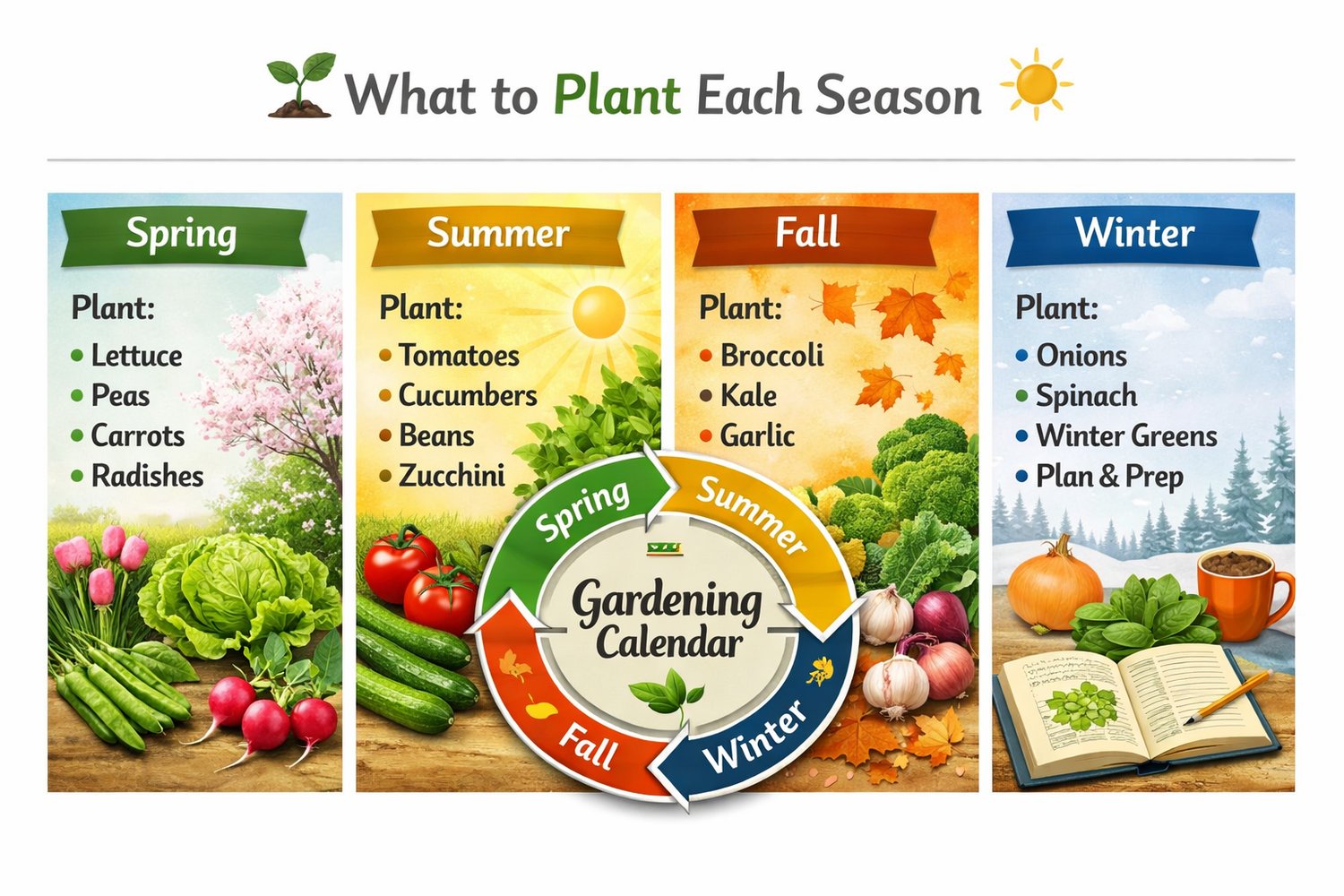
SPRING GARDENING CALENDAR
What to Plant in Spring
Vegetables:
• Lettuce
• Spinach
• Carrots
• Beetroot
• Peas
• Cabbage
Herbs:
• Basil
• Parsley
• Coriander
Flowers:
• Marigolds
• Petunias
• Sunflowers
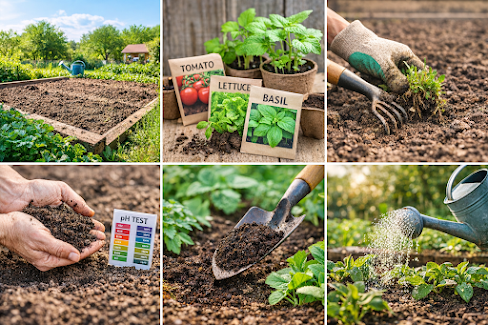
Step-by-Step Spring Preparation
1. Clear Garden Beds
Remove:
• Dead leaves
• Old roots
• Weeds
2. Loosen the Soil
Use a garden fork to:
• Break compacted soil
• Improve airflow
• Help root growth
3. Add Compost
Mix compost into topsoil before planting.
4. Start Watering Consistently
Young plants need regular moisture.
SUMMER GARDENING CALENDAR
What to Plant in Summer
Vegetables:
• Tomatoes
• Peppers
• Cucumbers
• Beans
• Corn
Herbs:
• Mint
• Oregano
• Thyme
Fruits:
• Strawberries
• Watermelon (space permitting)
Summer Care Routine
1. Water Early Morning
This reduces evaporation.
2. Add Mulch
Mulch helps:
• Retain moisture
• Reduce weeds
• Keep roots cooler
3. Monitor Pests Frequently
Warm weather increases pest activity.
4. Harvest Regularly
Picking vegetables encourages more production.
AUTUMN (FALL) GARDENING CALENDAR
What to Plant in Autumn
Vegetables:
• Broccoli
• Kale
• Lettuce
• Garlic
• Onions
Herbs:
• Parsley
• Chives
Autumn Garden Tasks
1. Remove Weak Summer Plants
Clear diseased or damaged crops.
2. Improve Soil
Add compost after summer harvesting.
3. Reduce Watering Slightly
Cooler weather slows evaporation.
4. Protect Young Plants
Cool nights may stress seedlings.
WINTER GARDENING CALENDAR
What to Plant in Winter
Cold-Tolerant Vegetables:
• Spinach
• Kale
• Garlic
Indoor Herbs:
• Basil
• Mint
• Chives
Winter Garden Focus
1. Prepare Soil for Spring
Add:
• Compost
• Organic matter
• Mulch
2. Protect Plants from Frost
Use:
• Covers
• Mulch
• Containers moved indoors
3. Clean Garden Tools
Winter is perfect for maintenance.
4. Plan Next Season
Prepare:
• Seeds
• Garden layout
• Crop rotation plans
Simple Beginner Planting Tips
Start Small
Do not plant too much at once.
Choose Easy Crops First
Best beginner plants:
• Lettuce
• Spinach
• Basil
• Mint
• Tomatoes
Watch Your Local Weather
Seasons vary by location.
Always adjust planting slightly based on your climate.
Common Seasonal Gardening Mistakes
Planting Too Early
Cold soil slows growth.
Ignoring Heat Stress
Summer plants may need shade and extra water.
Overwatering During Cooler Months
Plants use less water in cold weather.
Final Thought
Gardening becomes much easier when you work with the seasons instead of against them.
Each season creates new opportunities:
Spring begins growth
Summer strengthens production
Autumn restores balance
Winter prepares for renewal
When you plant at the right time, nature does much of the hard work for you
Comments ()