
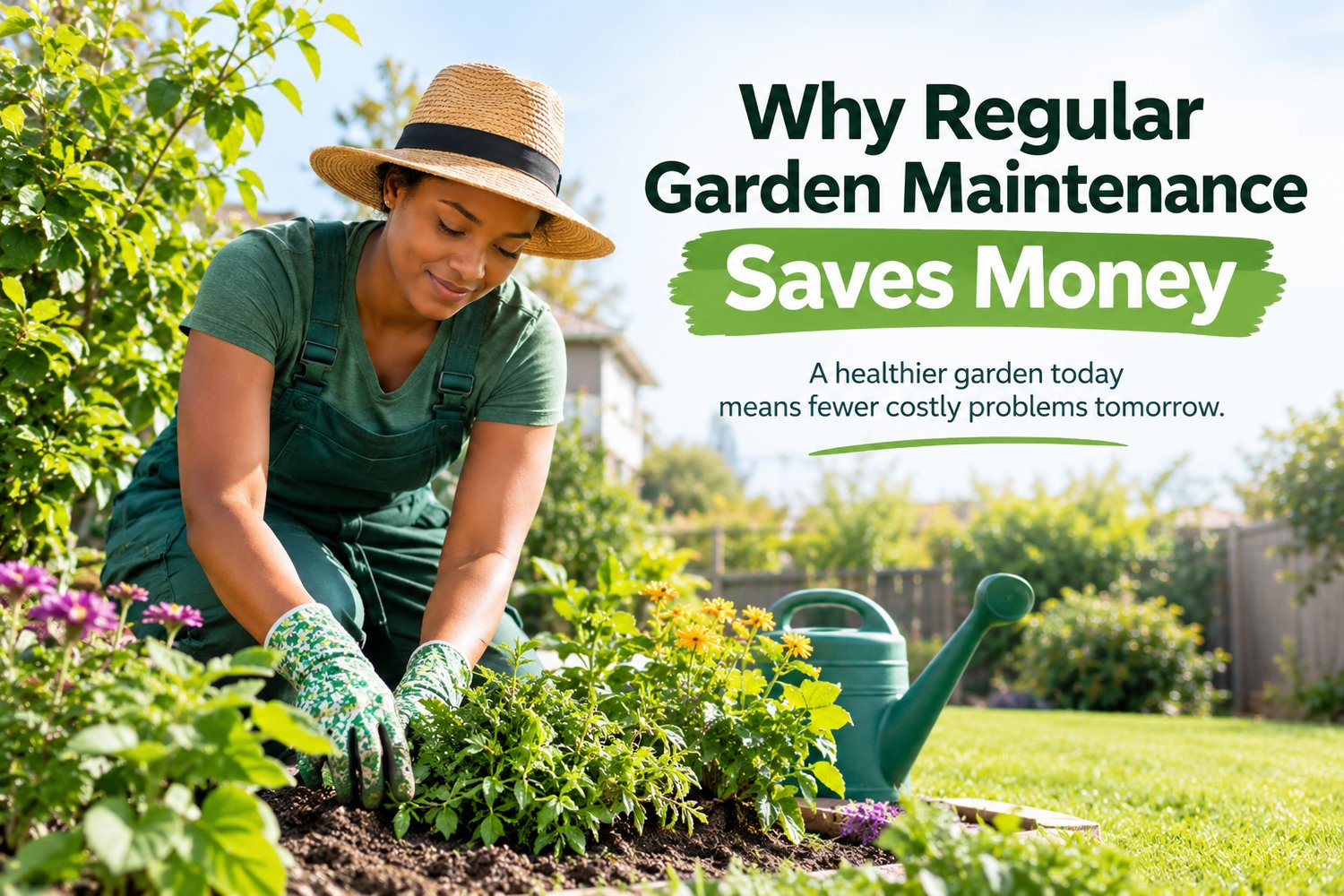
A beautiful garden doesn't happen by accident. Whether you have a small backyard, a large residential property, a landscaped entertainment area, or a productive vegetable garden, keeping it in good condition requires regular care.
Many homeowners delay garden maintenance because they want to save money. They may postpone lawn mowing, ignore weeds, skip pruning, or put off repairing an irrigation system. Unfortunately, these small delays can turn into expensive problems.
A neglected garden may eventually require costly plant replacements, extensive weed removal, lawn restoration, drainage repairs, or professional landscaping work that could have been avoided with routine care.
Regular garden maintenance saves money by preventing small problems from becoming major expenses, protecting existing plants and landscaping investments, and helping you use water, tools, and other resources more efficiently.
In this article, we explore 12 practical ways regular garden maintenance can reduce costs, protect your property, and help you enjoy a healthier outdoor space.
1. Prevents Small Problems From Becoming Expensive Repairs
One of the biggest financial benefits of garden maintenance is early problem detection.
A small problem is often easier and cheaper to resolve than a serious one.
For example, imagine that you notice water collecting in one corner of your garden after rainfall. You might initially ignore it because the water eventually disappears.
However, repeated waterlogging could damage grass, weaken plant roots, contribute to soil erosion, or affect nearby structures if drainage is poor.
Similarly, a leaking irrigation connection might seem insignificant, but over time it can waste water and damage surrounding soil.
Regular inspections help you identify these problems before they become more serious.
What to check regularly:
- Look for leaking taps, hoses, and irrigation connections.
- Check for areas where water collects.
- Inspect plants for unusual discolouration or wilting.
- Look for damaged paving, loose edging, and broken garden equipment.
- Check whether weeds are spreading into planting beds.
Money-saving tip: Spend a few minutes inspecting your garden every week. Early detection can help you avoid unnecessary repair and replacement costs.
2. Reduces the Cost of Weed Control
Weeds compete with desirable plants for water, nutrients, sunlight, and growing space.
When weeds are left unmanaged, they can spread rapidly and become much more difficult to remove.
For example, removing a few young weeds from a flower bed may take only minutes. If the same weeds are allowed to spread and produce seeds, removing them later could require hours of work.
Some persistent weeds may also need repeated treatment.
How to save money on weeds
- Inspect your garden regularly.
- Remove weeds while they are still small.
- Remove as much of the root system as practical, where appropriate.
- Avoid allowing weeds to produce and spread seeds.
- Apply suitable mulch to help suppress weed growth.
- Keep planting beds healthy so desirable plants have less competition.
Mulch can help reduce weed germination and conserve soil moisture, although it will not eliminate every weed.
Choose weed-control methods appropriate for the plants, soil, and environment. Always follow product instructions when using herbicides.
The key lesson: Controlling weeds early usually requires less time, effort, and money than reclaiming a heavily overgrown garden.
3. Protects Your Lawn From Expensive Restoration
A healthy lawn can improve the appearance and usability of a property. However, lawns can deteriorate when basic maintenance is neglected.
Common problems include:
- Grass growing too long.
- Bare patches developing.
- Weeds spreading.
- Soil becoming compacted.
- Watering being inconsistent.
- Grass being cut too short.
- Drainage problems damaging the roots.
Consider a homeowner who stops maintaining the lawn for several months. When they eventually return to it, they may discover extensive weeds, uneven growth, bare patches, and compacted soil.
Restoring the lawn may require weed management, soil improvement, reseeding or turf replacement, and additional watering.
How routine lawn care saves money
Mow correctly. Avoid removing too much leaf growth at once. The appropriate mowing height depends on the grass species.
Water appropriately. Consider rainfall, soil conditions, and the needs of the grass rather than watering automatically without checking.
Monitor bare patches. Investigate the cause before reseeding. Pests, disease, shade, compaction, and poor drainage can all contribute to lawn damage.
Avoid unnecessary foot traffic. Repeated use of the same wet or compacted area can damage grass.
Maintaining an established lawn is often more economical than allowing it to deteriorate and then paying to restore it.
4. Helps You Avoid Unnecessary Plant Replacement
Plants represent an investment in money, time, and effort.
You may have spent money purchasing trees, shrubs, flowers, herbs, or vegetable seedlings. Some plants may also have taken years to establish.
When plants die because of preventable problems, replacing them can become expensive.
For example, a homeowner might purchase several ornamental plants and place them in an area receiving strong afternoon sunlight, even though those plants prefer shade. Without monitoring their condition, the homeowner may continue replacing them without addressing the underlying problem.
Regular maintenance helps you notice signs of stress before damage becomes irreversible.
Look for these warning signs
- Yellowing leaves.
- Wilting despite adequate moisture.
- Unusual spots or markings.
- Stunted growth.
- Damaged stems.
- Root exposure.
- Pest activity.
- Leaves falling outside the plant's normal seasonal pattern.
Not every symptom has the same cause. Yellow leaves, for example, can result from overwatering, underwatering, nutrient problems, pests, disease, or natural ageing.
Inspect the plant and its growing conditions before purchasing fertilisers or treatments.
Money-saving tip: Diagnose the problem before buying a replacement plant. Sometimes correcting watering, sunlight, drainage, or soil conditions is enough to save the plant.
5. Reduces Water Waste
Water is an important garden expense, particularly where rainfall is limited or municipal water charges are high.
Poor maintenance can cause unnecessary water consumption.
Common examples include:
- Leaking hoses.
- Broken sprinkler heads.
- Irrigation systems watering paved areas.
- Overwatering plants.
- Watering during unsuitable conditions.
- Using the wrong watering method for the garden.
A small leak may not appear expensive initially, but repeated waste can accumulate over time.
Practical ways to save water
Inspect irrigation equipment. Look for leaks, damaged connections, and blocked emitters.
Water according to plant needs. Different plants require different amounts of water.
Check the soil. Feel the soil before watering instead of assuming every plant needs water every day.
Water efficiently. Where appropriate, water the root zone rather than wetting large areas of paving.
Use mulch. A suitable mulch layer can reduce evaporation and help the soil retain moisture.
Consider rainwater harvesting. Where practical and permitted, rainwater collection can supplement garden watering.
For South African households, it is particularly useful to plan watering around local rainfall, seasonal conditions, and any applicable water restrictions.
6. Keeps Trees and Shrubs Healthy
Trees and shrubs contribute to shade, privacy, beauty, and the overall structure of a landscape.
However, they need appropriate care as they grow.
Neglected trees may develop dead branches, crossing limbs, or growth that interferes with pathways and buildings. Shrubs may become overgrown and require more extensive corrective work.
Regular inspection helps you identify issues before they become difficult to manage.
Important maintenance practices
- Remove dead or damaged growth when appropriate.
- Prune according to the plant species and its growth requirements.
- Inspect trees for unusual damage or signs of disease.
- Keep pathways clear.
- Monitor trees growing near structures or overhead services.
- Avoid damaging trunks and roots with mowing or digging equipment.
Pruning is not simply about cutting plants into a particular shape. Incorrect or excessive pruning can damage some plants and create additional costs.
Large trees, hazardous branches, and trees near electrical lines should be assessed by suitably qualified professionals.
Why it matters: Maintaining trees and shrubs appropriately can help protect the landscape investment and reduce the likelihood of expensive corrective work.
7. Helps Control Pest and Plant Disease Problems Early
Pests and diseases can damage plants, reduce harvests, and spread to neighbouring plants.
A problem affecting one plant may become more expensive if it spreads throughout a flower bed, vegetable garden, or landscaped property.
For example, a gardener may notice small insects underneath a few leaves but ignore them. If the insects multiply, the affected plants may suffer extensive damage and require more time and resources to manage.
Make inspection part of your routine
Check:
- The underside of leaves.
- New shoots.
- Stems and branches.
- Plant roots where appropriate.
- Areas with poor air circulation.
- Plants showing unusual growth or discolouration.
When a problem appears, identify the likely cause before applying a treatment.
Integrated pest management can help by combining monitoring, cultural practices, physical removal, biological controls where suitable, and targeted treatments when necessary.
Avoid automatically spraying every plant. Unnecessary pesticide use can cost money and harm beneficial insects.
Money-saving tip: Regular observation and early intervention can reduce the scale of a pest or disease problem.
8. Extends the Life of Garden Tools and Equipment
Garden maintenance also involves looking after the tools used to complete the work.
Equipment can become expensive to replace when it is stored poorly or neglected.
Common examples include:
- Rusty pruning shears.
- Blunt cutting tools.
- Damaged hoses.
- Clogged irrigation equipment.
- Dirty lawnmower components.
- Cracked containers.
- Tools left outside in rain and sun.
How to protect your equipment
- Clean tools after use.
- Dry metal tools before storing them.
- Keep cutting tools appropriately sharp.
- Store equipment in a dry, secure location.
- Inspect hoses and fittings for leaks.
- Follow the manufacturer's maintenance instructions.
- Replace damaged parts before they cause further problems.
Always disconnect or isolate equipment as instructed before cleaning or servicing it. Fuel-powered and electrical tools require particular care.
Well-maintained tools generally perform better and can last longer, reducing the need for premature replacements.
9. Prevents Small Landscaping Defects From Getting Worse
Landscaping often involves more than plants and lawns. It may include pathways, retaining walls, edging, patios, decorative stones, irrigation systems, and outdoor structures.
These features can represent a significant investment.
When small defects are ignored, they may become more difficult or expensive to repair.
Examples include:
- Loose paving stones.
- Damaged garden edging.
- Erosion around pathways.
- Blocked drainage channels.
- Broken irrigation fittings.
- Rotting timber.
- Soil washing away from planting beds.
What should homeowners do?
Walk through the property regularly and inspect hard surfaces and structures.
Look for changes such as movement, cracking, loose components, or water collecting where it should not.
Address minor issues promptly, but don't attempt repairs that require specialist skills or could compromise structural safety.
The financial benefit: Routine inspections help protect the original investment in the landscape and may prevent avoidable deterioration.
10. Helps You Use Fertilisers and Garden Products More Efficiently
Buying more gardening products does not automatically produce better results.
Some homeowners repeatedly purchase fertilisers, pesticides, soil conditioners, or other products without understanding what their plants actually need.
This can waste money and, in some cases, damage plants or the environment.
For example, adding more fertiliser to a plant that is struggling because of waterlogged soil may fail to solve the problem.
The real issue may be poor drainage rather than a nutrient deficiency.
A more economical approach
- Identify the problem before buying a product.
- Read product labels carefully.
- Follow recommended application rates.
- Consider soil testing where appropriate.
- Avoid unnecessary repeat applications.
- Select products suitable for the intended plant and situation.
- Store products safely and according to instructions.
Regular maintenance gives you more opportunities to observe your garden and make informed purchasing decisions.
11. Reduces the Cost of Emergency Garden Clean-Ups
A garden that is ignored for months may eventually require intensive work.
Imagine a homeowner who postpones maintenance until weeds cover the planting beds, grass is overgrown, shrubs block pathways, and debris has accumulated.
The job may now require additional labour, equipment, waste removal, and several hours or days of work.
By contrast, routine maintenance spreads the work over smaller, more manageable tasks.
A simple maintenance schedule
Weekly
- Inspect plants.
- Remove small weeds.
- Check watering.
- Collect litter and garden debris.
- Monitor lawn growth.
Monthly
- Inspect irrigation equipment.
- Check shrubs and planting beds.
- Clean and maintain tools.
- Look for drainage issues.
- Review plant health.
Seasonally
- Adjust watering routines.
- Prune plants when appropriate.
- Refresh mulch where necessary.
- Review lawn and planting requirements.
- Prepare the garden for seasonal weather changes.
The exact schedule depends on the garden, climate, plant types, and time of year.
Regular work can also make it easier to budget for garden care rather than facing a large, unexpected clean-up bill.
12. Protects the Value and Appearance of Your Property
A well-maintained outdoor space can improve the way a property looks and feels.
A neat entrance, healthy plants, clear pathways, and a properly maintained lawn can make a home more inviting.
Neglected outdoor spaces, on the other hand, may create an impression of poor upkeep.
Although garden maintenance cannot guarantee a higher property value or selling price, it can help preserve the condition and presentation of the property.
Focus on high-impact areas
If you have limited time or money, prioritise:
- The entrance.
- The front lawn.
- Pathways.
- Overgrown shrubs.
- Visible weeds.
- Damaged garden features.
- Areas around outdoor entertainment spaces.
These areas often have a noticeable effect on the overall appearance of a residential property.
You don't have to redesign the entire garden. Consistent attention to the most important areas can make a meaningful difference.
How Much Money Can Regular Garden Maintenance Save?
The amount varies from one garden to another. It depends on the size of the property, local water costs, the plants you grow, the condition of the landscape, and whether you do the work yourself or hire a service provider.
Rather than promising a specific saving, consider this simple example.
Imagine two homeowners with similar gardens.
Homeowner A carries out routine inspections, removes weeds early, checks irrigation, and maintains plants regularly.
Homeowner B postpones maintenance until problems become noticeable. Eventually, the garden requires extensive weed removal, replacement plants, irrigation repairs, and a major clean-up.
Homeowner A may spend money consistently on routine care, but Homeowner B risks facing larger, less predictable expenses.
The purpose of regular maintenance is not to eliminate every gardening cost. It is to reduce avoidable expenses and protect what you have already invested in your garden.
A practical way to manage your budget
Keep a simple record of:
- Routine maintenance expenses.
- Water consumption.
- Products and tools purchased.
- Plant replacements.
- Repair costs.
- Professional services.
Reviewing these costs over time can help you identify where maintenance is working and where improvements may be needed.
DIY Garden Maintenance or Professional Services: Which Is More Economical?
The answer depends on the task, your available time, your skills, and the equipment required.
When doing it yourself may make sense
DIY maintenance may be suitable for:
- Removing small weeds.
- Watering plants.
- Collecting leaves.
- Cleaning small garden areas.
- Basic inspections.
- Maintaining small containers and planting beds.
These tasks may require little equipment and can be incorporated into a regular routine.
When professional assistance may be worthwhile
Professional support may be more appropriate for:
- Large or complex gardens.
- Extensive landscaping work.
- Major pruning.
- Irrigation installations or difficult repairs.
- Hazardous tree work.
- Persistent drainage problems.
- Intensive garden clean-ups.
A professional service may involve an upfront cost, but it can provide appropriate equipment, experience, and labour for tasks that would otherwise be difficult or unsafe.
The most economical option is not always the cheapest immediate option. Consider the quality of the work, the risks involved, and the cost of correcting mistakes.
A Simple Garden Maintenance Checklist
Use this checklist to make regular care easier to manage.
- Inspect plants for pests, disease, and unusual growth.
- Remove weeds before they spread.
- Check soil moisture before watering.
- Inspect hoses and irrigation connections.
- Mow the lawn according to its requirements.
- Remove dead leaves and accumulated debris.
- Check pathways, edging, and drainage.
- Clean and store tools properly.
- Review plants that may need pruning.
- Check whether garden products are actually needed before buying more.
- Record maintenance expenses.
- Arrange professional assistance for tasks that are unsafe or beyond your skills.
You don't have to complete everything on the same day. Spread tasks throughout the week or month according to your garden's needs.
How Agric Garden Buddy Can Help
Keeping a garden healthy and attractive takes time, the right tools, and an understanding of what your outdoor space needs. Whether you're maintaining a small home garden, managing a larger landscape, or developing your agricultural knowledge, having access to suitable products and services can make the work easier.
Agric Garden Buddy brings together garden maintenance, landscaping, training, and agricultural and garden products to support people working with gardens and outdoor spaces.
Garden Maintenance Services
Don't have enough time to manage your garden regularly?
Agric Garden Buddy offers garden maintenance solutions to help homeowners and other customers care for their outdoor spaces.
Regular maintenance can help keep gardens neat, identify problems early, and reduce the likelihood of neglect-related expenses.
Landscaping Services
If your garden needs more than routine care, landscaping can help improve its layout, appearance, and functionality.
Whether you're planning an outdoor transformation or looking to improve an existing space, explore Agric Garden Buddy's landscaping services.
Agricultural and Garden Products
Having suitable tools and products helps you carry out maintenance tasks more effectively.
Explore the available agricultural and garden products and tools to support your gardening, landscaping, and growing activities.
Training and Skills Development
Understanding how to maintain plants, use tools, manage growing conditions, and care for landscapes can help you make better decisions.
Agric Garden Buddy also focuses on training to help people develop knowledge and practical skills related to agriculture, gardening, and landscaping.
Agriculture and Practical Growing Solutions
Beyond residential gardens, Agric Garden Buddy also serves the broader agricultural space through its focus on agricultural products, training, and related solutions.
Whether you're a homeowner, gardening enthusiast, aspiring grower, or someone looking to improve your outdoor space, you can explore the available services and resources to identify what suits your needs.
Ready to take better care of your garden?
Visit the official Agric Garden Buddy website to explore agricultural and garden products, landscaping services, garden maintenance, training, and other available solutions.
Final Thoughts
Regular garden maintenance is not simply about keeping grass short or making plants look attractive. It is also a practical way to protect your investment, prevent avoidable problems, and manage expenses more effectively.
By removing weeds early, monitoring plant health, maintaining irrigation, caring for tools, and addressing minor defects promptly, you can reduce the risk of expensive repairs and replacements.
You don't need to spend hours in your garden every day. Start with a manageable routine, pay attention to changes, and seek professional help when necessary.
Remember: a little regular care can help you avoid a lot of unnecessary work later.
Maintain your garden. Protect your investment. Spend smarter.
Explore Agric Garden Buddy for garden maintenance, landscaping, agricultural and garden products, training, and practical solutions to help you make the most of your outdoor space.
Comments ()