
Why Building an Income Outside Your J.O.B. Could Be One of the Smartest Things You Do After 50
For most of our working lives, we were taught a fairly simple formula.
Get a job. Work hard. Become good at what you do. Stay loyal. Build your superannuation or retirement savings. Eventually, retire.
For many people, that formula worked remarkably well but this is the 21st century and the workplace is changing. FAST!
Artificial intelligence, automation, outsourcing, restructuring and changing technology are altering the way businesses operate. Jobs that looked perfectly secure a few years ago can suddenly change—or disappear altogether.
— I should know — I'm a letterpress printer by trade. Once upon a time, every newspaper, book and magazine depended on people with skills like mine. Today, we're somewhere between a lost art and an obscure chapter in a dusty history book. Technology didn't ask our permission before moving on — it just moved!
That doesn't mean you should march into work tomorrow morning, throw your security pass on the boss's desk and announce you're becoming an internet entrepreneur. Please don't tell them I suggested that.
It does mean we should probably ask ourselves a slightly uncomfortable question:
Should one employer be responsible for 100% of our income?
Because there's something important we sometimes forget.
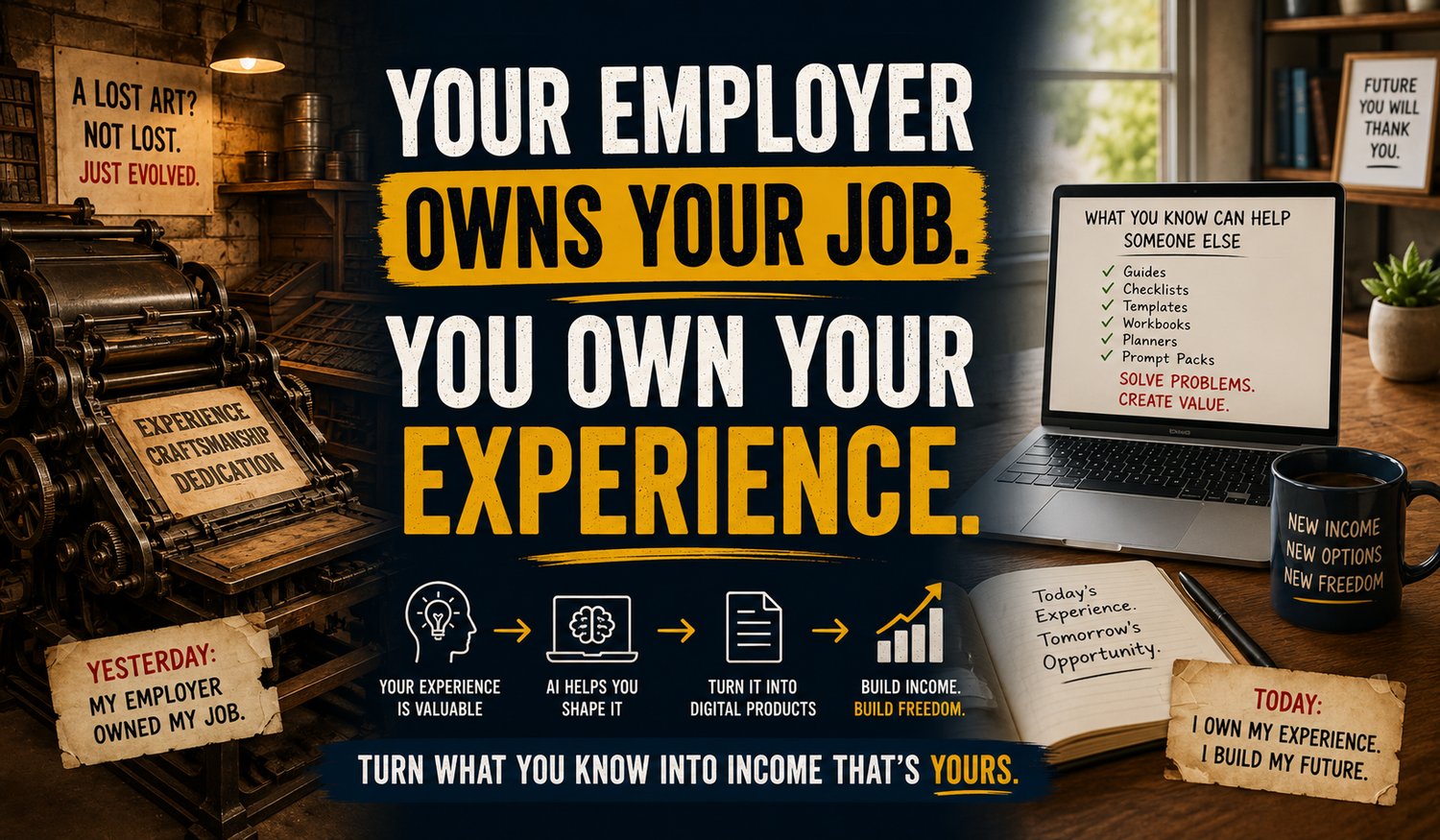
Your employer owns your job — which means, they own YOU!
But...
You own your experience and that gives you a secret advantage.
And after 30 or 40 years in the workforce, that experience could be considerably more valuable than you realise.
The Problem With Having Just One Income
Think about how we approach other areas of risk.
We insure our homes.
We insure our cars.
Many people insure their health, their lives and even their mobile phones. Yet our household income—the thing that pays for almost everything else—can depend entirely on one source:
- One employer.
- One paycheque.
- One J.O.B.
And as an old expression rather cheekily puts it:
J.O.B. = Just Over Broke.
Now, I'm certainly not suggesting having a job is a bad thing.
A regular paycheque is wonderful. I'm particularly fond of money arriving in the bank on a predictable schedule.
The problem isn't having a job — The problem is having no Plan B.
If your employment changed unexpectedly, what else could produce income? That's where the idea of income insurance becomes interesting. Not an insurance policy you buy from a company — That's another bill designed to take your money. I'm talking about something you build yourself — an asset!
As the author of Rich Dad Poor Dad, Robert Kiyosaki says... "an asset puts money in your pocket, a liability takes it out."
Income Insurance Doesn't Need to Replace Your Salary
This is where people often make the idea unnecessarily intimidating. They think a second income needs to replace their entire salary before it's worthwhile. — It doesn't.
Imagine you gradually built something that earned an extra $100 a month. — That might pay your credit card or phone bill.
Then $300. — Now it's starting to pay for your utilities too.
Then perhaps $500 or $1000 each and every month. Maybe it grows considerably beyond that. Maybe it doesn't.
Either way, something important has changed. — You no longer have one source of income.
More importantly, you've learned how to create income independently.
That's a skill worth having.
A small second income might help pay a bill, fund a holiday, contribute to retirement savings or simply provide a little breathing room.
But its greatest value could be knowing:
“If circumstances change, I've already started building something of my own.”
That's very different from receiving some unpleasant news at work on Friday afternoon and starting from zero on Monday morning.
Your Employer Can Take Away a Position. They Can't Take Away What You Know.
This is particularly important for people over 50. You've accumulated something younger workers simply haven't had enough time to accumulate yet. — Experience.
Perhaps you've spent 35 years in construction.
Maybe you've worked in administration, nursing, manufacturing, retail, sales, bookkeeping, hospitality, management or education.
Perhaps you're a tradesperson.
Maybe you've run a small business.
And it doesn't have to come from your career.
You might know an enormous amount about gardening, fishing, caravanning, photography, woodworking, sewing, family history, cooking, restoring old cars or travelling around Australia.
- You've solved problems.
- You've made mistakes.
- You've discovered shortcuts.
- You've taught other people.
- You've learned what works—and, occasionally, discovered spectacular examples of what doesn't.
- That knowledge belongs to you.
AI Has Changed What You Can Do With That Knowledge
This is where things become particularly interesting. Twenty years ago, turning your knowledge into something you could sell wasn't necessarily easy. Writing and publishing a book was difficult. — I still cringe when I look back at the days of modems, Dreamweaver and FTP haha
- Building a website required technical knowledge
- Graphic design could be expensive.
- Selling products online required infrastructure.
- Marketing was another skill entirely.
Today, AI and simple online tools have dramatically lowered many of those barriers.
AI can help you organise your thoughts:
- It can interview you about your experience.
- It can help create an outline.
- It can help turn rough notes into readable paragraphs.
- It can suggest product ideas, titles and descriptions.
- It can help create social media content.
- It can help you proofread.
Tools such as Canva can help make your work look professional, while platforms such as Payhip make it possible to sell digital products without building a complicated ecommerce website.
But remember... AI doesn't magically give you 30 years of experience. — You bring that part.
AI simply helps you package it.
What Could Your Experience Become?
This is where people tend to overcomplicate things so it helps to stand back and take a breath because you don't necessarily need to build a huge online course or massive interconnected self propelled internet machine.
You could start with something tiny. —
If you've spent years gardening, perhaps you create a simple beginner's vegetable-growing guide.
If you've worked in administration, perhaps you create workplace checklists or organisational templates.
If you're a retired tradesperson, perhaps you create a beginner's guide explaining what you've learned.
If you've travelled extensively in retirement, perhaps you create a planning workbook for someone preparing for their first big trip.
Your knowledge could become:
- an eBook
- a checklist
- a workbook
- a planner
- a template
- a quick-reference guide
- a prompt pack
- a mini-course
The important part isn't the format.
It's the problem you solve.
People generally aren't wandering around the internet thinking:
"Gee, I hope somebody sells me a PDF today."
They're looking for answers.
- How do I do this?
- What should I buy?
- Where do I start?
- What mistakes should I avoid?
Can somebody please explain this without making me feel like an idiot?
If your experience can answer one of those questions, you've got something worth exploring.
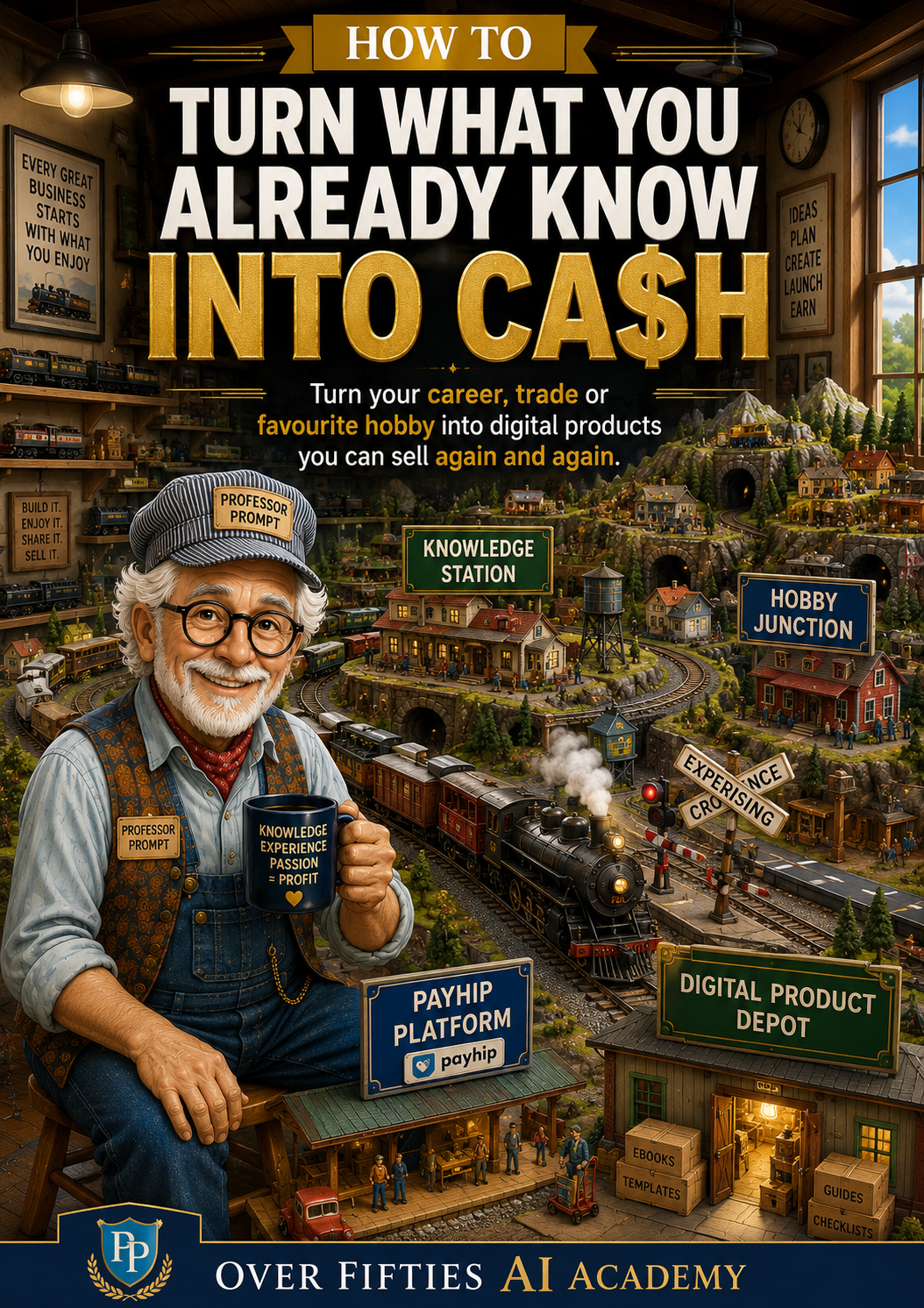
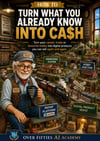
If you're not sure where to begin, How to Turn What You Already Know Into Ca$H was created specifically to help you identify useful knowledge and turn it into simple digital-product ideas.
Build Your Lifeboat While the Ship Is Still Floating
There's an important distinction here. This isn't about panicking because AI is coming for everybody's job.
Nobody knows exactly how employment will change over the next decade, but what we do know is that some jobs will disappear, some will change and of course new jobs will emerge. — Just as they did with the emergence of the steam engine in the 18th century.
The point is simpler:
The best time to create an alternative source of income is before you desperately need one.
When you're still employed, you have something enormously valuable on your side — Time.
- You can experiment.
- You can learn.
- You can create your first little product.
You can make mistakes without the mortgage depending on your success.
Perhaps your first product earns $20.
Excellent.
Somebody you've never met just paid you for something you created.
Now improve it.
Create another.
Learn how to promote them.
Build an audience.
Keep going.
That's how a little experiment can gradually become something meaningful.
Don't Try to Build Amazon by Tuesday
There's another trap I'd avoid.
Once people discover the possibilities of online income, they sometimes decide they need a website, YouTube channel, newsletter, seven social media accounts, twelve products and a logo before lunch.
You don't — You can:
- Start ridiculously small.
- Choose something you know.
- Find a problem you can help solve.
- Create one useful product.
- Put it somewhere people can buy it.
- Then learn from what happens.
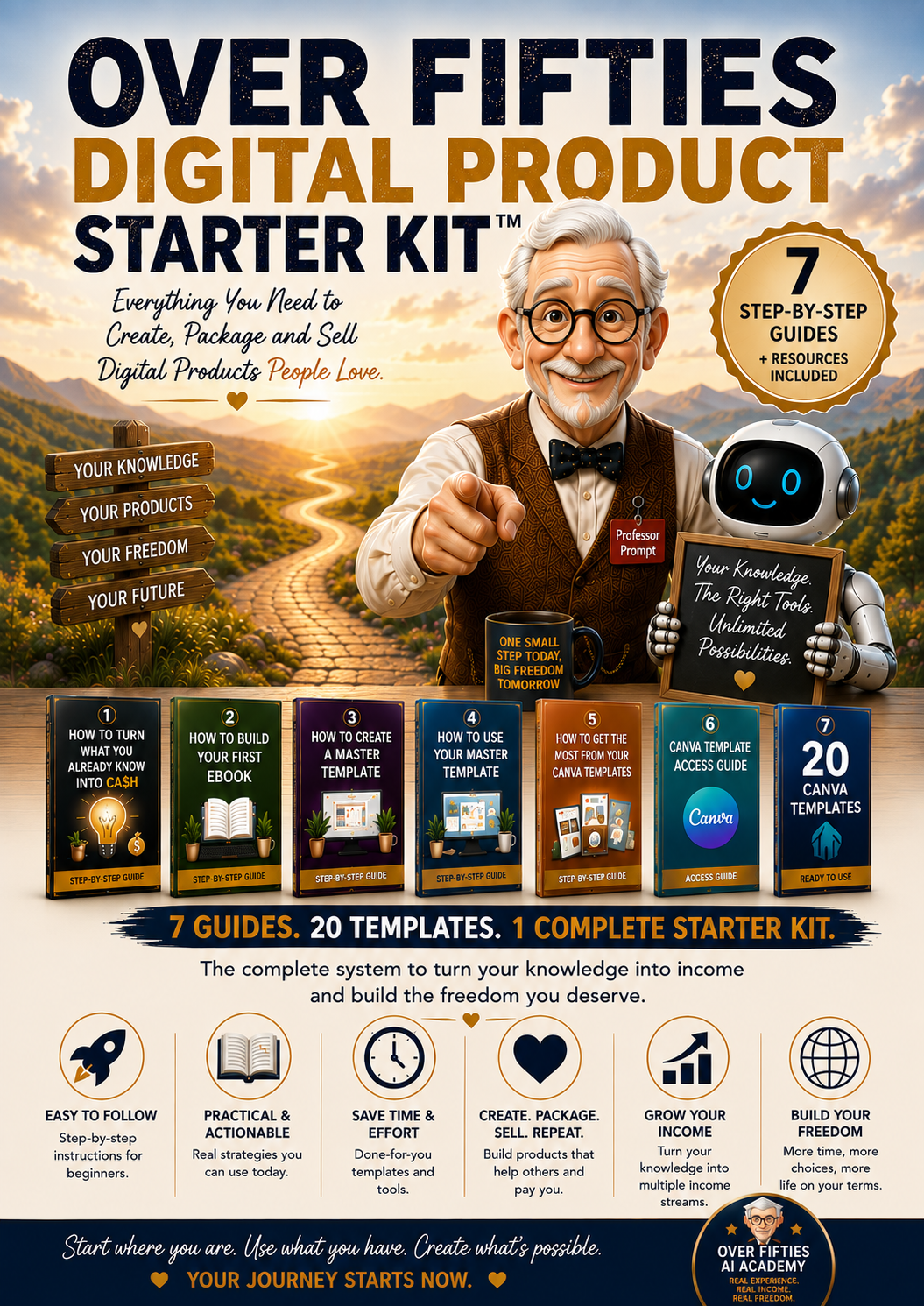
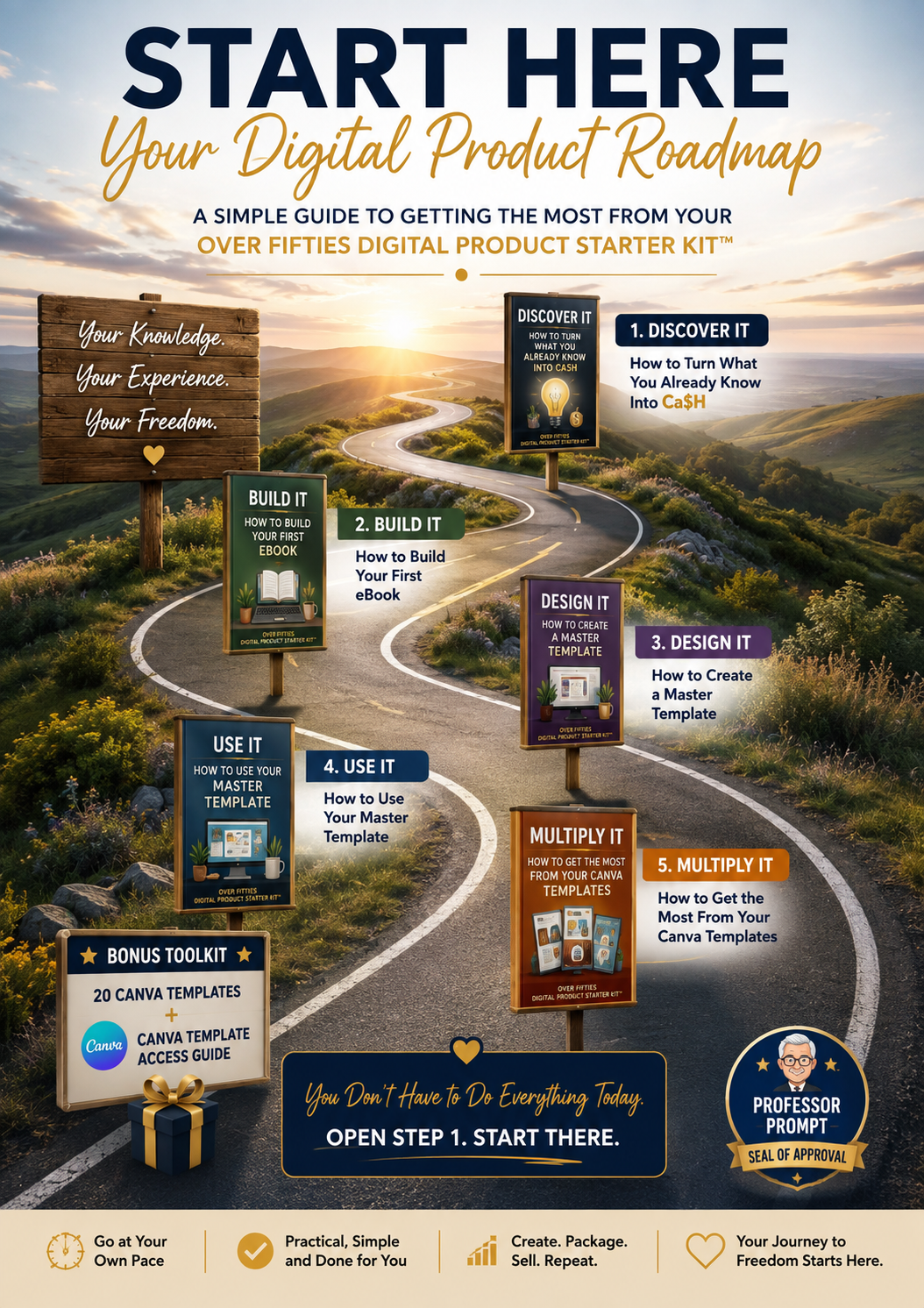
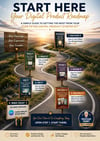
That's precisely why we created The Over Fifties Digital Product Starter Kit™. It provides a beginner-friendly roadmap for taking what you already know, creating your first digital product and getting it ready to sell—without needing to become a technical wizard first.
- One product.
- One customer.
- One sale.
- Then another.
Your Experience Could Be Your Greatest Insurance Policy
After 50, it's easy to look at technological change and wonder whether everything we've learned is becoming obsolete. I think that's looking at it backwards, because technology may be changing — But experience hasn't suddenly stopped being valuable.
In fact, AI may give us better ways to use that experience. The knowledge you've accumulated over decades doesn't have to disappear into a filing cabinet when you retire—or remain locked inside the job you're doing today.
You can package it.
- Teach it.
- Share it.
- Turn it into digital products.
And potentially build an income stream that belongs to you.
— You don't have to quit your job.
— You don't have to become the next internet millionaire.
— You don't need a bank loan or a huge investment.
— And you certainly don't have to have everything figured out by next Tuesday.
— You simply need to start building something you control.
Because your employer may control your position.
They may control your hours.
They may even decide whether your job exists next year.
But there's one thing they don't own — Your experience.
And perhaps it's time you started putting some of it to work for you.