
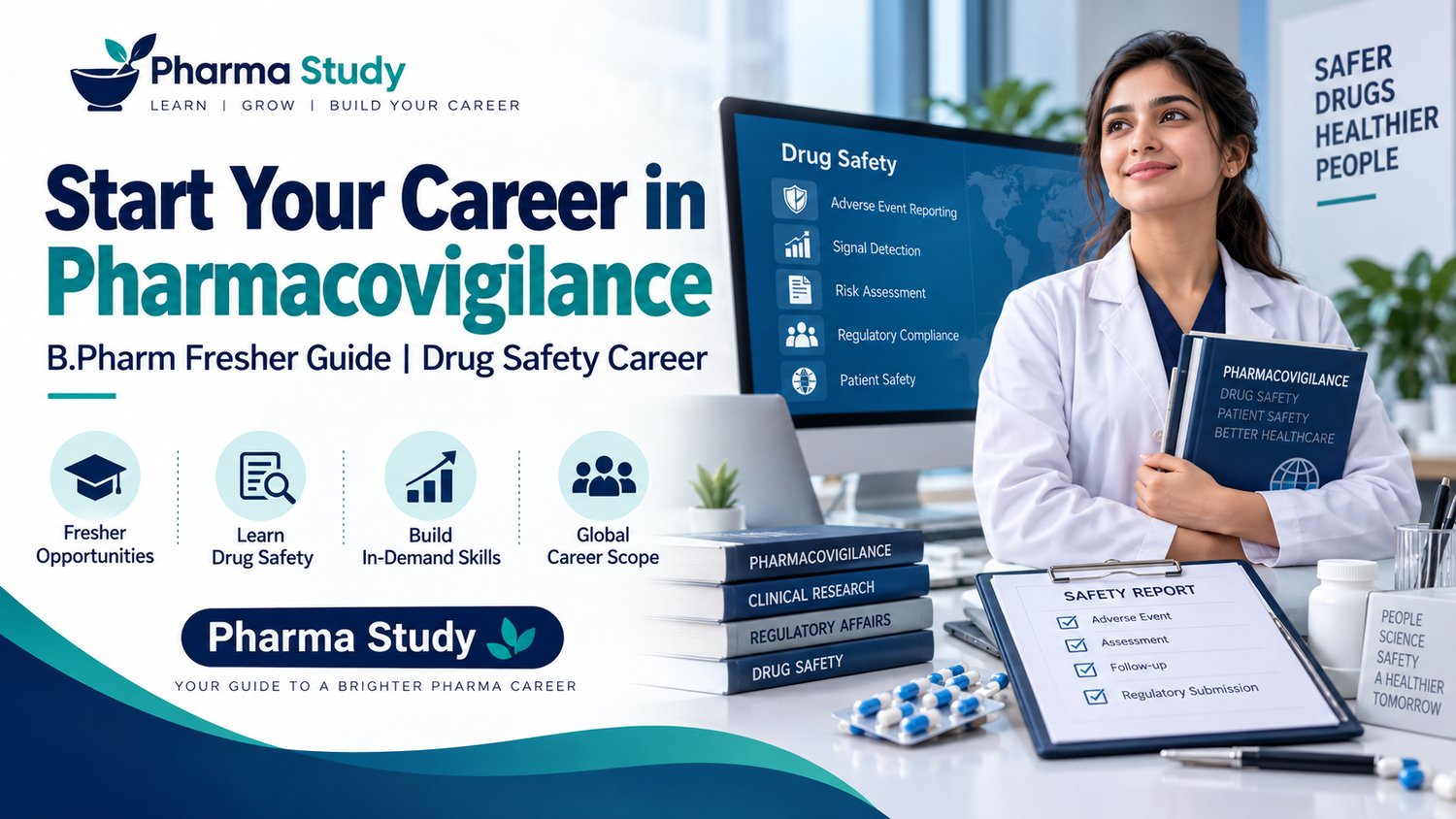
Pharmacovigilance, also known as Drug Safety, is a growing career option for pharmacy graduates interested in medicines, adverse drug reactions, patient safety, and healthcare documentation.
If you have completed B.Pharm or M.Pharm, you can start preparing for entry-level roles such as:
- Drug Safety Associate
- Pharmacovigilance Associate
- ICSR Case Processor
- Safety Data Associate
- PV Trainee
What Should Freshers Learn?
Start with the basic concepts commonly discussed in Pharmacovigilance interviews:
- Adverse Event vs Adverse Drug Reaction
- Serious vs Non-Serious Events
- ICSR basics
- Four minimum criteria of a valid case
- MedDRA and WHODrug
- Causality assessment
- Case processing workflow
- Follow-up information
- Basic Pharmacology and medical terminology
One important concept to understand is the difference between severity and seriousness. Severity describes how intense an event is, while seriousness is based on regulatory criteria such as hospitalisation, life-threatening events, disability, or death.
How to Prepare for Interviews
Do not focus only on memorising definitions.
Practice explaining concepts in simple language and work through basic case scenarios. Interviewers may ask you to identify the suspected drug, adverse event, seriousness criteria, missing information, or important follow-up questions.
Also revise your Pharmacology basics and prepare a clear answer for:
“Why do you want to work in Pharmacovigilance?”
Start With a Structured Approach
Learning Pharmacovigilance becomes much easier when you study one topic at a time.
If you are preparing for Drug Safety interviews, check out the:
Pharmacovigilance & Drug Safety Career Starter Kit
Includes 100 interview questions and answers for freshers covering important PV concepts and interview preparation.
Launch Price: ₹99
Pharma Study | Pharma Made Simple
For educational and career-learning purposes only.