
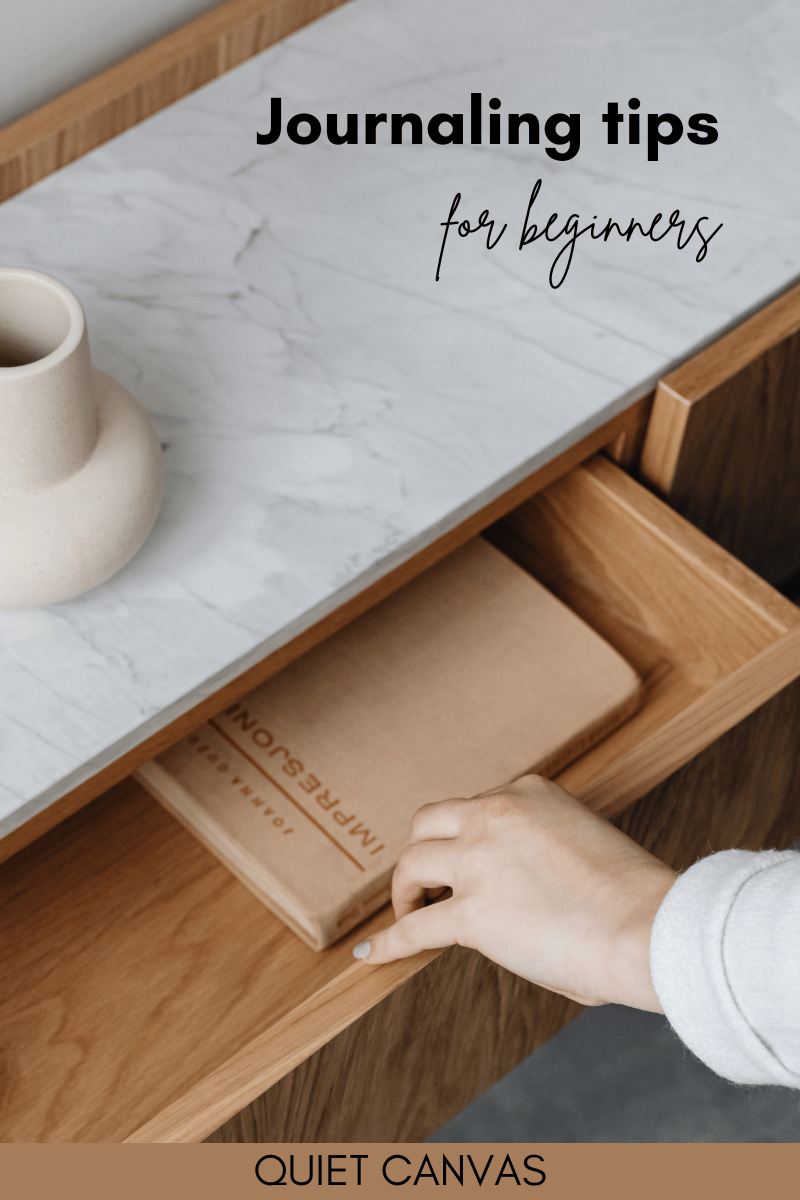
There is a quiet misconception about journaling.
Many people believe they need profound thoughts, beautiful handwriting, or a life full of extraordinary experiences before they can fill the first page.
So they wait.
They wait until they feel inspired.
Until they have more time.
Until they know what to write.
The blank page waits with them.
But journaling was never meant to be a performance. It isn't something you have to do well. It is simply a place where you can arrive exactly as you are.
If you're just beginning, perhaps that's the most important thing to remember.
There Is No Right Way to Keep a Journal
Some days you'll write three pages.
Some days you'll write three lines.
Some days you might simply write,
"Today felt heavy."
And that is enough.
Your journal doesn't ask you to impress anyone. It doesn't ask you to be wise or poetic. It quietly receives whatever you choose to bring.
Over time, you'll discover that consistency matters far more than perfection.
Let Curiosity Replace Pressure
When people first start journaling, they often ask,
"What should I write about?"
A gentler question might be,
"What am I noticing today?"
Perhaps it's the warmth of your morning tea.
The conversation that stayed with you long after it ended.
The way the evening sky looked on your walk home.
The small feeling you haven't quite found words for yet.
Not every page needs to uncover a life-changing realization. Sometimes it simply helps you notice your own life a little more carefully.
You Don't Have to Write Every Day
One of the quickest ways to stop enjoying journaling is to turn it into another obligation.
Life already asks enough of you.
Your journal doesn't need to become another task on a checklist.
Some weeks you may write every morning.
Other weeks, you may only return when something inside you quietly asks to be heard.
Both are perfectly valid.
A journal should feel like a place you want to visit—not somewhere you feel guilty for leaving.
Start with Gentle Prompts
If the blank page feels intimidating, begin with a simple question.
You don't need complicated exercises.
Sometimes these are enough:
- What made me pause today?
- What am I grateful for in this moment?
- What feels lighter than it did yesterday?
- What do I need more of this week?
- What would I like to remember about today?
Questions invite reflection without demanding perfect answers.
Write Honestly, Not Perfectly
Your journal isn't reading over your shoulder.
Cross out words.
Change your mind halfway through a sentence.
Write in fragments if that's all you have.
The pages aren't meant to become polished essays.
They're simply evidence that you spent a little time listening to yourself.
Let Your Journal Grow with You
The pages you write today won't look the same as the pages you'll write a year from now.
You'll notice different things.
Ask different questions.
Find new ways of expressing yourself.
That's not inconsistency.
That's growth.
A journal becomes meaningful not because every page is beautiful, but because together they quietly tell the story of someone becoming more familiar with themselves.
A Quiet Place to Return To
The world often encourages us to move faster, say more, and keep going.
A journal offers something different.
A moment to pause.
A place to notice.
A few quiet minutes that belong only to you.
You don't need the right notebook.
You don't need the perfect words.
You don't even need to know where to begin.
You only need a single page.
And the willingness to meet yourself there.
If you're looking for a gentle place to begin, the Quiet Canvas guided journal offers thoughtful prompts, spacious pages, and quiet moments for reflection—helping you build a journaling practice one page at a time.