

Table of Contents
- What Is Flambient Photography?
- Why HDR Alone Has Limitations
- Why Professionals Use Flash
- The Four-Exposure Workflow
- Flash Placement and Bouncing Techniques
- Common Flambient Mistakes
- HDR vs. Flambient
- Frequently Asked Questions
- Continue Learning
What Is Flambient Photography?
Flambient is a combination of two words:
Flash + Ambient
The technique combines the natural atmosphere of ambient light with the clean color and shadow control provided by flash.
The objective is not to make the room appear artificially lit.
Quite the opposite.
The purpose of flash is to make the image appear more natural.
When done properly, viewers should never realize flash was used at all.
Instead, they should simply notice:
- Clean colors
- Balanced brightness
- Realistic window views
- Reduced noise
- A welcoming atmosphere
Flambient has become one of the preferred workflows among high-end real estate photographers because it consistently produces professional results across a wide variety of lighting conditions.
Why Interior Photography Is Difficult
Interior spaces are filled with conflicting light sources.
A single room may contain:
- Daylight entering through windows
- Warm incandescent fixtures
- Cool LED lighting
- Reflections from flooring
- Green color cast from landscaping
- Blue color spill from the sky
Your eyes automatically compensate for these differences.
Your camera does not.
As a result, a single exposure often produces:
- Muddy colors
- Green walls
- Blue ceilings
- Excessive noise
- Harsh shadows
- Blown-out windows
Flambient solves many of these problems.
Why HDR Alone Sometimes Falls Short
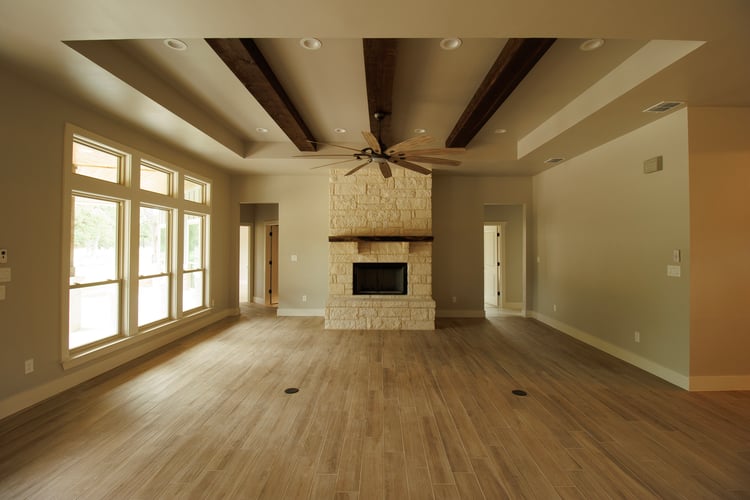
HDR is an excellent technique and remains part of many professional workflows.
However, HDR occasionally struggles with:
Color Accuracy
Mixed lighting often creates muddy tones.
Window Color Cast
Grass and sky can spill unwanted green and blue tones into the room.
Noise
Brightening shadows often introduces visible noise.
Contrast
HDR occasionally creates flat-looking interiors.
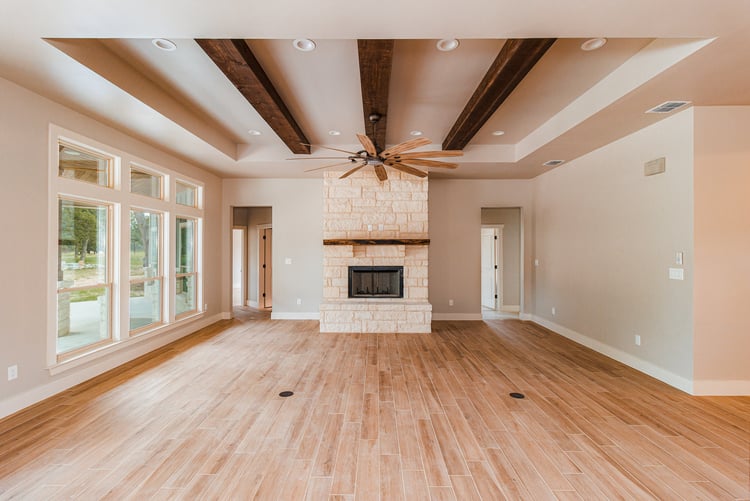
Flash addresses many of these issues directly.
By introducing clean light into the room, less aggressive editing becomes necessary.
Professional Tip
Many photographers mistakenly think flash is used to create dramatic lighting. In real estate photography, flash is usually used to remove problems—not create effects.
Why Flash Produces Better Colors
Flash is remarkably neutral.
Unlike warm bulbs or cool LEDs, it introduces consistent, clean light into the room.
This helps:
- Neutralize color casts
- Reveal natural paint colors
- Improve wood tones
- Create cleaner whites
- Preserve cabinetry details
This is one of the primary reasons luxury real estate photographers frequently rely on flash.
Accurate colors sell homes.
The REPT Flambient Capture Sequence
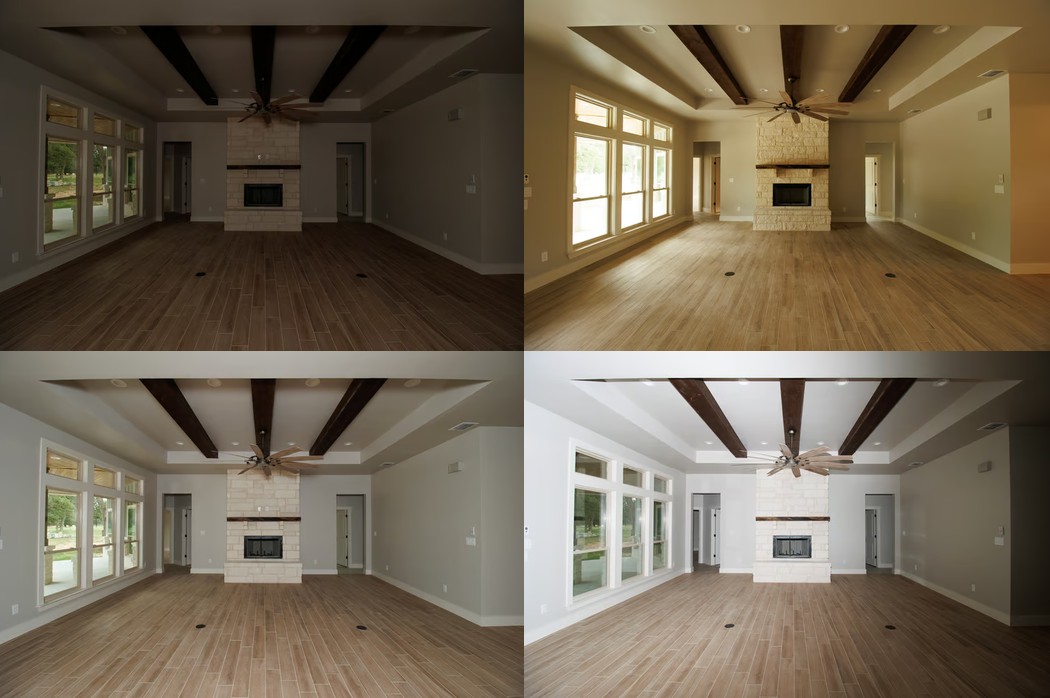
The workflow taught throughout Real Estate Photography Training uses a four-image sequence for most interiors.
Image 1 — Ambient Interior Exposure
Capture the room naturally.
This establishes atmosphere and natural lighting.
Image 2 — Flash Exposure
Bounce flash throughout the room to create clean lighting and accurate colors.
Image 3 — Window Pull Exposure
Expose specifically for the exterior view.
Image 4 — Flash Window Exposure
Use flash to raise interior brightness and assist with difficult windows and reflections.
These four images are later blended together during editing to produce the final photograph.
Bouncing Flash
One of the biggest misconceptions surrounding flash photography is that the flash should point directly at the room.
Usually, it shouldn't.
Direct flash creates:
- Harsh shadows
- Bright hotspots
- Distracting reflections
- Artificial lighting
Instead, professional photographers often bounce flash:
- Off ceilings
- Off walls
- Using reflectors
This effectively turns an entire wall or ceiling into a giant softbox.
The result is dramatically softer and more natural.
The REPT workflow frequently uses a reflector to soften and redirect flash throughout the room.
Flash Placement Matters
Large rooms may require:
- Multiple flash positions
- Slave flashes
- Additional exposures
The goal is simple:
Create even illumination while preserving the room's natural mood.
Don't think:
"How can I light this room?"
Think:
"How can I remove lighting problems?"
That subtle difference changes everything.
Flambient Creates Cleaner Window Views
One of the greatest benefits of flambient photography is window handling.
Windows are often the most difficult element in interior photography.
Without proper technique, they become:
- Pure white
- Unrealistically dark
- Filled with reflections
By introducing flash, the brightness difference between the room and the exterior becomes much smaller.
This makes blending dramatically easier.
Common Flambient Mistakes
Using Too Much Flash
Overpowering the room creates an unnatural appearance.
The room should still feel naturally illuminated.
Direct Flash
Harsh shadows immediately reveal the use of artificial lighting.
Bounce whenever possible.
Ignoring Ambient Light
Ambient exposures provide warmth and realism.
Flash should complement—not replace—them.
Shooting Without a Tripod
Flambient editing depends upon perfect alignment.
A sturdy tripod is essential.
Photographing Every Room the Same Way
Every home is different.
Every room is different.
Adapt your lighting approach accordingly.
Common Mistake
Beginners often believe that stronger flash equals better results. In reality, subtle flash blending usually produces the most believable photographs.
HDR vs. Flambient
This debate will probably continue forever.
The truth is:
Both methods work.
Both methods have strengths.
The best photographers understand both.
HDR Advantages
- Faster shooting
- Minimal equipment
- Simpler workflow
- Excellent for many properties
Flambient Advantages
- Better colors
- Cleaner shadows
- Reduced noise
- More realistic windows
- Superior control
Many experienced photographers use a hybrid approach.
There is no rule requiring you to choose only one method.
Frequently Asked Questions
Is flambient difficult to learn?
Initially, yes.
However, once the workflow becomes familiar, it becomes remarkably efficient and repeatable.
Do I need expensive flashes?
No.
Many photographers begin with inexpensive speedlights.
Technique matters far more than equipment.
Can flambient work in small rooms?
Absolutely.
Bathrooms and bedrooms often benefit tremendously from flash.
Should every room use flash?
Not necessarily.
Some naturally lit rooms may require very little supplemental lighting.
Evaluate each space individually.
Does flambient replace HDR?
No.
The two techniques frequently complement one another.
Recommended Course Lesson
The complete flambient workflow is demonstrated in:
Episode 4 – On Location: Interior Workflow
This lesson walks through:
- Camera settings
- Flash placement
- Slave flash setup
- Window pull exposures
- Four-image capture workflow
The subsequent editing process is expanded further in:
- Episode 7 – Interior Workflow: Rough Edits
- Episode 8 – Interior Workflow: Final Touches
Continue Your Training
Explore additional tutorials, educational articles, equipment recommendations, and workflow guides:
Website
Real Estate Photography Training
Complete Course
Ready to master the full professional workflow?
Real Estate Photography Training Course
Follow Along
Behind-the-scenes shoots, editing breakdowns, and new tutorials are regularly posted on Instagram.
Related Articles
Continue building your skills with these companion guides:
📖 The Complete Guide to Real Estate Photography
📖 HDR Photography Explained
📖 How to Photograph Interior Spaces Like a Professional
📖 RAW vs. JPEG for Real Estate Photography
📖 Understanding Dynamic Range: Why It Matters More Than Megapixels
Comments ()