

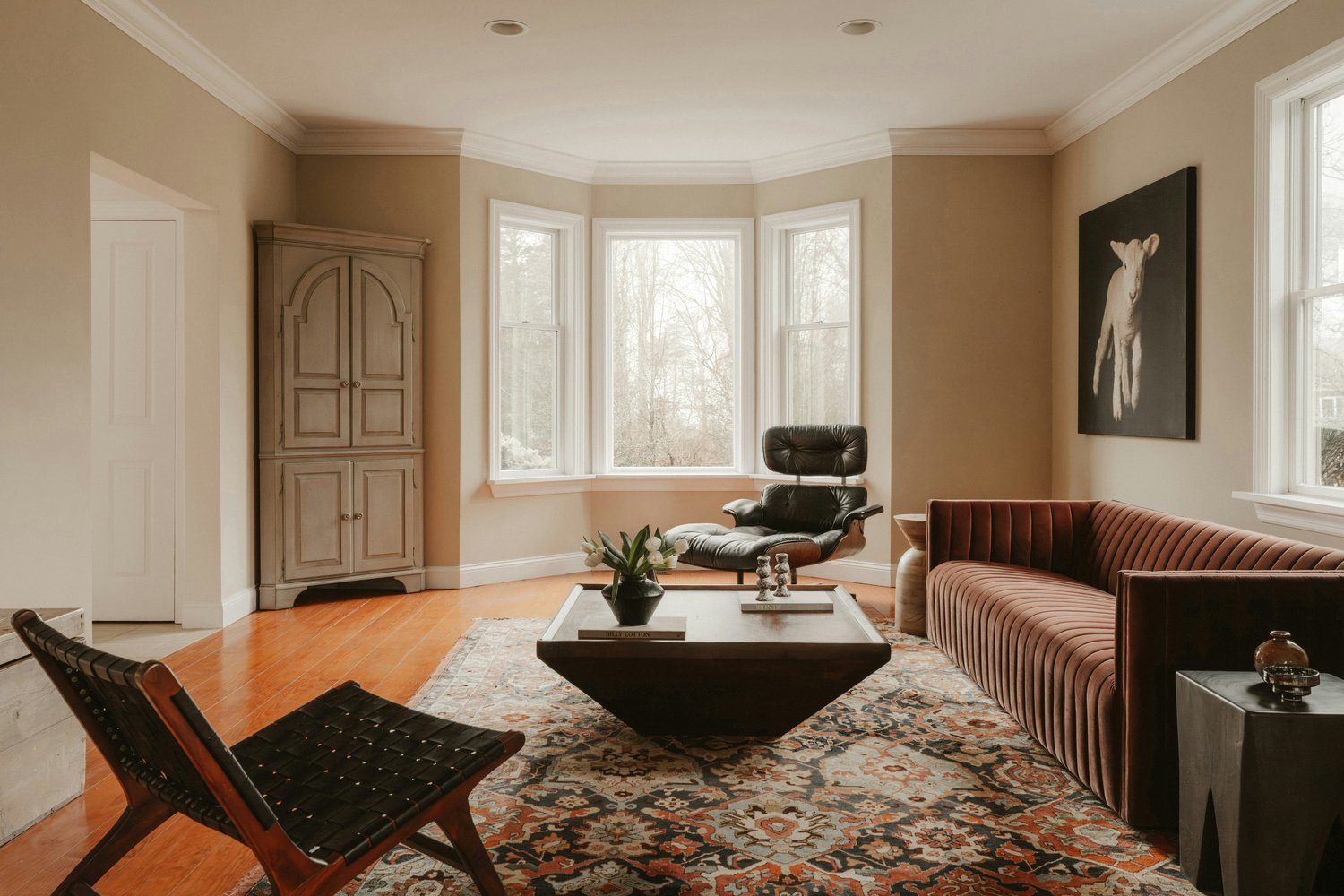
Media Licensing and Intellectual Property for Architectural and Commercial Photography
A photographer completes an architectural shoot for a custom homebuilder.
The project goes well.
The home is finished, the lighting is excellent, and the photographer delivers a polished collection of exterior photographs, interior compositions, and architectural details.
The builder uses the images on its website and social media.
Several months later, one of the photographs appears in a regional magazine.
The cabinet manufacturer requests the kitchen images for its product catalog.
A flooring company wants to use the living room photographs in an advertisement.
The architect asks for the complete gallery to include in its portfolio.
The builder's marketing department wants to place one of the exterior photographs on a billboard.
Then another builder asks whether it can purchase images of the same property for a design presentation.
The original photography assignment has now produced several different commercial opportunities.
The images remain the same, but the intended uses have changed.
A photograph originally commissioned to document one completed home may become a marketing asset for several businesses, each with different audiences, advertising needs, and budgets.
This is where understanding media licensing becomes important.
A photographer needs to know who owns the photographs, which rights have already been granted, whether additional businesses may use the images, and how those uses should be approved.
These questions also appear in ordinary residential real estate photography.
An agent orders photographs for a listing.
The images appear in the MLS.
They are distributed to listing portals.
The brokerage uses them on its website.
The property sells.
Months later, another agent wants to reuse the photographs.
The homeowner requests the images for a vacation rental.
A remodeling contractor asks to feature the kitchen on its website.
Those situations can involve different licensing questions even though every request concerns the same property.
A professional photographer should understand the distinctions before they arise.
Fortunately, the fundamental structure is manageable.
Copyright identifies the legal rights associated with an original creative work.
A license establishes how another party is permitted to use that work.
An assignment transfers copyright ownership or specified rights.
A production agreement explains the relationship between the photographer, client, and any other participants.
The difficult part is applying those concepts consistently across real projects.
For a photography company serving agents, builders, architects, designers, developers, manufacturers, and commercial clients, that responsibility can become substantial.
This chapter develops a practical licensing system for professional real estate and architectural photography.
The discussion focuses on the United States. Copyright law, contract requirements, privacy rights, and other obligations may differ in other jurisdictions.
This is business and copyright education rather than individualized legal advice. Significant licensing agreements, copyright assignments, exclusivity provisions, and disputes should be reviewed with a qualified attorney.
Table of Contents
Why Media Licensing Matters
Understand Copyright Ownership
Separate Copyright From Property Ownership
Understand Works Made for Hire
Distinguish Licenses From Copyright Assignments
Understand Exclusive and Nonexclusive Licenses
Build a Photography Licensing Framework
Structure a Standard Residential Listing License
Understand MLS Distribution and Syndication
Establish Rules for Reusing Listing Photographs
Structure Builder and Architectural Photography Licenses
Handle Architects, Designers, and Product Manufacturers
Distinguish Editorial and Commercial Usage
Understand Licensing Duration, Territory, and Exclusivity
Price Commercial Photography Usage
Manage Multiple Clients on One Architectural Project
Protect Portfolio and Self-Promotion Rights
Understand Property Access, Privacy, and Architectural Copyright
Manage Third-Party Artwork and Licensed Assets
Address RAW Files and Editable Project Files
Understand AI Editing and Derivative Media
Build an Internal Licensing Register
Copyright Registration for Professional Photographers
Respond to Unauthorized Image Usage
A Complete Architectural Licensing Example
A 30-Day Licensing Implementation Plan
Common Licensing Mistakes
Frequently Asked Questions
Recommended REPT Training & Resources
1. Why Media Licensing Matters
A professional photograph can have value long after the original assignment has been completed.
Consider a high-quality architectural exterior.
The builder may initially need it for a completed-project gallery.
Later, the same photograph may appear in a brochure, company presentation, social advertisement, or website redesign.
The architect may want to publish it in a design portfolio.
The landscape company may want to feature the completed grounds.
A publication may request the image for an article about residential architecture.
Each use can expose the photograph to a different audience.
Some uses may already fall within the original client's license.
Others may require additional permission.
The answer depends on the rights that were actually granted.
Licensing Makes Commercial Expectations Clear
A good licensing arrangement establishes what the client is purchasing.
For example, a real estate agent commissioning a residential photography package generally expects to use the finished images to market the property.
That may include MLS publication, listing portals, brokerage marketing, and social media.
The photographer should understand those normal requirements and grant appropriate rights.
A builder commissioning photographs for a national advertising campaign may need a broader license.
The agreement should reflect that difference.
Licensing Also Protects Client Relationships
Unclear rights can create problems for both parties.
A client may believe the photographs can be used indefinitely by every business associated with a project.
The photographer may believe the images were licensed only for one specific marketing purpose.
The disagreement may remain invisible until another organization begins using the images.
A written licensing framework reduces that uncertainty.
It gives the client dependable permission for the uses it needs and gives the photographer a clear way to evaluate additional requests.
REPT PROFESSIONAL TIP
Before quoting a commercial photography project, ask how the images will be used, which organizations will use them, and whether those uses may expand over time. Those questions often reveal requirements that would be difficult to address after delivery.
2. Understand Copyright Ownership
Under U.S. copyright law, original photographs generally receive copyright protection when they are created.
The U.S. Copyright Office explains that copyrightable creativity in photography can arise from decisions involving composition, lighting, camera position, and timing.
Copyright protection ordinarily begins when the photograph is captured.
Registration is not required for copyright to exist, although registration provides important additional legal benefits.
The Copyright Office explains these principles in its official guide:
U.S. Copyright Office — What Photographers Should Know About Copyright
What Rights Does Copyright Provide?
Copyright generally gives the owner exclusive rights to perform or authorize certain activities involving the work.
For photographs, important rights include:
Reproducing the photograph.
Distributing copies.
Creating derivative works.
Publicly displaying the photograph.
Licensing relevant rights to others.
These rights are subject to statutory limitations and exceptions.
The legal framework appears in Title 17 of the United States Code.
U.S. Copyright Office — Title 17, Chapter 1
Does the Person Paying for the Photography Own It?
Payment alone does not ordinarily establish that the client owns the copyright.
The legal arrangement depends on authorship, employment, valid works-made-for-hire arrangements, assignments, and other applicable agreements.
For example, an independent real estate photographer may retain copyright while granting an agent permission to use the images for an approved marketing purpose.
The agent can then use the images according to that license.
The photographer may retain other rights.
A different contract could establish a different arrangement.
This is why the written agreement matters.
3. Separate Copyright From Property Ownership
Owning a building and owning a photograph of that building are different matters.
Suppose a homeowner hires a photographer to document a completed residence.
The homeowner owns the property.
The photographer creates the images.
Depending on the agreement and circumstances, the photographer may own the photographic copyright while the homeowner receives permission to use the images.
The property's ownership does not automatically establish ownership of the photographs.
Likewise, owning the copyright in a photograph does not automatically establish permission to enter private property, disclose confidential information, or use someone's identity in advertising.
These are separate issues.
Three Different Categories of Rights
Category What It Concerns
Photography Copyright Rights associated with the original photograph
Property and Access Rights Permission to enter, photograph, or use a location under applicable rules
Contractual and Privacy Rights Obligations involving confidentiality, publication, people, property information, and agreed usage
A commercial photography project may require attention to all three.
For example, a builder may authorize photography at a privately owned residence.
The photographer may own the resulting photographs.
However, the production agreement may restrict public release until the homeowner or builder approves publication.
The photographer should follow those restrictions.
4. Understand Works Made for Hire
One of the most important distinctions concerns the relationship between the photographer and the organization commissioning the work.
Employee Photography
Under U.S. law, qualifying work created by an employee within the scope of employment may be considered a work made for hire.
In that situation, the employer is generally treated as the legal author and copyright owner unless the parties have agreed otherwise in an appropriate signed writing.
Independent Contractors
The analysis is different for independent contractors.
Simply paying a freelance photographer does not automatically make the resulting photographs works made for hire.
For specially commissioned work to qualify, the statutory requirements must be met.
These include a signed written agreement and the work falling within one of the categories identified by federal copyright law.
A written agreement containing the words work made for hire cannot automatically convert every commissioned photograph into qualifying work.
Why This Matters for Media Companies
A photography company may use:
Employee photographers.
Independent contractors.
Freelance videographers.
Outside editors.
Commercial production teams.
The company needs to understand which rights it actually controls.
If an outside photographer owns the copyright and has granted the company only limited permission to use the work, the company may lack authority to promise broader rights to an enterprise client.
This should be resolved before production.
The Copyright Office's guidance on works made for hire explains the governing requirements.
U.S. Copyright Office — Works Made for Hire, Circular 30
COMMON MISTAKE
A media company assumes that every photograph created by a paid freelancer automatically belongs to the company. Later, a builder requests expanded commercial rights, and the company discovers that its original contractor agreement did not clearly establish those rights.
5. Distinguish Licenses From Copyright Assignments
A license and a copyright assignment can have substantially different consequences.
A License
A license grants permission to use specified rights in a copyrighted work.
The photographer or other copyright owner may retain ownership.
The license can define the permitted purposes, users, duration, territory, and other conditions.
For example, a photographer might license finished images to a builder for use in the builder's own marketing.
A Copyright Assignment
An assignment transfers ownership of copyright or specified exclusive rights.
The scope depends on the agreement.
A complete assignment can substantially change the photographer's ability to control or reuse the work.
Under Section 204 of the Copyright Act, a voluntary transfer of copyright ownership generally requires a writing signed by the rights owner or authorized agent.
U.S. Copyright Office — Copyright Ownership and Transfer, Chapter 2
Understand What the Client Actually Needs
A builder may request ownership because it wants confidence that the photographs can be used in future marketing.
A properly drafted license may be capable of providing the required usage rights without transferring copyright ownership.
In other situations, the client may have a legitimate commercial reason for requesting an assignment.
The arrangement should be evaluated according to the actual requirements.
Address Portfolio Use
If the client receives copyright ownership, the photographer should not assume that portfolio usage remains permitted.
The agreement may need to reserve or grant back appropriate portfolio rights.
The same concern applies to exclusivity provisions that restrict the photographer's own use.
6. Understand Exclusive and Nonexclusive Licenses
Licenses can be structured in several ways.
Two important categories are exclusive and nonexclusive licenses.
Nonexclusive License
A nonexclusive license generally allows the rights owner to grant the same rights to other parties.
For example, a photographer might license an architectural image to the builder for its marketing.
The photographer may also be able to license the same image to the architect or interior designer, subject to other contractual restrictions.
Exclusive License
An exclusive license grants the specified rights exclusively to the licensee within the agreed scope.
That scope may be limited by use, territory, or duration.
For example, a company might obtain exclusive rights to use a particular image in a defined advertising category for a specified period.
The copyright owner may be restricted from exercising those same rights during that period.
Exclusive grants are transfers of copyright ownership under U.S. copyright law and require appropriate written formalities.
Exclusivity Should Be Defined Carefully
Consider a builder requesting exclusive rights.
Does that mean:
Exclusive use for all purposes?
Exclusive use only in residential builder advertising?
Exclusive use for one year?
Exclusive use within a particular market?
Exclusive use by one company and its approved subsidiaries?
Those arrangements are different.
The contract should identify exactly what is exclusive.
7. Build a Photography Licensing Framework
A professional licensing agreement should answer a consistent set of questions.
I would organize those questions into eight categories.
Licensing Element Question to Answer
Licensee Which person or organization may use the images?
Permitted Uses What marketing, editorial, or commercial activities are allowed?
Media Which photographs or deliverables are included?
Distribution Which platforms, publications, or channels are permitted?
Duration How long do the rights continue?
Territory Where may the media be used?
Exclusivity May the rights be granted to other parties?
Sublicensing May the client authorize other parties to distribute or use the media?
Some arrangements need additional terms.
These may address:
Modifications.
Attribution.
Portfolio rights.
Confidentiality.
Payment.
Third-party materials.
Termination.
Archive use.
The exact structure depends on the production.
Keep the License Understandable
A client should be able to determine whether an intended use is permitted.
For example, a builder should not need to interpret several pages of confusing language to determine whether an image can appear in a company brochure.
The photographer should likewise be able to identify whether a cabinet manufacturer needs separate authorization.
The licensing framework should make those decisions easier.
8. Structure a Standard Residential Listing License
Ordinary residential real estate photography deserves a practical licensing arrangement.
An agent needs to market the property.
That marketing typically involves several platforms.
A reasonable license should account for the normal distribution process.
Understand the Intended Use
A standard residential listing may require:
MLS submission.
Listing portals.
Brokerage websites.
Agent websites.
Property websites.
Social media.
Printed property brochures.
Authorized listing advertisements.
The precise list depends on the client's needs and applicable MLS rules.
Identify the Licensee
The photographer may be hired by an individual agent.
However, the brokerage may be the entity responsible for submitting the listing and granting rights to the MLS.
The license should account for the authorized participants.
A license granted only to the individual agent may be insufficient if the normal marketing process requires the brokerage to authorize additional distribution.
Define the Listing Lifecycle
Consider what happens when the property sells.
Does the license permit:
Marketing the active listing?
Displaying the sold property in an agent's historical portfolio?
Maintaining the image on the brokerage's website?
Using the image in a sold-property announcement?
Using the image in future brokerage advertising?
Those uses should be addressed rather than left to assumption.
Make Normal Marketing Straightforward
A photographer should avoid creating unnecessary administrative barriers to routine listing distribution.
The goal is a clear agreement that supports the client's legitimate property-marketing requirements.
The more complicated licensing decisions usually arise when the photographs are requested for a different purpose or by a different business.
9. Understand MLS Distribution and Syndication
The MLS introduces an important layer of media licensing.
A listing photograph may begin with the photographer.
The photographer grants appropriate rights to the agent or brokerage.
The brokerage submits the listing to an MLS.
The MLS may distribute listing content according to its agreements and policies.
Additional websites or services may display that content.
Each stage depends on the necessary permissions.
Understand the Chain of Rights
The National Association of REALTORS® explains that listing content may be owned by different parties and that brokers need appropriate rights to provide it to MLSs and other authorized recipients.
Its legal resources emphasize establishing a clear chain of ownership or licensing.
National Association of REALTORS® — Managing Listing Content
The Photographer's Agreement Should Support Authorized Distribution
If the photographer intends to permit ordinary MLS and portal syndication, that permission should be expressed clearly.
The agreement should address the rights needed for the actual distribution process, including authorized sublicensing where applicable.
A vague statement permitting use on a single website may fail to describe how listing media is normally distributed.
Do Not Assume Every MLS Has Identical Rules
MLS requirements can vary.
A photographer should understand the rules affecting the clients and markets being served.
A brokerage may also have its own vendor terms and media-usage requirements.
For substantial or recurring brokerage accounts, review those obligations during onboarding.
Distribution Does Not Automatically Resolve Every Future Use
A photograph appearing on a listing portal does not necessarily mean every unrelated business has permission to download and reuse it.
The rights depend on the relevant licenses, agreements, and applicable law.
This distinction becomes important when another agent, builder, designer, or manufacturer requests the images.
10. Establish Rules for Reusing Listing Photographs
Real estate photographs are frequently requested after the original listing has ended.
A homeowner may want the images for personal records.
A new agent may need photographs when the property returns to the market.
A property manager may want to use them for a rental listing.
A renovation company may want to feature the completed work.
Those requests should follow an established process.
Identify the Requesting Party
Begin by determining who wants to use the images.
Is it the original client?
The same brokerage?
A new brokerage?
The homeowner?
A construction company?
A commercial third party?
Identify the New Purpose
The new use may be closely related to the original assignment.
Or it may be substantially different.
For example, using photographs to market the same property through a new agent may require a new license depending on the original terms.
Using the kitchen image in a national appliance advertisement is a separate commercial application.
Check the Original Agreement
Before approving reuse, determine:
Who owns the copyright?
Which rights were previously granted?
Whether the original license is still applicable.
Whether the new party is an authorized user.
Whether another agreement restricts additional licensing.
Create a Simple Reuse Procedure
I would establish a standard process.
Request → Rights Review → Usage Definition → Approval and Pricing → Delivery
A routine request may be resolved quickly.
A complex commercial use may require a separate agreement.
The important step is recording what was authorized.
REPT PROFESSIONAL TIP
When someone requests photographs from a completed listing, ask which organization will use the images and where they will appear. Those two questions often reveal whether the request falls within an existing license or requires a new arrangement.
11. Structure Builder and Architectural Photography Licenses
Builder photography frequently has a longer commercial life than ordinary listing photography.
A builder may use completed-project photographs across several years.
The images may appear in:
Project galleries.
Company websites.
Social media.
Print brochures.
Sales presentations.
Community advertising.
Recruiting.
Trade publications.
Awards submissions.
Digital advertising.
A builder may also use the photographs after the original property has been sold.
The license should reflect the intended marketing life of the images.
Establish the Commercial Scope
Before preparing the quote, ask:
Will the images be used only to document the project?
Will they appear in ongoing company marketing?
Will they be used in paid advertising?
Will they be distributed to sales offices?
Will they appear in printed publications?
Will other related companies need access?
Does the builder expect perpetual usage?
Account for the Entire Organization
A regional builder may operate through several legal entities.
A national builder may have multiple divisions.
The agreement should identify the organizations authorized to use the media.
A license to one company does not automatically establish unlimited rights for every related business unless the agreement provides for that arrangement.
Consider Future Uses
A builder may not know every marketing application at the time of the shoot.
The agreement can provide broad authorized usage where commercially appropriate.
Alternatively, it can define the original scope and establish a process for adding future uses.
The correct choice depends on the client's requirements and the negotiated economics.
Separate Production and Usage When Helpful
A commercial estimate may distinguish:
The cost of creating the images.
The cost of the requested usage rights.
Additional production services.
Special requirements.
That structure helps the client understand why an architectural advertising project may cost more than a basic listing package.
For broader commercial pricing, review:
REPT — Commercial Real Estate Media Packages and Pricing
12. Handle Architects, Designers, and Product Manufacturers
A completed architectural project may involve numerous businesses.
The architect designed the building.
The builder completed the construction.
The interior designer selected finishes and furnishings.
A cabinet manufacturer produced custom millwork.
A lighting company supplied fixtures.
A landscape designer developed the exterior.
Those organizations may all have legitimate reasons to want photographs of the completed project.
Their commercial requirements are not necessarily identical.
Architects
An architect may want images for:
Portfolio presentations.
Website projects.
Awards submissions.
Professional publications.
Marketing materials.
The intended uses should be defined.
Interior Designers
Interior designers may want detailed images that emphasize materials, furnishings, spatial relationships, and specific design decisions.
Their usage may continue for years.
A designer may also submit the photographs to publications.
Product Manufacturers
A product manufacturer may want to use an image in:
Product advertising.
Catalogs.
Trade-show displays.
Dealer materials.
Social campaigns.
Website product pages.
This can represent a different commercial use from the original builder commission.
Determine Whether the Original License Covers These Parties
Suppose the builder commissioned the photographs.
The cabinet manufacturer contacts the photographer directly.
Before granting the manufacturer a license, review the builder's agreement.
An exclusive arrangement, confidentiality provision, or other restriction may affect the photographer's ability to grant additional rights.
If the original arrangement permits third-party licensing, the manufacturer may purchase an appropriate license.
The process should be documented.
The REPT chapter Working With Interior Designers and Product Manufacturers develops the production and client-management side of these relationships.
13. Distinguish Editorial and Commercial Usage
A photograph can appear in several different contexts.
Editorial Usage
Editorial usage may involve a publication discussing architecture, design, construction, or another newsworthy subject.
For example, a regional design magazine might feature a completed residence.
The photographer may license images to support the article.
Commercial Advertising
Commercial advertising uses the image to promote a product, company, or service.
For example, a manufacturer may use a kitchen photograph to advertise cabinetry.
The same image may have different value and licensing requirements depending on the use.
Evaluate the Actual Application
The word editorial in a request does not automatically resolve every rights question.
A magazine may request the image for an editorial feature.
The publication may also want to use the photograph in paid promotional material.
A manufacturer may describe a product catalog as editorial content even though it serves a commercial marketing purpose.
Ask how the image will actually be distributed.
Understand Third-Party Rights
Editorial and commercial contexts can also involve different considerations concerning people, trademarks, artwork, and other protected material.
A license from the photographer does not necessarily resolve those additional rights.
Significant uses should be reviewed according to the actual content and intended publication.
14. Understand Licensing Duration, Territory, and Exclusivity
Commercial image licenses can be customized.
Three important dimensions are duration, territory, and exclusivity.
Duration
A license may be:
Limited to a defined campaign.
Valid for a specified number of years.
Valid for the life of a particular project.
Perpetual for the stated uses.
The duration should reflect the client's actual needs.
Territory
A license may cover:
A local market.
A state.
The United States.
North America.
Worldwide usage.
For digital marketing, geographic restrictions can be more complicated to administer because websites may be accessible from many locations.
The contract should describe the intended territorial rights clearly.
Exclusivity
A client may want assurance that competitors cannot use the same photograph in a particular context.
That exclusivity has commercial implications.
The photographer may be giving up other licensing opportunities.
Do Not Use Broad Terms Without Defining Them
Words such as unlimited, exclusive, and all media can carry significant consequences.
If a client needs unusually broad rights, discuss the scope carefully.
A qualified attorney can help ensure that the written terms reflect the business agreement.
15. Price Commercial Photography Usage
Commercial licensing can be difficult to price because the images may have several sources of value.
There is the cost of production.
There is the value of the intended commercial usage.
There may be exclusivity.
There may be additional services, administration, or legal requirements.
I would begin by separating those considerations.
Production Costs
Production may include:
Planning.
Travel.
Photography.
Lighting.
Assistants.
Editing.
Retouching.
Equipment.
Project management.
Delivery.
Those costs establish part of the commercial foundation.
Usage Scope
Consider whether the client needs:
A limited project gallery.
Ongoing website and social media rights.
Printed marketing.
Paid advertising.
National distribution.
Third-party licensing.
Exclusive usage.
The value and restrictions associated with those rights should be considered.
A Hypothetical Pricing Example
Suppose a photographer produces a completed-home gallery.
The original assignment includes a $600 production fee for a defined set of deliverables and a specified builder marketing license.
Several months later, a flooring manufacturer requests permission to use one image in a regional advertising campaign.
The photographer reviews the existing agreement and confirms that additional licensing is permitted.
The manufacturer asks for:
One image.
Regional advertising.
A six-month campaign.
Digital and print usage.
No exclusivity.
The photographer can now evaluate the license according to the commercial scope.
A separately negotiated licensing fee may be appropriate.
The amount should reflect market conditions, the intended use, the value of the image, contractual restrictions, and the photographer's business model.
There is no universal percentage or industry price that automatically applies to every such transaction.
Evaluate Restrictions
If the manufacturer requests exclusive rights, the arrangement may prevent the photographer from licensing the same rights to other businesses during the agreed period.
That restriction should influence the negotiation.
Keep the Quote Understandable
A commercial proposal can identify:
Production.
Post-production.
Included usage.
Optional expanded rights.
Additional deliverables.
Special restrictions.
This gives the client a clear explanation of what the quoted amount covers.
REPT PROFESSIONAL TIP
When commercial usage expands beyond the original project, evaluate the new application on its own terms. A single image used in a national advertising campaign may require a different licensing arrangement from the same image appearing in a local project portfolio.
16. Manage Multiple Clients on One Architectural Project
Sometimes several organizations want to participate in one photography assignment.
For example, a builder, architect, and interior designer may all want finished photographs.
There may be opportunities to coordinate the production.
The parties may share certain production costs.
However, each organization's usage rights should remain clear.
Identify the Commissioning Parties
Determine whether:
One company is hiring the photographer.
Several companies are jointly commissioning the work.
One client is funding the shoot while others will license the finished images later.
These arrangements have different administrative and licensing consequences.
Establish Who Approves the Work
A builder may care most about the complete architecture.
An interior designer may be focused on furniture and materials.
An architect may prioritize structural or spatial relationships.
The production should identify who controls:
Shot selection.
Styling.
Creative direction.
Editing approval.
Final delivery.
Establish Each Party's License
The builder may receive rights for company marketing.
The architect may receive portfolio and awards-submission rights.
The interior designer may receive rights for its project gallery.
A manufacturer may require a separate commercial license.
These uses should be defined rather than assumed.
Avoid Conflicting Agreements
A photographer should be careful about promising exclusivity to one party while also promising unrestricted rights to several others.
Resolve those questions before accepting the production.
17. Protect Portfolio and Self-Promotion Rights
A photographer's portfolio is an important business asset.
Architectural work may become one of the strongest examples of the photographer's capabilities.
However, portfolio usage should be addressed in the production agreement.
Consider Publication Timing
A builder may want to announce the completed project at a particular time.
An architect may be preparing a publication submission.
A homeowner may prefer that the residence remain private.
A magazine may require an agreed period of exclusivity.
The photographer should understand those requirements.
Define Permitted Portfolio Use
A portfolio permission may address:
Photographer website.
Social media.
Printed portfolio.
Awards submissions.
Professional presentations.
Behind-the-scenes content.
The permitted uses may differ between projects.
Respect Confidentiality
Some properties are sensitive.
For example:
Private luxury residences.
Unannounced developments.
Homes containing valuable collections.
Confidential commercial projects.
Properties with security concerns.
A photographer should avoid assuming that every completed image may be publicly shared.
Obtain Appropriate Approvals
When the agreement requires client or property-owner approval, preserve that authorization.
The REPT chapter Real Estate Photography Case Studies: Turn Projects Into Marketing explains how completed projects can become useful portfolio and marketing material.
18. Understand Property Access, Privacy, and Architectural Copyright
Architectural photographs involve several possible rights considerations.
One important distinction concerns the copyright associated with a building's architectural design.
Architectural Works and Publicly Visible Buildings
Section 120(a) of the U.S. Copyright Act generally limits an architectural copyright owner's ability to prevent photographs and other pictorial representations of a constructed building located in or ordinarily visible from a public place.
This provision is important to architectural photography.
Official statute:
U.S. Copyright Office — Title 17, Section 120
However, the provision has a defined scope.
It should not be treated as permission to enter restricted property, ignore privacy requirements, or disregard contractual restrictions.
Private Interiors
Photography inside a privately owned residence generally involves permission to access the property.
The intended publication may also be subject to agreements with the homeowner, builder, agent, or another authorized party.
A photographer should verify the relevant access and publication conditions.
Recognizable People
If identifiable people appear in commercial media, additional rights and permissions may be relevant.
The requirements depend on the circumstances and applicable law.
For advertising assignments, appropriate releases should be considered with qualified professional guidance.
Sensitive Information
Even an otherwise authorized photograph can reveal:
Security equipment.
Access codes.
Private documents.
Family photographs.
Valuable personal belongings.
Confidential architectural plans.
The production workflow should identify and handle sensitive content before publication.
19. Manage Third-Party Artwork and Licensed Assets
Architectural photographs frequently contain other creative works.
Examples include:
Paintings.
Sculptures.
Murals.
Decorative graphics.
Custom artwork.
Licensed digital displays.
Other protected visual material.
The photographer may own the copyright in the photograph while another person owns rights in artwork depicted within it.
The appropriate treatment depends on the facts and intended use.
Consider the Prominence of the Material
A small artwork appearing incidentally in the background raises different questions from an advertising photograph built around a recognizable painting.
The intended commercial use also matters.
Avoid Assuming the Property Owner Controls Everything
A homeowner purchasing a painting does not necessarily acquire the copyright in the artwork.
A builder installing a commissioned mural may not possess unrestricted reproduction rights.
The photographer should identify material third-party content when planning commercial advertising work.
Use Licensed Assets According to Their Terms
A property film may contain music, stock footage, graphics, or other licensed material.
Those licenses may limit:
Commercial usage.
Advertising.
Distribution platforms.
Duration.
Transfer to other parties.
The finished media license should reflect those underlying restrictions.
For audio and music, see Music Licensing for Real Estate Video.
20. Address RAW Files and Editable Project Files
A client may ask for the original files after receiving the finished media.
That request should be evaluated separately from the usage license.
Finished Photographs
These are the approved deliverables.
The contract should identify the expected formats and resolutions.
RAW Capture Files
RAW files may include:
Alternative exposures.
Unselected compositions.
Incomplete captures.
Private information.
Other material that was never intended for delivery.
A client receiving finished JPEGs should not automatically assume that every original capture file is included.
Editable Project Files
Photoshop documents may contain layers, masks, linked assets, and other production elements.
Video project files may contain licensed music, graphics, or third-party media.
The agreement should establish whether these files are included.
Source Files and Copyright Are Different Issues
Delivering a RAW file does not, by itself, transfer copyright ownership.
Likewise, a copyright assignment does not automatically define the physical or digital files that must be delivered.
Those matters should be addressed separately.
The REPT chapter How to Deliver Real Estate Photos Professionally covers the practical delivery process.
21. Understand AI Editing and Derivative Media
AI-assisted editing introduces additional questions concerning intellectual property and client authorization.
The most important practical issues involve:
The rights to the original material.
The nature of the modification.
The rights associated with generated content.
The software's commercial-use terms.
The accuracy of the finished property representation.
Distinguish Ordinary Corrections From Material Changes
Routine photographic corrections may include exposure adjustment, lens correction, perspective correction, and color balancing.
Other operations may substantially change the depicted property.
Examples include:
Adding architectural elements.
Removing permanent fixtures.
Changing landscaping.
Replacing finishes.
Generating furniture.
Creating an artificial exterior view.
The permitted uses and disclosure requirements may differ.
Copyrightability of AI-Generated Material
The U.S. Copyright Office has examined copyright protection for works containing AI-generated material.
Its guidance emphasizes the role of human authorship and the importance of identifying AI-generated content in applicable registration circumstances.
The legal analysis can depend on the nature and extent of human creative contribution.
Official reference:
U.S. Copyright Office — Copyright and Artificial Intelligence
Review Software Terms
Before using AI services for commercial work, determine:
Whether commercial use is permitted.
What rights the service claims.
Whether files are processed externally.
Whether submitted content may be retained or used for model improvement.
Whether client confidentiality requirements permit the service.
Do not assume every AI tool has identical terms.
Preserve the Source Material
For significant modifications, I would maintain:
The original image.
The edited image.
A record of the alteration.
The software or service used.
The client's approval where required.
Any necessary disclosure information.
This supports quality control and provides a useful record if questions arise later.
22. Build an Internal Licensing Register
A growing photography company needs to know which rights it has granted.
A licensing register makes that information easier to manage.
It can begin as a spreadsheet.
Essential Fields
Field Purpose
Project ID Connects the license to the production
Copyright Owner Identifies the rights holder
Licensee Identifies the authorized user
Media Included Identifies the covered photographs or deliverables
Permitted Uses Defines authorized applications
Duration Records the applicable term
Territory Records geographic scope
Exclusivity Identifies relevant restrictions
Sublicensing Records whether additional distribution is permitted
Portfolio Permission Defines photographer self-promotion rights
Additional Restrictions Records relevant conditions
Agreement Location Identifies the signed documentation
For more complex projects, each license may need its own record.
Connect Licenses to Files
A photographer may have several versions of the same image.
The licensing record should identify which finished files are included.
A consistent project ID and filename system helps.
Record New Licenses
Suppose a cabinet manufacturer purchases usage rights six months after the original shoot.
Create a new record.
Identify the manufacturer, permitted use, duration, and relevant files.
Do not overwrite the original builder license.
The two agreements may remain active simultaneously.
Preserve Signed Agreements
Store the executed documents with the appropriate project records.
Maintain access controls.
Make sure the company can retrieve the agreements when a client requests additional rights.
23. Copyright Registration for Professional Photographers
Copyright protection generally exists automatically when an original photograph is created.
However, registration provides important legal benefits.
The Copyright Office explains that registration is generally required before bringing an infringement lawsuit in federal court concerning a U.S. work.
Registration timing can also affect eligibility for certain statutory damages and attorney's fees.
Registering Individual Photographs
A photographer can register qualifying individual works through the Copyright Office's registration system.
Group Registration
The Copyright Office also provides procedures for registering groups of photographs.
Under its published-photo group registration procedure, qualifying applications may include up to 750 photographs.
Specific requirements address authorship, ownership, publication dates, titles, and other information.
A separate procedure exists for qualifying unpublished photographs.
Official guidance:
U.S. Copyright Office — Group Registration for Published Photographs
U.S. Copyright Office — Group Registration for Unpublished Photographs
Understand Publication Status
The Copyright Office distinguishes published from unpublished works.
The classification can be more complicated than simply determining whether an image has appeared online.
The Copyright Office explains that public display alone does not necessarily constitute publication.
For photographers with substantial licensing or registration needs, accurate publication records are important.
Consider a Registration Policy
A commercial photography company may decide to register certain categories of work systematically.
For example:
Major architectural commissions.
High-value advertising photography.
Significant commercial projects.
Other photographs with substantial licensing value.
The appropriate registration strategy depends on production volume, ownership, costs, and legal priorities.
A qualified copyright attorney can help establish a suitable process.
24. Respond to Unauthorized Image Usage
A photographer may discover images being used by an organization that was not part of the original assignment.
The initial response should be careful and evidence-based.
Step 1 — Identify the Use
Record:
Where the image appears.
Who appears to be using it.
When the use was discovered.
How the image is being used.
Any relevant publication or advertising information.
Preserve evidence before contacting the organization.
Step 2 — Verify Ownership
Confirm that the photographer or company possesses the rights needed to act.
Review:
The original production agreement.
Employee or contractor rights.
Copyright assignments.
Existing licenses.
Any relevant exclusivity provisions.
Step 3 — Check Existing Permissions
The use may fall within an authorized license.
For example, an image appearing on a listing portal may result from permitted MLS distribution.
Do not assume every unfamiliar publication is unauthorized.
Step 4 — Determine the Appropriate Response
Depending on the circumstances, possible responses may include:
Requesting clarification.
Asking for attribution when contractually appropriate.
Negotiating an additional license.
Requesting removal.
Seeking professional legal advice.
The best response depends on the facts.
Step 5 — Understand DMCA Takedowns
The Digital Millennium Copyright Act provides a notice-and-takedown process for qualifying online infringement situations.
The Copyright Office explains that registration is not required merely to submit a qualifying takedown notice.
However, the person making the request needs the appropriate rights and must satisfy the relevant legal requirements.
False or materially misleading notices can create liability.
Official guidance:
U.S. Copyright Office — Section 512 Notice-and-Takedown Resources
Step 6 — Preserve the Relationship Where Appropriate
Some unauthorized usage occurs because the organization misunderstands the original license.
A professional explanation may resolve the issue.
Other situations may require more formal action.
The response should be proportionate to the circumstances.
REPT PROFESSIONAL TIP
Before contacting an organization about suspected unauthorized usage, retrieve the original agreement and identify the rights previously granted. A licensing dispute becomes much easier to evaluate when the company can show exactly what was authorized.
25. A Complete Architectural Licensing Example
Consider a hypothetical photography project for a completed custom residence.
The photographer is commissioned by the builder.
The assignment includes:
Exterior photography.
Interior architectural compositions.
Craftsmanship details.
A finished gallery of thirty-five photographs.
The builder plans to use the images for ongoing marketing.
Stage 1 — Establish the Original License
The builder wants:
Company website usage.
Social media.
Project brochures.
Digital advertising.
Client presentations.
The photographer and builder agree on the production and licensing scope.
The agreement identifies the permitted uses and any restrictions.
The photographer retains copyright under this hypothetical arrangement.
Stage 2 — Complete the Production
The photographer captures and edits the project.
The approved gallery is delivered.
The licensing register records the builder's rights and the included files.
Stage 3 — The Architect Requests Images
Two months later, the architect asks for six photographs.
The intended uses are:
Website portfolio.
Professional awards.
Project presentations.
The photographer reviews the original builder agreement.
There is no conflicting exclusivity or confidentiality restriction.
A separate license is negotiated with the architect.
The licensing register records the new agreement.
Stage 4 — The Cabinet Manufacturer Requests Usage
A manufacturer wants two kitchen photographs for a product campaign.
The requested use includes:
Website product pages.
Digital advertising.
Printed marketing.
The photographer evaluates the commercial scope.
The manufacturer receives a separate license if the parties agree.
The cabinet company does not automatically receive rights to the complete gallery.
Stage 5 — A Magazine Requests Publication
A design publication contacts the photographer.
The magazine wants several images for an architectural feature.
The photographer reviews the publication terms.
The arrangement addresses image selection, permitted usage, attribution, and any publication restrictions.
If the publication requests exclusivity, the photographer evaluates that condition against existing licenses.
Stage 6 — The Builder Expands Its Campaign
The builder later wants to use one exterior photograph in a broader advertising campaign.
The photographer reviews the original agreement.
If the use is already authorized, the builder can proceed within the existing terms.
If additional rights are required, the parties negotiate an appropriate expansion.
Stage 7 — Maintain the Records
At the end of the process, one project may have several licensing records.
Licensee Media Permitted Use
Builder Full approved gallery Defined builder marketing
Architect Six images Portfolio, awards, presentations
Cabinet Manufacturer Two images Defined product advertising
Publication Selected images Approved editorial feature
The specific rights and restrictions would be contained in the actual agreements.
The table provides a simple administrative overview.
The Larger Principle
One architectural project can generate several legitimate commercial uses.
The photographer should establish the rights carefully so that each organization understands what it is authorized to do.
That structure supports future licensing opportunities and reduces disputes.
26. A 30-Day Licensing Implementation Plan
A photography company can establish a useful licensing system without replacing its entire business workflow.
Week 1 — Review Existing Agreements
Collect the company's current:
Booking terms.
Photography agreements.
Builder contracts.
Commercial project agreements.
Contractor agreements.
Delivery terms.
Identify unclear licensing provisions.
Week 2 — Define Standard Usage Categories
Develop consistent categories for:
Residential listing photography.
Builder portfolio photography.
Commercial advertising.
Architectural editorial usage.
Third-party manufacturers.
Portfolio and self-promotion.
Source-file delivery.
The categories should reflect the company's actual services.
Week 3 — Build the Licensing Register
Create the record fields.
Connect licenses to project IDs.
Identify the relevant files.
Store signed agreements in an organized location.
Assign responsibility for maintaining the records.
Week 4 — Establish the Approval Process
Create a consistent workflow for new licensing requests.
Identify who can:
Approve routine usage.
Quote expanded commercial rights.
Review exclusivity.
Approve copyright assignments.
Authorize third-party use.
Escalate legal questions.
The company should also review its contractor agreements to confirm that it possesses the rights needed to fulfill client commitments.
At the end of thirty days, the business should have a clearer understanding of the rights it grants and a practical process for evaluating new requests.
27. Common Licensing Mistakes
Assuming Payment Transfers Copyright
The client pays for the images, and both parties assume ownership has been resolved.
No Written Licensing Terms
The scope depends entirely on conversations that neither party remembers accurately.
Ignoring MLS Distribution
The residential license does not adequately account for normal listing syndication.
Unlimited Rights Without Understanding the Consequences
A broad license is granted without considering future commercial opportunities or restrictions.
Confusing RAW File Delivery With Copyright Ownership
The parties treat file access and intellectual-property rights as the same issue.
No Contractor Rights Agreement
A media company promises rights it has not secured from the people who created the work.
Ignoring Third-Party Users
Architects, designers, manufacturers, and other businesses receive images without a clear authorization process.
No Portfolio Permission
A photographer completes an excellent project but later discovers that self-promotion is restricted.
No Confidentiality Review
Private or unpublished projects are shared before the client has authorized publication.
Treating Every Architectural Image as Unrestricted
The photographer ignores property access, privacy, artwork, or contractual concerns.
No Licensing Records
The company cannot determine which rights were granted several years earlier.
Failing to Consider Registration
Valuable work remains poorly documented when an infringement concern arises.
Aggressive Enforcement Without Reviewing the License
The company accuses an organization of infringement before determining whether the usage was authorized.
COMMON MISTAKE
A photographer offers one standard license for every assignment, regardless of whether the client is an individual listing agent, regional builder, architect, or national manufacturer. The different uses deserve different consideration. A consistent licensing framework can accommodate those differences without making every project unnecessarily complicated.
28. Frequently Asked Questions
Who owns real estate photography images?
Generally, the photographer who creates an original photograph is the initial copyright owner, subject to qualifying employment, work-made-for-hire, assignment, and other applicable arrangements.
Does the real estate agent own the photos because they paid for them?
Payment alone generally does not transfer copyright ownership.
The agreement determines the rights granted, subject to applicable law.
Does the homeowner own the photographs?
Owning the property does not automatically establish ownership of the photographs.
The homeowner may have other relevant property, privacy, or contractual rights.
What is a photography usage license?
A license grants permission to use copyrighted photographs according to specified terms.
What is the difference between copyright and licensing?
Copyright establishes legal rights associated with the work.
Licensing allows another party to use specified rights without necessarily transferring ownership.
What is a nonexclusive license?
A nonexclusive license generally allows the copyright owner to grant the same rights to other parties.
What is an exclusive license?
An exclusive license grants specified rights exclusively within its defined scope.
What is a copyright buyout?
The term is commonly used commercially to describe arrangements granting very broad rights or transferring ownership. Its precise legal meaning depends on the agreement.
What does work made for hire mean?
It is a legal classification under which a qualifying employer or commissioning party is treated as the author of the work.
The statutory requirements must be satisfied.
Can I license the same photograph to a builder and an architect?
Potentially, yes.
The answer depends on the rights you own and the restrictions in existing agreements.
Can a cabinet manufacturer use my kitchen photographs?
The manufacturer needs an appropriate legal basis for the intended use.
That may involve obtaining a license from the rights holder.
Can an agent reuse old listing photographs?
The answer depends on the applicable license, the identity of the user, and the intended use.
Can another brokerage use photographs I took for the original listing agent?
That depends on the original licensing terms and whether the new brokerage has appropriate authorization.
Does MLS publication transfer copyright ownership?
Submission to an MLS does not inherently establish a complete transfer of the photographer's copyright.
The applicable agreements and licensing arrangements determine the rights granted.
Can I continue using photographs after the property sells?
That depends on the copyright ownership, license terms, confidentiality obligations, and any other applicable restrictions.
Can I publish luxury-home photographs in my portfolio?
Potentially, but the production agreement and relevant privacy or publication restrictions should be reviewed.
Does photographing a publicly visible building violate architectural copyright?
Section 120(a) of U.S. copyright law generally permits pictorial representations of qualifying constructed buildings located in or ordinarily visible from public places.
Other legal and contractual considerations may still apply.
Can I give clients the RAW files?
Yes, where appropriate and agreed.
The delivery terms should distinguish source files from finished deliverables and copyright ownership.
Do I need permission to photograph artwork inside a home?
The answer depends on the artwork, circumstances, intended use, and applicable copyright limitations or other permissions.
Commercial advertising involving prominent protected artwork may warrant additional review.
How should I price commercial image licensing?
Consider the production requirements, usage scope, duration, territory, exclusivity, client needs, and commercial value.
There is no single universal licensing rate.
Does AI editing affect copyright?
It can introduce additional questions concerning human authorship, generated material, software terms, and derivative content.
The legal analysis depends on the work and the specific circumstances.
Do I need to register every photograph?
Copyright registration is not required for copyright protection to arise.
Registration can provide important legal benefits.
A photographer should consider a strategy appropriate to the work and business.
How many photographs can I register together?
The Copyright Office permits qualifying group applications of up to 750 photographs under specified published- and unpublished-photo registration procedures.
What should I do when a company uses my images without permission?
Preserve evidence, verify ownership, review existing licenses, and determine whether the use was authorized.
Consider professional legal advice before pursuing formal enforcement.
Can I request a DMCA takedown without copyright registration?
The Copyright Office explains that registration is not required merely to submit a qualifying takedown notice.
Other legal requirements still apply.
What is the most important licensing habit?
Maintain written agreements that clearly identify the authorized users and uses, then preserve those agreements with the project records.
29. Recommended REPT Training & Resources
Understanding copyright and licensing becomes increasingly important as a photographer begins working with commercial clients.
However, the foundation remains the ability to produce professional property images consistently.
Strong architectural composition, dependable capture methods, controlled lighting, and careful editing create the work that clients want to license.
Those fundamentals should come first.
Recommended REPT Course Lessons
The Real Estate Photography Training course and products provide a structured training path through professional property photography.
The most relevant lessons include:
Episode 2 — Required Equipment and Software
Establish a dependable professional equipment workflow.
Episode 3 — Exterior Photography Workflow
Learn to compose and capture architectural exteriors consistently.
Episode 4 — Interior Photography Workflow
Develop the camera placement, composition, exposure, and lighting skills needed for professional interior work.
Episodes 5–8 — Editing Workflow
Learn the editing process behind professional real estate images, including exposure blending, flambient processing, window balancing, color correction, and export.
These skills provide the production foundation for more advanced architectural and commercial commissions.
Free REPT First Listing Starter Kit
If you are preparing for your first paid listing assignment, begin with a dependable capture and delivery process.
The Free REPT First Listing Starter Kit includes an eight-page field guide and a two-sided quick-reference card covering equipment preparation, exterior and interior photography, bracketing, editing, and delivery.
It is the best next step for beginners who want to build consistent working habits before developing more advanced business systems and commercial licensing arrangements.
Download the Free REPT First Listing Starter Kit
Complete Real Estate Photography Training
For the deeper, complete training path through professional property photography, lighting, exposure bracketing, flambient capture, Photoshop editing, and final delivery:
Real Estate Photography Training — Course and Products
Explore the REPT Knowledge Base
Continue through the connected educational library covering photography, editing, commercial production, client management, pricing, and professional media business operations.
REPT Knowledge Base
Visit Real Estate Photography Training
Explore the main website and available educational resources.
Real Estate Photography Training
Follow Malachi on Instagram
For real estate photography, architectural imagery, editing examples, and practical observations from professional property-media production:
Malachi Gobart — Real Estate Photography
Related Articles
Commercial Real Estate Media Packages and Pricing
Develop a commercial pricing structure covering production costs, specialized deliverables, expanded client requirements, and project economics.
Read the Commercial Pricing Guide
Working With Interior Designers and Product Manufacturers
Learn how to photograph designed spaces, work with creative stakeholders, document materials and products, and serve commercial clients.
Read the Interior Design and Manufacturer Guide
How to Deliver Real Estate Photos Professionally
Understand file preparation, export, gallery delivery, client access, and the final steps in a dependable photography workflow.
Read the Professional Delivery Guide
Real Estate Photography File Management and Backup Systems
Build a consistent system for organizing original captures, finished photographs, client projects, archives, and backups.
Read the File Management Guide
Real Estate Photography Case Studies: Turn Projects Into Marketing
Develop professional case studies and portfolio material from completed photography projects.
Read the Case Study Guide
Vendor Management for Real Estate Media Companies
Understand how to manage subcontractors, outside editing teams, production vendors, contractual obligations, and business continuity.
Read the Vendor Management Guide
Continue the Editorial Roadmap
1. Advanced Architectural Cinematography: Camera Movement, Lighting, and Visual Continuity
A technical production chapter covering architectural camera movements, lens selection, lighting, stabilization, perspective, transitions, and continuity across complex property films.
2. Building a Professional Real Estate Video Editing Pipeline
A production-management chapter covering media ingest, proxies, editing templates, color workflows, shared projects, version control, client approvals, quality assurance, and delivery.
3. Building a Real Estate Photography Sales and Account Management Team
A business chapter covering sales responsibilities, account ownership, lead qualification, onboarding, relationship management, performance measurement, and compensation.
4. Real Estate Photography Capacity Forecasting and Seasonal Workforce Planning
An advanced operations chapter covering seasonal demand, scheduling capacity, staffing, editing workloads, forecasting, and workforce planning.
5. Commercial Architectural Photography Contracts: Licensing Scenarios and Negotiation Case Studies
An advanced practical chapter using detailed project scenarios to examine builder commissions, manufacturer licensing, exclusive campaigns, shared productions, portfolio restrictions, and expanded usage requests.
Editorial Note
There is something interesting about the commercial life of a strong architectural photograph.
The photographer may spend several hours preparing the composition.
The light needs to be right.
The furniture and finishes need to be arranged carefully.
The camera position needs to explain the architecture.
Then the photographer captures the image, edits it, and delivers it to the client.
That work may be finished in a few days.
But the image can remain useful for years.
A builder may continue featuring it in a portfolio.
An architect may use it when discussing the design.
A manufacturer may want to show a particular product.
A magazine may request it for a project feature.
The photograph can move into several different contexts long after the original production has ended.
I think professional photographers should understand that process.
At the same time, I would avoid making ordinary client relationships unnecessarily complicated.
A real estate agent needs photographs to market a property.
The license should support the normal listing process.
A builder needs dependable rights to market the work it has completed.
The agreement should give the builder the permissions it actually needs.
More specialized requests deserve additional consideration.
For example, a manufacturer purchasing advertising rights to a photograph may be asking for something different from the builder's original project gallery.
The photographer should be able to recognize that distinction and respond professionally.
There is also a responsibility to understand the rights being promised.
A photography company working with independent contractors needs to know what rights it has obtained from those photographers.
A company providing media to a brokerage needs to understand the distribution requirements.
A photographer working inside a private residence needs to respect the applicable access, confidentiality, and publication restrictions.
Those details are part of a mature photography business.
I would begin with a straightforward licensing framework.
Identify the client.
Identify the photographs.
Define the intended use.
Establish the duration and other relevant conditions.
Clarify whether additional organizations can use the material.
Preserve the agreement.
When another request arrives, review the existing rights before granting new ones.
That process does not need to create unnecessary administrative work.
A small photography company can maintain it with organized project folders and a simple register.
A larger company may integrate licensing records into its client and production-management software.
The important thing is consistency.
Over time, the photographer develops a clearer understanding of the commercial value of the work.
The client has greater confidence in the permissions received.
Additional licensing opportunities become easier to evaluate.
And the business is better prepared to protect its intellectual property when questions arise.
Professional photography requires skill with the camera.
Commercial photography also requires an understanding of what happens to the images after they leave the photographer's hands.
A dependable licensing system connects those two responsibilities.
It allows the photographer to produce excellent work, serve clients properly, and manage the long-term value of the resulting media.
Sources
1. U.S. Copyright Office — “What Photographers Should Know About Copyright”
Publication / last-updated date: Not specified on the referenced page.
Official guidance explaining photography copyright, authorship, automatic protection, works made for hire, registration, and infringement.
U.S. Copyright Office — What Photographers Should Know About Copyright
2. U.S. Copyright Office — “Copyright Law of the United States, Title 17, Chapter 1”
Authority: Title 17 of the United States Code.
Official statutory text addressing copyrightable subject matter, exclusive rights, limitations, and architectural works, including Section 120.
U.S. Copyright Office — Title 17, Chapter 1
3. U.S. Copyright Office — “Copyright Ownership and Transfer, Title 17, Chapter 2”
Authority: Title 17, Sections 201–205.
Official statutory text addressing initial ownership, works made for hire, ownership of copies, transfers, and signed-writing requirements.
U.S. Copyright Office — Copyright Ownership and Transfer
4. U.S. Copyright Office — “Works Made for Hire, Circular 30”
Publication / last-updated date: Not independently established.
Official guidance explaining the statutory definition and requirements for works made for hire, including employee works and qualifying specially commissioned works.
U.S. Copyright Office — Works Made for Hire
5. National Association of REALTORS® — “Who Owns Your Property Photos?”
Published: November 9, 2016.
Industry legal guidance explaining listing photograph ownership, licenses, brokerage responsibilities, and the importance of preserving photography agreements.
National Association of REALTORS® — Who Owns Your Property Photos?
6. National Association of REALTORS® — “Managing Listing Content”
Publication / last-updated date: Not specified on the referenced page.
Official NAR resources explaining ownership, licensing, MLS distribution, and the chain of rights associated with listing photographs and other property media.
National Association of REALTORS® — Managing Listing Content
7. U.S. Copyright Office — “Group Registration for Published Photographs”
Publication / last-updated date: Not specified on the referenced documentation.
Official registration guidance explaining eligibility requirements for registering groups of published photographs, including the 750-photograph limit.
U.S. Copyright Office — Published Photograph Group Registration
8. U.S. Copyright Office — “Group Registration for Unpublished Photographs”
Publication / last-updated date: Not specified on the referenced documentation.
Official registration guidance for qualifying unpublished photograph groups.
U.S. Copyright Office — Unpublished Photograph Group Registration
9. U.S. Copyright Office — “Copyright and Artificial Intelligence”
Ongoing initiative: 2023–present.
Official Copyright Office resources addressing AI-generated content, copyrightability, human authorship, and registration guidance.
U.S. Copyright Office — Copyright and Artificial Intelligence
10. U.S. Copyright Office — “Section 512: Notice-and-Takedown Resources”
Publication / last-updated date: Not specified on the referenced page.
Official guidance explaining the DMCA notice-and-takedown process, registration requirements, and responsibilities associated with copyright enforcement online.
U.S. Copyright Office — Section 512 Resources
Comments ()