

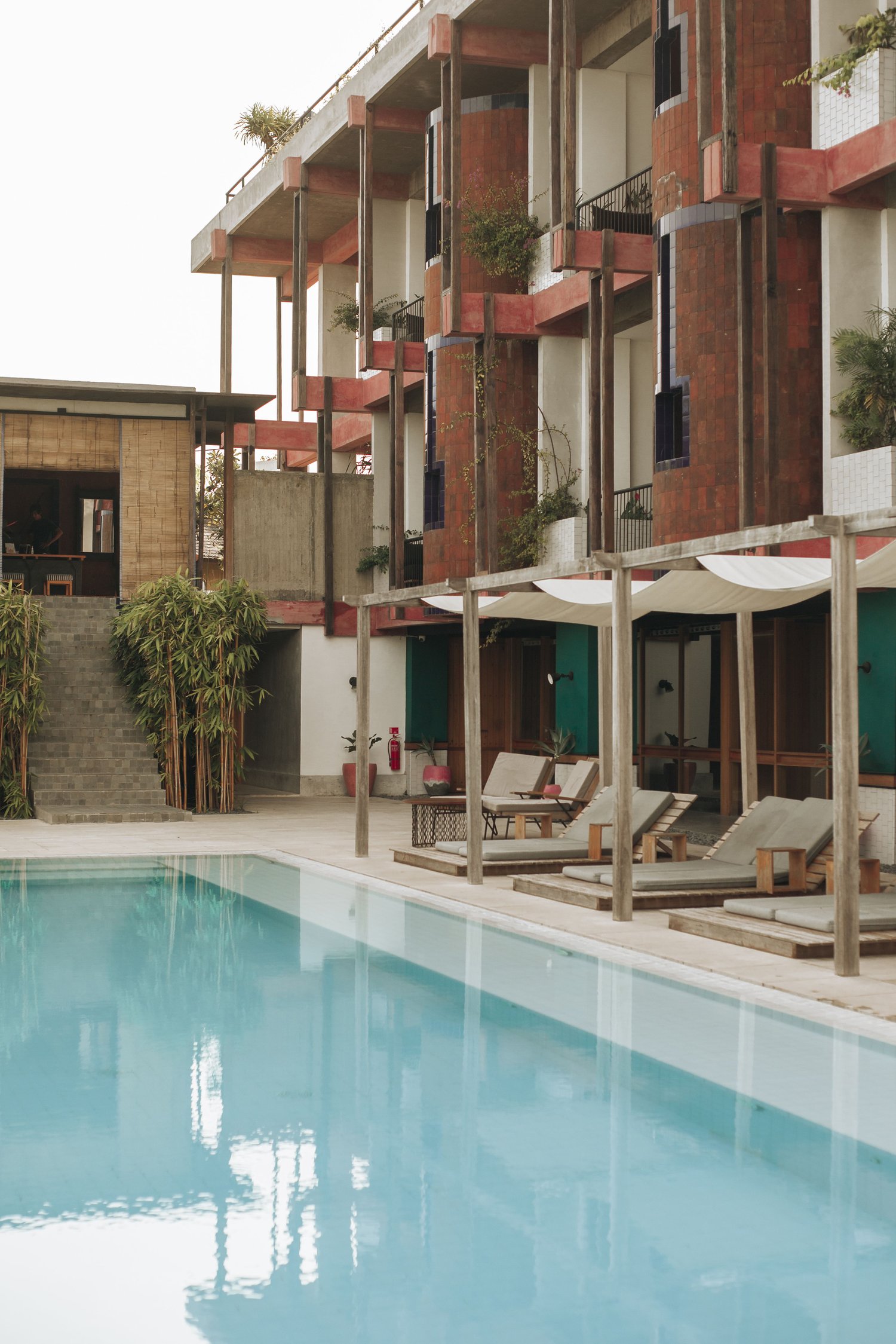
Introduction
Vacation rental photography looks familiar to residential real estate photography until you start thinking about what the guest is trying to decide.
A homebuyer wants to understand a property they may purchase. A vacation rental guest is trying to imagine a stay.
They want to know whether the bedroom feels comfortable, whether six people can actually sit together in the living room, whether the kitchen has enough space for a family meal, whether the pool is private, how the outdoor area connects to the house, where they will park, what the view looks like, and whether the property feels worth the nightly rate.
That changes the photography.
A traditional listing assignment often prioritizes efficient room coverage and a logical tour through the property. Vacation rental photography needs that same foundation, but it also needs stronger coverage of amenities, sleeping arrangements, guest-use spaces, outdoor living, details, and the features that separate one rental from dozens of nearby alternatives.
The photographs may also remain online much longer than a residential listing gallery. A successful vacation rental can use the same core media across Airbnb, Vrbo, a direct-booking website, social media, property-management marketing, email campaigns, and seasonal promotions for several years.
That makes vacation rental photography a useful specialty for real estate photographers who want recurring clients instead of relying entirely on properties that sell once.
Table of Contents
- Understand the Difference Between Selling a Home and Selling a Stay
- Learn How Vacation Rental Platforms Use Photography
- Build the Shoot Around Guest Questions
- Prepare the Property Before Photography
- Start With a Complete Coverage Plan
- Photograph the Exterior and Arrival Experience
- Photograph the Living Room
- Photograph the Kitchen and Dining Areas
- Photograph Bedrooms Clearly
- Photograph Bathrooms Without Wasting Frames
- Show Sleeping Capacity Honestly
- Photograph Amenities as Part of the Experience
- Give Outdoor Living More Coverage
- Photograph Pools and Hot Tubs
- Show Views Without Exaggerating Them
- Photograph Workspaces and Practical Amenities
- Photograph Accessibility Features Clearly
- Use Detail Images Selectively
- Choose the Right Lens and Camera Height
- Keep Vacation Rental Photography Accurate
- Capture Horizontal and Vertical Media
- Build the First Five Images Carefully
- Create a Logical Full Gallery
- Consider Drone Photography
- Add Twilight When the Property Supports It
- Add Video and Short-Form Content
- Deliver Files for Several Marketing Channels
- Plan Seasonal and Property Updates
- Work With Property Managers
- Price Vacation Rental Photography
- Handle Licensing and Long-Term Usage
- Build Recurring Revenue From Vacation Rental Clients
- Common Vacation Rental Photography Mistakes
- Frequently Asked Questions
Understand the Difference Between Selling a Home and Selling a Stay
A residential listing can succeed with a relatively straightforward photographic sequence.
Exterior.
Living room.
Kitchen.
Bedrooms.
Bathrooms.
Backyard.
Done.
Vacation rentals deserve more interpretation.
The owner is selling access to a temporary lifestyle. A guest may never physically visit the property before paying hundreds or thousands of dollars for a stay.
The photographs therefore have several jobs.
They need to explain the property accurately, make the space appealing, show the important amenities, and reduce uncertainty.
A good vacation rental gallery should answer questions before the guest needs to ask them.
Can everyone sit together?
Is the pool actually private?
Does the second bedroom have a queen bed or two twins?
Is there enough outdoor seating?
Where does the dining table sit relative to the kitchen?
Is the balcony attached to the primary bedroom or shared?
Does the cabin have direct lake access or only a lake view?
Can someone realistically work from the property?
How many vehicles fit in the driveway?
The strongest vacation rental photographers learn to think through those questions while they photograph.
Professional Tip
Before you begin, ask the owner or property manager: What are the three reasons guests choose this property instead of another rental nearby?
Make sure all three reasons receive strong photographic coverage.
Learn How Vacation Rental Platforms Use Photography
Photography should be created with the final platform in mind.
Airbnb currently uses a photo-tour system that can automatically assign uploaded images to rooms. Hosts can reorganize those rooms manually, add room information, and change photo order. Airbnb specifically emphasizes the first five photographs because they receive prominent placement on the listing. Its current photo-tour guidance calls for images of at least 1024 × 683 pixels, while Airbnb's photography resource recommends uploading at 1200 × 800 pixels or larger.
Vrbo similarly places heavy importance on the opening image. Its current photo-management guidance says the first photograph is the image travelers see in search results. Vrbo requires a minimum upload size of 1024 × 683 pixels and currently recommends 3840 × 2160 pixels or higher for best quality.
Those specifications are minimum delivery considerations rather than photography targets.
A professional photographer should deliver larger, well-edited files with enough resolution for the client to use on several platforms, websites, advertisements, brochures, and future marketing.
Platform design also reinforces something I have found important in the field: complete room coverage matters.
A collection of beautiful detail photographs will not help much if the guest cannot understand where the second bedroom, bathroom, patio, or dining space fits into the property.
Airbnb's current photo tour specifically encourages hosts to provide at least one image of every room or space so each can be included in the tour.
That is a useful standard even when the property will be marketed somewhere else.
Build the Shoot Around Guest Questions
Before photographing a vacation rental, walk through the property as though you have never seen it.
Do not begin immediately with the camera.
Look at the space.
Ask yourself what a guest would need to understand.
For every room, consider three questions:
What is this space?
The photograph should establish the room clearly.
How would I use it?
Show seating, sleeping, cooking, working, relaxing, entertaining, or whatever purpose matters.
What makes it special?
That may be:
- A fireplace
- Ocean view
- Private balcony
- Game table
- Built-in bunks
- Large dining table
- Espresso machine
- Outdoor shower
- Hot tub
- Reading nook
- Fire pit
- Workspace
- Theater room
- Lake access
This produces a stronger gallery than simply photographing every room from two opposite corners.
Prepare the Property Before Photography
Vacation rental photography is heavily dependent on preparation.
A short-term rental normally contains more guest-facing items than an empty real estate listing.
You may be dealing with:
- Linens
- Towels
- Kitchen supplies
- Coffee stations
- Games
- Books
- Outdoor cushions
- Pool equipment
- Grill tools
- Welcome materials
- Guest toiletries
- Bunk beds
- Fold-out sofas
- Patio furniture
- Decorative accessories
All of those items can make the property feel useful or cluttered depending on how they are presented.
Airbnb's current photography guidance recommends cleaning and decluttering, identifying features guests will care about, photographing each guest-accessible room and area, and scheduling around favorable natural light.
Prepare Beds Carefully
Beds deserve more attention in vacation rentals because sleeping capacity is part of the product.
Check:
- Duvet position
- Pillow symmetry
- Wrinkles
- Bed skirts
- Nightstands
- Lamps
- Visible cords
- Items underneath the bed
A beautifully designed room can look inexpensive when the bedding is poorly prepared.
Prepare Outdoor Areas
Before the shoot:
- Remove pool-cleaning equipment where appropriate.
- Arrange lounge chairs.
- Open umbrellas if weather allows.
- Clean tables.
- Position cushions.
- Remove maintenance tools.
- Coil hoses.
- Clean grills.
- Sweep patios.
- Open hot tubs when safe and appropriate.
- Remove overflowing trash containers.
- Move maintenance vehicles.
Vacation rentals often sell their outdoor areas as strongly as the interior.
Treat those spaces accordingly.
Common Mistake
Spending thirty minutes adjusting decorations while the patio cushions, pool deck, grill, fire pit, and exterior furniture remain unprepared. Guest amenities usually deserve more attention than decorative objects.
Start With a Complete Coverage Plan
I like to divide vacation rental photography into four categories.
Core Property Coverage
These photographs explain the physical property.
Examples:
- Front exterior
- Entry
- Living room
- Kitchen
- Dining
- Bedrooms
- Bathrooms
- Hallways where needed
- Rear exterior
Amenity Coverage
These photographs show additional guest value.
Examples:
- Pool
- Hot tub
- Fire pit
- Game room
- Theater
- Grill
- Outdoor dining
- Workspace
- Coffee station
- Washer and dryer
- Fitness equipment
- Sauna
- Dock
- Beach access
Experience Coverage
These photographs help someone imagine using the property.
Examples:
- Dining table prepared cleanly
- Fire pit at dusk
- Pool during good light
- Chairs facing a mountain view
- Coffee setup near a balcony
- Outdoor kitchen
- Hammock
- Reading nook
Practical Coverage
These photographs answer logistical questions.
Examples:
- Parking
- Entry
- Stairs
- Accessibility features
- Bunk configuration
- Sleeper sofa
- Laundry
- Shared versus private outdoor areas
A strong vacation rental gallery usually contains all four.
Photograph the Exterior and Arrival Experience
The front exterior may be the first photograph a guest sees.
It also provides reassurance.
Guests want to know what they should look for when they arrive.
Photograph:
- Main front elevation
- Entry
- Driveway
- Parking arrangement
- Walkway
- Porch
- Building position when relevant
- Signage that belongs to the property
- Relationship to surrounding land
Choose the Main Exterior Based on the Property
A traditional house may look strongest from the front.
A lake cabin may make more sense from the water side.
A mountain property may need a wider composition showing the house within the landscape.
A condominium might need an exterior photograph of the building followed by images showing the unit's view and shared amenities.
Do not automatically use the same real estate front-angle formula for every vacation rental.
Photograph the Entry
The entry photograph does not always belong near the front of the final gallery, but it can help guests identify:
- Door
- Unit location
- Staircase
- Porch
- Walkway
- Entry configuration
That becomes especially helpful for cabins, multi-unit buildings, and properties with unusual access.
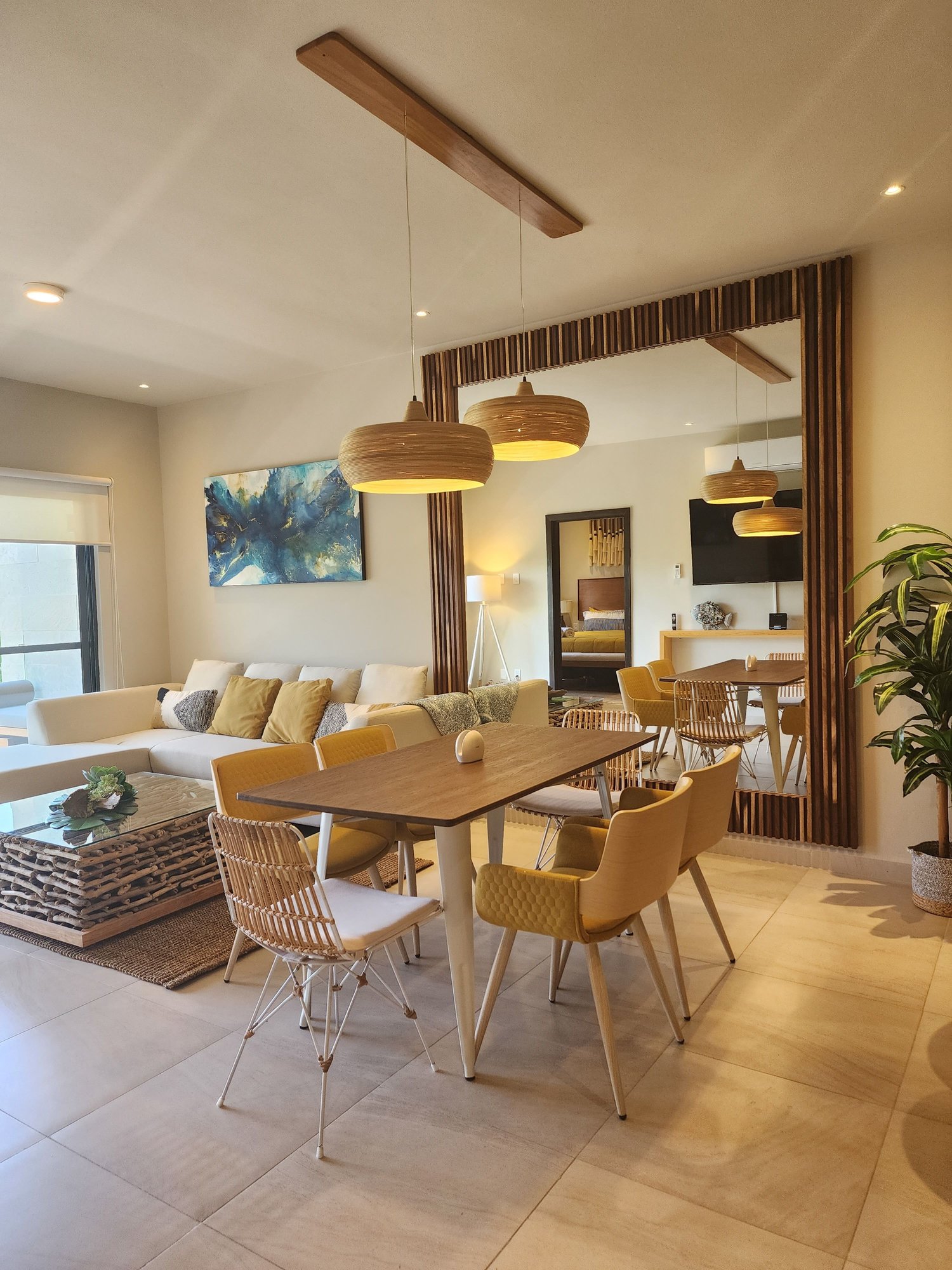
Photograph the Living Room
The living room often deserves more coverage than it would in a residential listing.
Guests are evaluating how the group will spend time together.
Start with a composition that explains the whole room.
Then look for a second angle that answers something different.
Maybe it shows:
- Fireplace
- Television
- View
- Patio connection
- Dining area
- Open kitchen
- Seating arrangement
Avoid creating three nearly identical wide-angle photographs.
Each photograph should add information.
Show Seating Capacity
If a rental is advertised for eight guests but the living room contains a four-person sofa and one chair, the photographs will reveal that.
That information matters.
Photograph the seating honestly.
When the room genuinely supports a group, use the composition to show that advantage.
Photograph the Kitchen and Dining Areas
Kitchens matter more in vacation rentals than they do in many residential listings because guests may actually rely on them every day.
Begin with complete room coverage.
Then photograph useful features.
That may include:
- Large island
- Range
- Coffee station
- Wine refrigerator
- Dining table
- Outdoor-kitchen connection
- Pantry
- Bar seating
Show Dining Capacity
A guest booking for ten people may want to know whether ten people can eat together.
If the table seats ten, show it clearly.
Do not hide half the chairs behind an ultra-wide perspective.
Keep Counters Controlled
A short-term rental kitchen often contains:
- Coffee pods
- Toaster
- Blender
- Kettle
- Knife block
- Paper towels
- Soap
- Welcome snacks
Some of that helps communicate the rental experience.
Too much becomes clutter.
Keep enough to show function while allowing the kitchen itself to remain readable.
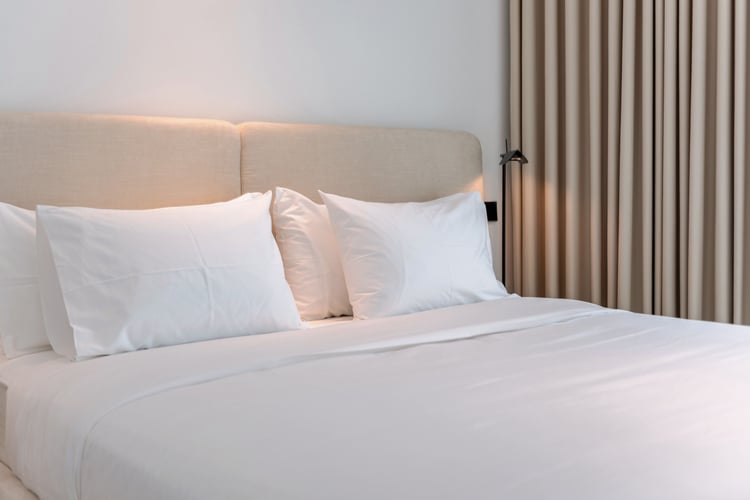
Photograph Bedrooms Clearly
Bedrooms can become repetitive quickly.
The photographer still needs to make each one understandable.
For every bedroom, I want at least one photograph that clearly shows:
- Bed size or configuration
- Room proportions
- Windows when important
- Major furniture
- Attached bathroom or balcony connection when relevant
A second photograph should only be included when it adds useful information.
Bunk Rooms
Bunk rooms deserve careful coverage.
Show:
- Number of bunks
- Layout
- Floor space
- Ladders
- Nearby storage
- Room entrance when useful
These rooms frequently determine whether a property works for a large family or group.
Avoid Hiding Small Rooms
A narrow bedroom can still be photographed well.
Do not use extreme distortion to make it look twice its actual size.
Guests will see the room in person eventually.
Accurate photography protects both the host and the photographer.
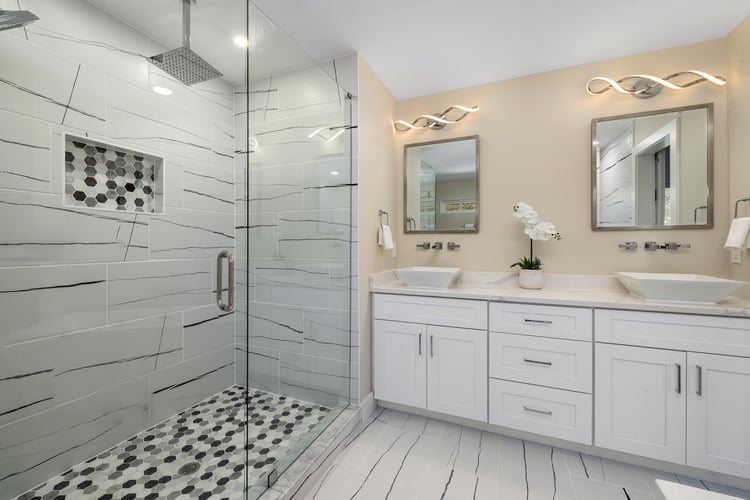
Photograph Bathrooms Without Wasting Frames
Bathrooms need enough coverage to explain the facilities.
A typical bathroom may need:
- One overall composition.
- One additional photograph if an important feature is hidden.
Additional coverage may be appropriate for:
- Freestanding tub
- Large shower
- Double vanity
- Accessible shower
- Sauna
- Outdoor shower
- Luxury fixtures
A basic half-bath rarely needs three photographs.
Use image count where it creates guest value.
Show Sleeping Capacity Honestly
Short-term rental marketing often emphasizes occupancy.
Your photography should help verify that capacity visually.
Capture:
- Primary beds
- Twin rooms
- Bunk rooms
- Sleeper sofas
- Murphy beds
- Daybeds
- Loft sleeping areas
If a sleeper sofa is important to occupancy, ask whether the owner wants a photograph showing it opened.
The same applies to:
- Trundle beds
- Convertible furniture
- Fold-down bunks
Guests should not have to guess.
Professional Tip
Ask for the advertised sleeping capacity before the shoot. Then compare that number with your photographs before leaving. Every major sleeping arrangement should be understandable somewhere in the gallery.
Photograph Amenities as Part of the Experience
Amenities can be the reason a guest chooses one property over another.
Airbnb specifically encourages hosts to highlight popular amenities and unique features in listing photography, while Vrbo tells hosts to use high-quality imagery to communicate what the property offers.
Common high-value amenities include:
- Pools
- Hot tubs
- Fire pits
- Game rooms
- Theater rooms
- Beach access
- Mountain views
- Docks
- Kayaks
- Outdoor kitchens
- Grills
- Saunas
- Fitness areas
- Children's play areas
- EV chargers
- Dedicated workspaces
- Large gathering spaces
Do not photograph an important amenity as an afterthought.
Give it the same attention you would give the kitchen.
Give Outdoor Living More Coverage
Residential photographers sometimes treat the backyard as one or two closing frames.
That can be a mistake with vacation rentals.
A property may generate bookings because of:
- Deck
- Patio
- Pool
- Outdoor kitchen
- Fireplace
- Fire pit
- Dining area
- Dock
- Beach
- Lawn
- Mountain view
- Balcony
- Rooftop terrace
Photograph the outdoor area both as a whole and as several useful zones.
For a large patio, I may capture:
- Overall layout
- Outdoor dining
- Lounge seating
- Pool relationship
- View from seating
- Grill
- Fire feature
Those images explain how guests will use the property.
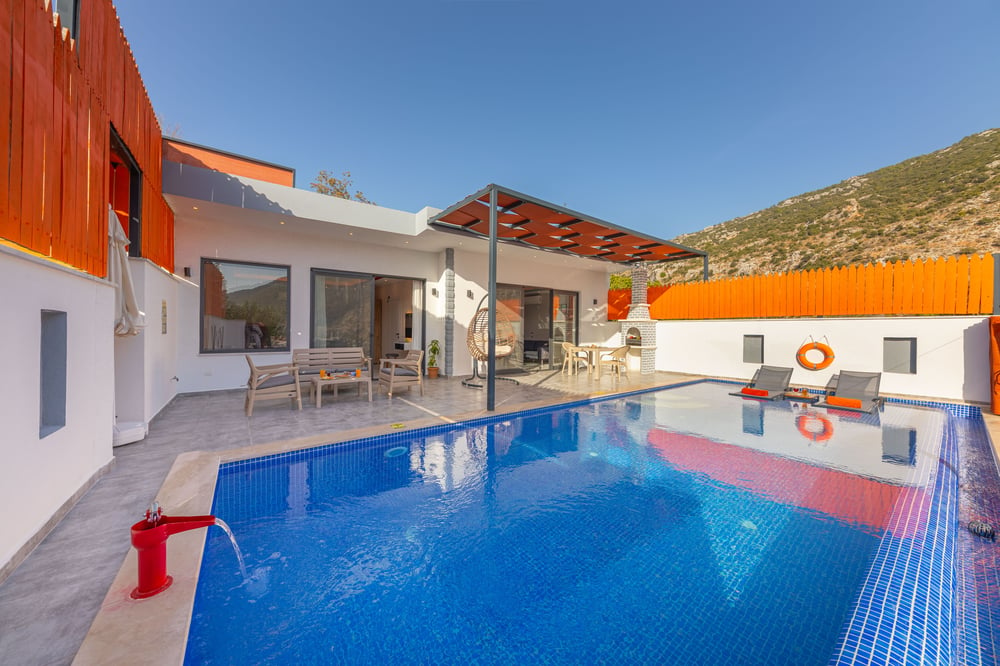
Photograph Pools and Hot Tubs
Pools deserve deliberate timing.
Try to photograph when:
- Water is clean
- Pool equipment is removed
- Furniture is arranged
- Harsh reflections are controlled
- Landscaping receives useful light
A good pool photograph should show its relationship to the house.
Guests often care whether the pool is:
- Immediately behind the home
- Across a yard
- Shared with neighboring units
- Enclosed
- Visible from outdoor seating
Capture that context.
Hot Tubs
Photograph hot tubs with the cover removed when the property manager approves and the tub is ready.
Clean water and prepared surroundings matter.
At twilight, a hot tub can become a strong lifestyle image when lighting and steam cooperate.
Show Views Without Exaggerating Them
Views are valuable.
They are also easy to misrepresent.
A telephoto lens can make a distant mountain appear immediately behind the property.
An extreme window composite can make the exterior scene look brighter, larger, and closer than it actually appears.
Use enough focal length to present the view cleanly without creating a false expectation.
Where the relationship matters, photograph both:
- The view itself.
- The room or patio from which the guest sees it.
That tells a more complete story.
Photograph Workspaces and Practical Amenities
Vacation rentals compete on practical convenience as well as appearance.
A dedicated workspace may deserve its own photograph.
Airbnb specifically recommends updating listing photographs and captions to show workspaces when a property offers them.
Other practical features worth photographing can include:
- Washer and dryer
- Mudroom
- Ski storage
- Beach-equipment storage
- EV charger
- Covered parking
- Crib
- High chair
- Dog area
- Bicycle storage
- Gear room
Not every photograph belongs near the top of the gallery.
The information may still help a guest make a booking decision.
Photograph Accessibility Features Clearly
Accessibility photography should prioritize clarity over style.
Useful subjects may include:
- Step-free entry
- Parking-to-entry route
- Wide doorways
- Roll-in shower
- Grab bars
- Shower seat
- Elevator
- Ground-floor bedroom
- Accessible bathroom
- Pathways
Vrbo has specifically encouraged hosts to provide full-room photographs that make accessibility features, entrances, steps, showers, and similar conditions understandable instead of relying only on decorative close-ups.
If the client markets an accessibility feature, make sure the photograph actually shows it.
A close-up of a grab bar tells very little about the space around it.
A wider composition showing the entire shower and entry is much more useful.
Use Detail Images Selectively
Vacation rentals provide more opportunities for detail photographs than standard residential listings.
Useful details may include:
- Coffee station
- Record player
- Games
- Reading area
- Fireplace
- Custom bunk detail
- Outdoor shower
- Guest amenities
- Local guidebooks
- Branded property materials
- Luxury linens
- Unique architecture
The important word is selectively.
Ten photographs of decorative objects will not compensate for missing room coverage.
Capture the complete property first.
Then add details that help communicate the experience.
Choose the Right Lens and Camera Height
My basic lens strategy remains similar to normal real estate photography.
A wide-angle lens handles most interiors.
A normal or moderate focal length becomes more valuable for:
- Amenities
- Details
- Outdoor scenes
- Lifestyle compositions
- Views
Avoid Excessive Width
Vacation rental guests care about accurate expectations.
Extremely wide focal lengths can make:
- Bedrooms appear larger
- Hallways appear longer
- Furniture appear farther apart
- Pools appear larger
- Views appear more dramatic
Use the width required to explain the room.
Do not make width the style.
Keep the Camera Level
Neutral camera position gives guests a more believable understanding of the space.
Airbnb's own current photography guidance recommends shooting straight rather than angling the lens sharply upward or downward.
That aligns well with good architectural practice.
Keep Vacation Rental Photography Accurate
Accuracy has long-term business value.
A residential listing may disappear after a few months.
Vacation rental photographs can influence hundreds of future bookings.
If the gallery creates expectations the property cannot meet, the client eventually has to deal with those expectations.
Avoid:
- Enlarging rooms through extreme distortion
- Removing permanent undesirable features
- Fabricating views
- Adding amenities that do not exist
- Replacing furniture with unrealistic digital versions without clear disclosure
- Removing neighboring structures that affect the guest experience
- Making a shared pool look private
- Hiding stairs that affect accessibility
Good editing should make the property look like a polished version of itself.
Capture Horizontal and Vertical Media
Horizontal photographs remain the foundation of most vacation rental listing galleries.
Airbnb currently recommends horizontal photography, and its listing interface uses landscape-oriented images while cropping some imagery for other display contexts.
Clients may also need vertical images for:
- Stories
- Reels covers
- Advertisements
- Direct-booking websites
When an important scene supports both formats, capture both.
Good vertical subjects include:
- Fireplace
- Pool
- Bedroom
- Bunk room
- Kitchen island
- Tall windows
- Outdoor shower
- Entry
- Unique architectural detail
Do not rely entirely on heavy crops from horizontal files.
Build the First Five Images Carefully
The beginning of the gallery deserves deliberate planning.
Airbnb currently gives prominent placement to the first five listing photographs, while Vrbo uses the first photograph as the image travelers see in search.
The first five should quickly explain why the property is worth considering.
For a typical vacation home, I might use:
- Primary hero image.
- Main living space.
- Kitchen or indoor gathering space.
- Signature bedroom or view.
- Strongest amenity.
For a pool property, the pool may appear much earlier.
For a mountain cabin, the exterior setting may become the hero.
For a beachfront condo, the view may lead.
There is no universal sequence.
Choose the images that communicate the property's strongest booking reasons.
Create a Logical Full Gallery
After the opening photographs, build a gallery that becomes easy to explore.
One approach is:
Opening Highlights
Best five images.
Main Living Spaces
Living room, kitchen, dining.
Bedrooms
Work through them consistently.
Bathrooms
Pair them logically with nearby bedrooms when possible.
Additional Interior Amenities
Game room, theater, office, laundry.
Outdoor Spaces
Patio, pool, fire pit, deck.
Exterior
Building, entry, parking.
Location or Context
Aerials, views, nearby guest-use features when appropriate.
Modern listing platforms may reorganize some imagery themselves. Airbnb's current photo-tour system, for example, can automatically assign photos to rooms.
The photographer still benefits from delivering an organized gallery.
A clear file sequence gives the host a strong starting point.
Do Not Use Platform Minimums as Your Shoot Target
Airbnb allows hosts to begin a listing with a relatively small number of photographs, while Vrbo currently requires at least six published photos and warns that maintaining fewer than six for more than 30 days may lead to listing suspension. Vrbo's May 2026 host guide says the average property contains roughly 25 photos.
Those numbers describe platform operation.
They should not determine professional coverage.
A small one-bedroom rental might need twenty strong photographs.
A five-bedroom lake property with a pool, game room, dock, fire pit, multiple patios, and extensive views may need fifty or more.
Photograph what the guest needs to understand.
Consider Drone Photography
Vacation rentals can benefit significantly from aerial coverage when the aerial photograph explains something useful.
Good aerial subjects include:
- Beach proximity
- Lake frontage
- Mountain setting
- Acreage
- Private pool
- Large yard
- Dock
- River access
- Community relationship
- Distance between structures
- Rural privacy
Avoid filling the gallery with high-altitude photographs that provide little guest information.
Aerials should explain the property.
Show Context Carefully
When showing proximity to attractions, roads, water, trails, or neighboring homes, make sure the photograph is not misleading.
If you add labels or boundary graphics, keep them accurate and clearly designed.
For the complete aerial workflow, continue through the REPT Knowledge Base:
https://www.airbnb.com/resources/hosting-homes/a/how-to-take-great-photos-for-your-listing-687
Airbnb — How to Add the Best Photos of Your Space
Published October 13, 2025. Current host guidance covering high-quality photographs, horizontal framing, captions, and minimum listing-photo setup.
https://www.airbnb.com/resources/hosting-homes/a/how-to-add-the-best-photos-of-your-space-367
Airbnb — Setting Up a Photo Tour for Your Home Listing
Current Airbnb Help Center guidance covering AI room organization, image dimensions, room coverage, captions, cover photography, and the importance of the first five images.
https://www.airbnb.com/help/article/477
Airbnb — Confirming Photo Accuracy for Listings
Current Airbnb Help Center guidance explaining on-site listing-photo verification, in-app capture, matching perspective, and restrictions on camera-roll uploads for verification.
https://www.airbnb.com/help/article/2881
Airbnb — Refresh Your Listing
Published March 4, 2024; updated November 18, 2024. Guidance encouraging hosts to maintain current photography and accurate property expectations.
https://www.airbnb.com/resources/hosting-homes/a/refresh-your-listing-661
Airbnb — How to Make Your Space Comfortable for Remote Workers
Airbnb host guidance recommending that workspaces be included in photographs and listing information.
Vrbo — Manage Your Listing Photos in the Owner Mobile App
Current Vrbo photo guidance covering minimum and recommended image dimensions, cover photography, captions, and photo ordering.
https://help.vrbo.com/articles/Manage-your-listing-photos-in-the-owner-mobile-app
Vrbo — Add Photos to Your Listing
Current Vrbo Help Center instructions covering minimum published photo requirements, captions, and room assignment.
https://help.vrbo.com/category/undefined/articles/upload-photos-to-my-listing
Vrbo / Expedia Group — Step-by-Step Guide: How to List Your Property on Vrbo
Published May 7, 2026. Current Vrbo host guidance addressing photography, amenities, listing setup, image quantity, and property presentation.
Vrbo / Expedia Group — Accessible Vacation Rentals
Current Expedia Group guidance addressing clear photography of accessibility features, entrances, rooms, showers, and property conditions.
https://partner.expediagroup.com/en-us/resources/blog/accessible-vacation-rentals
Comments ()