

Summary
The latest housing data does not point to a collapsing real estate market.
Existing-home sales fell 1.7% from June to July, reaching a seasonally adjusted annual rate of 4.06 million. Sales were still 0.7% higher than a year earlier, and year-to-date activity through July remained ahead of 2025. The median existing-home price reached $434,100, up 2% from July 2025. Homes typically remained on the market for 29 days.
Those national numbers hide meaningful differences.
Sales declined 3.1% month over month in the South and 2% in the Midwest, increased 2% in the Northeast, and were unchanged in the West. At the same time, separate Zillow research shows a widening gap between entry-level and luxury housing: starter-home inventory has risen while starter sales have fallen, while luxury inventory has tightened and luxury sales have increased.
For real estate photographers, the practical lesson is to avoid making business decisions from a single national headline.
Your local market, client mix, property price range, and service menu increasingly matter more than the national average.
My recommendation heading into fall 2026 is to watch local listing activity closely, protect pricing instead of discounting automatically, strengthen services that help agents market homes more completely, and continue developing relationships in luxury, builder, commercial, rental, and recurring-content markets.
Table of Contents
- What Happened in July
- The National Market Is Moving Sideways
- Inventory Is Not Expanding Everywhere
- Homes Are Taking Slightly Longer to Sell
- The Regional Numbers Matter
- Luxury and Starter Homes Are Moving Differently
- What This Means for Photography Demand
- Do Not Cut Prices Because of One Market Report
- Give Agents More Ways to Market Each Listing
- Watch Repeat and Refresh Media Opportunities
- Luxury Photography Remains Worth Developing
- Entry-Level Listings Need Efficiency
- Local Data Matters More Than National Data
- Build Beyond Residential Listing Volume
- What I Would Do Going Into Fall 2026
- What Could Change Next
- Frequently Asked Questions
What Happened in July
The National Association of REALTORS® released its July Existing-Home Sales report on August 11.
Existing-home sales fell 1.7% from June to a seasonally adjusted annual rate of 4.06 million.
Compared with July 2025, however, sales were 0.7% higher. NAR also reported that year-to-date sales were running 2.4% ahead of the previous year.
That combination is important.
The market softened during the month without producing a major year-over-year decline.
For photographers, I would read that as a relatively stable national baseline rather than evidence of either a major housing recovery or a broad market collapse.
The numbers become more useful when we look underneath the national total.
The National Market Is Moving Sideways
Real estate photographers usually feel housing conditions through appointment volume.
When more homes are listed and sold, there are more opportunities for photography, video, floor plans, drone coverage, virtual tours, and other listing media.
When transactions slow dramatically, photographers can feel that almost immediately.
July's report suggests something less dramatic.
Closed sales remain close to last year's level.
National housing activity has been moving within a relatively narrow range rather than accelerating rapidly in either direction. NAR's July figure of 4.06 million annualized existing-home sales followed 4.09 million in June.
That type of environment rewards operational discipline.
A photographer may not receive a large wave of new assignments simply because the housing market improves.
At the same time, there is little reason to assume residential listing photography is disappearing.
The work remains available.
Competition for it may become more important.
Professional Tip
Track your own monthly shoots alongside local new-listing activity. Your booking history often becomes a better business indicator than a national housing headline.
Inventory Is Not Expanding Everywhere
NAR reported approximately 1.54 million existing homes available for sale at the end of July.
That was down 1.9% from June and slightly lower than July 2025.
The national supply remained at 4.6 months at the current sales pace.
That matters because some of the common housing-market discussion over the past several years has focused on inventory returning toward more normal levels.
July's existing-home report did not show another large inventory increase.
For photographers, listing inventory is worth watching because it helps determine how much property marketing enters the market at once.
A market with substantial inventory growth can create more photography opportunities even when individual homes take longer to sell.
A market with limited new inventory can feel quiet even when buyer demand remains reasonable.
That is one reason photographers should monitor new listings locally instead of looking only at closed sales.
Closed sales tell us what completed recently.
New listings tell us more directly how much property marketing is entering the pipeline.
Homes Are Taking Slightly Longer to Sell
The median existing home spent 29 days on the market in July, compared with 28 days in June and 28 days one year earlier.
One additional day nationally is not a major change.
The broader idea is still worth watching.
When homes take longer to sell, agents have more time to evaluate whether the original marketing package is working.
That can create legitimate reasons to revisit a property.
Possible opportunities include:
- Updated exterior photography after better weather
- New twilight photographs
- Additional drone coverage
- Vertical social video
- Agent-led video
- New construction or renovation updates
- Seasonal exterior refreshes
- Reworked listing graphics
I would not build a business around reshooting listings that fail to sell.
I would make sure clients know that a media refresh is available when the property changes or the marketing campaign needs new material.
The Regional Numbers Matter
The national market became much less useful once the July sales numbers were divided by region.
Northeast
Existing-home sales increased 2% from June and were unchanged from one year earlier.
Midwest
Sales declined 2% from June but remained 2.1% higher than July 2025.
South
Sales declined 3.1% from June and were unchanged year over year.
West
Sales were unchanged from June and increased 1.4% from one year earlier.
Those differences help explain why real estate photographers can have completely different experiences during the same national housing market.
One photographer may be adding clients.
Another may be losing volume.
Both can be accurately describing their local market.
That makes local business tracking increasingly important.
Common Mistake
Reading that national sales fell 1.7% and immediately assuming your own photography market should also fall 1.7%. Real estate photography is local, and your individual client mix makes it even more specific.
Luxury and Starter Homes Are Moving Differently
Another market split deserves particular attention from photographers.
Zillow published an analysis on July 29 showing substantially different conditions between starter homes and luxury properties.
Using Zillow's definitions, starter homes are properties within the 5th to 35th percentile of local home values, while luxury homes occupy the top 5%.
Nationally, Zillow reported that starter-home inventory increased 4.5% year over year in June while luxury inventory decreased 5.2%.
The sales figures moved in the opposite direction.
Starter-home sales were down 5.4% year over year in May, while luxury sales increased 6.2%. Zillow also found that price cuts were more common among starter homes than luxury listings.
Redfin identified a similar difference earlier in the summer.
Its analysis for the three months ending May found luxury home prices rising 4.7% year over year compared with 1.5% growth for non-luxury properties. Luxury pending sales were also increasing faster.
These companies use different methodologies, so the numbers should not be treated as interchangeable.
The direction is useful.
Higher-end and entry-level properties are currently experiencing different demand conditions in many markets.
What This Means for Photography Demand
There is no national dataset that tells us exactly how these housing numbers translate into professional real estate photography bookings.
The following is my business interpretation rather than a reported market statistic.
When transaction volume remains relatively stable nationally but varies substantially by price tier and market, photographers should expect uneven demand rather than uniform growth or decline.
That means the strongest opportunities may depend on what you photograph.
A photographer serving primarily entry-level residential agents may experience different pressure than someone working heavily with:
- Luxury agents
- Custom builders
- Interior designers
- Vacation rentals
- Commercial properties
- Property managers
The photographer serving several categories has more ways to absorb a slowdown in any one of them.
Do Not Cut Prices Because of One Market Report
One of the easiest reactions to a softer market is discounting.
I would be careful.
If your own bookings are stable, there is little reason to lower pricing because a national sales report moved down for one month.
If bookings are weakening, determine why first.
Ask:
- Are your best clients listing fewer homes?
- Did you lose clients to a competitor?
- Are fewer homes being listed locally?
- Is your pricing significantly above the market?
- Are agents replacing professional services with internal media?
- Are your turnaround times slipping?
- Are your packages aligned with what clients currently want?
Those questions produce useful business decisions.
A national percentage usually does not.
Protect Average Order Value
In a slower environment, photographers often concentrate on getting more appointments.
Sometimes improving the value of each existing appointment is more practical.
Useful additions may include:
- Drone stills
- Vertical video
- Floor plans
- Twilight photography
- Social-media clips
- Agent introductions
- Neighborhood content
The service needs to provide real value.
Do not add products simply to create a longer menu.
Give Agents More Ways to Market Each Listing
When properties take longer to sell or face more competition, agents need enough content to continue marketing after launch day.
A photography-only gallery provides strong listing fundamentals.
A broader media library gives the agent additional material for the following weeks.
For example, one property appointment can create:
- MLS photography
- Vertical Reel
- Drone photographs
- Short neighborhood clip
- Agent introduction
- Detail images
- Story-format images
- Twilight hero
The client can then market the property several times without reposting the same exterior photograph repeatedly.
That does not mean every listing needs every service.
Offer enough flexibility that the client can match media investment to the property.
Professional Tip
When an agent orders video or social content, ask how they intend to use it during the first two or three weeks of the listing. That conversation usually produces a better deliverable than simply handing over a generic Reel.
Watch Repeat and Refresh Media Opportunities
Longer marketing periods can create additional media needs.
Imagine a property photographed in early spring.
Several weeks later:
- Trees have filled out.
- Landscaping has been installed.
- A pool is open.
- Construction has finished.
- Outdoor furniture has arrived.
- The asking price has changed.
- The agent wants to relaunch the campaign.
A full reshoot may be unnecessary.
A targeted refresh can make sense.
Property Refresh Session
A refresh service might cover:
- New exterior hero
- Updated landscaping
- New amenity
- Twilight
- Several vertical clips
- Updated aerials
The service can be smaller than the original assignment while still producing genuinely new marketing content.
This type of work becomes particularly valuable with builders, vacation rentals, luxury properties, and homes undergoing improvements during the listing period.
Luxury Photography Remains Worth Developing
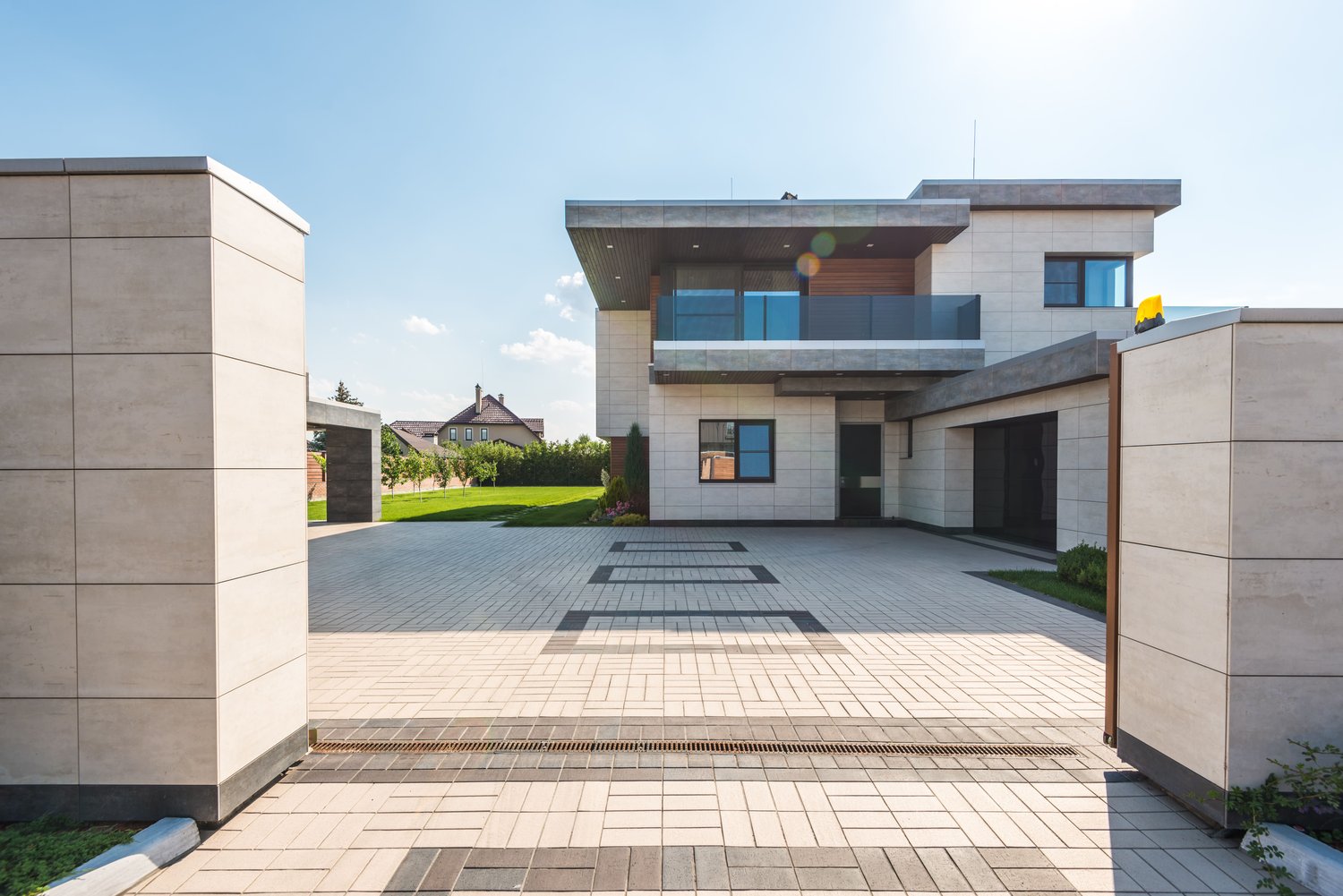
The current strength in higher-end housing does not guarantee luxury photography work for every photographer.
It does reinforce the value of learning how to serve that segment well.
Luxury properties often justify broader production:
- More detailed still photography
- Twilight
- Drone
- Property video
- Vertical content
- Agent-led presentation
- Detail photography
- Architectural compositions
- Longer capture time
The photography also needs to support the expectations of the client.
A high price point does not automatically require dark cinematic grading, excessive drone footage, or complicated camera movement.
Strong luxury media begins with excellent property preparation, composition, light, consistency, and a complete understanding of what makes that particular home valuable.
The current market data simply gives photographers another reason to continue developing those skills.
Entry-Level Listings Need Efficiency
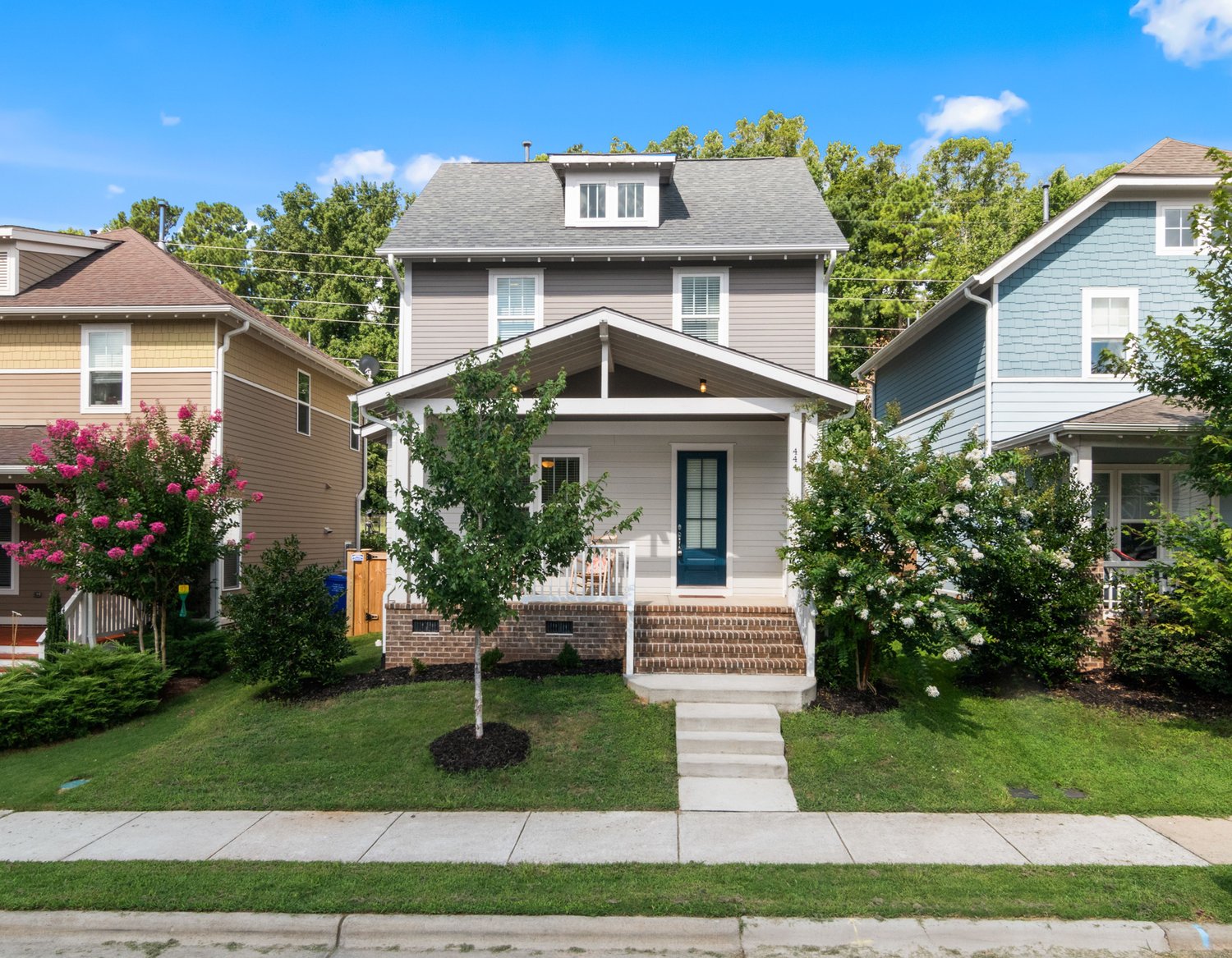
The starter-home side of the market creates a different business problem.
Zillow's latest analysis shows more starter inventory, weaker sales, and more price reductions than the luxury segment.
Agents selling those homes may face tighter marketing budgets.
That does not automatically mean professional photography should become cheap.
It means the production workflow needs to make sense.
For smaller standard listings, photographers should become excellent at:
- Scheduling efficiently
- Routing appointments
- Capturing quickly without rushing quality
- Maintaining consistent editing
- Delivering reliably
- Offering simple packages
- Avoiding unnecessary production overhead
A profitable smaller-home package can serve both the photographer and agent well.
Efficiency becomes the advantage.
Local Data Matters More Than National Data
The July report is a useful baseline.
Your business still depends on your market.
A photographer should know several local numbers.
New Listings
Are more or fewer properties entering the market?
Days on Market
Are listings moving quickly?
Price Reductions
Are sellers adjusting expectations?
Active Inventory
How much competition exists between listings?
Price-Tier Activity
Which parts of the market are moving?
Builder Activity
Are new neighborhoods and custom homes being developed?
Rental Activity
Is the area adding short-term rentals, apartments, or property-management inventory?
You do not need to become a real estate economist.
You should understand the environment your clients operate in.
That makes conversations with agents more useful and helps you recognize where demand may be developing.
Build Beyond Residential Listing Volume
The current market is another reminder that a real estate media business can serve more than resale listings.
Related markets include:
- Custom builders
- Developers
- Vacation rentals
- Property management
- Commercial real estate
- Interior designers
- Architects
- Hotels and hospitality
- Construction documentation
- Apartment communities
Those categories do not all move with existing-home sales in the same way.
A custom builder needs finished-project photography whether that home enters the MLS or not.
A vacation rental may need updated photography after a renovation.
A commercial property can require photography for leasing, investor presentations, or marketing materials.
A property-management company may add rentals throughout the year.
Diversification should still make operational sense.
Do not add six services you cannot perform well.
Build outward from the photography skills you already have.
Explore the complete REPT Knowledge Base for the connected specialized-property and business chapters:
https://payhip.com/RealEstatePhotographyTraining/blog/get-started-real-estate-photography
What I Would Do Going Into Fall 2026
If I were evaluating a real estate photography business today, I would focus on five areas.
Track Local Volume
Compare August and September bookings with the same months last year.
Look at both appointments and revenue.
Protect Strong Client Relationships
A slower market increases the value of clients who continue listing consistently.
Make their workflow easy.
Improve Media Depth
Make sure you can provide more than one useful marketing asset when the property deserves it.
Develop One Adjacent Client Category
Builder work, vacation rentals, commercial photography, or property management can create opportunities outside traditional resale listings.
Keep Improving the Core Photography
Market conditions do not remove the value of excellent photography.
Composition, color, vertical control, window management, exterior timing, preparation, and reliable delivery remain the foundation of the service.
What Could Change Next
Several factors could change the picture quickly.
Mortgage Rates
Buyer affordability remains sensitive to borrowing costs.
Redfin reported at the end of July that pending sales had weakened as mortgage rates moved higher. Its four-week measure through July 26 showed pending sales at their lowest level since early April.
Fall Listing Activity
New listings entering August and September will determine how much photography demand reaches the market ahead of the traditional year-end slowdown.
Price-Tier Conditions
The current separation between starter and luxury markets may narrow or widen.
Regional Variation
National stability can continue while individual cities experience major changes.
Economic Conditions
Employment, consumer confidence, financing, and investment-market conditions can affect buyer behavior quickly.
For photographers, the useful approach is monitoring rather than predicting.
You do not need to forecast the housing market six months in advance.
You need enough awareness to recognize when your clients' behavior begins changing.
Frequently Asked Questions
Did existing-home sales fall in July 2026?
Yes. NAR reported a 1.7% month-over-month decline in July to a seasonally adjusted annual rate of 4.06 million existing-home sales. Sales remained 0.7% higher than one year earlier.
Is the housing market down compared with last year?
National existing-home sales were slightly higher year over year in July. Individual regions and local markets can be very different.
How long are homes taking to sell?
NAR reported a national median of 29 days on market in July, compared with 28 days in June and 28 days in July 2025.
Is inventory increasing?
NAR's existing-home inventory decreased 1.9% from June and 0.6% year over year in July. Other datasets and individual market segments can show different patterns.
Are starter homes and luxury homes behaving differently?
Yes, according to recent Zillow research. Starter-home inventory rose while starter sales declined, while luxury inventory declined and luxury sales increased.
Should photographers lower their prices because sales fell?
A national monthly sales decline is not enough information to justify a pricing change. Review your own booking volume, local market, competitive position, production costs, and client retention first.
Are luxury listings a good market for photographers right now?
Recent Zillow and Redfin research shows stronger activity in luxury housing than in some lower-priced segments nationally, although conditions vary substantially by metro. Photographers interested in the category should evaluate their own local luxury market rather than assuming the national trend applies everywhere.
Should photographers offer more services in a slower market?
Additional services can help when they solve a genuine marketing need. Drone, video, twilight, floor plans, vertical social content, and listing refreshes should be offered strategically rather than bundled automatically.
What market statistic matters most to a real estate photographer?
Local new-listing volume is particularly useful because new listings are closely connected with the need for new property media. Your own appointment volume and revenue history are even more directly relevant to your business.
Should I stop focusing on residential real estate?
No broad market statistic supports that conclusion. Residential listing work remains the foundation of many successful media businesses. Adjacent categories can reduce dependence on any single client segment.
Recommended REPT Course Lessons
Episode 2 — Equipment and Software
A stable production system makes it easier to handle fluctuations in booking volume without constantly changing equipment or workflow.
Episode 3 — Exterior Photography Workflow
Strong exterior photographs become particularly important when listings compete for buyer attention and agents need reusable hero images across multiple marketing channels.
Episode 4 — Interior Photography Workflow
Consistent interior composition remains the core deliverable regardless of price tier or market cycle.
Episodes 5–8 — Editing Workflow
Reliable Camera Raw, HDR, Photoshop, blending, color, and final-finishing systems allow photographers to maintain quality when appointment volume changes.
Explore the complete Real Estate Photography Training course:
https://payhip.com/RealEstatePhotographyTraining
Continue Your Training
Explore the REPT Knowledge Base
Continue through the connected photography, editing, drone, video, delivery, pricing, licensing, business, and specialized-property chapters:
https://payhip.com/RealEstatePhotographyTraining/blog/get-started-real-estate-photography
Visit Real Estate Photography Training
Explore current training resources and REPT Journal industry analysis:
Complete the Course
Learn the complete real estate photography capture and editing workflow:
https://payhip.com/RealEstatePhotographyTraining
Follow Malachi on Instagram
See current photography, editing examples, field work, and industry observations:
https://instagram.com/malachikg_rephoto
Related Articles
- Real Estate Photography Pricing Guide
- Marketing Strategies for Real Estate Photographers
- How to Photograph Luxury Homes
- Builder Photography and Ongoing Construction Content
- Photographing Vacation Rentals and Short-Term Rental Properties
- Real Estate Video Tours and Short-Form Content Creation
- Drone Photography for Real Estate
- Twilight and Dusk Real Estate Photography
- Real Estate Photography Client Communication Guide
- Building a Real Estate Photography Portfolio That Gets Clients
Sources
National Association of REALTORS® — “NAR Existing-Home Sales Report Shows 1.7% Decrease in July”
Published August 11, 2026. Official July existing-home sales data covering sales volume, inventory, median prices, affordability, regional activity, days on market, and buyer composition.
https://www.nar.realtor/newsroom/nar-existing-home-sales-report-shows-1-7-decrease-in-july
National Association of REALTORS® — Existing-Home Sales
Current NAR housing-statistics page providing the latest national existing-home sales summary and release schedule.
https://www.nar.realtor/research-and-statistics/housing-statistics/existing-home-sales
Zillow — “The Housing Market Is Splitting in Two: Luxury Homes Are in High Demand While Starter Homes Sit”
Published July 29, 2026. Zillow analysis comparing inventory, sales, price reductions, and market conditions for starter and luxury homes.
Redfin — “Luxury Home Prices Are Rising Three Times Faster Than Non-Luxury Prices”
Published June 30, 2026; underlying article updated July 13, 2026. Analysis of luxury and non-luxury pricing, pending sales, listings, and regional trends.
Redfin — “Homebuying Demand Slows As Mortgage Rates Hit Highest Level in a Year”
Published July 30, 2026. Report covering late-July pending sales, listing-tour activity, and buyer demand.