

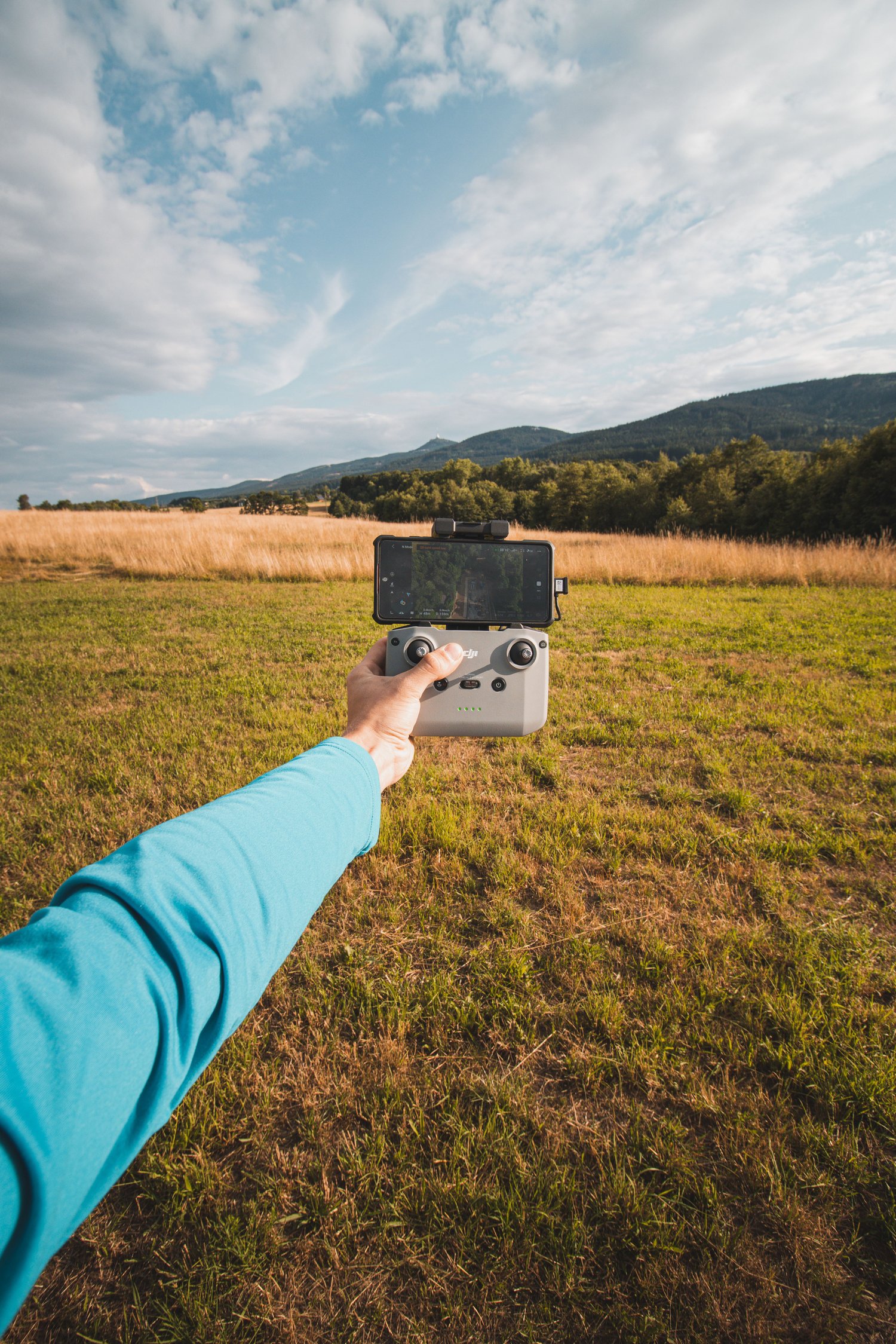
On October 13, 2026, a new Federal Communications Commission rule took effect that further restricts which drones and other electronic equipment can receive authorization for the United States market.
For real estate photographers who depend on drones from DJI, Autel, or other manufacturers, the important question is what this actually changes.
Can you still fly the aircraft you already own?
Can you replace a damaged component?
Will firmware updates continue?
Can you buy another drone?
And should a photography company begin changing its equipment strategy?
The answers are more specific than some of the headlines suggest.
The new rule does not prohibit continued use of previously authorized drones.
It primarily affects the process through which manufacturers obtain new FCC equipment authorizations. In particular, it prevents certain devices from receiving authorization when they contain qualifying electronic components produced by companies identified on the FCC's Covered List.
The restriction can apply even when the finished aircraft is assembled or branded by another manufacturer.
The FCC adopted the rule on July 22, released it on July 23, published it in the Federal Register on September 11, and made it effective October 13, 2026.
The rule appears in FCC 26-50, the Third Report and Order in ET Docket No. 21-232.
Read the official regulation: FCC — Final Rule Published September 11, 2026 — https://www.federalregister.gov/documents/2026/09/11/2026-18535/protecting-against-national-security-threats-to-the-communications-supply-chain-through-the
For working property photographers, I would approach this as an equipment-planning issue rather than an immediate reason to ground an existing drone.
There are practical steps worth taking now, particularly if aerial photography represents a meaningful part of your business.
Summary: What Drone Photographers Should Do Now
Situation REPT Recommendation
Existing, previously authorized DJI or Autel drone Continue operating under applicable FAA and local requirements
Existing drone in good working condition Maintain it; no acquisition-related replacement is necessary
Firmware or software update for an existing authorized drone Continue using supported updates after normal compatibility checks
Damaged component requiring identical replacement Repairs remain permitted under the FCC's existing-equipment guidance
Shopping for a new aircraft Verify the exact model's authorization status before purchasing
Considering an unfamiliar drone brand Investigate manufacturer, service support, authorization, and replacement-parts availability
Building a company fleet Document aircraft, batteries, controllers, registrations, and replacement plans
Relying on one aircraft for paid assignments Build a realistic backup-coverage plan
Expecting a particular future drone model to reach the U.S. Monitor official authorization and availability; do not assume approval
Considering replacing an entire functioning fleet Delay unless there is a separate operational reason
The strongest immediate recommendation is simple:
Keep a reliable, authorized drone in service and make future purchasing decisions more carefully.
What Actually Changed on October 13?
The FCC's new rule closes what regulators described as a gap in the existing equipment-authorization restrictions.
Before this change, the rules could prevent certain manufacturers from receiving new equipment authorizations for complete devices.
However, a device made by another company could potentially contain electronic components produced by a restricted manufacturer and still obtain authorization.
The October 13 rule addresses that situation.
Under the new rule, a device cannot receive FCC equipment authorization if it incorporates certain logic-bearing hardware components produced by a company identified on the Covered List, provided the device would also be prohibited if that listed company produced the entire device.
That last condition matters.
The rule is tied to particular Covered List entities and existing authorization restrictions. It is not a blanket prohibition on every electronic component manufactured outside the United States.
What Is a Logic-Bearing Hardware Component?
The FCC uses a technical definition involving components that perform digital processing or certain radio-frequency data operations.
In practical drone terms, potentially relevant components include:
Flight-control electronics
Radio and communications modules
Digital processing boards
Camera-control electronics
Certain gimbal-control systems
Other electronic assemblies that meet the regulatory definition
The rule specifically excludes purely mechanical or passive components such as housings, fasteners, ordinary wiring, resistors, and plain battery cells.
The FCC also declined to extend this particular component restriction to software and firmware.
Those distinctions help explain why a new drone design may face authorization problems while ordinary repairs to an existing aircraft remain possible.
Why DJI and Autel Matter
DJI and Autel have been central to the U.S. drone-regulation debate.
Both companies were affected by the FCC's December 2025 Covered List actions, which restricted authorization of additional foreign-produced drones and related equipment.
The latest component rule adds another consideration for manufacturers attempting to bring new aircraft to market.
Imagine a company designs and assembles a drone in the United States.
The airframe is manufactured domestically.
The aircraft uses a flight-control or communications component produced by a company independently identified on the FCC's Covered List.
Under the new rule, that component may prevent the finished aircraft from receiving authorization, even though another company assembled it.
That is the practical change.
The Country-of-Origin Distinction
There is an important detail in the official rule that deserves attention.
The FCC explicitly distinguishes between two kinds of Covered List entries.
One identifies particular producers or providers.
The other identifies categories of equipment based on where the equipment is produced.
The October 13 logic-bearing-component prohibition applies to components from entities subject to the relevant producer/provider-based determinations.
It does not automatically apply to every component from an unnamed foreign supplier merely because that supplier operates outside the United States.
Other restrictions on foreign-produced drones and critical components still exist.
The new component provision has a more specific scope.
That distinction matters when assessing new drones advertised as American-made or American-assembled.
A domestic assembly location alone does not necessarily establish that an aircraft can receive authorization.
Can Real Estate Photographers Still Fly Existing DJI Drones?
Yes, under the FCC's rules, previously authorized aircraft can continue to be used.
The October 13 order applies prospectively to new equipment-authorization applications.
It does not revoke authorizations previously granted to existing models.
The FCC's drone-specific Covered List guidance also states that consumers may continue using previously purchased, lawfully authorized devices.
Read: FCC — Covered List FAQs for Drones and Critical Components — https://www.fcc.gov/covered-list-faqs-uas-and-uas-critical-components
For a real estate photographer operating an authorized DJI Mini, Air, Mavic, or another existing model, the new component rule does not itself create a requirement to stop flying.
That does not eliminate ordinary operating requirements.
You still need to follow:
FAA Part 107.
Registration.
Remote ID.
Applicable airspace authorizations.
Temporary flight restrictions.
State and local restrictions where applicable.
Client or contract restrictions.
The FCC's equipment-authorization rules and the FAA's operating rules govern different parts of the drone industry.
FCC Authorization and FAA Flight Permission Are Different
This distinction is worth understanding because the agencies can easily become mixed together in news coverage.
The FCC Regulates Equipment Authorization
The FCC deals with whether radiofrequency devices meet the requirements for authorization, marketing, and importation.
This includes the communications equipment found inside drones.
The FAA Regulates Flight Operations
The FAA governs how drones operate in U.S. airspace.
For ordinary commercial real estate photography, this generally means Part 107.
The FAA's current registration guidance requires drones used under Part 107 to be registered individually. Registered aircraft are also subject to Remote ID requirements, except where a qualifying regulatory exception applies.
The FAA currently lists a $5 registration fee per Part 107 aircraft, valid for three years.
Read: FAA — How to Register Your Drone — https://www.faa.gov/uas/getting_started/register_drone
Commercial remote pilots also need an appropriate Remote Pilot Certificate and must maintain required aeronautical knowledge recency.
Read: FAA — Become a Certificated Remote Pilot — https://www.faa.gov/uas/commercial_operators/become_a_drone_pilot
An aircraft's FCC status and your permission to conduct a particular flight are separate questions.
An FCC-authorized drone can still be operated illegally if the pilot violates airspace or operational requirements.
Can You Still Repair an Existing Drone?
The FCC's current guidance says its Covered List restrictions do not prohibit repairs to devices that were already authorized.
It also says that replacing components with identical parts in previously authorized equipment remains permitted under the Covered List framework.
That is useful for a working photography business.
Drones experience wear.
Propellers get damaged.
Batteries age.
Controllers fail.
Gimbal assemblies can require service.
A company that uses aerial photography professionally needs to maintain equipment rather than treating every failure as a reason to purchase a new aircraft.
However, I would distinguish ordinary repair from substantial modification.
Replacing an identical component in an authorized aircraft is different from redesigning or materially modifying electronic systems in ways that may trigger additional authorization requirements.
For major electronic repairs, I would use manufacturer-approved service procedures or a qualified repair provider.
Maintain documentation showing which aircraft was repaired and what was replaced.
What About Firmware Updates?
This is one of the more important developments for existing owners.
The FCC issued an additional public notice on May 8, 2026, extending and expanding certain waivers concerning software and firmware changes to previously authorized drones, drone components, and routers.
Under that action, qualifying devices can continue receiving specified software and firmware updates intended to maintain functionality, compatibility, and security through at least January 1, 2029.
The waiver does not remove the broader Covered List restrictions.
It preserves a route for certain necessary updates to equipment already authorized before the applicable restrictions.
Read: FCC — May 8, 2026 Software and Firmware Waiver Extension — https://docs.fcc.gov/public/attachments/DA-26-454A1.pdf
What This Means for Photographers
If your aircraft is functioning properly, there is no reason to assume that firmware support must stop because of the October 13 rule.
Continue paying attention to:
Manufacturer support notices.
Firmware compatibility.
Remote ID functionality.
Controller updates.
Battery firmware.
Security updates.
Operating-system compatibility.
I would also maintain the normal discipline of testing significant updates before an important commercial assignment.
Do not install unfamiliar firmware immediately before a luxury twilight shoot when the aircraft must work reliably.
REPT Professional Tip
For a photography company operating several drones, maintain a simple fleet record with aircraft model, serial number, FCC ID where applicable, FAA registration, Remote ID information, firmware version, batteries, service history, and primary pilot. When a regulation or manufacturer announcement changes, you can identify which equipment needs attention without rebuilding the inventory from memory.
Can You Still Buy a DJI Drone in the United States?
The October 13 rule does not automatically remove previously authorized models from the market.
The FCC has stated that existing models with prior equipment authorization are generally unaffected by the Covered List additions for purposes of continued use and permitted marketing.
That means an existing authorized model may remain available for purchase.
However, buyers should distinguish between:
An established model that already received authorization.
A newly announced model that still requires authorization.
An unfamiliar rebranded model.
An imported aircraft with an uncertain U.S. authorization status.
Those situations are not identical.
Verify the Exact Model
Before ordering an aircraft for commercial work, confirm:
The exact model designation.
Whether the model has the appropriate FCC authorization.
Whether the seller is reputable.
Whether U.S. warranty and repair support are available.
Whether batteries and replacement parts are readily available.
Whether the aircraft supports required Remote ID operation.
Whether the aircraft fits your actual photography and video requirements.
A product listing that simply says "DJI compatible" or "U.S. assembled" does not answer all of those questions.
For expensive purchases, request the manufacturer's FCC ID information and supporting authorization details.
The FCC maintains a public equipment-authorization system through which authorization records can be checked.
A familiar-looking aircraft from an unfamiliar manufacturer deserves more scrutiny, especially when the price is unusually attractive.
The New Rule Also Affects Online Marketplaces
The October 13 order includes requirements addressing the marketing of unauthorized radiofrequency equipment.
It also creates FCC ID display obligations for qualifying online marketplaces.
Importantly, the compliance dates for those marketplace display requirements are later than October 13.
The rule specifies:
Marketplace Category Compliance Date
Marketplaces selling devices themselves or physically handling/taking title to covered listings March 1, 2027
Qualifying marketplaces relying on third-party seller certification June 1, 2027
The rule also includes exceptions for certain existing listings, lower-volume third-party sellers, and used devices.
For photographers, the practical takeaway is that marketplace information may become easier to verify over time.
I would not wait for those future display requirements before checking equipment today.
Does This Make Used Drones More Valuable?
Possibly.
But I would be careful about making that assumption.
A previously authorized, well-maintained drone may become attractive to a buyer who wants a known commercial platform.
At the same time, used aircraft carry normal risks:
Battery wear.
Hidden crash damage.
Camera and gimbal condition.
Controller compatibility.
Outdated firmware.
Service history.
Replacement-part availability.
The future resale value of a drone will depend on more than FCC regulation.
Supply, demand, newer authorized alternatives, service support, and camera performance will all matter.
For a professional photographer, I would buy used equipment based on condition and productive value rather than speculation about future scarcity.
The Larger Issue Is Equipment Availability Over Time
This is where the rule may affect real estate media companies most.
A single photographer with one functioning aircraft may experience very little immediate disruption.
A business operating ten photographers across several markets has a different problem.
Aircraft need replacement.
Employees damage equipment.
Batteries wear out.
New cameras offer better image quality.
Clients request more advanced video.
Aerial services expand.
The company may need five additional aircraft over the next eighteen months.
Now future product availability becomes part of business planning.
A new authorization restriction can affect which models manufacturers bring to market, how they design their systems, and which products distributors can offer.
That is an operational consequence worth preparing for.
Standardizing a Fleet Becomes More Important
Imagine a regional photography company with six drone operators.
Each pilot uses a different model.
Different batteries.
Different controllers.
Different charging systems.
Different accessories.
Different flight characteristics.
Different firmware.
Replacement becomes complicated.
Training becomes complicated.
Backup coverage becomes complicated.
Where practical, standardizing around a smaller number of reliable, authorized aircraft can reduce that operational burden.
The exact equipment choice should follow the work.
Do Not Replace a Good Aircraft Simply Because the Market Is Changing
I would avoid making an expensive equipment decision from regulatory anxiety.
Suppose your existing drone:
Produces sharp RAW photographs.
Captures reliable 4K video.
Handles your typical wind conditions.
Meets applicable operational requirements.
Has working batteries.
Receives necessary support.
There may be little practical benefit to replacing it immediately.
The new rule does not improve image quality.
It does not change the property's architecture.
It does not make a capable camera worse.
The aircraft should be replaced when its capabilities, reliability, support, or economics justify the change.
What Real Estate Photographers Should Look for in Future Drones
Regardless of manufacturer, the equipment evaluation remains familiar.
I would prioritize:
Camera Quality
RAW still capture.
Useful dynamic range.
Good color.
Reliable sharpness.
Appropriate focal length.
Video
Stable 4K or better recording.
Useful frame rates.
Good exposure control.
Consistent color profiles.
Reliable gimbal movement.
Flight Performance
Wind resistance.
Battery endurance.
Obstacle awareness.
Return-to-home reliability.
Controller connection.
Operations
Replacement batteries.
Parts availability.
Service turnaround.
Manufacturer support.
FAA and FCC compatibility.
Insurance compatibility.
Business Economics
Purchase price.
Batteries.
Accessories.
Service cost.
Replacement cost.
Expected working life.
Actual revenue contribution.
The best drone for a media company is one that consistently completes profitable assignments.
Should Real Estate Media Companies Diversify Drone Brands?
Diversification can reduce dependence on one manufacturer.
It can also increase costs.
Operating several brands may require:
Additional training.
Different controllers.
Different batteries.
Multiple software environments.
Different camera-color workflows.
Additional support relationships.
I would not diversify simply to say the company uses several manufacturers.
The benefit needs to justify the added complexity.
A reasonable approach may be to maintain a primary fleet and evaluate one alternative platform through controlled testing before adopting it across the company.
Backup Coverage Matters More Than Brand Speculation
For a small media company, losing aerial capability can create immediate scheduling problems.
Imagine a photographer arrives at an acreage listing.
The agent specifically purchased:
Photography.
Drone.
Video.
The aircraft fails during preflight.
Now the company needs a solution.
Possible backup arrangements include:
A second working aircraft.
A qualified backup pilot.
Another photographer within the company.
A trusted subcontractor.
A clearly documented rescheduling procedure.
These are ordinary business-continuity decisions.
The new regulatory environment gives companies another reason to formalize them.
For related business risk planning, see:
REPT — Insurance for Real Estate Photographers: Complete Business Risk Guide — https://payhip.com/RealEstatePhotographyTraining/blog/get-started-real-estate-photography/insurance-for-real-estate-photographers-complete-business-risk-guide
A Practical Drone Fleet Audit
I would spend an hour reviewing the company fleet.
Start by listing every aircraft.
Record its model, authorization information, registration, Remote ID status, firmware, and current condition.
Then review the batteries.
Look for:
Age.
Charging behavior.
Cycle count where available.
Physical damage.
Unusual swelling.
Unexpected flight-time reduction.
Next, review the accessories and support situation.
Are replacement propellers available?
Is the controller functioning reliably?
Can you replace a damaged battery?
Is the manufacturer still supporting the aircraft?
Then look at the business side.
Which aircraft is assigned to which photographer?
Who can cover if that aircraft is unavailable?
Which drone services depend on a particular model?
How long would it take to restore aerial coverage?
A company with that information already has a meaningful equipment-continuity plan.
What About Construction and Builder Photography?
Builder and development projects can depend on drones more heavily than ordinary residential listings.
Aerial coverage may be used for:
Site preparation.
Foundation progress.
Framing.
Roofing.
Community development.
Infrastructure.
Completed projects.
Promotional campaigns.
Multi-month progress documentation.
A long-term project benefits from consistency.
If the same building is photographed every month for a year, you want reasonably consistent:
Camera position.
Altitude.
Gimbal angle.
Lens perspective.
Color.
Resolution.
Flight coverage.
Switching aircraft in the middle of a project may introduce a different camera or lens perspective.
That is manageable when planned.
Document the original capture settings and reference views so another aircraft can reproduce them if necessary.
For the field workflow, see:
REPT — Drone Photography for Real Estate: Settings, Composition, Safety, and Workflow — https://payhip.com/RealEstatePhotographyTraining/blog/get-started-real-estate-photography/drone-photography-for-real-estate-settings-composition-safety-and-workflow
What About Photographers Just Starting Out?
If you are preparing to start a real estate photography business, I would not begin by purchasing three drones because you are worried about future availability.
Begin with the core photography workflow.
Learn:
Camera operation.
Exposure bracketing.
Interior photography.
Exterior composition.
Tripod discipline.
Editing.
Client delivery.
Then develop your commercial drone capability.
A drone can become a valuable add-on, but the business still needs strong ground-level photography.
Our Free REPT First Listing Starter Kit — https://payhip.com/b/VWSPH is the best starting point if you are preparing for your first assignments.
It covers the core camera-preparation, interior, exterior, bracketing, editing, and delivery workflow before you begin expanding into more specialized services.
For the full photography training path, visit the Real Estate Photography Training Course and Products — https://payhip.com/RealEstatePhotographyTraining.
What Remains Uncertain?
There are several questions this regulation does not answer.
Future Aircraft Availability
The rule establishes restrictions on authorization.
It does not provide a complete list of every future drone that will or will not become available.
Manufacturer Product Strategies
Manufacturers may change components, suppliers, assembly, or product plans.
The exact response will vary.
Prices
The rule does not establish retail prices.
Whether costs increase or decrease depends on supply chains, competition, manufacturing, and demand.
Future FCC Decisions
The agency continues reviewing additional equipment-authorization and supply-chain questions.
The October 13 order was adopted alongside a further proposed rulemaking addressing possible additional measures.
Proposals should be distinguished from rules that are already in force.
Litigation and Regulatory Challenges
The drone restrictions have generated challenges and industry disagreement.
The current published rules remain the appropriate starting point for equipment decisions until an authoritative change occurs.
Long-Term Firmware Support
The FCC's current waiver extends specified updates for qualifying previously authorized equipment through at least January 1, 2029.
That does not guarantee that every manufacturer will continue supporting every individual model for that entire period.
Regulatory permission and manufacturer support are separate issues.
REPT Recommendation: Buy, Keep, Delay, or Monitor?
My recommendation depends on the state of your equipment.
Existing Working Drone — KEEP
Continue using it if it is authorized, reliable, and suited to the work.
Maintain the aircraft and preserve its records.
Damaged Aircraft — REPAIR WHEN ECONOMICAL
Check whether an appropriate identical replacement component or manufacturer repair is available.
Do not assume the new rule prohibits normal repairs to previously authorized equipment.
Purchasing a Drone — VERIFY BEFORE BUYING
Confirm the exact model's authorization status and commercial support.
Avoid purchasing based only on a marketplace title or seller claim.
Major Fleet Replacement — DELAY UNLESS JUSTIFIED
Do not replace several working aircraft simply because the regulatory environment is uncertain.
Model the cost and operational benefit first.
New Drone Technology — MONITOR
Follow actual FCC authorizations and manufacturer availability rather than announcements alone.
Multi-Photographer Company — PLAN
Maintain an equipment inventory, standardized training, and a backup aerial-coverage process.
Those systems are valuable regardless of how future regulation develops.
Frequently Asked Questions
Did the FCC ban DJI drones on October 13, 2026?
The October 13 rule restricts new equipment authorizations involving qualifying components from Covered List entities. It does not itself prohibit continued operation of previously authorized DJI drones.
Can I still fly my existing DJI drone commercially?
Yes, provided the aircraft and operation meet applicable FAA requirements and any other relevant restrictions. The October 13 FCC rule does not ground previously authorized aircraft.
Does the rule apply to Autel?
Autel is among the manufacturers affected by the broader Covered List framework. The component rule applies according to the specific producer-based Covered List criteria and the device's authorization circumstances.
Are all foreign-made drone components banned?
No. The new logic-bearing-component restriction applies to qualifying components produced by entities subject to the relevant Covered List determinations. Separate restrictions address foreign-produced drones and critical components.
What is a logic-bearing component?
It is a hardware component meeting the FCC's specified digital-processing or radiofrequency data-processing criteria. Some controllers, processors, communications modules, and other electronic assemblies can fall within the definition.
Are batteries banned?
The October 13 logic-bearing-component definition excludes plain battery cells and purely passive components. Other rules, model compatibility, and product-specific requirements can still matter.
Are propellers banned?
Ordinary mechanical propellers are outside the logic-bearing-component definition.
Can I repair my existing aircraft?
The FCC says repairs and replacement with identical components remain permitted for previously authorized devices under its Covered List guidance.
Can I still update DJI firmware?
The FCC extended specified software and firmware update waivers for qualifying existing authorized equipment through at least January 1, 2029. Manufacturer support and compatibility still determine whether an update is available for a particular model.
Can I buy a previously authorized drone?
The FCC's current guidance generally allows continued marketing and use of previously authorized models under the relevant Covered List rules. Check the exact model and applicable restrictions before purchasing.
Does a drone assembled in the United States automatically qualify?
No. Authorization depends on the full applicable regulatory requirements, including restrictions concerning certain components.
Does an FCC ID mean the drone is legal to fly anywhere?
No. FCC equipment authorization and FAA flight permission are separate matters.
Do I still need Part 107?
Commercial real estate drone operations generally fall under Part 107, including applicable remote-pilot certification requirements.
Does a drone under 250 grams require Part 107 registration?
The FAA's under-250-gram recreational exception does not eliminate registration requirements for ordinary Part 107 operations. Drones used under Part 107 must be registered as required by the FAA.
Do I still need Remote ID?
Drones required to be registered generally must comply with Remote ID unless an applicable exception applies.
Should I buy a second drone as a backup?
If your business depends on reliable aerial delivery, backup capability deserves consideration. Whether to purchase another aircraft depends on job volume, replacement access, service support, and the availability of another qualified pilot.
Will the rule make drones more expensive?
It may influence future supply chains and product availability, but the FCC rule itself does not establish pricing. Future market effects remain uncertain.
Are used drones a good investment now?
Possibly for operational use, provided condition, authorization, and support are verified. I would avoid treating used camera drones as speculative investments.
Should I change drone brands?
Only when another platform offers a real operational advantage. Factor in training, batteries, controllers, service, camera quality, and the cost of supporting multiple systems.
What should a photography company do first?
Inventory the aircraft it already owns, verify registration and support status, inspect equipment condition, and document how aerial assignments will be covered if the primary drone becomes unavailable.
REPT Training & Resources
The regulatory environment is changing, but the fundamentals of aerial real estate photography remain valuable.
Good aerial photography depends on preparation.
You need to understand:
What the property requires.
Which angles communicate the architecture.
How to work with the available light.
Where the drone can operate safely.
How to capture clean RAW images.
How to maintain consistent color.
How to deliver useful photographs rather than unnecessary aerial coverage.
A more expensive drone cannot replace those decisions.
Learn the Complete Drone Photography Workflow
The REPT Knowledge Base includes a connected field guide covering aerial camera settings, composition, flight preparation, safety, acreage, luxury properties, builders, and commercial drone operations.
Drone Photography for Real Estate: Settings, Composition, Safety, and Workflow — https://payhip.com/RealEstatePhotographyTraining/blog/get-started-real-estate-photography/drone-photography-for-real-estate-settings-composition-safety-and-workflow
Free REPT First Listing Starter Kit
If you are new to property photography, start by building a dependable ground-level capture and delivery workflow.
The free starter kit includes practical shooting and editing references you can use before your first paid assignment.
Get the Free REPT First Listing Starter Kit — https://payhip.com/b/VWSPH
Complete Real Estate Photography Training
For a deeper training path through equipment, exterior and interior photography, bracketing, flambient techniques, Photoshop editing, window balancing, and professional delivery:
Real Estate Photography Training — Course and Products — https://payhip.com/RealEstatePhotographyTraining
Explore the REPT Knowledge Base
Continue through the connected guides covering photography, drones, video, business operations, client management, and professional real estate media.
REPT Knowledge Base — https://payhip.com/RealEstatePhotographyTraining/blog/get-started-real-estate-photography
Visit Real Estate Photography Training
Real Estate Photography Training Website — https://rephototraining.com/
Follow Malachi on Instagram
For field photography, real estate media work, equipment observations, and current production examples:
Malachi Gobart — Real Estate Photography — https://instagram.com/malachikg_rephoto
Related Articles
Drone Photography for Real Estate: Settings, Composition, Safety, and Workflow
The complete aerial field-production guide, including camera settings, compositions, legal preparation, and property-specific flight planning.
Read the REPT Drone Photography Guide — https://payhip.com/RealEstatePhotographyTraining/blog/get-started-real-estate-photography/drone-photography-for-real-estate-settings-composition-safety-and-workflow
Insurance for Real Estate Photographers: Complete Business Risk Guide
A broader look at professional liability, equipment protection, client-property exposure, business interruptions, and insurance considerations for growing media companies.
Read the REPT Insurance Guide — https://payhip.com/RealEstatePhotographyTraining/blog/get-started-real-estate-photography/insurance-for-real-estate-photographers-complete-business-risk-guide
How to Start a Real Estate Photography Business
A connected beginner guide covering the equipment, workflow, business decisions, and client foundations required to establish professional property-media services.
Read the REPT Business Startup Guide — https://payhip.com/RealEstatePhotographyTraining/blog/get-started-real-estate-photography/how-to-start-a-real-estate-photography-business-complete-beginner-guide
Editorial Note
For a working real estate photographer, the most important part of this development is the distinction between the drone you already own and the drone you may need three years from now.
An existing aircraft does not suddenly lose its ability to make photographs because the FCC changes its equipment-authorization rules.
The sensor is the same.
The lens is the same.
The gimbal is the same.
If it was capable of producing professional work last week, the October 13 rule does not automatically make that equipment obsolete.
What changes is the environment around future equipment.
Manufacturers have new requirements to consider.
Some product designs may become more difficult to authorize.
Replacement options may change.
For a solo photographer, that may have little immediate effect.
For a company operating several aircraft and hiring additional photographers, those changes deserve attention.
I would respond by becoming more disciplined about equipment management.
Know what you own.
Know what is authorized.
Keep registrations current.
Maintain the aircraft.
Preserve service records.
Track the batteries.
Have a backup plan.
Review the support situation before buying another drone.
I would also avoid trying to predict the entire future of the U.S. drone market from one FCC order.
Manufacturers will respond differently.
Regulatory decisions may continue changing.
Some products may become unavailable.
Others may enter the market.
New manufacturers may become stronger.
There will be opportunities and tradeoffs.
As a professional photographer, your job is to maintain reliable production capability while the market works through those changes.
The equipment matters because it allows you to deliver the service.
Keep that relationship in the right order.
A good drone is useful.
A reliable aerial photography business is better.
Sources
1. Federal Communications Commission — “Protecting Against National Security Threats to the Communications Supply Chain Through the Equipment Authorization Program”
Published: September 11, 2026
Effective: October 13, 2026
Order: FCC 26-50, ET Docket No. 21-232
Primary regulatory source establishing the logic-bearing-component restrictions, prospective application, authorization requirements, marketplace obligations, and treatment of previously authorized equipment.
Read the FCC Final Rule — Federal Register — https://www.federalregister.gov/documents/2026/09/11/2026-18535/protecting-against-national-security-threats-to-the-communications-supply-chain-through-the
2. Federal Communications Commission — “Covered List FAQs: UAS and UAS Critical Components”
Last updated: July 21, 2026
Official FCC guidance explaining existing-device use, previously authorized models, repairs, identical replacement components, Covered List restrictions, and relevant drone exemptions.
FCC Drone Covered List FAQs — https://www.fcc.gov/covered-list-faqs-uas-and-uas-critical-components
3. Federal Communications Commission — “Office of Engineering and Technology Announces Extension and Expansion of Waiver of Prohibitions on Certain Software and Firmware Permissive Changes to Certain Covered UAS, UAS Critical Components, and Routers”
Released: May 8, 2026
Public Notice: DA 26-454
Official FCC notice extending qualifying software and firmware update waivers for previously authorized equipment through at least January 1, 2029.
Read the FCC Software and Firmware Waiver Notice — https://docs.fcc.gov/public/attachments/DA-26-454A1.pdf
4. Federal Aviation Administration — “How to Register Your Drone”
Official FAA guidance on drone registration, Part 107 registration requirements, fees, Remote ID, and registration certificates.
FAA Drone Registration Guidance — https://www.faa.gov/uas/getting_started/register_drone
5. Federal Aviation Administration — “Become a Certificated Remote Pilot”
Last updated: June 9, 2026
Official FAA guidance covering Remote Pilot Certificates, initial requirements, and recurrent training for Part 107 operations.
FAA Remote Pilot Certification Guidance — https://www.faa.gov/uas/commercial_operators/become_a_drone_pilot